Taper Fade: What It Is, Every Height and What to Ask Your Barber
On this page
- What Is a Taper Fade?
- Taper vs Fade: The One Difference That Matters
- Low, Mid and High Taper Fade
- Shadow, Zero or Skin Taper Fade
- Taper Fade by Hair Type
- Taper Fade Styles by Top Length
- What to Tell Your Barber
- How Long a Taper Fade Lasts and What It Costs
- Common Taper Fade Mistakes
- Frequently Asked Questions
- Related Guides
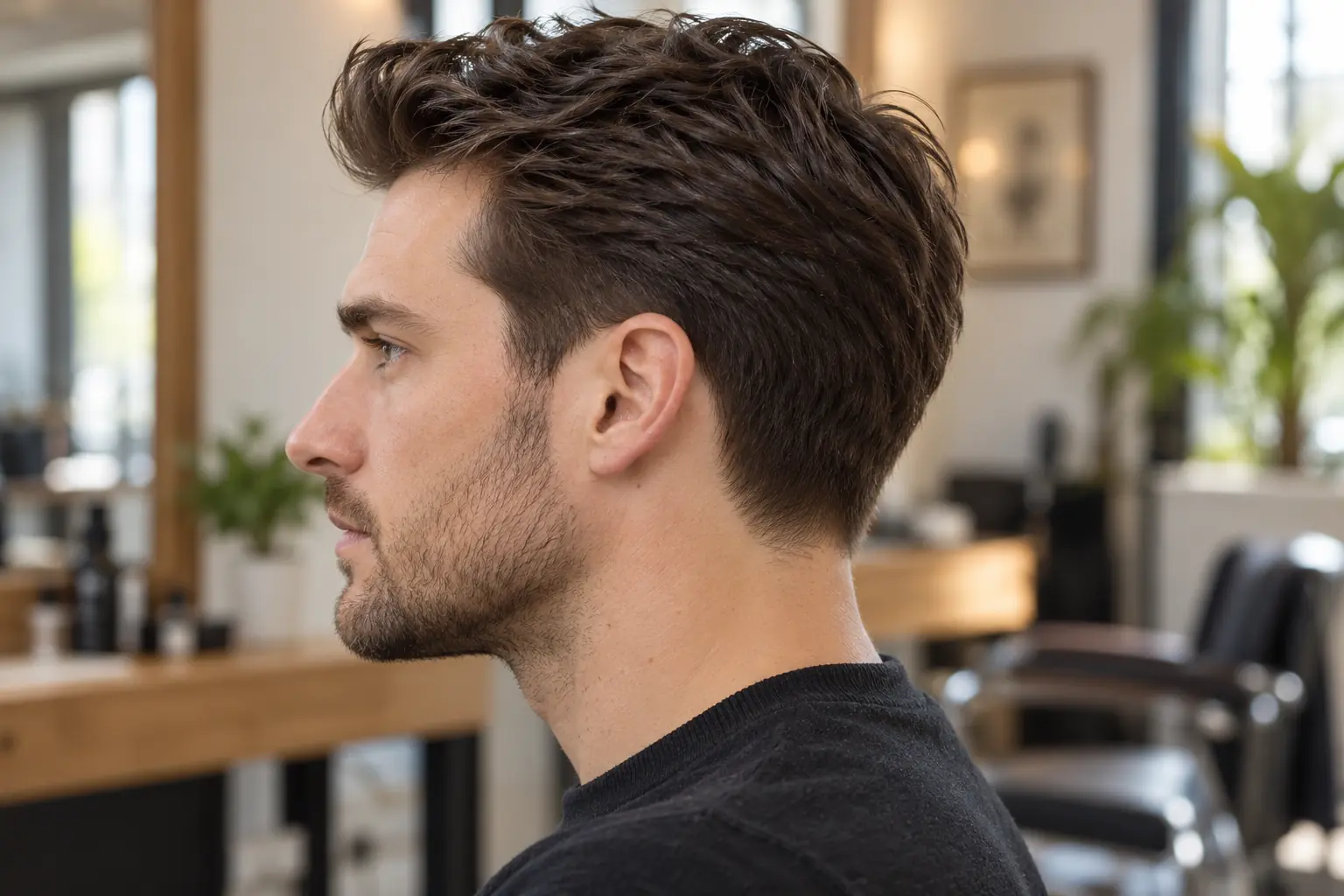
A taper fade is a haircut where the hair gets shorter only at the edges: the sideburns and the neckline. Everything above and behind the ears keeps its length, so the cut looks clean but not shaved. You choose three things: how high the taper starts (low, mid or high), how short it ends (shadow, zero or skin) and what you wear on top.
What Is a Taper Fade?
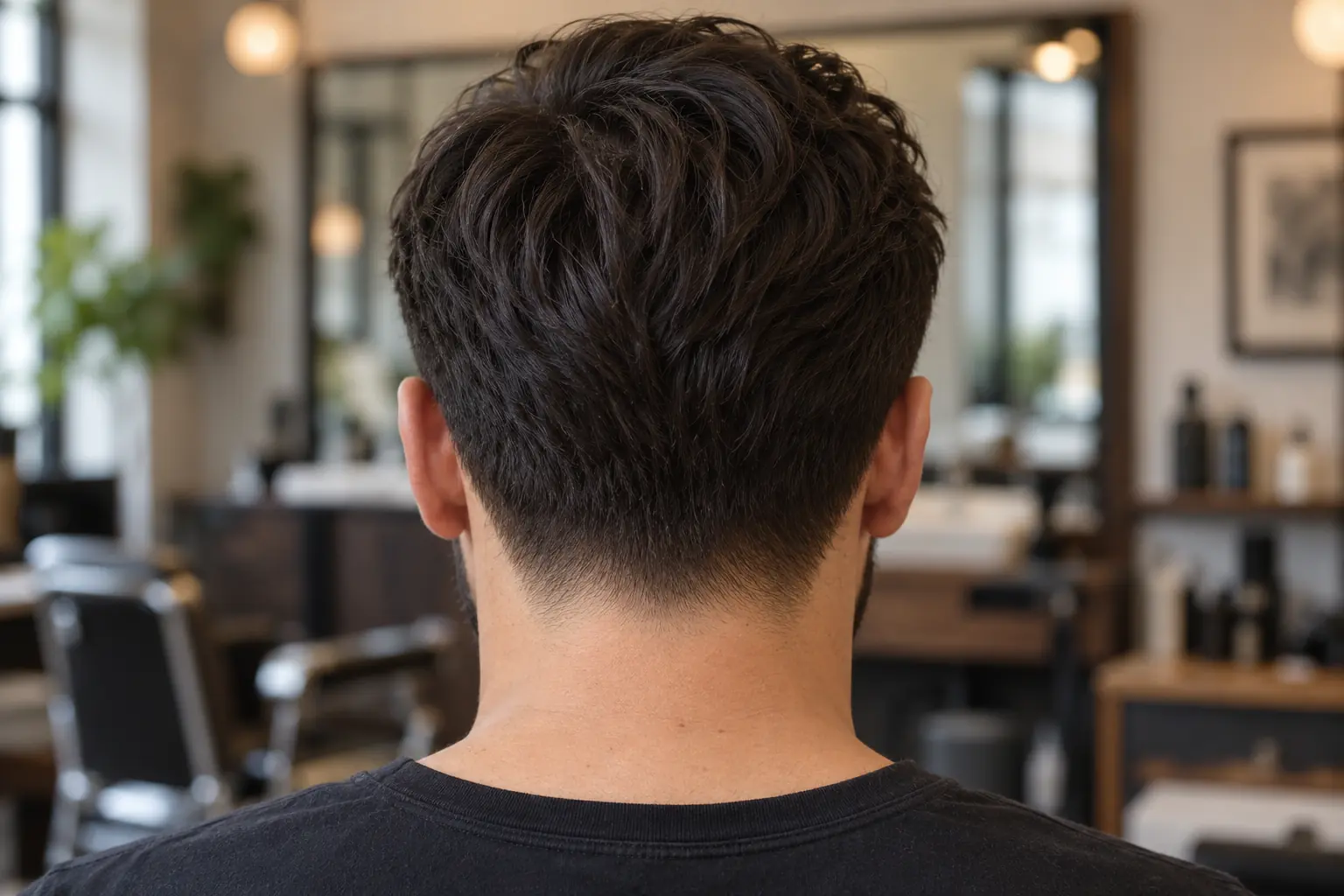
A taper fade, often just called a taper, is a localized blend. The barber shortens the hair at the sideburn and at the nape, then blends it smoothly into the length above. The rest of the sides and back stay fuller, which is the main thing that separates it from a regular fade.
That is why the taper fade haircut suits almost every setting: it looks neat at work, it grows out without a hard line, and it works with short, medium or long hair on top.
Taper fade at a glance
| Feature | Taper fade |
|---|---|
| Where it’s short | Sideburns and neckline only |
| Sides above the ear | Keep visible length |
| Heights | Low, mid or high |
| Finishes | Shadow, zero or skin |
| Top length | Any, from a short crop to long hair |
| Touch-up | Usually every 3 to 4 weeks |
| Best for | Anyone who wants a clean look without short sides |
Taper vs Fade: The One Difference That Matters
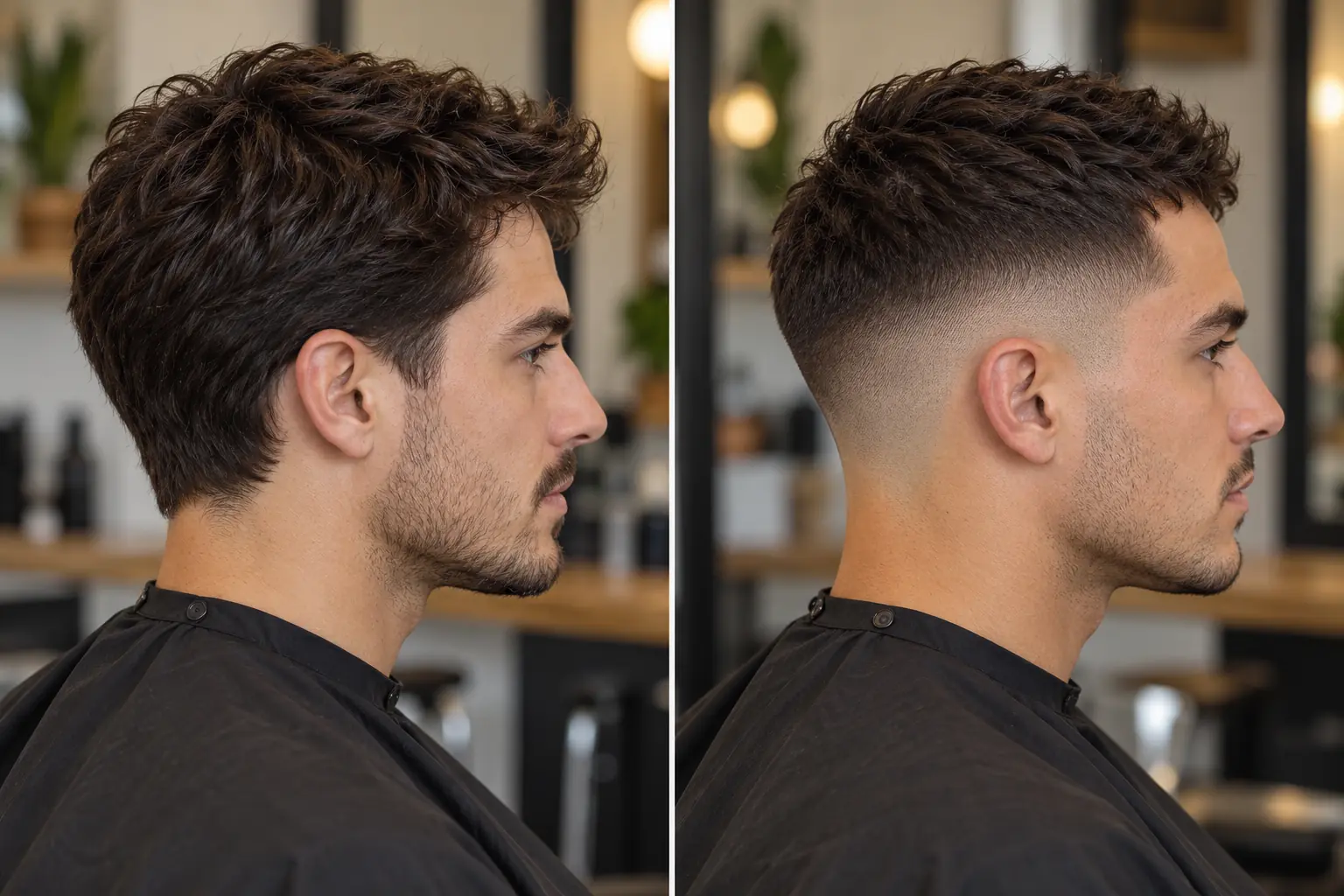
A taper only touches the edges of the haircut. A fade blends the hair short all the way around the sides and back, so a band of very short hair wraps around the head. Both can be low, mid or high, and both can end in skin.
| Taper | Fade | |
|---|---|---|
| Short area | Sideburns and nape | The whole side and back band |
| How it looks | Natural, fuller sides | Sharper, more contrast |
| Grow-out | Soft, few awkward weeks | Shows a line sooner |
| Upkeep | Every 3 to 4 weeks | Every 2 to 3 weeks |
Many barbers use “taper fade” loosely for any fade, so say what you mean: “short only at the sideburns and neckline.” For the full side-by-side, see fade vs taper. If you are choosing between a taper and a curved burst around the ear, read burst fade vs taper fade.
Low, Mid and High Taper Fade
The height is where the blend starts at the sideburn. It changes how much skin shows around the ear and how bold the cut looks.
Low taper fade
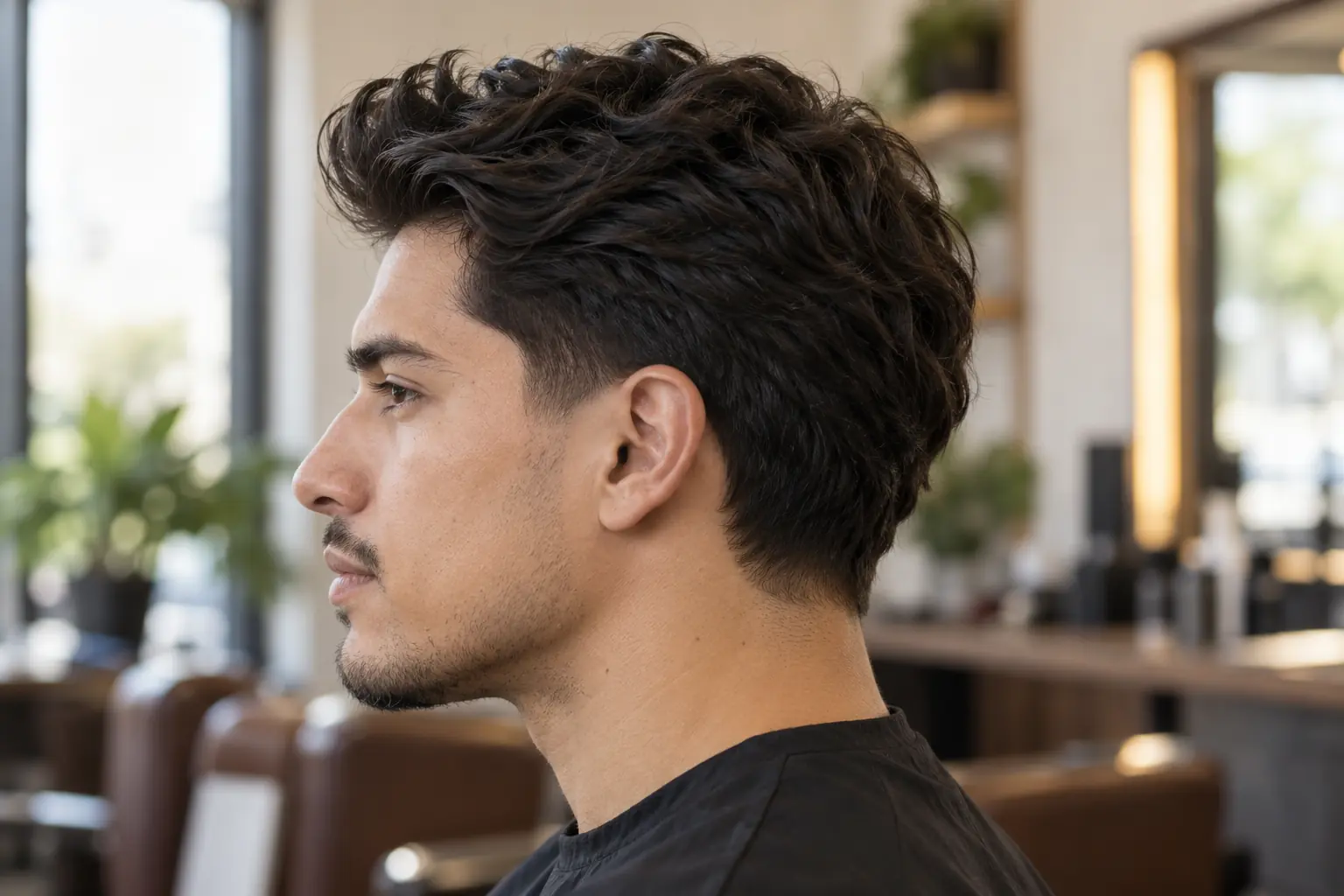
The blend starts at the bottom of the sideburn, below the middle of the ear, and stays close to the neckline at the back. It is the most subtle and the most popular choice for offices and first-time tapers. See every variation in the low taper fade guide.
Mid taper fade
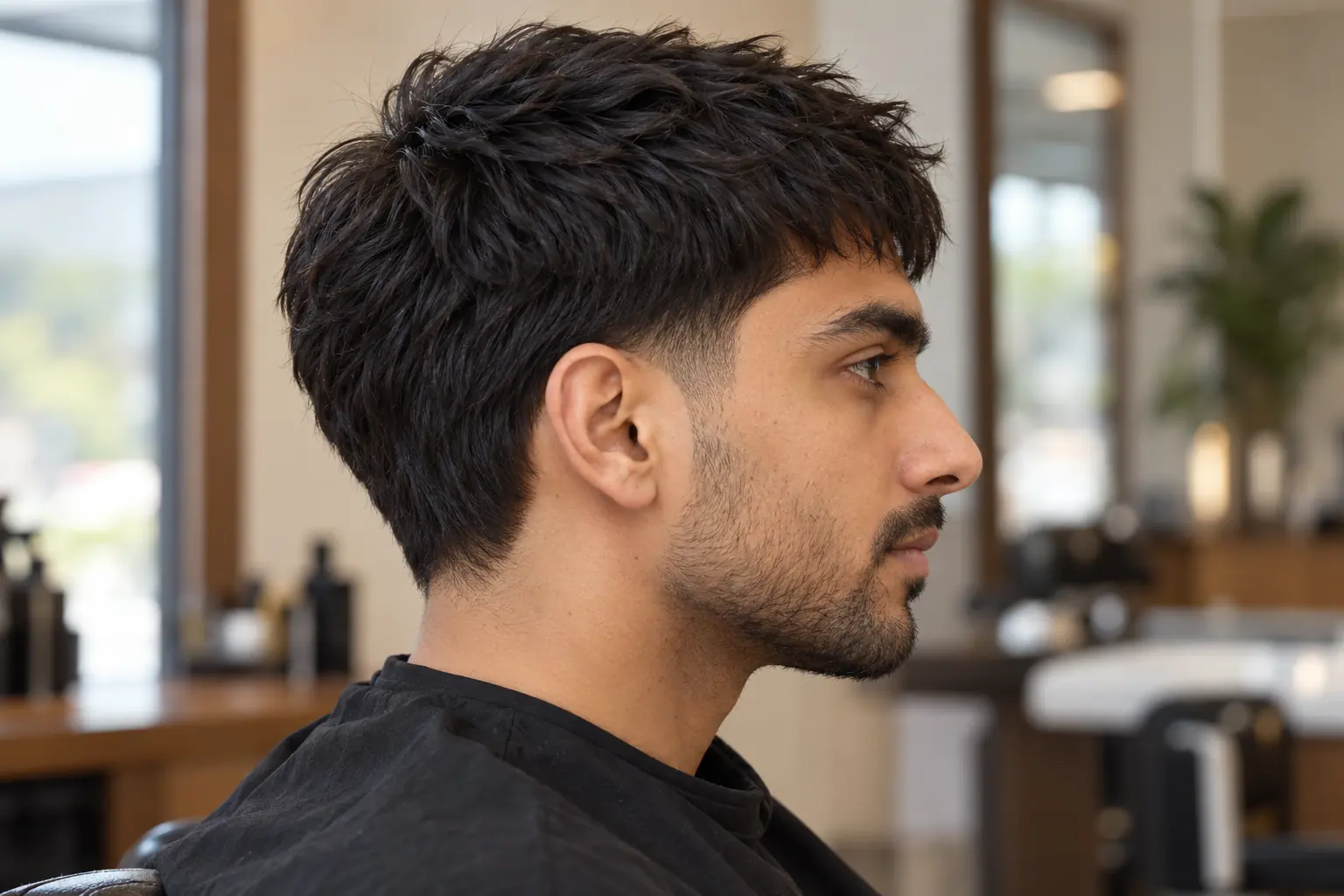
The blend starts around the middle of the ear. It looks cleaner and sharper than a low taper but still keeps length above and behind the ear. The mid taper fade guide covers it by hair type, and mid taper vs low taper compares the two side by side.
High taper fade
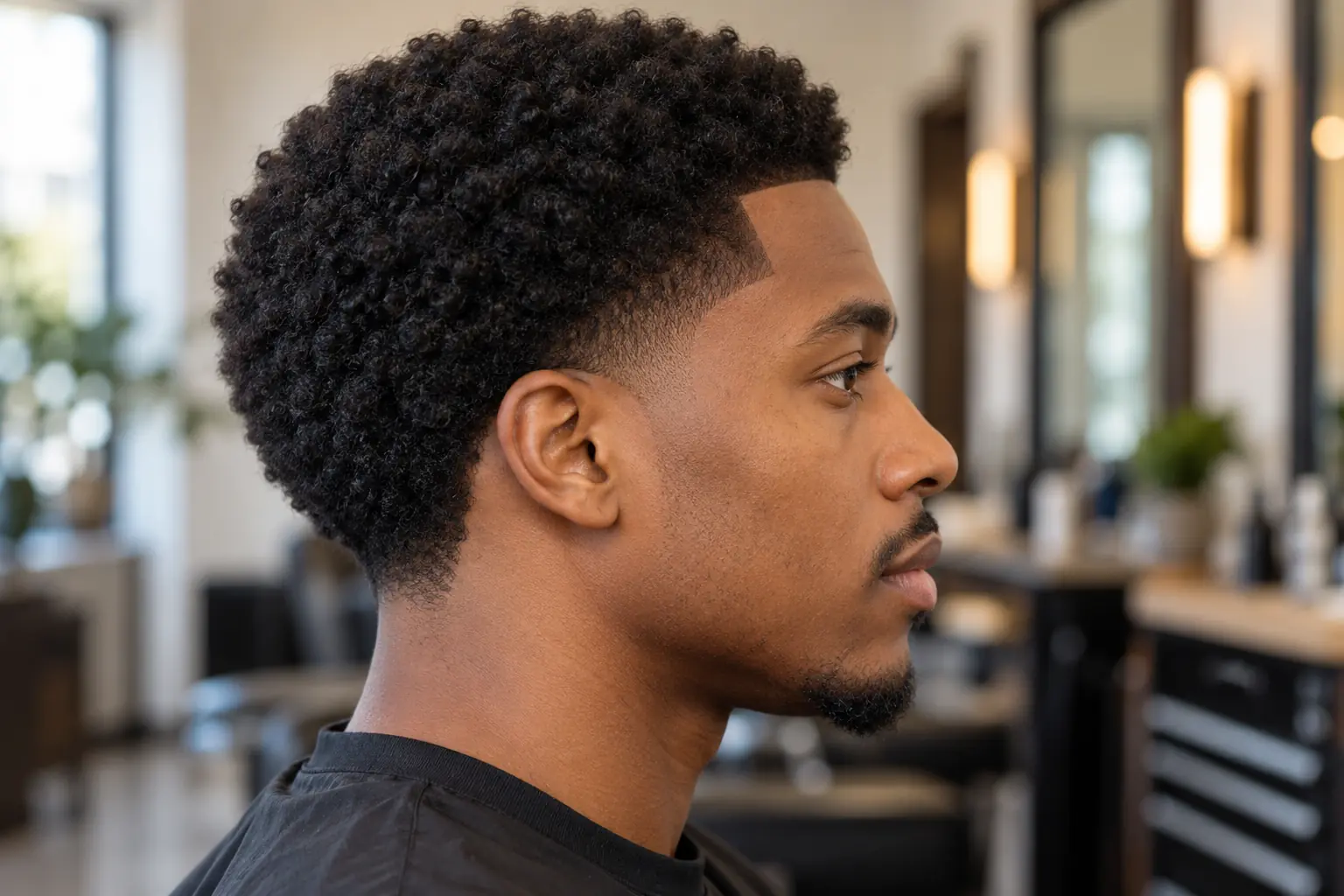
The blend starts at the temple, near the top of the ear. It is the boldest taper and pairs well with a line-up and a short afro, waves or a textured top. More examples are in the high taper fade guide.
Not sure which height suits you? The fade calculator suggests one from your hair type, job and how often you can get a cut.
Shadow, Zero or Skin Taper Fade
The finish is how short the very bottom of the taper goes. It is a separate choice from the height.
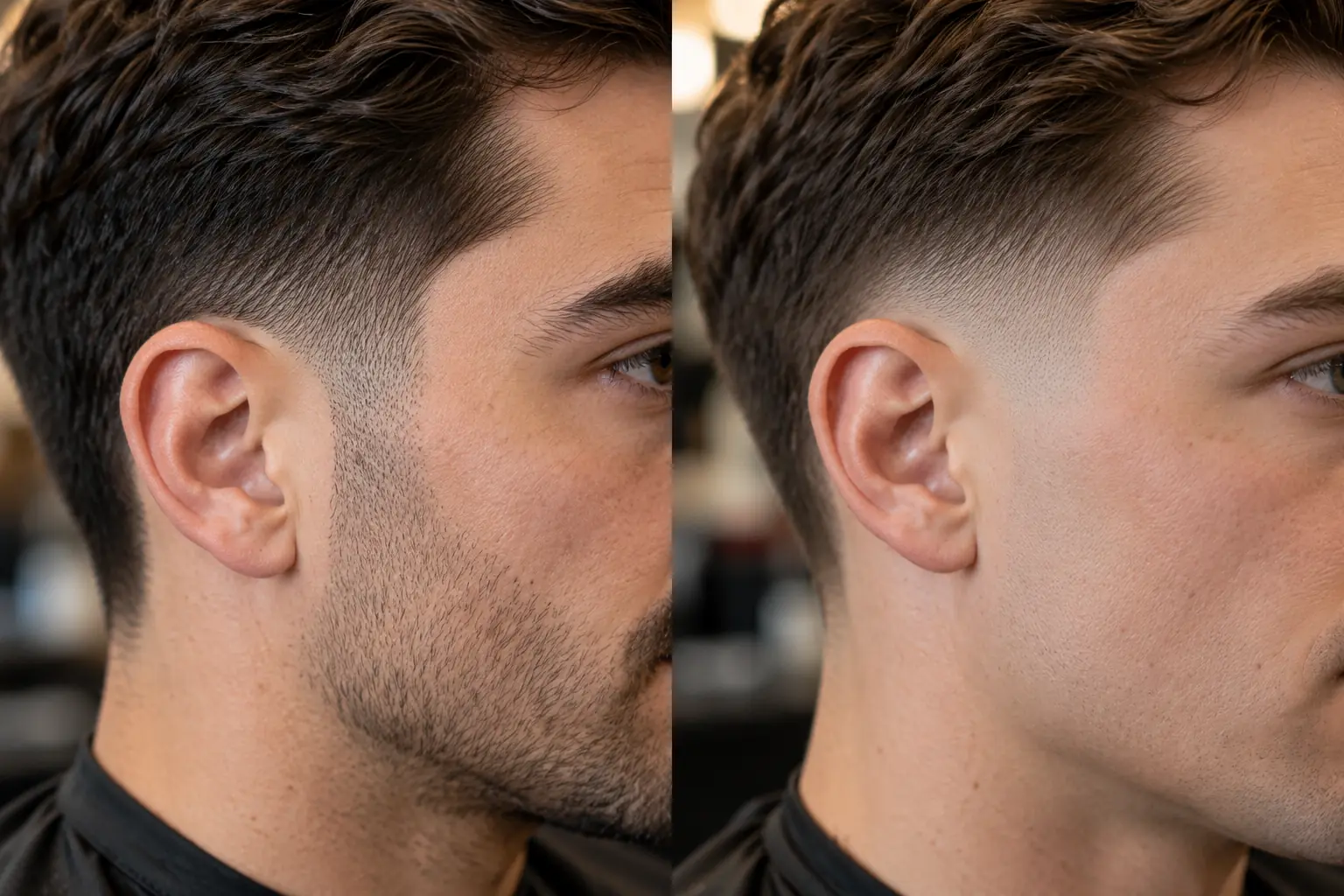
- Shadow taper: the bottom keeps a light layer of hair, usually a #0.5 or #1 guard. It grows out the softest.
- Zero taper: the bottom is cut with the clipper and no guard. It leaves short stubble, while a skin finish goes further. See the zero mid taper fade for photos.
- Skin taper fade (also called a bald taper): the bottom is shaved to the skin with a foil shaver or razor. It looks the sharpest but needs a touch-up within one to two weeks to stay crisp.
If your skin gets bumps or irritation after shaving, ask for a shadow or zero finish instead of skin.
Taper Fade by Hair Type
Straight hair
Straight hair shows every clipper step, so a slow, even blend matters. A low or mid taper with a textured crop, side part or quiff is the safest choice. See the classic mid taper for straight hair.

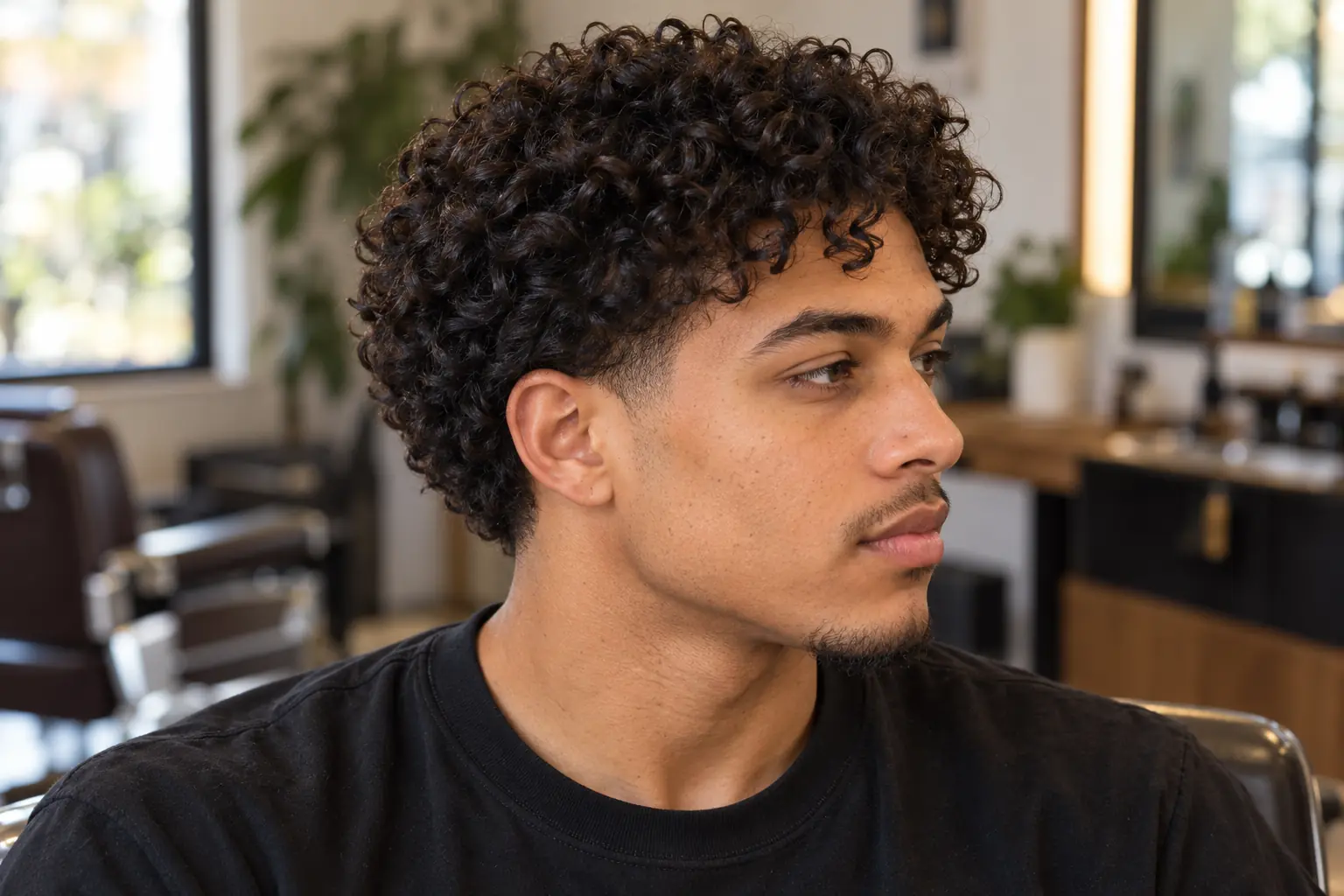
Curly hair
A taper keeps curls full on top while cleaning up the edges, so the shape stays rounded instead of puffy at the sides. A low taper suits loose curls; tight curls look sharp with a mid taper and a line-up. See the full taper fade for curly hair guide.
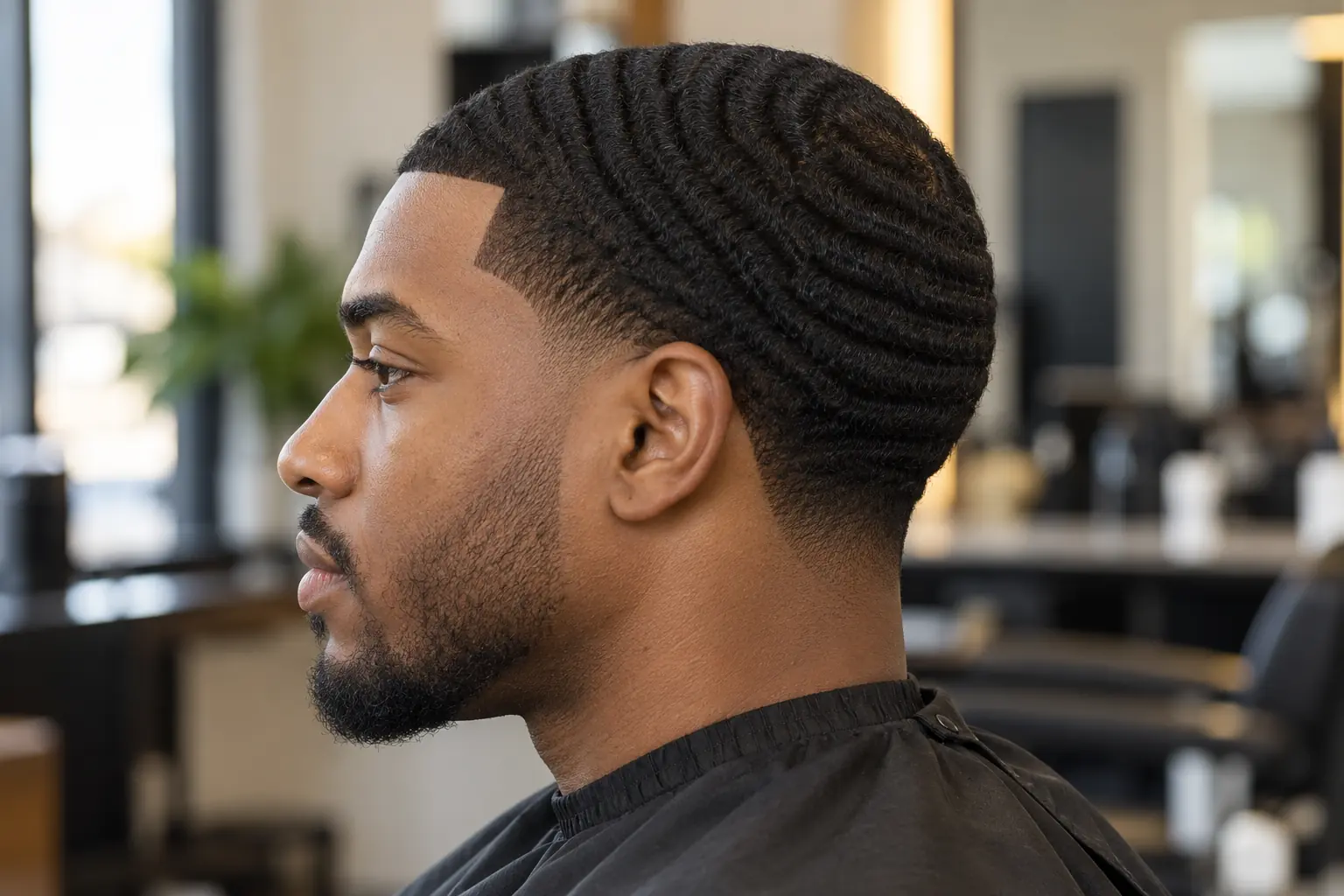
Afro, coily hair and 360 waves
An afro taper fade keeps the shape of the afro and cleans the temple and neckline, often with a sharp line-up. It also frames 360 waves well. Find more styles in fade haircuts for Black men and the mid taper for coily hair.
Wavy and thick hair
Wavy hair needs enough length on top for the wave to show, usually 3 to 4 inches. Thick hair can mushroom over a taper as it grows, so ask your barber to remove bulk on top too. See the mid taper for wavy hair and the mid taper for thick hair.
Taper Fade Styles by Top Length
Short taper fade
A short taper fade pairs the taper with 1 to 2 inches on top: a textured crop, crew cut or short spiky top. It is the lowest-maintenance version and needs almost no styling.
Textured top or fringe
The most requested combination right now. The top is cut with texture and pushed forward into a choppy fringe. See the low taper fade with textured fringe and the mid taper with textured fringe for photos from every angle.
Taper fade with long hair
A taper is the best fade for long hair because it only cleans the edges. The sides and back keep their length, so you can grow hair past your ears or into a modern mullet while the neckline still looks tidy.
Side part, comb over and slick back
A low taper under a side part or comb over is the classic professional cut. For a slick back, keep 4 inches or more on top and ask for a low taper so the sides don’t look too short when the top is combed back.
Middle part taper fade
A middle part works with 3 to 5 inches on top that fall into curtains. Keep the taper low so the sides frame the face instead of exposing it.
With a beard
Ask your barber to blend the taper at the sideburn into your beard, using the same guard where they meet. This connects the haircut and beard so there is no gap at the cheek.
Taper with a burst or drop fade
A burst taper curves the blend around the ear, and a drop fade dips it behind the ear toward the nape. Both start from a taper but are bolder. Compare them in burst vs taper and burst vs drop fade.
Taper for boys
A low taper is a popular choice for kids because it looks neat, grows out without a line and does not need a skin finish. Ask for a shadow finish to avoid irritation on young skin.
What to Tell Your Barber
Say these four things, in this order, and show a photo of the height you want:
- Height: “A low (or mid, or high) taper, only at the sideburns and neckline. Keep the length above and behind my ears.”
- Finish: “Shadow, zero or skin at the bottom.”
- Neckline: “Tapered neckline, not blocked.”
- Top: how many inches to leave and how you style it, for example “about 3 inches, textured, pushed forward.”
Clipper guard sizes for a taper fade
Most tapers start at a #0.5 or #1 at the very edge, or skin, and blend into the length of your sides, often a #2 to #4.
| Guard | Length left | Where it’s used in a taper |
|---|---|---|
| No guard (#0) | About 1/32 in. (under 1 mm) | Zero finish at the edge |
| #0.5 | 1/16 in. (1.5 mm) | Shadow finish at the edge |
| #1 | 1/8 in. (3 mm) | Bottom of a soft taper |
| #1.5 | 3/16 in. (4.5 mm) | Blending step |
| #2 | 1/4 in. (6 mm) | Blending into the sides |
| #3 | 3/8 in. (10 mm) | Sides on a fuller taper |
| #4 | 1/2 in. (13 mm) | Sides that keep real length |
Guard lengths are for standard clipper guards and can vary slightly by brand.
How Long a Taper Fade Lasts and What It Costs
A taper grows out more softly than a fade because only the edges are short. Most people get it touched up every 3 to 4 weeks; a skin taper looks crisp for about 1 to 2 weeks. A taper usually costs the same as a regular men’s fade, which runs about $30 to $75 before tip at the U.S. shops in our fade cost guide.
Common Taper Fade Mistakes
- Not saying the height. “Just a taper” often ends up higher than you wanted. Name low, mid or high.
- Getting a fade instead. If the barber starts taking the whole side short, it is turning into a fade. Remind them: edges only.
- Skin on sensitive skin. A shadow finish avoids razor bumps and grows out softer.
- Too much bulk on top. On thick hair, a taper with a heavy top looks mushroom-shaped after two weeks. Ask for weight removed.
- A blocked neckline. A squared neckline grows out with a fuzzy line. A tapered neckline stays clean longer.
Frequently Asked Questions
What is a taper fade?
A taper fade is a haircut where the hair gets shorter only at the sideburns and the neckline, blended smoothly into the longer hair above. The sides above and behind the ears keep their length.
Is a taper fade the same as a fade?
No. A fade blends the hair short all the way around the sides and back. A taper only shortens the edges, so it looks more natural and grows out more softly.
Which is better, a low or mid taper fade?
A low taper is more subtle and suits offices and longer sides. A mid taper looks sharper and cleaner around the ear. If you are unsure, start low: it is easy to go higher next time, but not lower.
Does a taper fade work with long hair?
Yes. It is the best fade for long hair because it only cleans the sideburns and neckline, so the sides and back keep their length.
How often should I get a taper fade?
Every 3 to 4 weeks for most tapers, or every 1 to 2 weeks if you want a skin taper to stay sharp.
Is a taper fade professional?
Yes. A low taper with a side part, crop or short textured top is one of the most conservative haircuts you can get, which makes it a safe choice for almost any job.
Related Guides
- Low Taper Fade
- Mid Taper Fade
- High Taper Fade
- Mid Taper vs Low Taper
- Fade vs Taper
- All Fade Haircuts for Men
 Low Taper Fade for Black Men: Styles, Line-Ups and What to Ask For
 Low Taper Fade with Textured Fringe: Styles, Barber Script and Styling
 Taper Fade for Curly Hair: Low, Mid and Blowout Tapers by Curl Type
6 Comments