
Mid Taper Fade: Placement, Styles & Barber Guide
On this page
- Where a Mid Taper Sits
- Mid Taper vs Low Taper vs Mid Fade
- Shadow, Zero or Skin Mid Taper?
- Top Styles That Work With a Mid Taper
- How Hair Texture and Density Change the Cut
- What to Tell Your Barber
- Maintenance Without a Fixed Universal Schedule
- Common Mid Taper Mistakes
- More visual references
- Sources and Further Reading
- Frequently Asked Questions
A mid taper fade cleans and graduates the perimeter at a more visible middle placement while preserving more upper-side and back weight than a full mid fade. In practical terms, the taper is concentrated near the temple/sideburn and neckline instead of removing a broad band around the whole head. Because barbershop terminology varies, describe the exact zones and shortest finish you want.
To compare low, mid and high tapers side by side, see the taper fade guide. Curly hair has its own taper fade for curly hair guide.
Quick answer: ask for a visible but localized taper at the temple and nape, with the hair around and above the ear kept fuller. Choose shadow, zero or skin separately and show the barber how high you want the temple blend to reach.
Where a Mid Taper Sits
“Mid” describes the visual height or strength of the graduated zone; “taper” describes a more localized perimeter treatment. The sideburn and temple area usually carry the clearest blend. At the back, the nape can be tapered without stripping the entire occipital area.

| Area | Typical mid-taper treatment | What should remain |
|---|---|---|
| Temple/sideburn | Visible short-to-long graduation | Weight above and behind the ear |
| Around ear | Clean outline, not necessarily a full fade band | Enough density to connect into the upper side |
| Nape | Localized neckline graduation | Fuller center-back weight above the taper |
| Top | Independent styling choice | Length needed for fringe, curls, part, quiff or pomp |
Mid Taper vs Low Taper vs Mid Fade

- Low taper: keeps the shortest graduation closer to the lower perimeter and usually preserves the most side weight.
- Mid taper: makes the temple/nape cleanup more visible or positions it higher while retaining a localized shape.
- Mid fade: changes a broader band through the sides and back, producing a more obvious all-around transition.
See mid taper vs low taper for the height decision. If you are comparing taper placement with an ear-centered burst, use burst fade vs taper fade.
Shadow, Zero or Skin Mid Taper?

The haircut name does not define the shortest length. Choose it explicitly:
- Shadow: short hair stays visible at the base, creating a softer, more forgiving result.
- Zero: very close clipper work gives a crisp base without automatically removing hair to bare skin.
- Skin: the lowest section is shaved to skin, creating the highest contrast and the fastest visible change during grow-out.
A mid skin taper is possible, but do not assume every barber uses the phrase the same way. Point to the placement and say how short the base should be.
Top Styles That Work With a Mid Taper
| Top style | Why it works | Useful instruction |
|---|---|---|
| Textured fringe | Balances a casual front with a clean perimeter | Specify blunt versus separated/point-cut ends |
| Wavy top | Retained side weight supports natural movement | Judge the fringe and bulk when dry |
| Pompadour or quiff | Fuller upper sides make the transition into height less disconnected | Preserve enough corner weight for the intended silhouette |
| Side part or slick back | A localized taper cleans the edge without erasing the connection | Keep density near the parietal ridge |
| Curls or coils | Creates edge definition while preserving texture volume | Account for shrinkage before setting taper height |
For focused examples, compare the mid taper textured fringe, mid taper for wavy hair, mid taper pompadour, thick-hair mid taper and classic straight-hair mid taper.
How Hair Texture and Density Change the Cut
- Straight hair: exposes weight lines clearly. The blend and the connection into the top need careful refinement.
- Wavy hair: can soften the transition but may expand above the taper if bulk is not managed.
- Curly hair: supports volume above a tight perimeter; the dry curl position should guide taper height.
- Coily hair: can create a crisp temple and nape shape while retaining a fuller silhouette. Avoid pushing the natural hairline back.
- Fine or thinning hair: usually looks safer with a softer finish and enough side weight to avoid emphasizing density differences.
- Very thick hair: may need internal weight removal above the taper, but over-thinning can create a shelf as the hair grows.
What to Tell Your Barber
“I want a mid taper localized at the temple/sideburn and the nape. Keep the hair around and above the ear fuller; do not turn it into a full mid fade. Finish the shortest point at [shadow/zero/skin], and keep the top [length/style]. Please show me the temple height before taking it higher.”
A side photo should show the temple blend and upper-side weight. A rear photo should show whether you want only the nape cleaned or a stronger connection into the back.
Maintenance Without a Fixed Universal Schedule
A mid taper can stay presentable as it softens because much of the side weight remains, but a skin base and sharp lineup show growth sooner. Hair growth, edge detail and preferred crispness vary too much for one compulsory interval. Recut when the perimeter no longer matches your preference.
Common Mid Taper Mistakes
- The blend expands into a full mid fade even though the client wanted a localized taper.
- The temple is taken higher than the reference photo.
- The barber assumes skin or zero without confirming the shortest finish.
- Too much corner weight is removed, disconnecting a pompadour, quiff or side part.
- A sharp lineup is pushed beyond the natural hairline.
More visual references
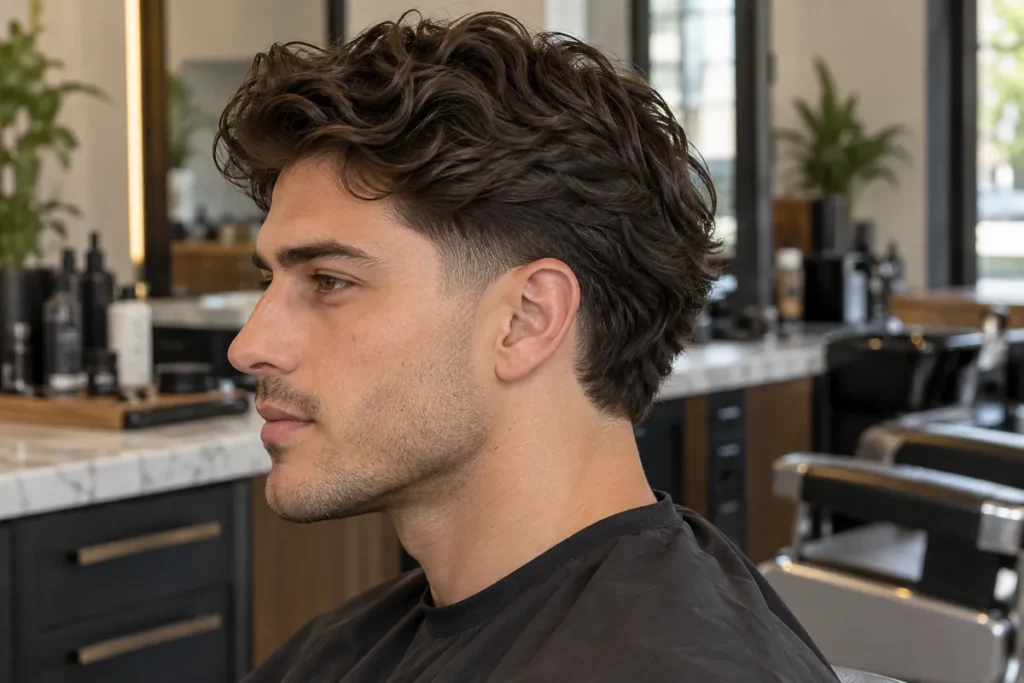
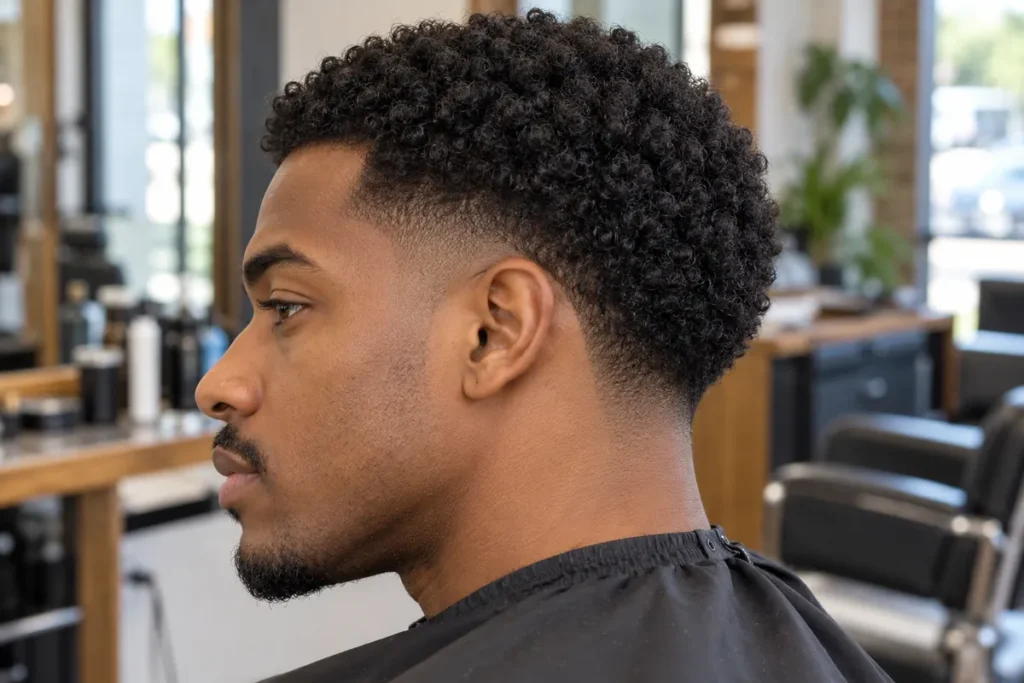
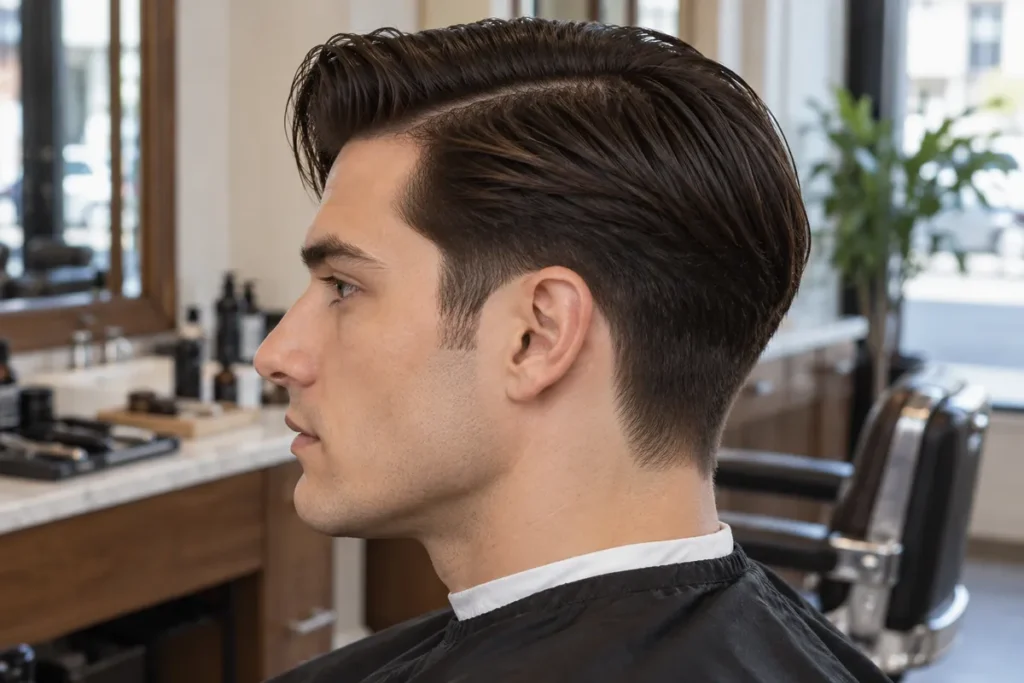
Sources and Further Reading
- Modern Barber — professional taper vs fade placement demonstration
- GQ — fade height, finish and barber-communication guidance
Frequently Asked Questions
What is a mid taper fade?
It is a visible but localized short-to-long graduation around perimeter zones such as the temple/sideburn and nape, while more weight remains through the upper sides and back than in a full mid fade.
Is a mid taper the same as a mid fade?
Not in the terminology used here. A mid taper is localized at perimeter zones; a mid fade changes a broader band around the sides and back. Shop vocabulary varies, so describe the placement.
Can a mid taper go to skin?
Yes. Shadow, zero and skin describe the shortest finish, while mid describes placement. State both choices.
Does a mid taper work with long hair on top?
Yes. It can connect to a fringe, quiff, pompadour, side part, curls or other longer tops as long as the barber preserves the weight needed for that shape.
What should I show my barber?
Use a side reference for temple height and upper-side weight plus a rear reference for neckline treatment. Also show the top length and texture you want.
 Low Taper Fade for Black Men: Styles, Line-Ups and What to Ask For
 Low Taper Fade with Textured Fringe: Styles, Barber Script and Styling
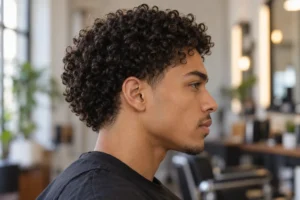 Taper Fade for Curly Hair: Low, Mid and Blowout Tapers by Curl Type
2 Comments