
High Taper Fade: 5 Best Styles & Complete Barber Guide
On this page
- What Makes a High Taper Fade Different?
- High Taper vs Mid Taper vs High Fade
- Low Taper vs High Taper
- Who Suits a High Taper Fade?
- Side and Rear Views Matter
- High Taper Fade Finishes: Shadow, Zero or Skin
- 5 High Taper Fade Styles to Consider
- How Texture and Density Change the Result
- Exact Barber Request
- Maintenance and Grow-Out
- Common High Taper Mistakes
- Sources and Further Reading
- Frequently Asked Questions
A high taper fade makes the short-to-long graduation at the temple/sideburn and nape more visible or places it higher while preserving more hair through the center of the sides and back than a full high fade. The label is not standardized between barbershops, so the safest request defines the zones, peak height, shortest finish and retained weight separately.
To compare all three taper heights side by side, see the taper fade guide.
Quick answer: ask for a stronger, higher taper at the temple and nape while keeping the area around the upper ear and center back fuller. Then specify shadow, zero or skin, show where the temple blend should peak and bring both side and rear references.
What Makes a High Taper Fade Different?
In a high taper fade, “high” describes the apparent height or strength of the localized blend. “Taper” describes where the graduation is concentrated: commonly the temple/sideburn and neckline rather than a broad band around the whole head. A high taper can therefore look crisp and exposed at the edges while retaining density above the ear and through the middle back.
The exact landmark varies with head shape, hairline and shop vocabulary. Instead of ordering by name alone, point to where you want the temple blend to stop and explain whether the nape should be softly tapered, clipper-close or taken to skin.

High Taper vs Mid Taper vs High Fade
| Cut | Where the blend sits | What usually remains | Overall effect |
|---|---|---|---|
| Mid taper | Localized temple and nape zones at a moderate height | Fuller side and center-back weight | Balanced and less exposed |
| High taper | Localized temple and nape zones that read higher or stronger | Weight through the central side/back | Crisper edge contrast without a full fade band |
| High fade | Broader connected band high on the sides and back | Less side and back weight below the top | More dramatic all-around exposure |
The main high taper fade distinction is coverage, not whether the lowest point reaches skin. A high taper may be shadowed; a mid taper may be taken to skin. If you want the transition to continue around the entire head, compare the broader fade haircuts for men guide. For a lower localized option, use the mid taper vs low taper comparison.
Low Taper vs High Taper
A low taper and a high taper change the same two zones, the sideburn and the nape. The difference is how far up the blend climbs before it meets the longer hair.
| Low taper | High taper | |
|---|---|---|
| Where it starts | Bottom of the sideburn, just above the ear and neckline | Up toward the temple, above the top of the ear |
| Scalp showing | Very little | Noticeably more at the temples and nape |
| Look | Subtle, office-friendly | Sharper and more contrasted |
| Grow-out | Softest; 3 to 4 weeks between cuts | Shows growth sooner; 2 to 3 weeks |
| Works best with | Fuller sides, longer tops, first-time tapers | Short or textured tops, waves, a strong line-up |
If you are not sure, start low. You can take a taper higher at the next visit, but you can’t put length back. For photos of the lower version, see the low taper fade guide; for how all three heights relate, see the main taper fade guide.
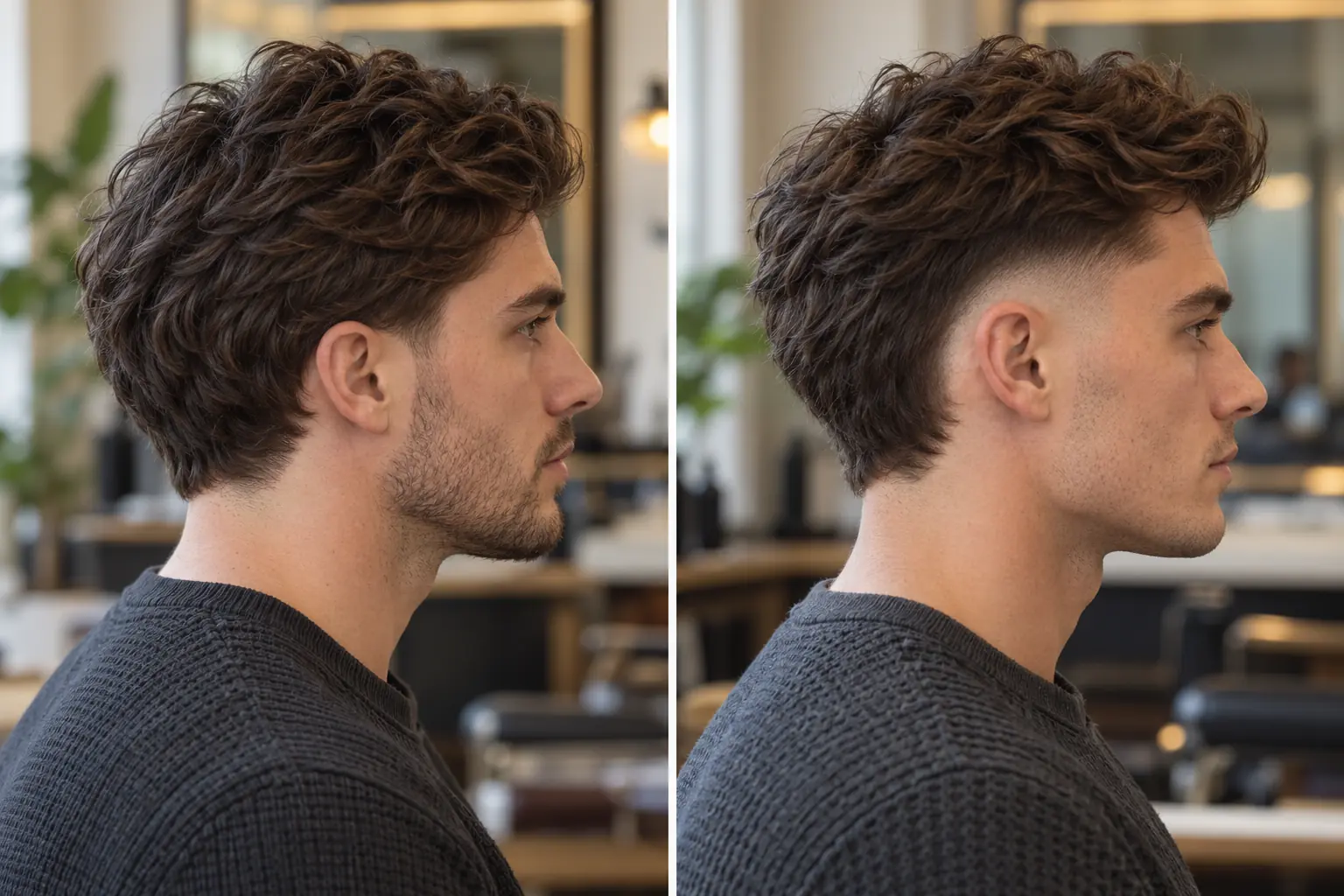
Who Suits a High Taper Fade?
- Round or full faces: the higher, cleaner temples make the face look longer and slimmer.
- Short and textured tops: crops, waves, sponge curls and short twists look sharper with the extra contrast.
- Thick or fast-growing hair: removing more at the temples controls bulk that pushes the sides out.
- Think twice if you have a strong head shape at the temples, scars you want to hide, or you can’t get to the barber every two to three weeks. A mid taper is the safer middle ground.
Wearing it on coily hair with waves or twists? See the low taper fade for Black men to compare heights on those styles, or the high fade haircut if you want the blend all the way around.
Side and Rear Views Matter
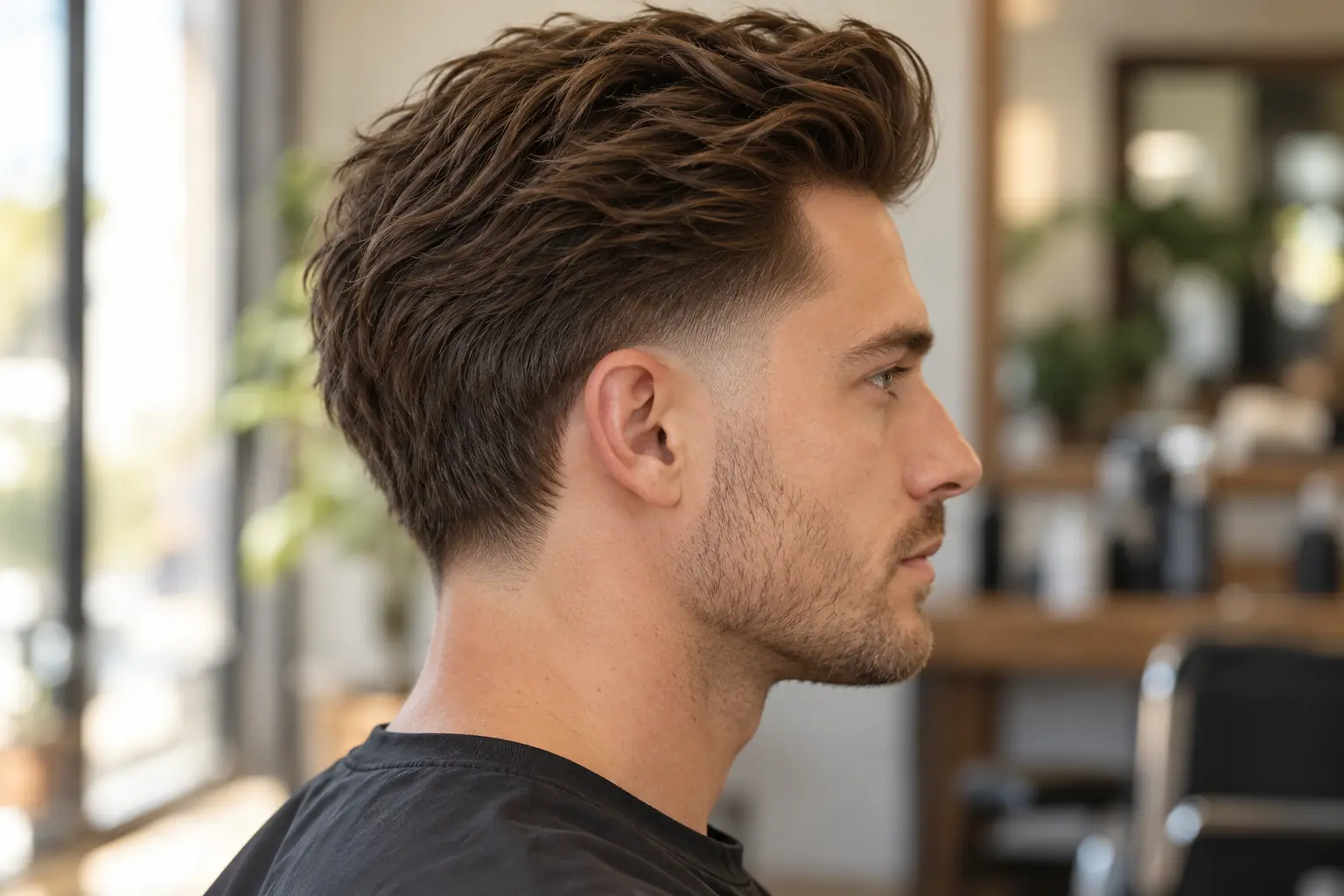
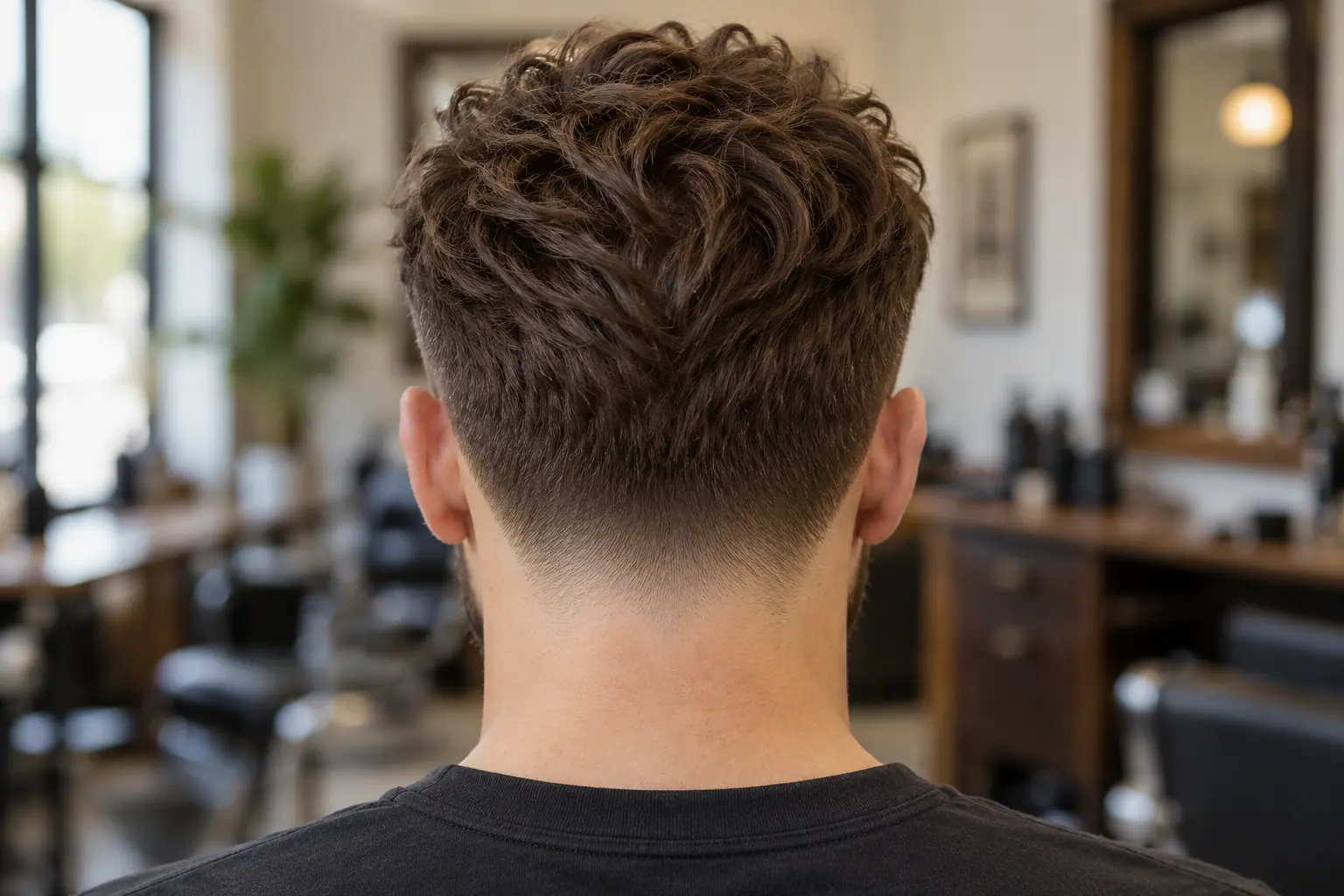
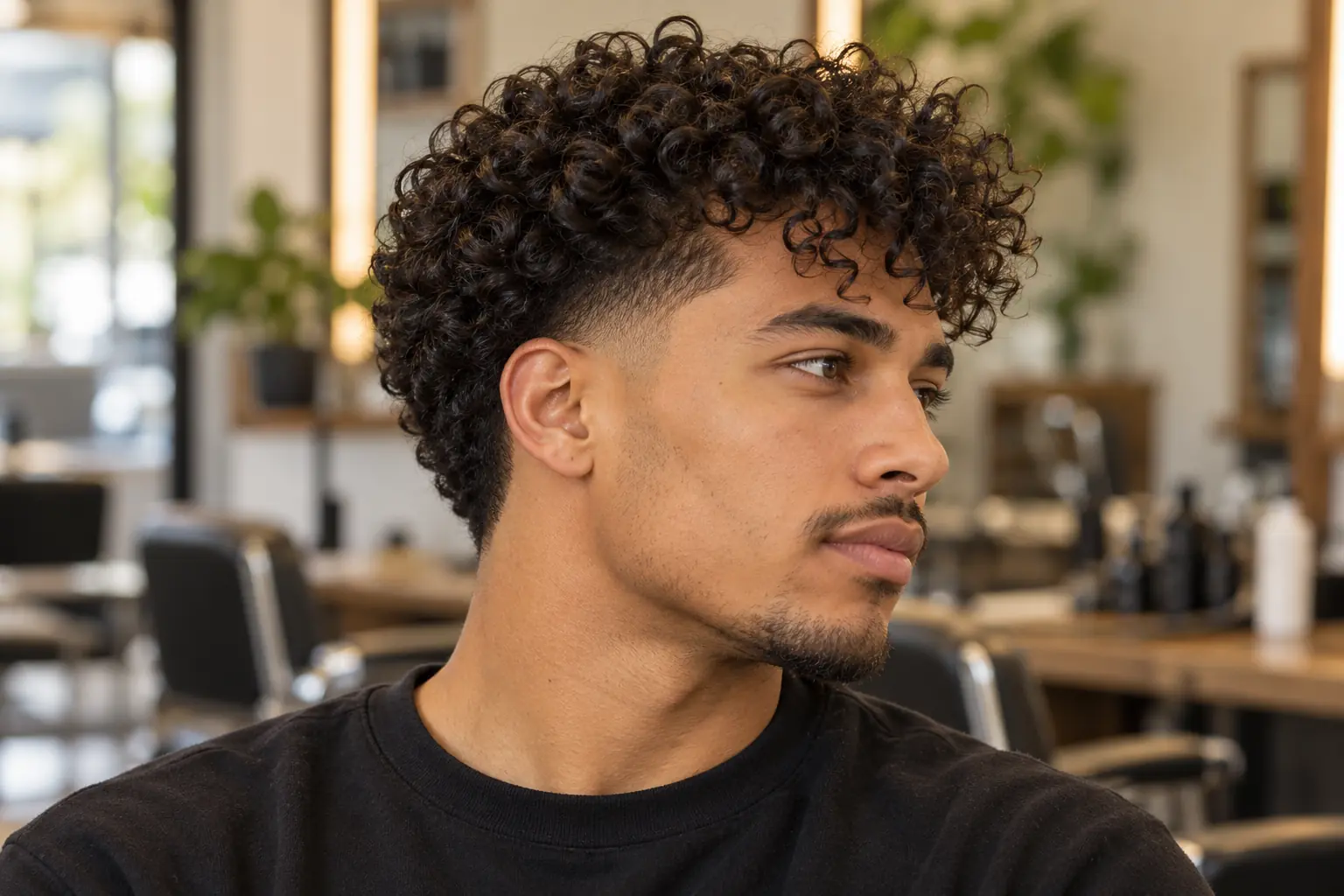
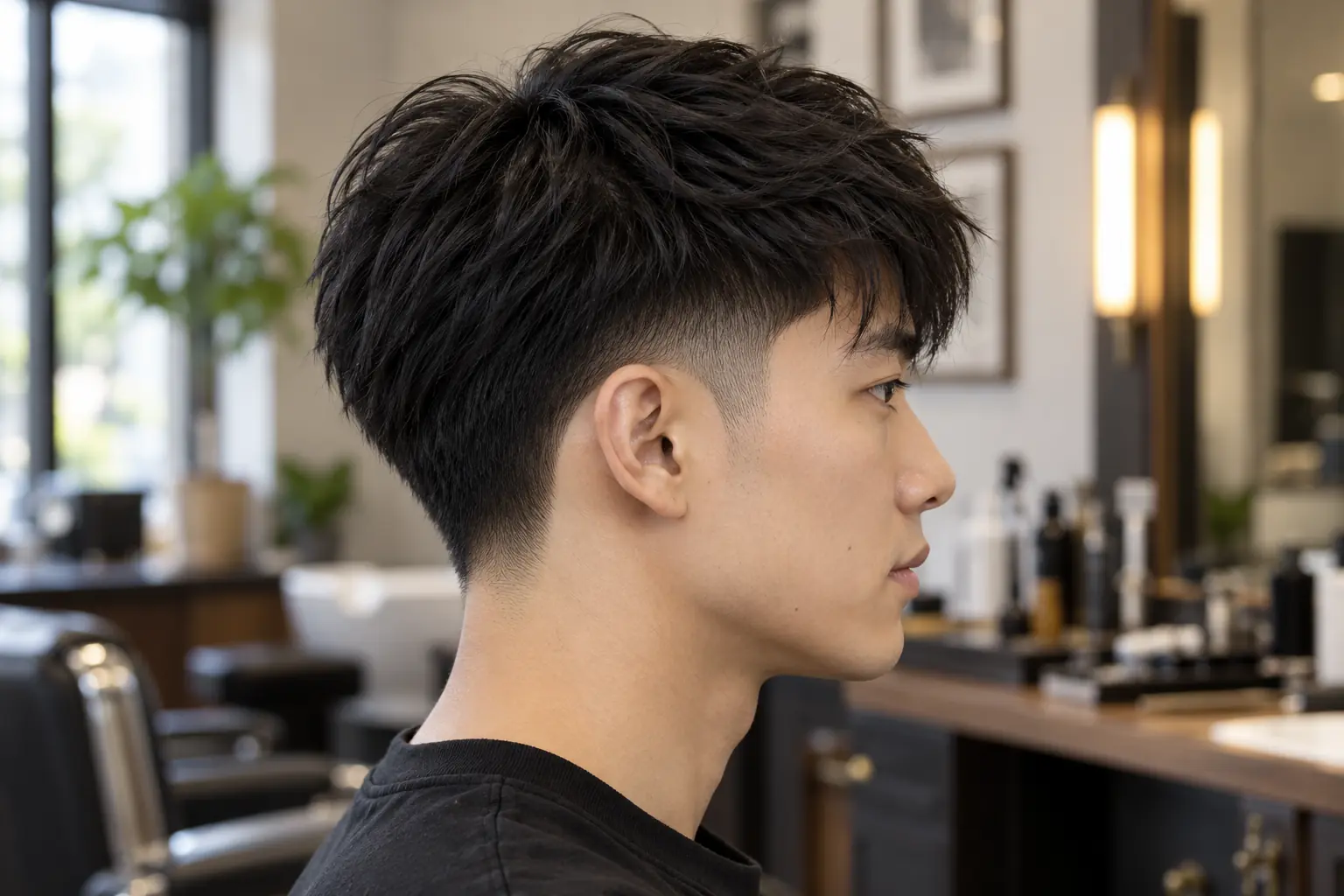
For a high taper fade, a side photo shows the temple peak, how much hair remains over the ear and how the taper connects into the top. A rear photo shows a different decision: whether the nape is a small localized cleanup or a larger blend that begins to resemble a full fade.
- For a subtle result: keep the high point narrow at the temple, retain weight behind the ear and use a shadow finish.
- For a sharper result: expose more of the sideburn/temple zone, use a zero or skin base and request a defined edge without pushing the natural hairline back.
- For easier grow-out: keep the transition soft above the shortest area and avoid an unnecessarily wide skin section.
High Taper Fade Finishes: Shadow, Zero or Skin
| Finish | Shortest area | Contrast | Grow-out visibility |
|---|---|---|---|
| Shadow | Visible short hair remains | Softest | Usually the least abrupt |
| Zero | Very close clipper stubble | Strong | Becomes visible sooner than shadow |
| Skin / bald | Lowest area taken to bare skin | Strongest | The return of stubble is easiest to notice |
Terminology varies, especially around “zero.” Say whether you do or do not want bare skin. The zero mid taper guide explains the finish distinction in more detail, and the clipper guard size chart provides standard reference lengths without pretending every brand or lever position cuts identically.
5 High Taper Fade Styles to Consider
| Top style | Why it can work | What to protect |
|---|---|---|
| Textured fringe | A crisp temple area contrasts with a loose forward top | Enough corner weight to avoid a hollow connection |
| Curly or coily top | Defined edges emphasize natural volume | The natural hairline and dry curl/coil shape |
| Quiff or pompadour | A stronger taper can sharpen the lower outline | Density through the upper side to support height |
| Short crop | Keeps the overall cut compact and practical | A smooth blend so the high taper does not look detached |
| Side part or slick back | Cleans the perimeter without requiring a full high fade | The transition into the parietal ridge and crown |
These high taper fade pairings work only when the transition protects the weight needed by the top. For fringe options, compare textured fringe haircuts for men. For a fuller classic top, see the taper pompadour guide. The taper can be adapted to straight, wavy, curly or coily hair, but density and growth direction should determine how much weight is removed.
How Texture and Density Change the Result
- Straight hair: makes weight lines easy to see. A high taper needs a clean transition into the longer side.
- Wavy hair: adds movement and can soften the boundary, but bulky areas above the taper may need careful scissor work.
- Curly hair: creates strong volume contrast. Set the taper height after considering where the curls sit when dry.
- Coily hair: can support crisp temple and nape definition. Avoid moving the natural lineup backward for temporary sharpness.
- Fine or low-density hair: often looks more balanced with a narrower high taper and a shadow finish rather than maximum scalp exposure.
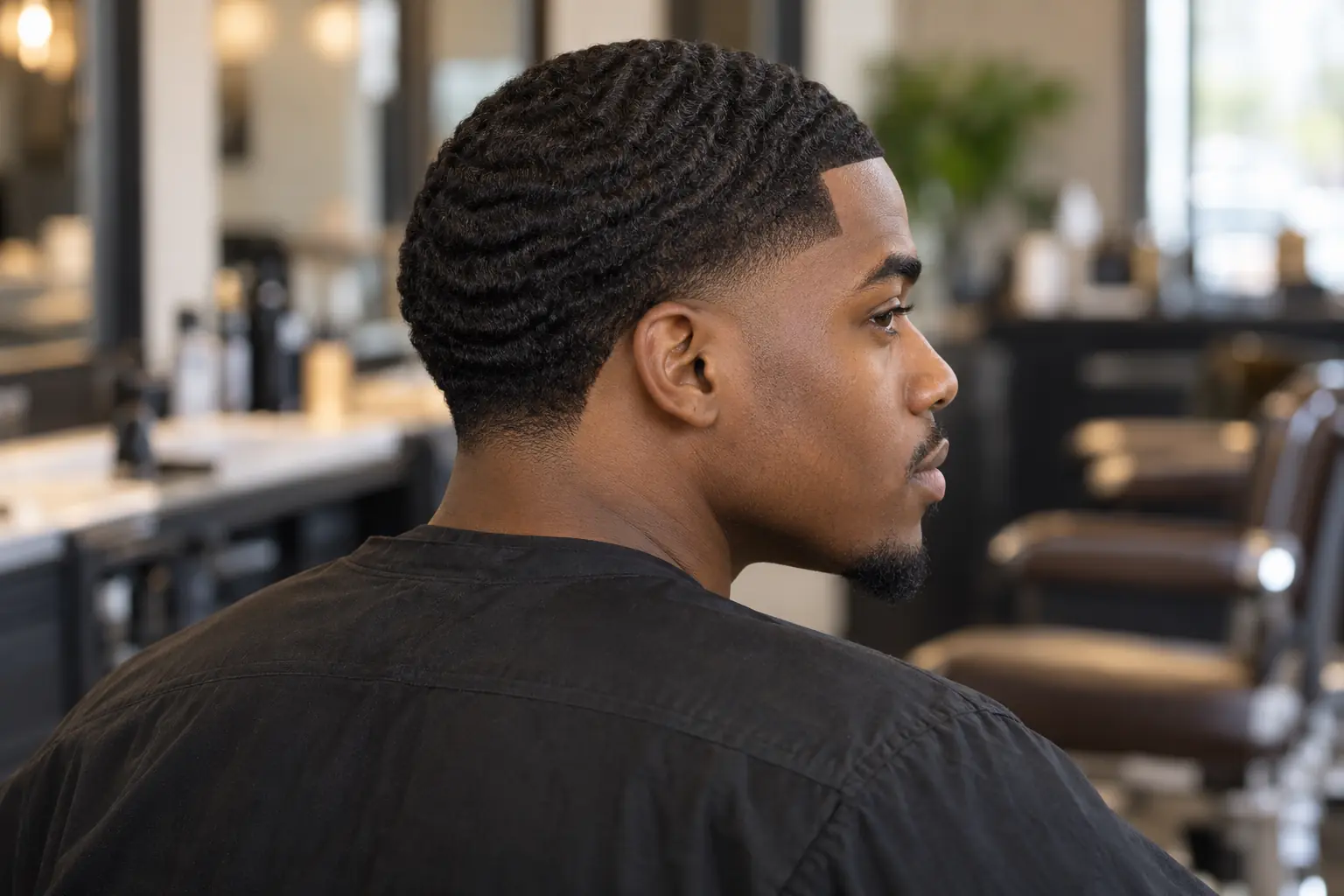
Exact Barber Request
“I want a high taper, not a full high fade. Keep the graduation localized at the temple/sideburn and the nape, keep weight through the center sides and back, and stop the temple blend around [point to the height]. Finish the shortest area at [shadow / zero / skin]. Keep the top [length and style], and please show me the height before taking it higher.”
Bring one side image, one rear image and a separate top-style reference if the hero photo does not match your intended texture or length. A front-only photo cannot communicate the two main taper zones.
Maintenance and Grow-Out
No single appointment interval fits everyone. A high taper fade with a skin finish, sharp lineup and wide high-contrast zone shows change sooner than a shadow finish with natural edges. Hair growth speed, scalp comfort and preferred neatness matter more than a fixed calendar rule. Rebook when the temple or nape no longer has the balance you want.
Daily care belongs mostly to the top style: lightweight cream for controlled movement, matte paste or clay for separated short texture, and appropriate leave-in moisture for curls or coils. Product should not be used to disguise an uneven transition.
Common High Taper Mistakes
- The barber extends the blend through a broad side/back band and creates a high fade instead.
- The temple peak rises above the reference and removes needed corner weight.
- “Zero” is assumed to mean bare skin without confirming the finish.
- The nape is blended too widely, changing the intended rear silhouette.
- The natural hairline is pushed back to make the first-day outline look sharper.
- Only a side image is supplied, leaving the neckline decision unclear.
Sources and Further Reading
- Modern Barber — professional explanation of taper and fade coverage
- GQ — fade height, finish and barber-communication guidance
- Wahl — professional fade technique and transition guidance
Frequently Asked Questions
What is a high taper fade?
It is a stronger or higher localized graduation at perimeter zones such as the temple/sideburn and nape, while more center-side and back weight remains than in a full high fade.
Is a high taper the same as a high fade?
No in the terminology used here. A high taper stays localized at the temple and nape; a high fade changes a broader connected band through the sides and back. Barbershop vocabulary varies, so describe the coverage.
Can a high taper be a skin taper?
Yes. High describes placement or strength, while skin describes the shortest finish. You can also request a high shadow or high zero taper.
Does a high taper work with curly hair?
Yes. It can emphasize curl volume while cleaning the temple and nape. The barber should account for the dry curl position and avoid taking the taper higher than intended.
What photos should I show my barber?
Bring a side reference for temple height and retained weight, a rear reference for nape treatment and a top reference if your preferred length or texture differs.
 Low Taper Fade for Black Men: Styles, Line-Ups and What to Ask For
 Low Taper Fade with Textured Fringe: Styles, Barber Script and Styling
 Taper Fade for Curly Hair: Low, Mid and Blowout Tapers by Curl Type
3 Comments