
Low Taper Fade: Placement, Styles & Barber Script
On this page
- Low taper fade references by top style
- Low taper fade references by texture and neckline
- What “Low,” “Taper” and “Fade” Mean Here
- Low Taper Fade vs Low Fade vs Mid Taper
- Shadow, Zero or Skin? Finish Is a Separate Choice
- Which Top Styles Work With a Low Taper?
- How It Changes by Hair Texture
- What to Tell Your Barber
- Maintenance: Choose Crispness, Not a Mandatory Calendar
- Why “Low Taper Fade” Became a Huge Internet Phrase
- Common Low Taper Mistakes
- Sources and Further Reading
- Frequently Asked Questions
A low taper fade is best understood as a low, localized perimeter blend. Instead of removing a wide band of hair through the entire side and back, the shortest graduation stays close to the temple/sideburn area and the nape, preserving more weight around the ears and upper sides. The exact vocabulary varies by barber, so describe placement and shortest finish as well as the haircut name.
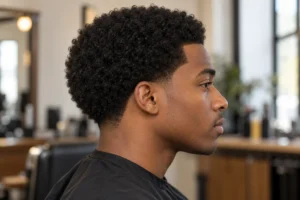
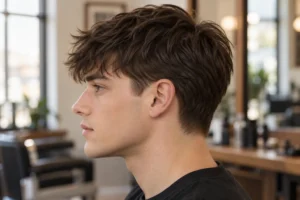
New to tapers? Start with our taper fade guide for every height and finish, or see the low taper fade with textured fringe, the most requested top style. For waves, twists, sponge curls, locs and afros, see the low taper fade for Black men.
Quick answer: choose a low taper fade when you want a cleaner edge without giving up much side density. Tell the barber to keep the shortest graduation low at the sideburn/temple and nape, leave the hair around and behind the ear fuller, and finish the bottom at shadow, zero or skin according to your preferred contrast.
Low taper fade references by top style
Compare the visible top shape, retained coverage and lower edge. Select an image to view it larger; these are separate fictional models, not matching views of one haircut.
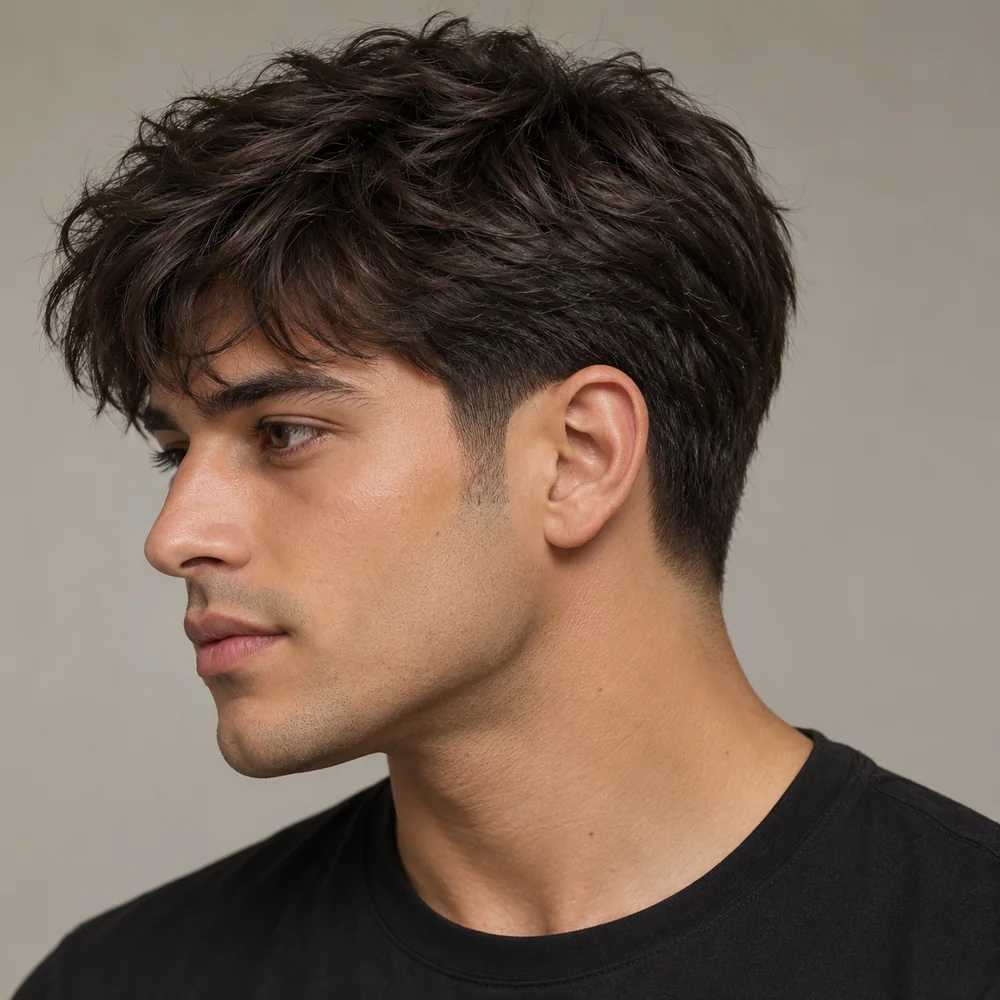
Low taper with textured fringe
The broken fringe brings attention forward while the sides retain weight. Ask for a short taper at the sideburn rather than a faded band above the ear.
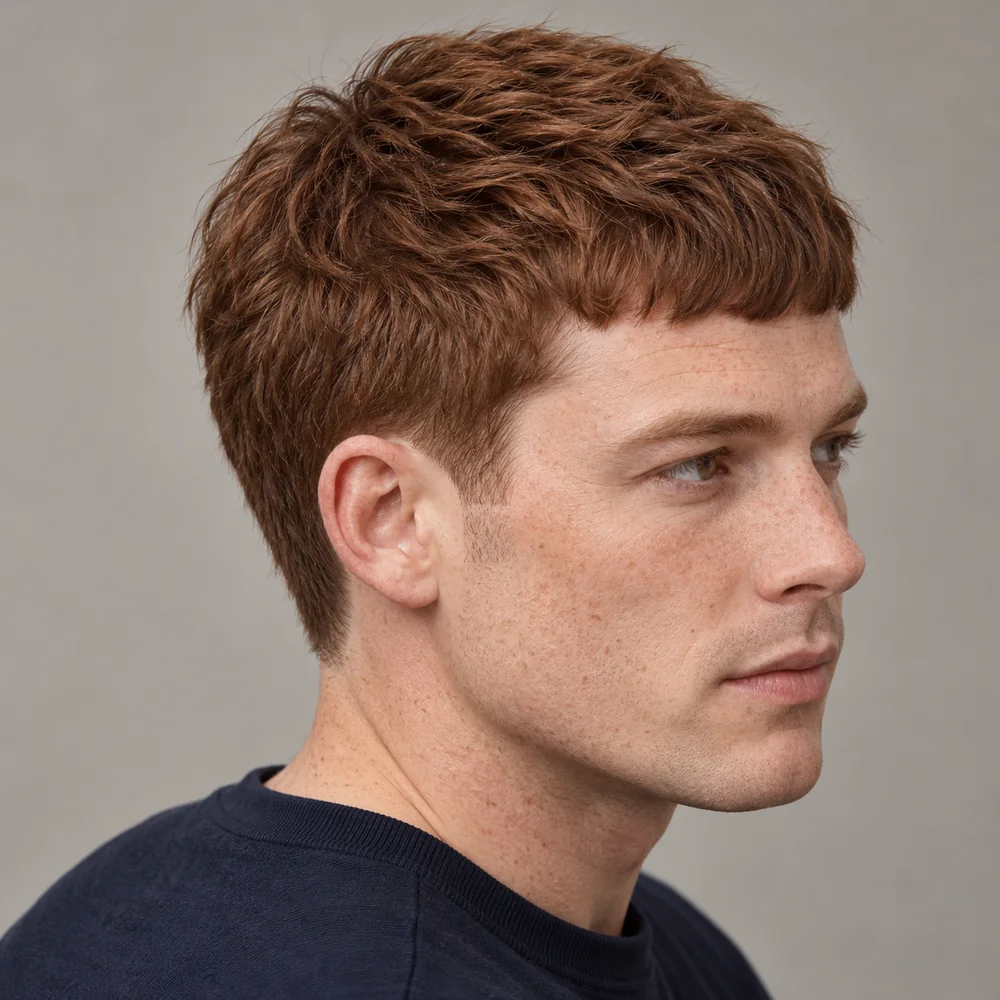
Low taper with a French crop
A short forward crop gives the fringe a more defined outline. Use this reference for the top shape, then agree separately how short the low perimeter blend should finish.
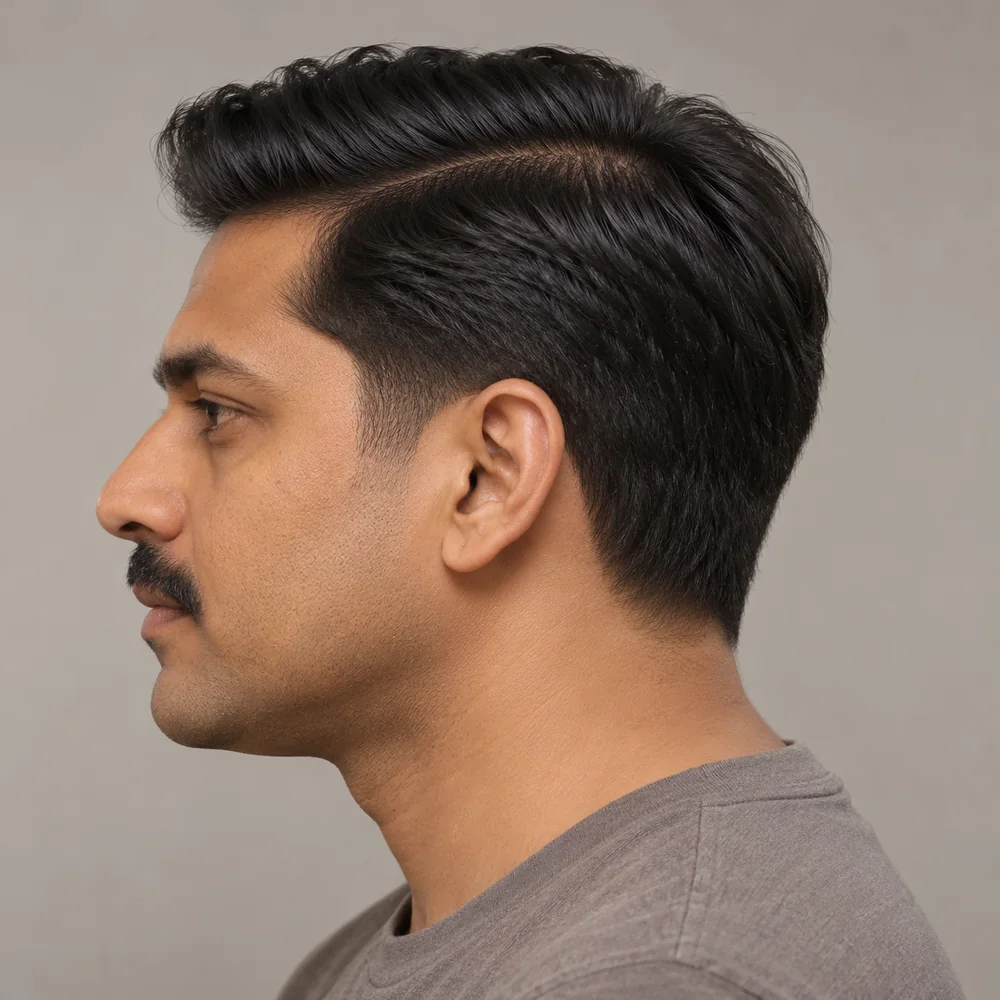
Low taper with a side part
The natural part directs the top to one side without a shaved parting line. Ask the barber to preserve the connected side coverage and keep the sideburn transition low.
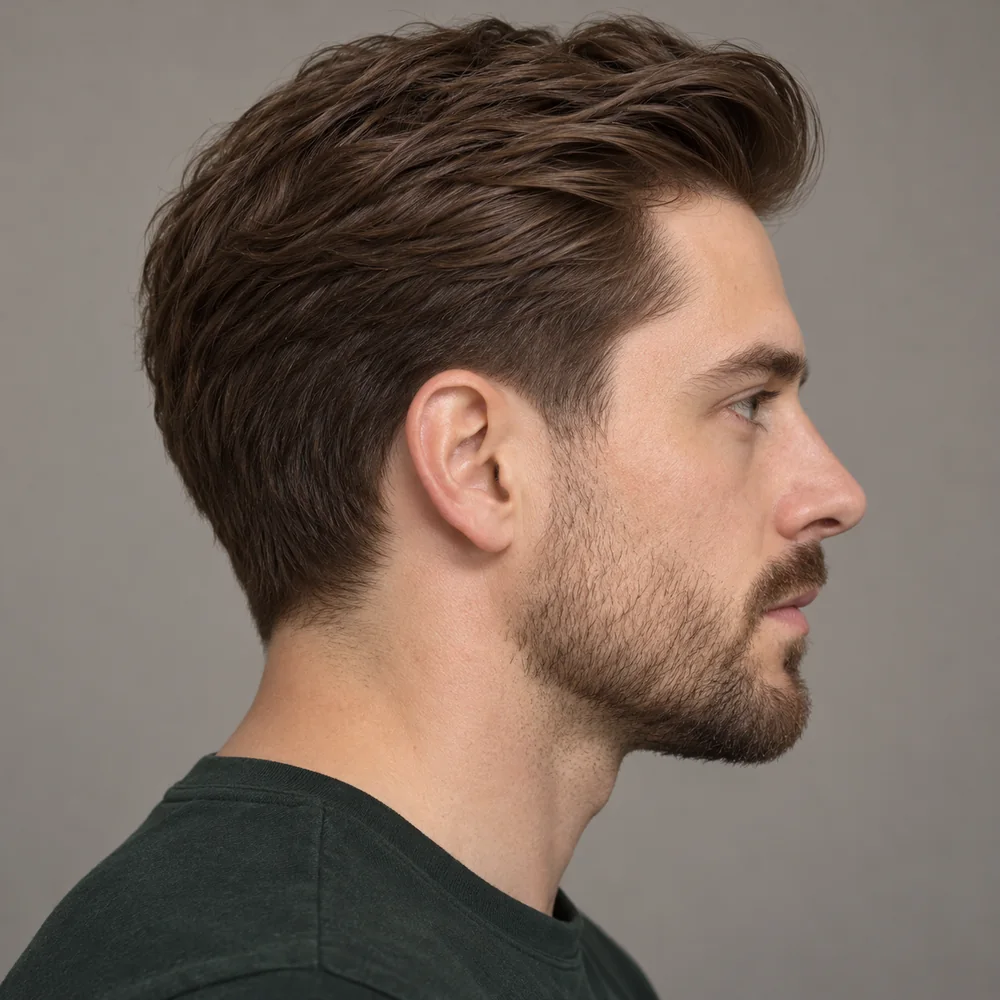
Low taper with brushed-back hair
Brushed-back strands create direction without a disconnected undercut. Discuss enough top length to sweep back while keeping hair around the ear, with a small sideburn taper.
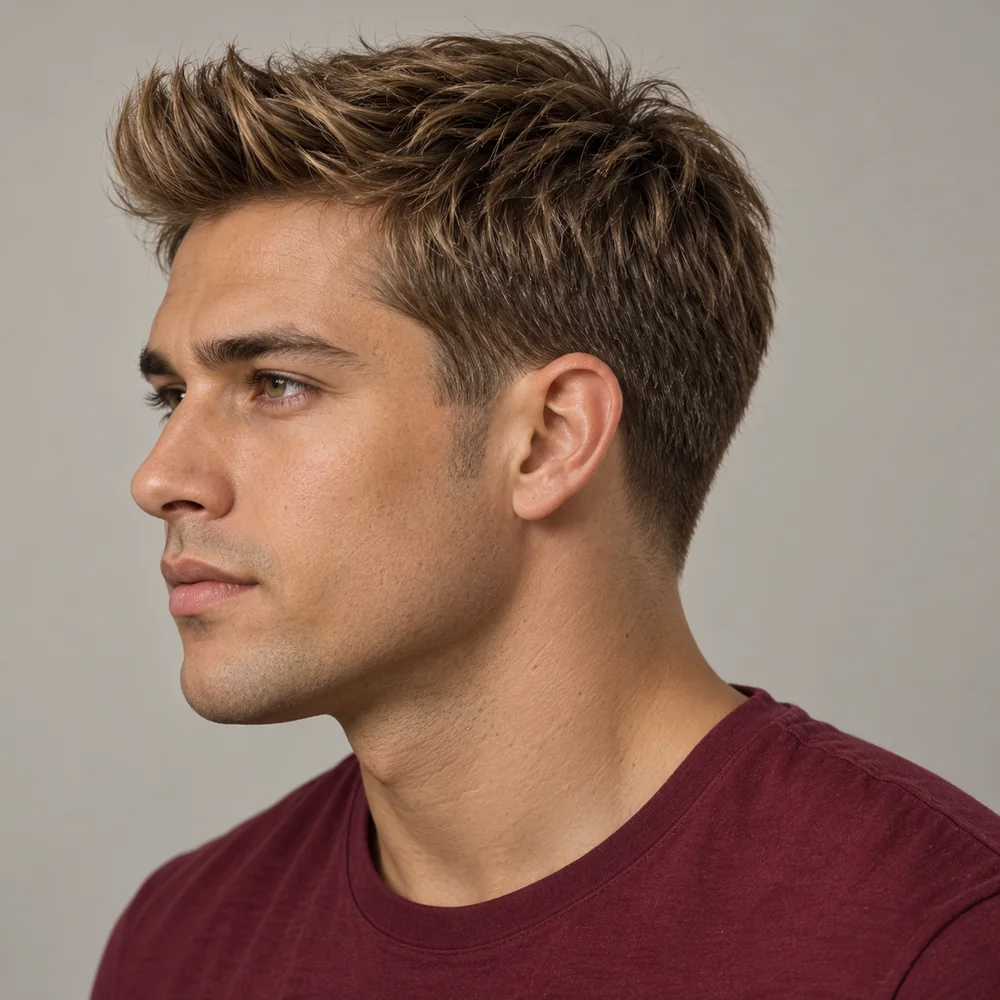
Low taper with a short quiff
The front lifts into a compact quiff rather than a tall pompadour. Show the modest front height and ask for retained side weight with a low, localized blend.
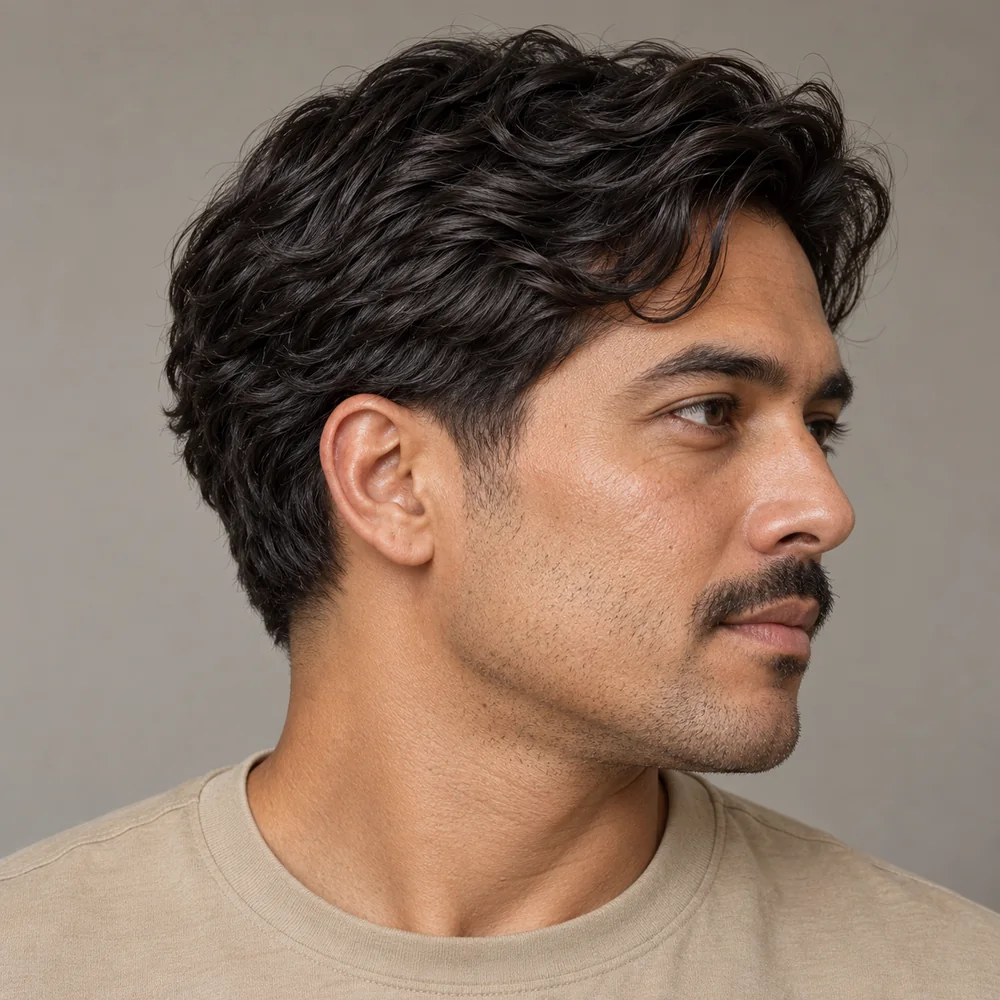
Low taper with a wavy sweep
Loose waves sweep sideways with a softer outline. Ask the barber to work with the wave pattern and preserve movement, keeping the shortest sideburn work close to the lower edge.
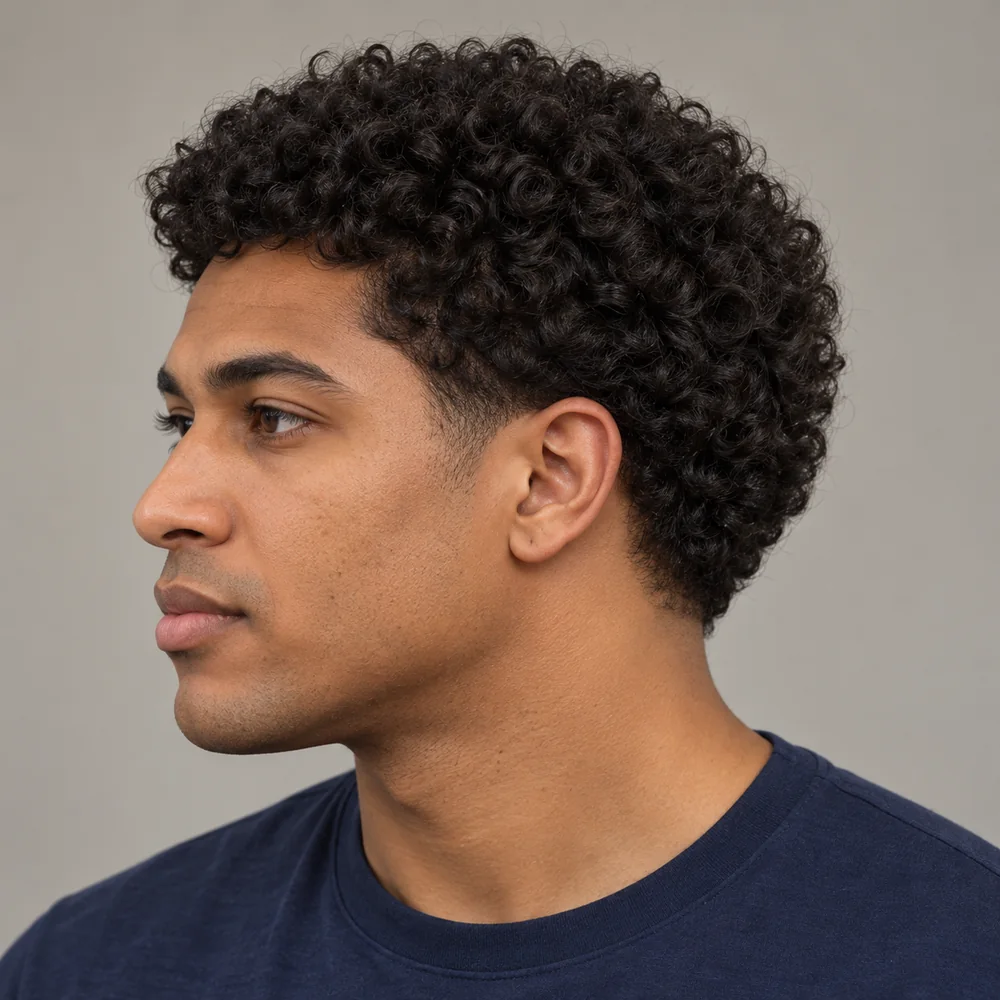
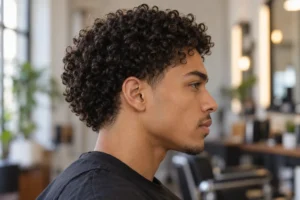
Low taper with a curly top
Springy curls retain volume above the ear while a small sideburn transition cleans the edge. Discuss curl shrinkage before choosing the dry top length and how much side density to retain.
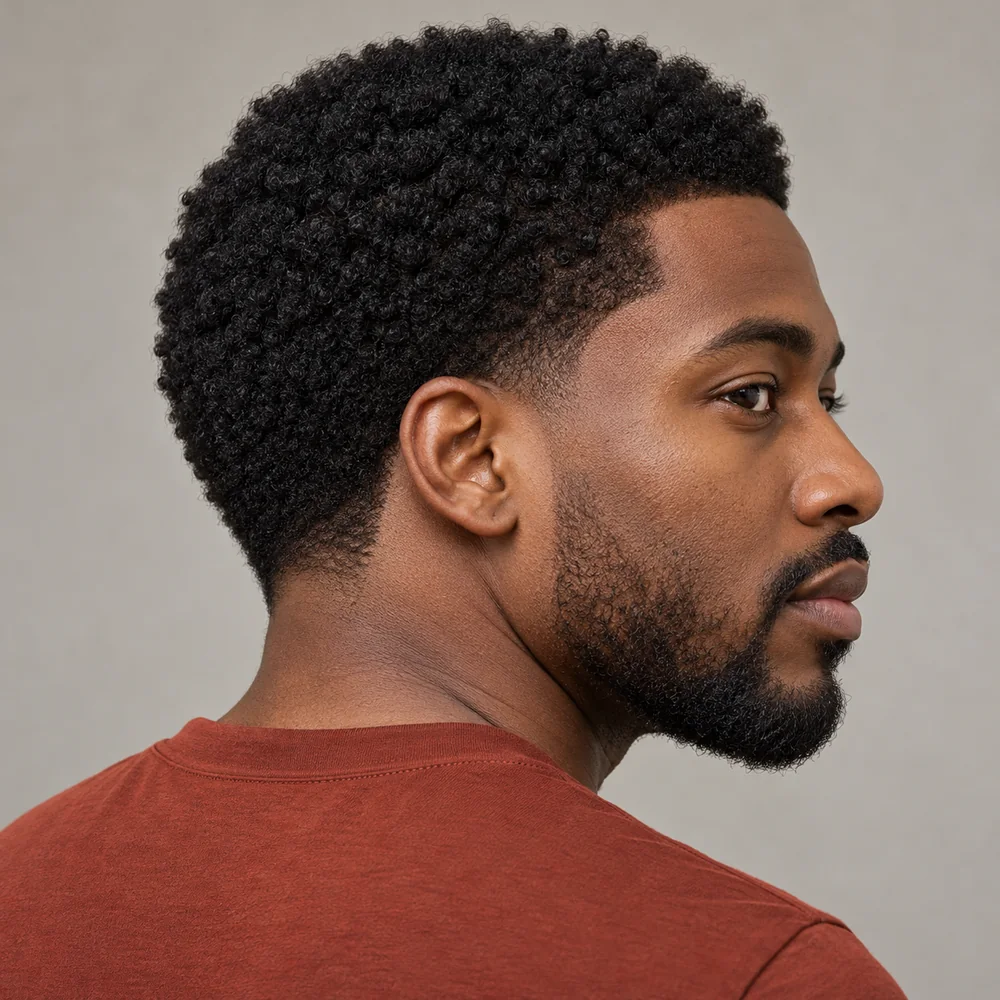
Low taper with a coily top
The compact coily top keeps a full silhouette through the upper sides. Ask for a localized perimeter taper and agree how much coil height to retain rather than requesting a broad fade.
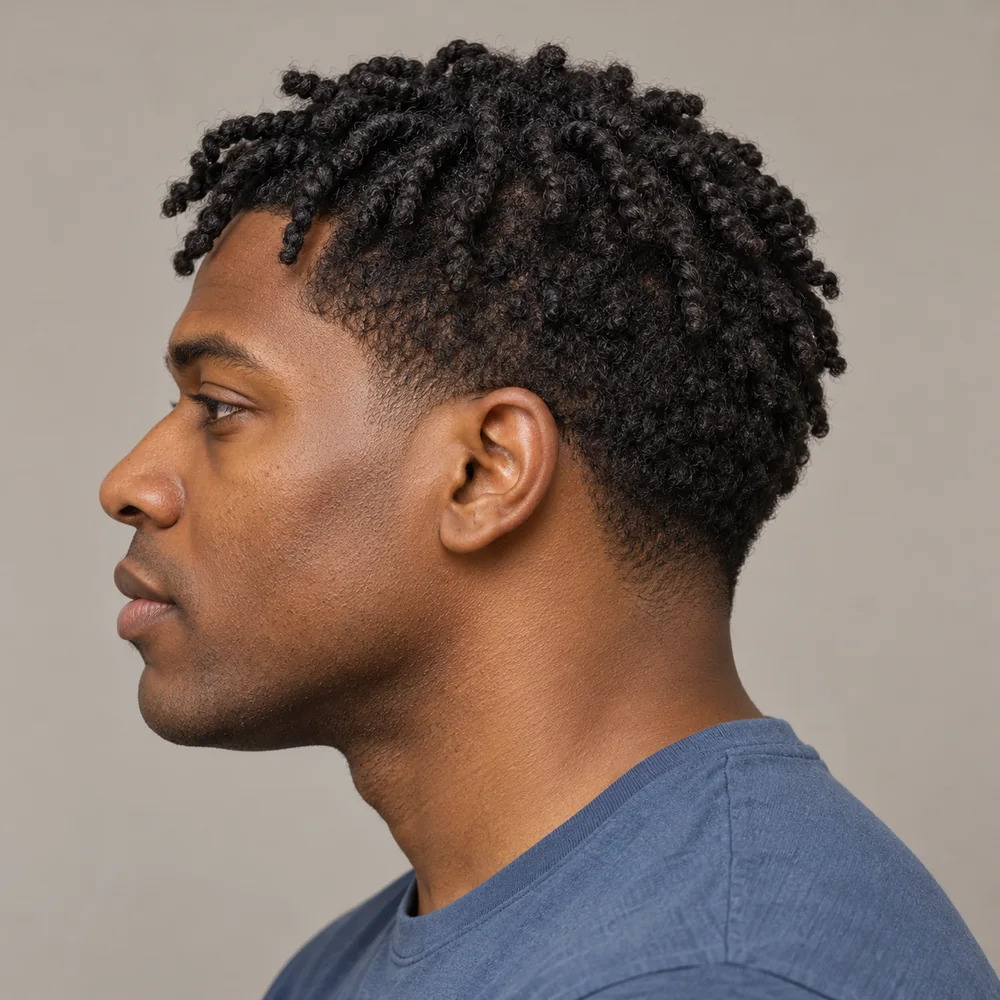
Low taper with short twists
Short twists give the top a distinct sectioned texture. Keep the surrounding coverage visible and discuss a small sideburn taper; twist length and the taper finish are separate choices.
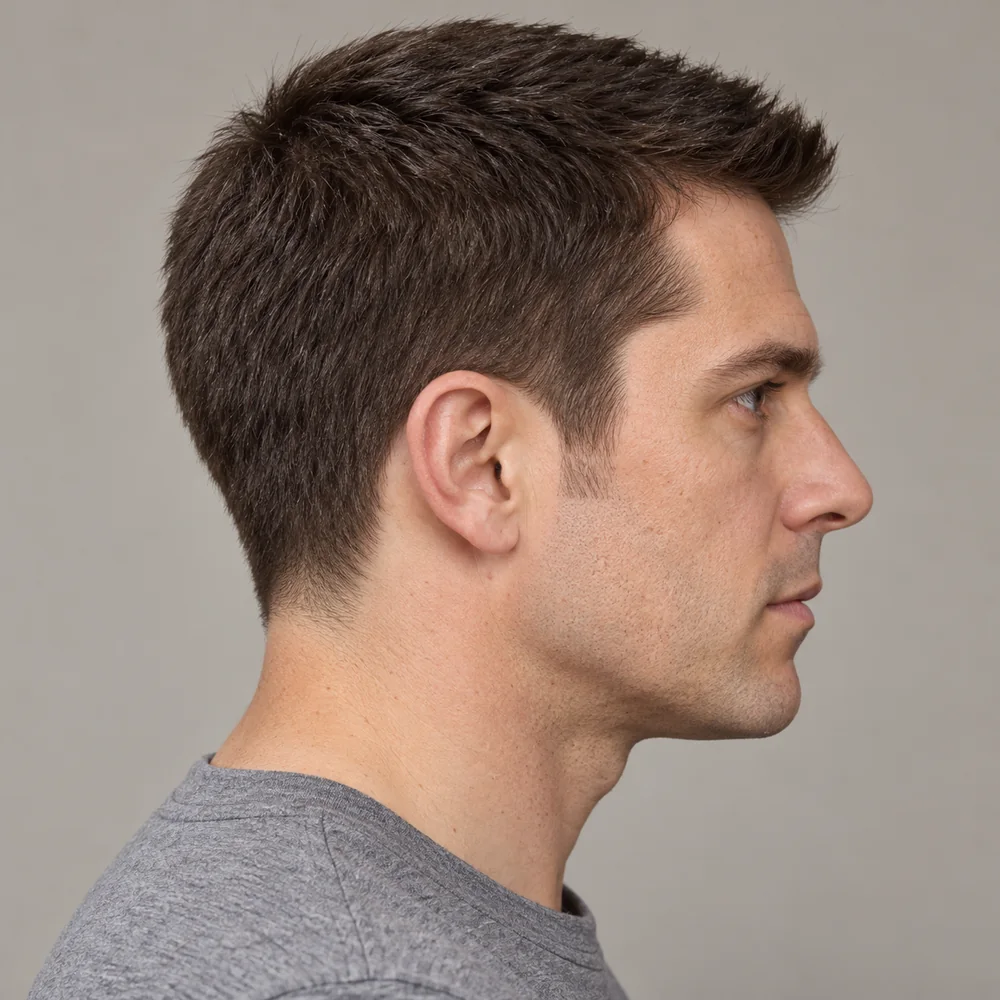
Low taper with a crew cut
A compact crew cut keeps the top short with slightly more length toward the front. Ask for a low perimeter blend while retaining enough short side hair to avoid a broad fade.
Visual disclosure: These ten references are original AI-generated editorial illustrations of fictional adults. They illustrate choices, not real clients, exact guard sizes or guaranteed results. Show a reference and discuss placement and finish with your barber.
Low taper fade references by texture and neckline
Compare the visible top shape, retained coverage and lower edge. Select an image to view it larger; these are separate fictional models, not matching views of one haircut.
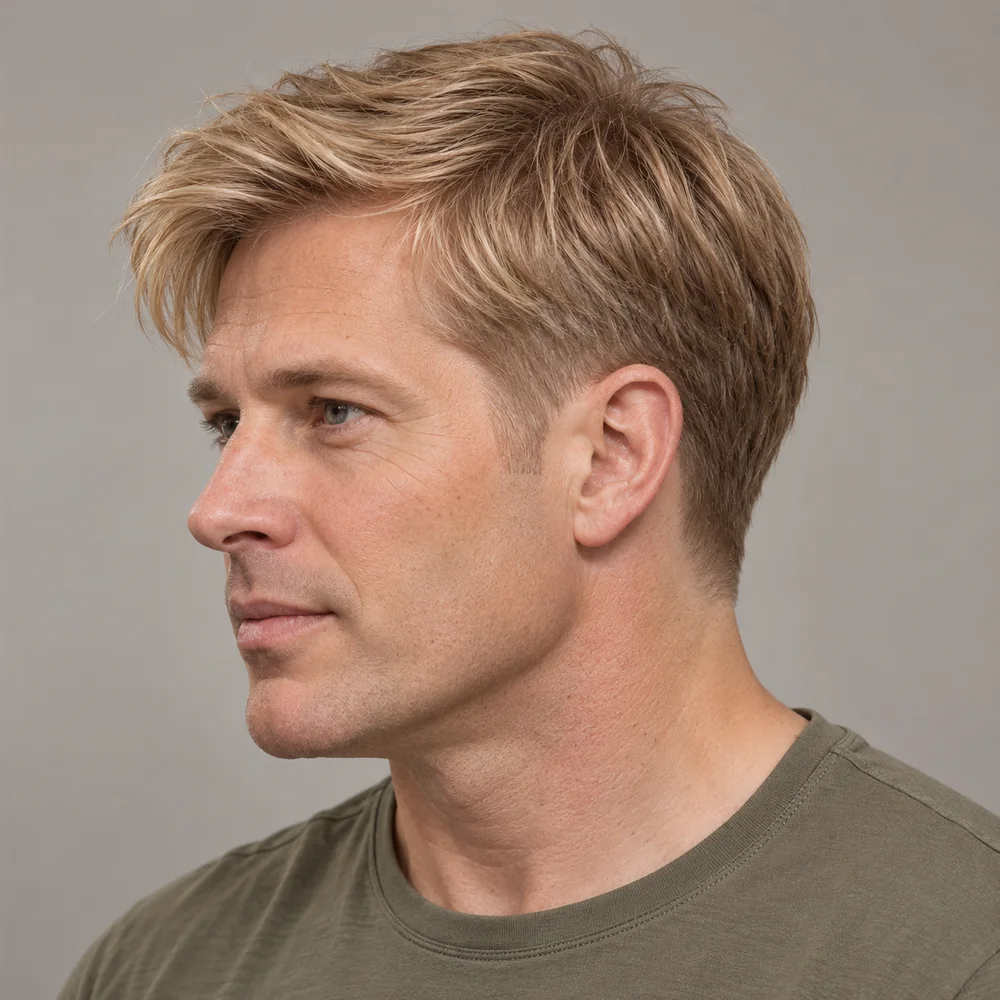
Fine straight hair with retained coverage
Fine straight strands are swept gently forward and sideways with coverage retained around the ear. Discuss the amount of weight to leave; this illustration does not promise thicker hair or concealment.
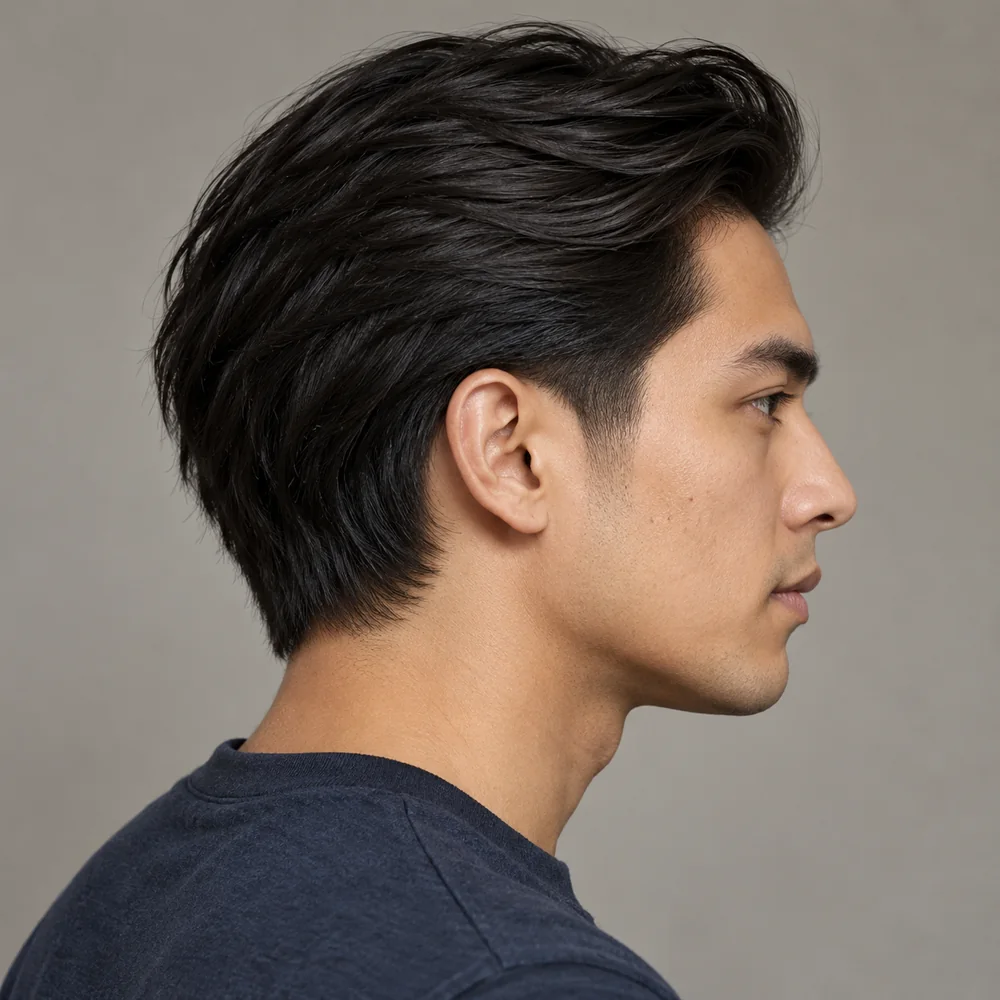
Longer straight top with a low taper
A longer straight top flows back into connected side coverage. Ask for movement and retained length around the ear, with only the lower sideburn edge tapered close.
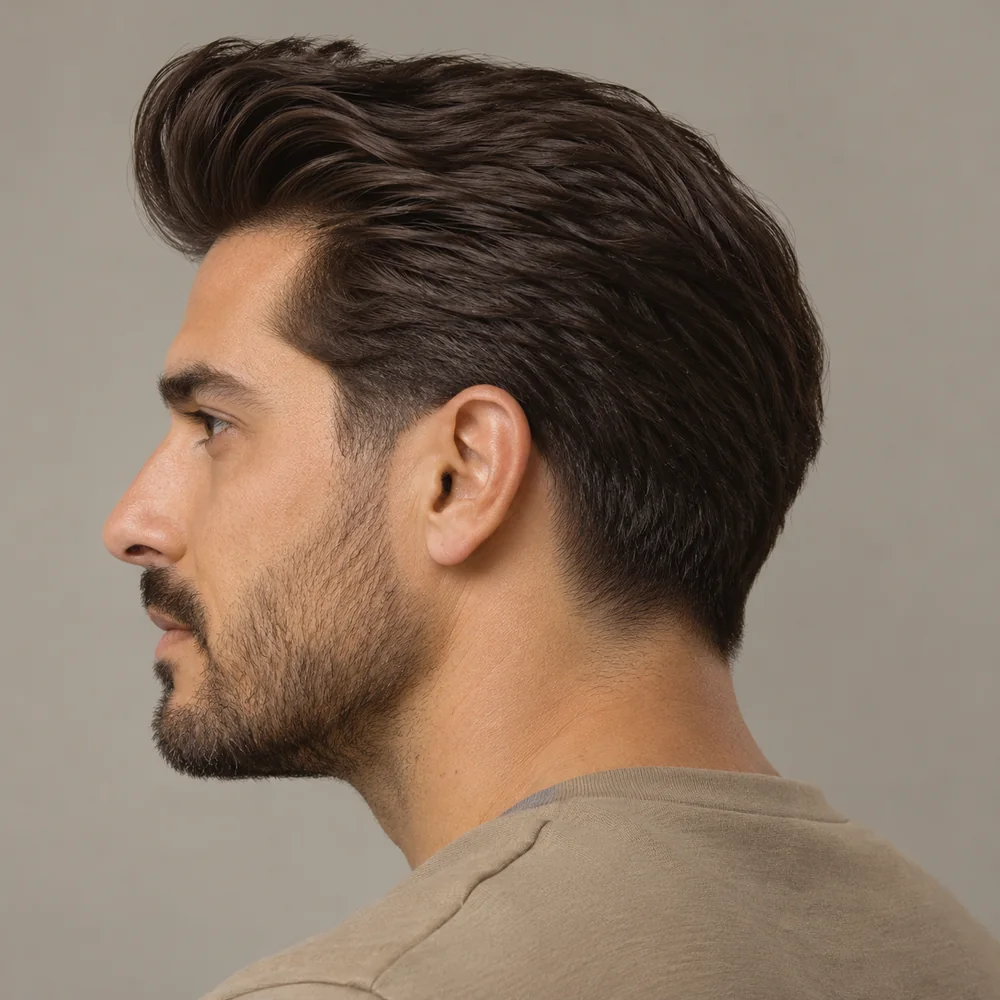
Low taper with a pompadour
The pompadour has a taller, swept-back front than the short quiff reference. Discuss the top length and styling effort separately from the small low sideburn taper.
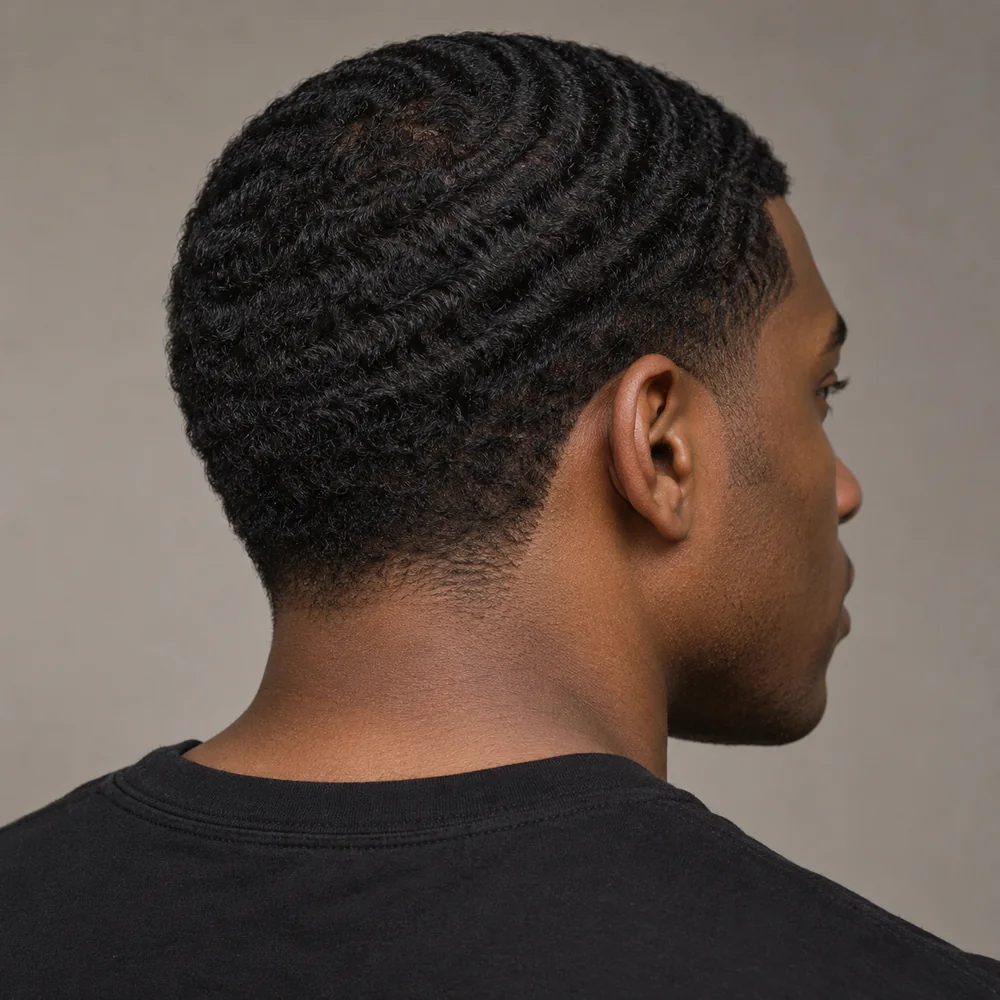
Short waves with a low taper
Short brushed waves maintain visible coverage across the back and side. Use the rear angle to discuss the low neckline transition without requesting a wide strip of exposed scalp.
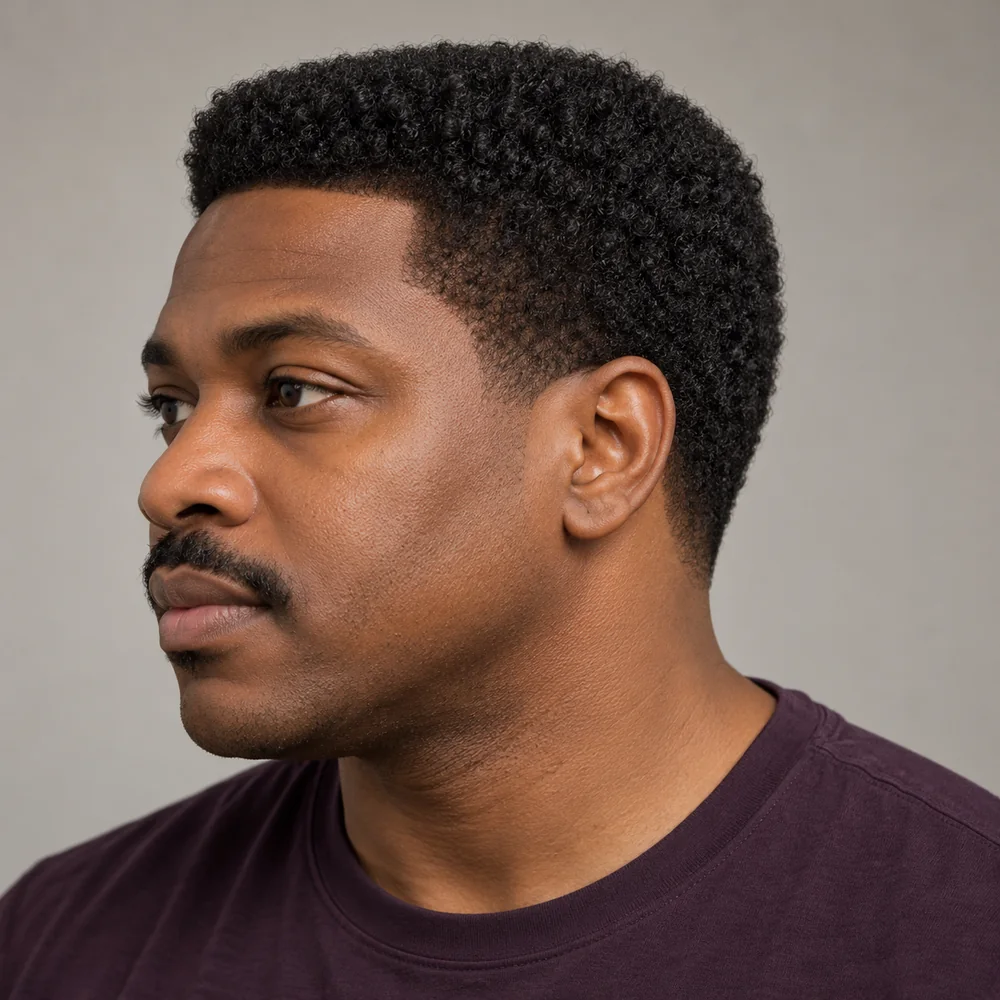
Coily flat top with a low taper
The coily top has a flatter upper outline with softened corners. Ask how much height and side density can be retained while keeping the perimeter blend localized.
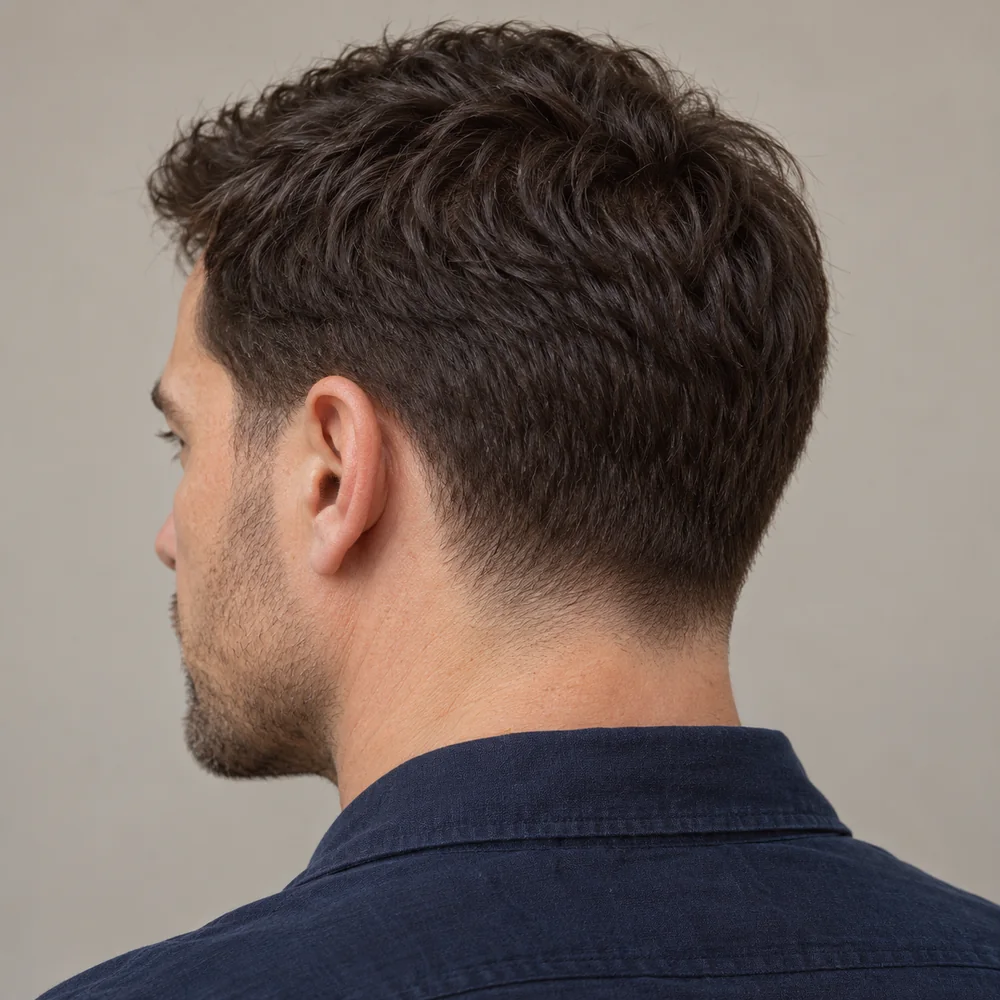
Low taper with a shadow nape
This rear angle shows hair shadow at the lower nape, with darker coverage above it. Ask for a soft low transition and explain how much visible hair you want at the bottom.
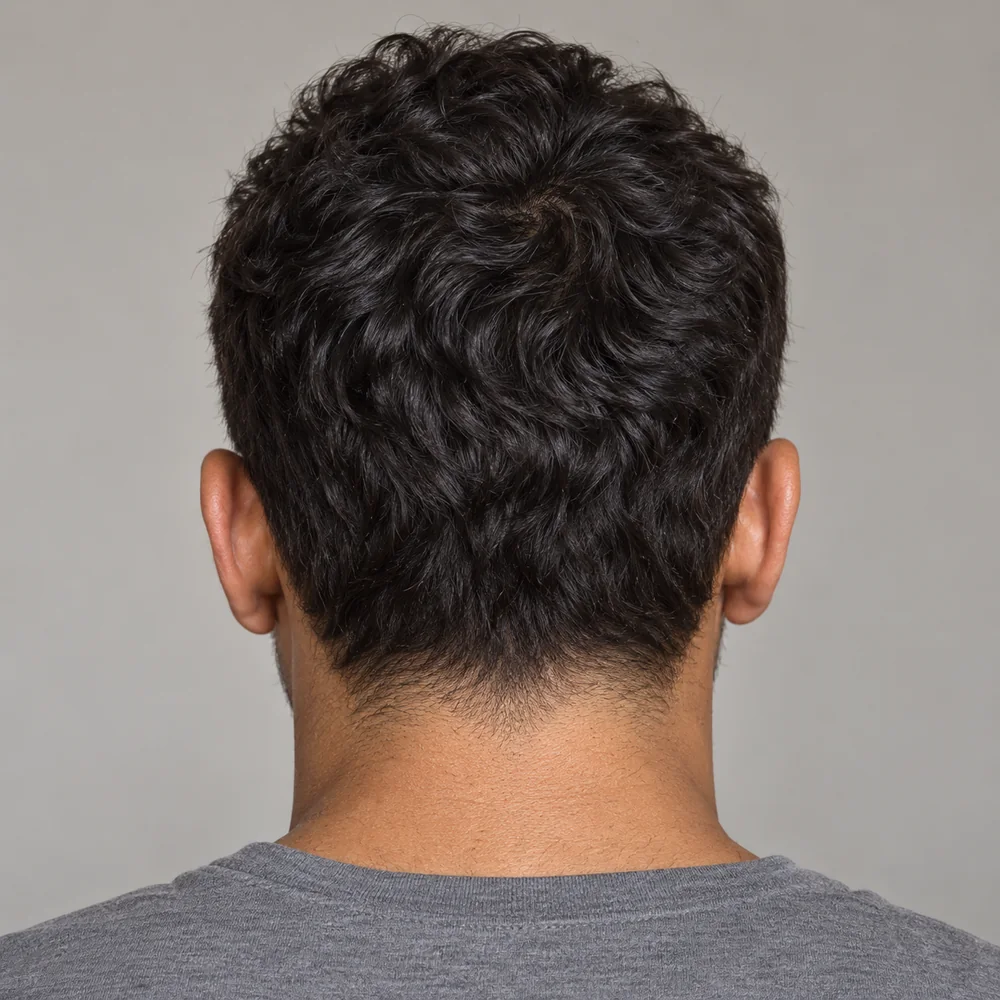
Low taper with a natural nape
The direct rear view shows a natural, softly shortened lower neckline. Discuss the outline and finish using a rear reference; do not rely on an exact guard number from a generated image.
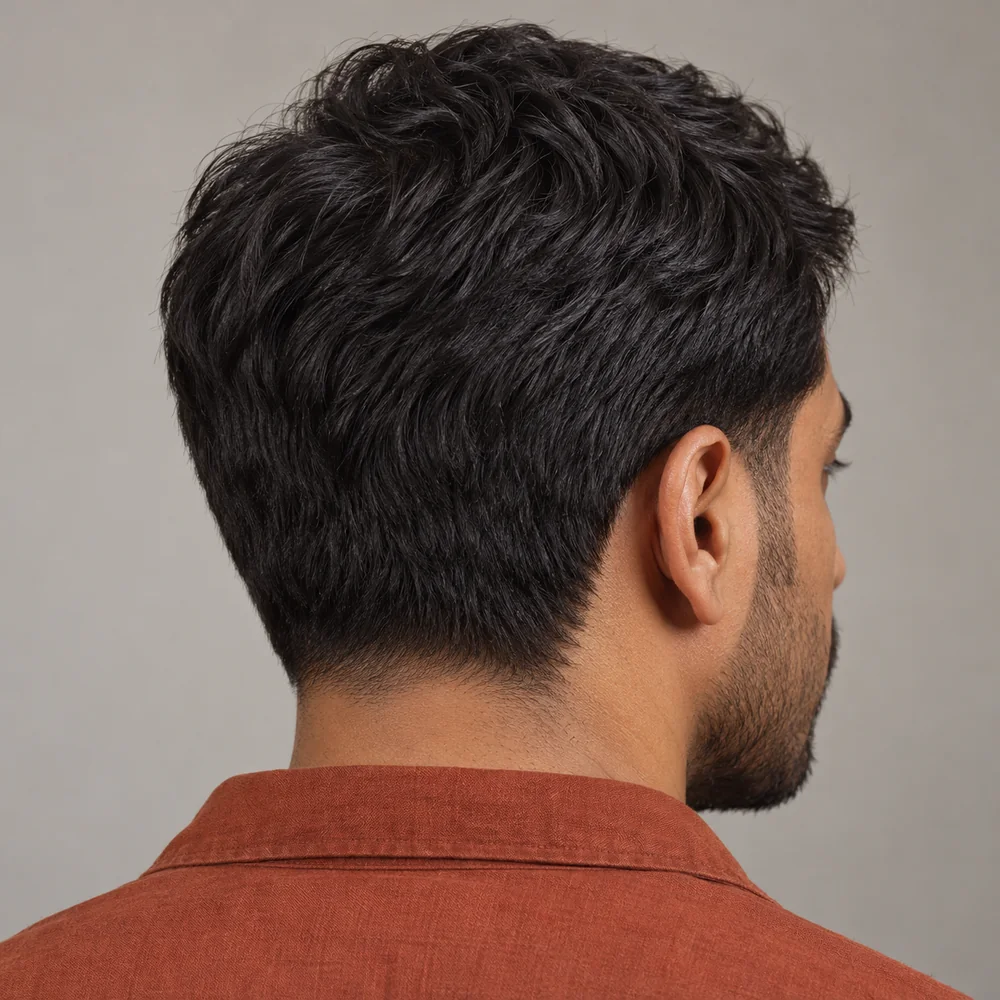
Full back with a soft low nape
Dense back coverage continues behind the ear into a softly tapered lower nape. Use this angle to show the weight you want retained above the neckline rather than asking for a broad rear fade.
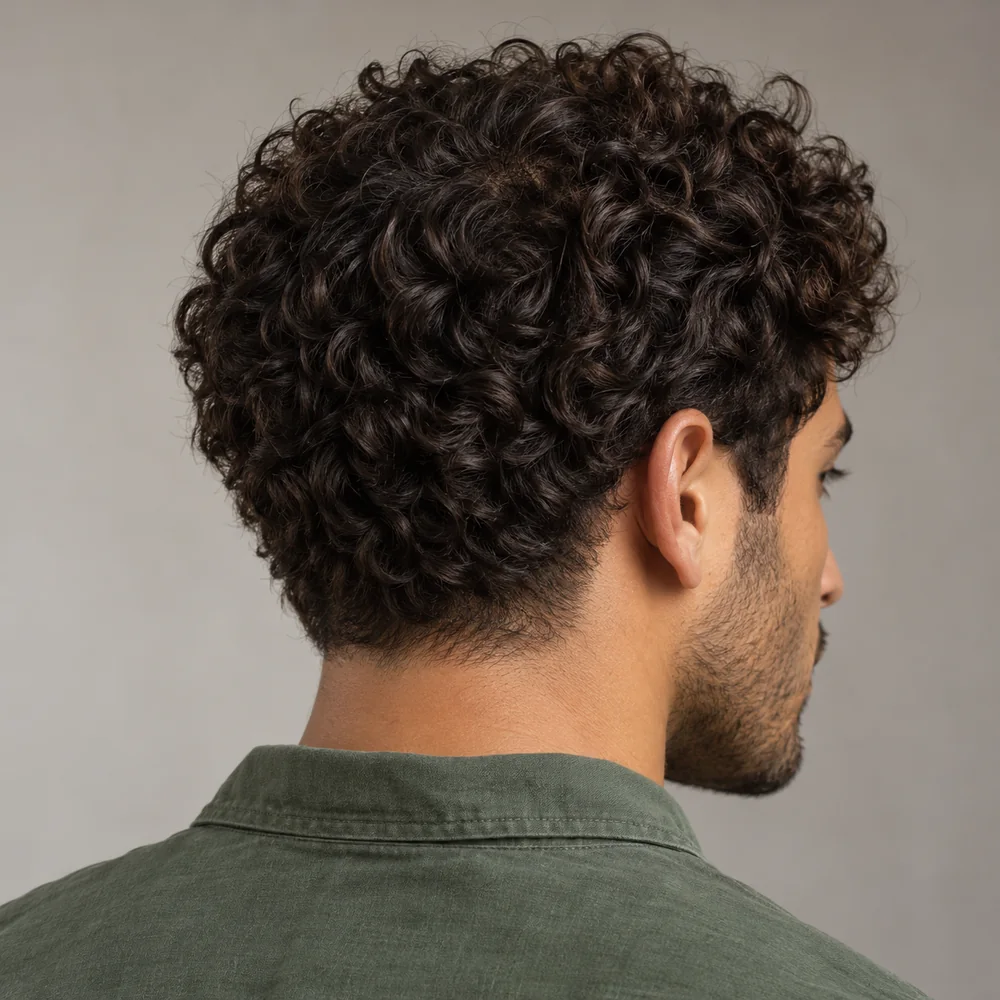
Curly low taper: rear coverage
Curls remain full across the rear silhouette while the lowest nape is shortened. Ask the barber to assess the dry curl shape and keep the taper below the fuller back section.
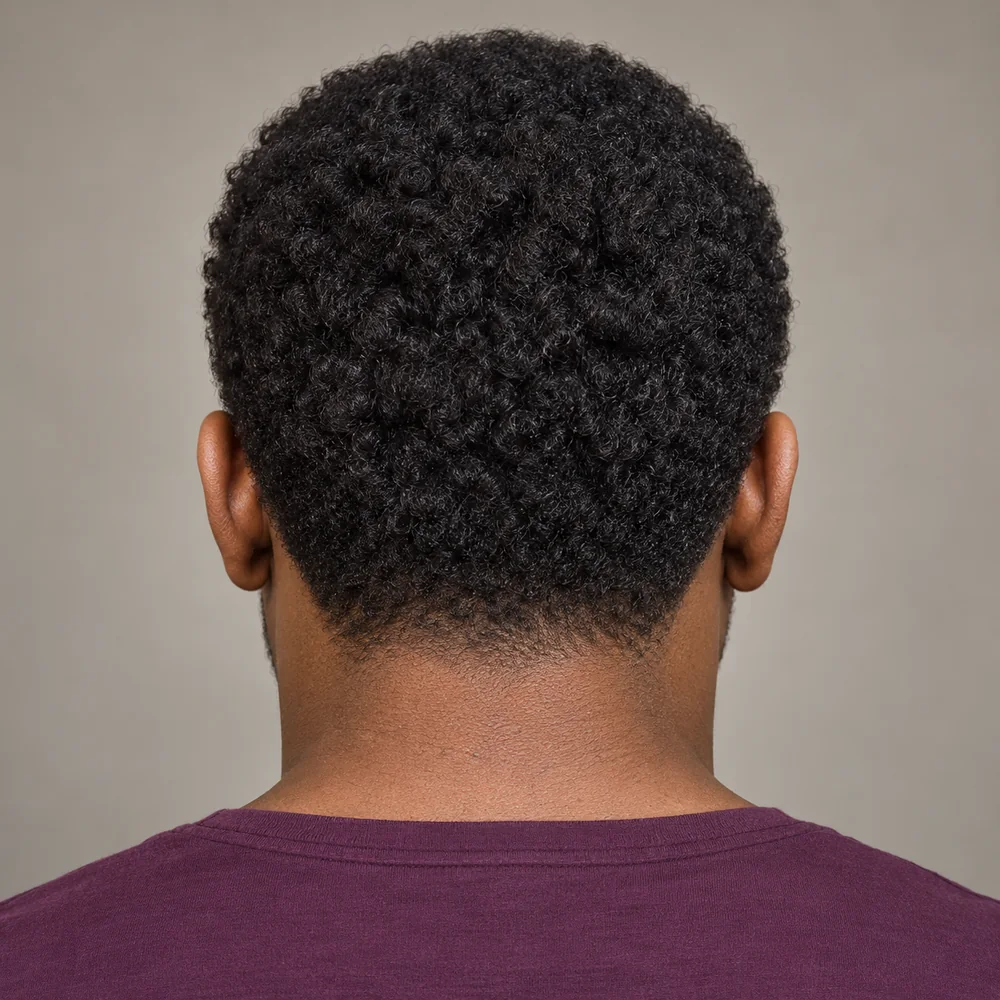
Coily low taper: rear coverage
Tight coils retain a rounded rear silhouette and coverage behind both ears. Discuss the low nape outline in addition to the sideburn blend, allowing for your own density and growth pattern.
Visual disclosure: These ten references are original AI-generated editorial illustrations of fictional adults. They illustrate choices, not real clients, exact guard sizes or guaranteed results. Show a reference and discuss placement and finish with your barber.

What “Low,” “Taper” and “Fade” Mean Here
Online definitions conflict because shops use these words differently. On Burst & Taper we use a practical communication model:
- Low: the visible short-to-long graduation stays close to the lower hairline.
- Taper: the shortening is concentrated around perimeter zones—most commonly the sideburn/temple and neckline—rather than stripping a broad side panel.
- Fade: the lengths are blended so the transition reads smoothly rather than as obvious clipper steps.
Modern Barber’s taper-vs-fade demonstration similarly emphasizes that a low taper keeps more scalp coverage and more hair around the ears than a fuller fade. GQ’s 2026 fade guide also stresses that fade placement and client preference matter more than one rigid recipe.
Low Taper Fade vs Low Fade vs Mid Taper
| Cut | Where the shortest work sits | How much side weight stays | Typical visual effect |
|---|---|---|---|
| Low taper fade | Localized sideburn/temple + nape | Most | Clean perimeter, softer overall contrast |
| Low fade | Broader lower side/back band | More than mid/high, less than a localized taper | Visible fade around more of the head |
| Mid taper | Localized zones but set higher/stronger | Still relatively full | More visible edge contrast |
If the height decision is your main question, compare our mid taper vs low taper guide. If you’re deciding between localized and full-side blending, see burst fade vs taper fade for a visual explanation of placement.
Shadow, Zero or Skin? Finish Is a Separate Choice
“Low taper fade” does not tell the barber how short the very bottom should be. Choose that separately:
- Shadow: visible short hair remains; softest grow-out.
- Zero: very tight clipper finish without assuming a foil-shaved base.
- Skin: bare skin at the lowest point; strongest contrast and most visible regrowth.
This distinction is important because some competitors incorrectly define every taper as “never skin” while others define every fade as “must be skin.” Real shop vocabulary is less consistent. State the finish you want.
Which Top Styles Work With a Low Taper?
Because the cut preserves side weight, it pairs with a wide range of tops instead of dictating one silhouette.
- Textured fringe or French crop: keeps the front casual while the perimeter stays clean.
- Edgar: lets the graphic fringe remain the focus without taking the sides too high.
- Side part or slick back: retained upper-side weight helps the top connect naturally.
- Curls and coils: useful when you want edge definition without removing too much side density.
- Waves: a localized taper can clean the edges while preserving more of an established wave pattern.
- Pompadour or quiff: the fuller sides can support a less disconnected transition into height on top.
How It Changes by Hair Texture
Straight hair makes the blend line easy to see, so poor transitions show quickly. Wavy hair can hide tiny blending imperfections but may expand above the taper if the weight line is not managed. Curly/coily hair often benefits from the retained side volume; the barber should account for shrinkage before deciding how much to remove.
If density is very high, see our thick-hair taper guide. For wavy texture, compare mid taper fade for wavy hair.
What to Tell Your Barber
“I want a low taper fade, localized at the sideburn/temple and the nape. Keep the hair around and behind the ear fuller and don’t turn it into a full low fade. Finish the shortest point at [shadow / zero / skin], and keep the top [describe or show photo].”
That wording is more reliable than saying “low taper” alone because it defines both where and how short.
Maintenance: Choose Crispness, Not a Mandatory Calendar
A low taper often grows out more softly than a high skin fade because more surrounding weight is retained, but there is no universal three- or four-week rule. A skin finish and sharp edge-up will look softer sooner than a shadow finish. Hair-growth rate, neckline detail and personal preference determine when you actually need another appointment.
Why “Low Taper Fade” Became a Huge Internet Phrase
The haircut existed long before the meme, but the phrase became unusually recognizable online in 2024 after musician ericdoa improvised “Imagine if Ninja got a low taper fade” during a livestream. The Daily Dot documented how the audio spread on TikTok, how streamer Ninja later got the haircut, and how the joke evolved into the “meme is still massive” copypasta. That cultural moment helps explain why the wording became familiar far beyond barbershop circles; it does not change the haircut’s technical definition.
Common Low Taper Mistakes
- The blend rises into a full low fade even though you wanted only the perimeter cleaned.
- The barber assumes “skin” or “never skin” without confirming your shortest finish.
- The taper removes too much weight above the ear and disconnects a longer top unexpectedly.
- A lineup is pushed backward instead of respecting the natural hairline.
- You choose from a face-shape chart instead of matching a reference to your actual texture and top length.
Sources and Further Reading
- Modern Barber — professional taper vs fade demonstration
- GQ — 2026 fade haircut guide with barber input
- The Daily Dot — documented origin and spread of the 2024 low taper fade meme
Frequently Asked Questions
What is a low taper fade?
It is a low, localized blend concentrated near perimeter zones such as the sideburn/temple and nape, preserving more side weight than a fuller low fade.
Is a low taper the same as a low fade?
Not necessarily. In the terminology used here, a low taper is more localized while a low fade changes a broader lower section of the sides/back. Barbershop vocabulary varies, so describe the placement you want.
Does a low taper fade have to go to skin?
No. Ask for a shadow, zero or skin finish separately. The placement and shortest length are different decisions.
How often should a low taper be cut?
There is no required interval. Very crisp skin/zero finishes show regrowth sooner; softer shadow finishes and natural edges can be left longer.
What should I say so the barber keeps it low?
Ask for the shortest graduation to stay localized at the sideburn/temple and nape, with the hair around and behind the ear kept fuller. Show a side and rear reference if possible.
 Low Taper Fade for Black Men: Styles, Line-Ups and What to Ask For
 Low Taper Fade with Textured Fringe: Styles, Barber Script and Styling
 Taper Fade for Curly Hair: Low, Mid and Blowout Tapers by Curl Type
3 Comments