Mid Taper Fade for Wavy Hair: Barber Script & Styling Routine
On this page
- Wavy Hair With a Mid Taper: Front, Side and Rear
- Why Wavy Hair Pairs Well with a Mid Taper
- Mid Taper vs Mid Fade on Wavy Hair
- Where Wavy Hair Usually Goes Wrong
- Barber Script: Use This in the Chair
- Simple Morning Routine for Wavy Hair
- Three Top Styles That Work
- How Often Should You Refresh It?
- Styling Reference
A mid taper fade for wavy hair should make the perimeter cleaner without flattening the movement that makes wavy hair useful in the first place. The key is to keep the taper localized around the temple/sideburn and nape, preserve enough weight above it, and shape the top so the waves move in a deliberate direction instead of expanding into a triangle.
If your waves are closer to curls, see the taper fade for curly hair.
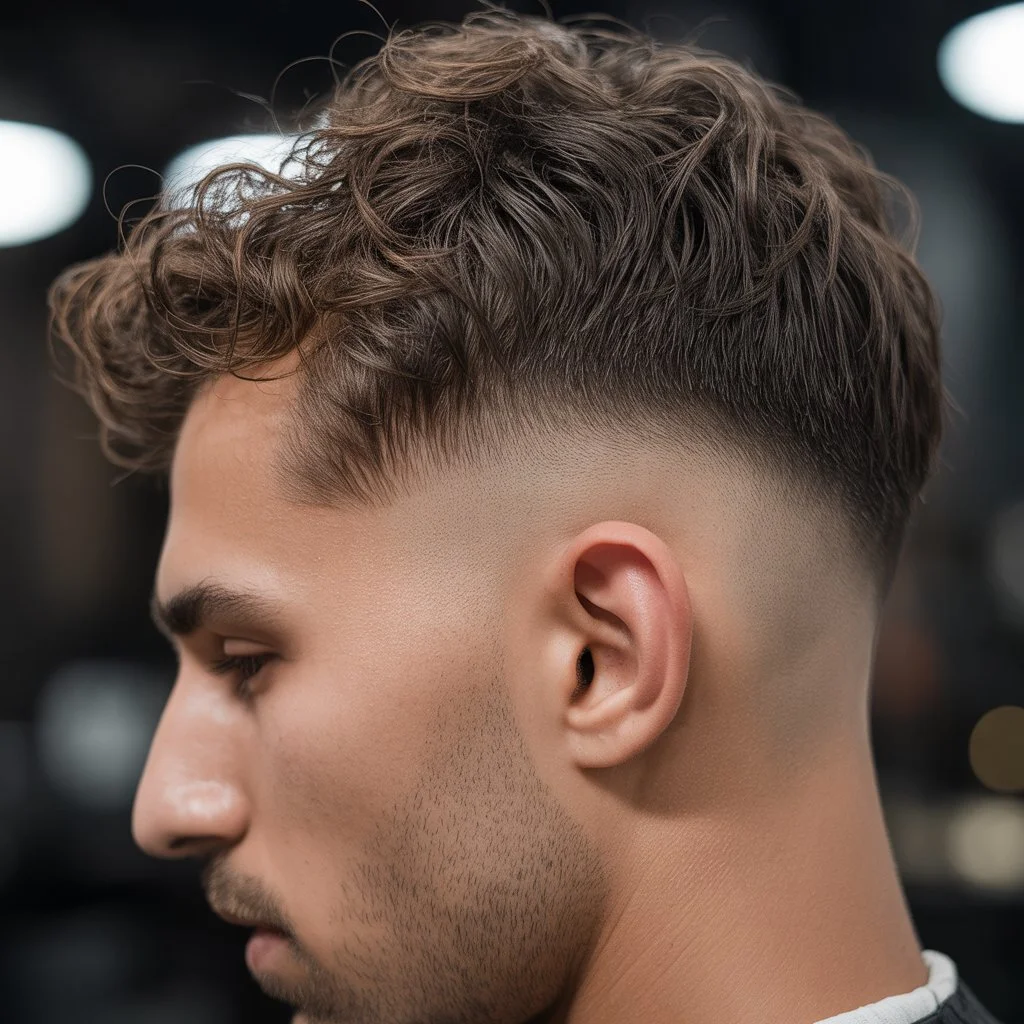
What to ask for: “Keep my natural wave on top, clean the temple/sideburn and nape with a mid taper, and remove only the bulk that makes the sides push out. Do not take the fade high into the upper sides.”
Wavy Hair With a Mid Taper: Front, Side and Rear
These views show how a localized taper can clean the edges without removing the natural wave pattern or all of the side weight.


Why Wavy Hair Pairs Well with a Mid Taper
Wavy hair already provides texture and movement. A high or aggressive fade can create more contrast than you want, especially if the top is long. A taper gives the haircut a clean outline while retaining the darker side weight that helps waves connect into the top. It is a useful choice when you want a visible cleanup without turning the entire side and back into a full fade.
Mid Taper vs Mid Fade on Wavy Hair
The names are often used loosely, so show your barber a reference. In this guide, a mid taper means a localized blend around the temple/sideburn and neckline. A mid fade means the fade travels through a much larger part of the sides and back. If you want to keep width and flow through the upper sides, the taper is usually the safer request.
Where Wavy Hair Usually Goes Wrong
1. Too much bulk above the taper
If the barber creates a tight taper but leaves an abrupt shelf of dense hair directly above it, the side can mushroom as soon as it grows. The fix is not automatically a higher fade; it is a smoother transition and selective weight removal where the hair actually pushes out.
2. Cutting the wave too short
Natural S-shaped movement needs enough length to form. If the top is cut below the point where your wave develops, it may look straight, fuzzy, or uneven until it grows back.
3. Heavy product on damp waves
Dense wax or excessive pomade can bind the wave pattern into heavy clumps. Start light and add control only where needed.
Barber Script: Use This in the Chair
“I want a mid taper around the temple/sideburn and nape, not a full mid fade. Keep enough weight through the upper sides so it blends into my waves. On top, keep the length that forms my wave pattern and point-cut or shape only where it needs movement. I want a natural finish, not a hard shelf above the taper.”
If one side of your hair grows differently, tell the barber before the cut. Wavy hair often has stronger direction changes around the crown and front hairline, and symmetry in length does not always produce symmetry in appearance.
Simple Morning Routine for Wavy Hair
- Reset with moisture: lightly dampen the top instead of soaking it every morning.
- Add a light base: use a small amount of leave-in conditioner, curl/wave cream, or light styling foam if your hair needs control.
- Choose the direction: push waves forward for a textured fringe, back for flow, or slightly upward for a loose quiff.
- Dry without crushing: air-dry or use a diffuser/low-airflow approach if your waves become frizzy under aggressive heat.
- Finish sparingly: a tiny amount of matte paste can add separation after the hair is mostly dry.
Three Top Styles That Work
Textured fringe
Wear the top forward with separated ends and enough length at the front to create movement. See our mid taper with textured fringe guide for the cutting and styling details.
Natural flow
Keep more length through the top and guide the waves backward or diagonally. This is the lowest-product option when your natural pattern already falls in the direction you like.
Loose quiff
Dry the front upward and slightly back, but keep the surface textured rather than trying to straighten every wave.
How Often Should You Refresh It?
There is no single schedule for everyone. A very short taper around the temple and nape may look noticeably softer after a couple of weeks, while the wavy top can often go longer between major reshaping cuts. If you like a less “freshly faded” look, let the taper grow and refresh it when the outline starts to feel untidy rather than following a rigid calendar.
If your main problem is density rather than wave pattern, read mid taper for thick hair. For a bigger comparison of heights and fade shapes, use our fade haircut guide.
Styling Reference
Reuzel’s textured-crop guidance emphasizes building shape with towel-dried hair, directional blow-drying and a small amount of matte product rather than overworking the finish. See Reuzel’s textured crop styling guide for a professional product-and-technique reference.
Is a mid taper good for wavy hair?
Yes, especially when you want to clean the temple/sideburn and neckline while preserving the natural movement and weight of the waves above.
Should wavy hair be thinned for a taper?
Not automatically. Weight should be removed only where density is causing the shape to push out. Over-thinning can make some wave patterns frizzier or less controlled.
What product is best for a wavy mid taper?
Start with a light leave-in, wave/curl cream, foam, or small amount of matte paste depending on the finish you want. Avoid loading the hair with heavy product before you know how much hold it actually needs.
 Low Taper Fade for Black Men: Styles, Line-Ups and What to Ask For
 Low Taper Fade with Textured Fringe: Styles, Barber Script and Styling
 Taper Fade for Curly Hair: Low, Mid and Blowout Tapers by Curl Type