
Fade Haircuts for Men: 30+ Types of Fades, Styles & How to Choose
On this page
- In This Guide
- How Fade Haircut Names Actually Work
- Fade Haircuts at a Glance
- The 10 Core Types of Fade Haircuts
- 24 Popular Fade Haircut Combinations
- Which Fade Works With Your Hair Texture?
- Does Face Shape Decide Which Fade You Should Get?
- Fade vs Taper: What’s the Difference?
- Which Fade Is Easiest to Maintain?
- What to Tell Your Barber
- Common Fade Haircut Mistakes
- Still Not Sure Which Fade to Choose?
- Frequently Asked Questions
- How to Make Your Final Choice
- Continue Exploring
A fade haircut gradually changes from shorter hair into longer hair across the sides and back, but not every fade starts at the same height, finishes at the same length, or follows the same path. This guide compares the main fade haircuts for men, 24 popular style combinations, hair-texture options, maintenance, and the exact wording you can use with your barber.
New guides: taper fade, modern mullet, low taper with textured fringe and taper fade for curly hair. Also new: the low taper fade for Black men, the crew cut, the warrior cut and buzz cut guard sizes, plus the buzz cut fade, textured crop and Boosie fade.
If fade names are starting to blur together, use this page as a visual starting point. A low fade keeps the transition closer to the ears, a mid fade moves the blend higher, and a high fade removes more side weight. Skin and shadow describe how short the bottom becomes, while burst and drop describe the path the blend follows.
Quick answer: Choose a low fade or taper for a softer, more conservative result. Choose a mid fade for balanced contrast. A high fade creates stronger separation between the top and sides. A skin fade takes the shortest area to bare skin. Choose a drop fade when you want the blend to descend behind the ear, or a burst fade when you want the blend to curve around the ear while preserving a different rear silhouette.
How Fade Haircut Names Actually Work
One reason fade terminology becomes confusing is that several different choices can be combined in a single haircut. Instead of treating every name as a completely separate style, break the request into four variables.
1. Fade Height
Fade height describes where the visible short-to-long transition sits on the side of the head.
- Low fade: keeps the transition close to the lower sides and ears.
- Mid fade: moves the transition through the middle portion of the side profile.
- High fade: starts the transition farther up the sides and removes more visible side weight.
2. Shortest Length
A fade does not automatically mean bare skin. The shortest area can retain a visible shadow, finish around clipper-zero, or go completely to skin. This is why a phrase such as mid skin fade provides two useful pieces of information: its height and its shortest finish.
3. Fade Path
Some fades are identified by the direction in which the blend travels. A drop fade descends behind the ear as it moves around the head. A burst fade forms a curved or semicircular transition around the ear and commonly preserves more length toward the rear.
4. Haircut on Top
The fade describes only part of the finished haircut. A textured crop, French crop, buzz cut, quiff, pompadour, curls, afro, braids or mullet can all sit above different fade placements. Two clients can therefore request a mid fade and leave the chair with completely different hairstyles.
Terminology note: haircut terminology is not perfectly standardized between every barber and shop. Explain the placement, shortest length and rear shape you want, and bring a reference photo whenever possible. For another expert-sourced overview of modern fade terminology, see GQ’s guide to fade haircuts.
Fade Haircuts at a Glance
| Fade type | Main placement | Typical contrast | Side/back weight | Common pairings |
|---|---|---|---|---|
| Low fade | Lower sides, close to ears | Subtle to moderate | More retained | Crop, side part, waves, curls |
| Mid fade | Middle of the side profile | Moderate | Balanced | Quiff, crop, curls, crew cut |
| High fade | Higher on the sides | Strong | Less retained | Buzz cut, crop, pompadour |
| Skin fade | Any fade height, finished at skin | Strongest at base | Depends on height | Buzz cut, crop, short textured top |
| Shadow fade | Visible short hair remains at base | Softer | More visual density | Curls, waves, classic styles |
| Drop fade | Drops lower behind the ear | Moderate to strong | Shape-dependent | Curls, afro, textured top |
| Burst fade | Curves around the ear | Moderate to bold | Often more retained at rear | Mullet, faux hawk, mohawk |
| Temple fade | Localized around temples/sideburns | Subtle to moderate | Mostly retained | Afro, curls, beard blend |
| Taper | Localized around perimeter | Subtle | Most retained | Side part, curls, classic cuts |
| Zero fade | Shortest area finished around clipper-zero | Crisp | Depends on height | Short crop, crew cut |

The 10 Core Types of Fade Haircuts
1. Low Fade
A low fade keeps the shortest transition close to the lower sides of the haircut. Because more hair remains above the ears, it generally creates less contrast than a mid or high fade.
It is a useful starting point when you want the haircut to look cleaner and more defined without removing too much side weight.

Low Fade Quick Facts
- Contrast: subtle to moderate
- Side weight: relatively full
- Works with: crops, side parts, waves, curls and longer tops
- Barber wording: “Keep the fade low around the sides and preserve the weight above it.”
2. Mid Fade
A mid fade moves the blend higher through the side profile, creating more visible separation between the shorter sides and longer hair above. It sits between the understated character of a low fade and the stronger exposure of a high fade.

Mid Fade Quick Facts
- Contrast: moderate
- Side weight: balanced
- Works with: textured crops, quiffs, curls, crew cuts and pompadours
- Barber wording: “I want the fade through the middle of the side profile rather than very low or very high.”
If you like this amount of contrast but want to preserve more of the full sides, compare our mid taper vs low taper guide.
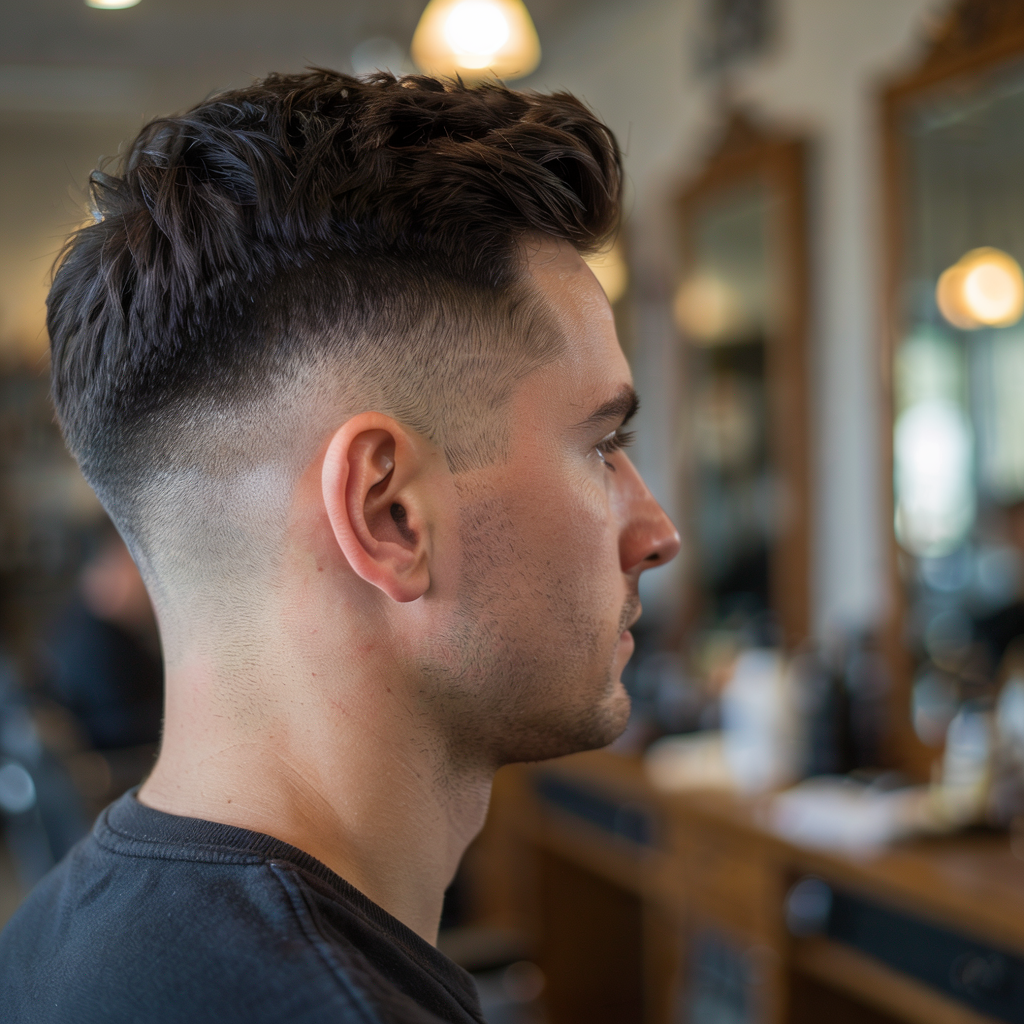
3. High Fade
A high fade pushes the transition farther up the sides. More visible side weight is removed, so the hair on top stands apart much more strongly.
This makes a high fade useful when the goal is deliberate contrast rather than a soft, conservative transition.
High Fade Quick Facts
- Contrast: bold
- Side weight: reduced
- Works with: buzz cuts, crops, short quiffs, pompadours and high-volume tops
- Barber wording: “Keep the fade high, but show me where the transition will sit before removing the side weight.”
4. Skin Fade or Bald Fade
A skin fade primarily describes the shortest finish rather than one fixed height. The bottom of the blend is taken to bare skin, and that finish can be combined with a low, mid or high placement.
A low skin fade and high skin fade therefore both finish at skin but produce very different silhouettes because the transition occupies different areas of the head.
Skin Fade Quick Facts
- Shortest point: bare skin
- Contrast: strong at the base
- Can be combined with: low, mid or high placement
- Barber wording: specify both the fade height and that you want the bottom taken to skin
5. Shadow Fade
A shadow fade keeps visible hair at the shortest area instead of taking the blend completely to bare skin. The retained density gives the base a softer appearance and can make early regrowth feel less dramatic than a skin-tight finish.

Shadow Fade Quick Facts
- Contrast: softer
- Shortest point: visible hair remains
- Useful for: people who want a faded silhouette without maximum scalp exposure
- Barber wording: “Keep a visible shadow at the bottom instead of taking the fade to skin.”
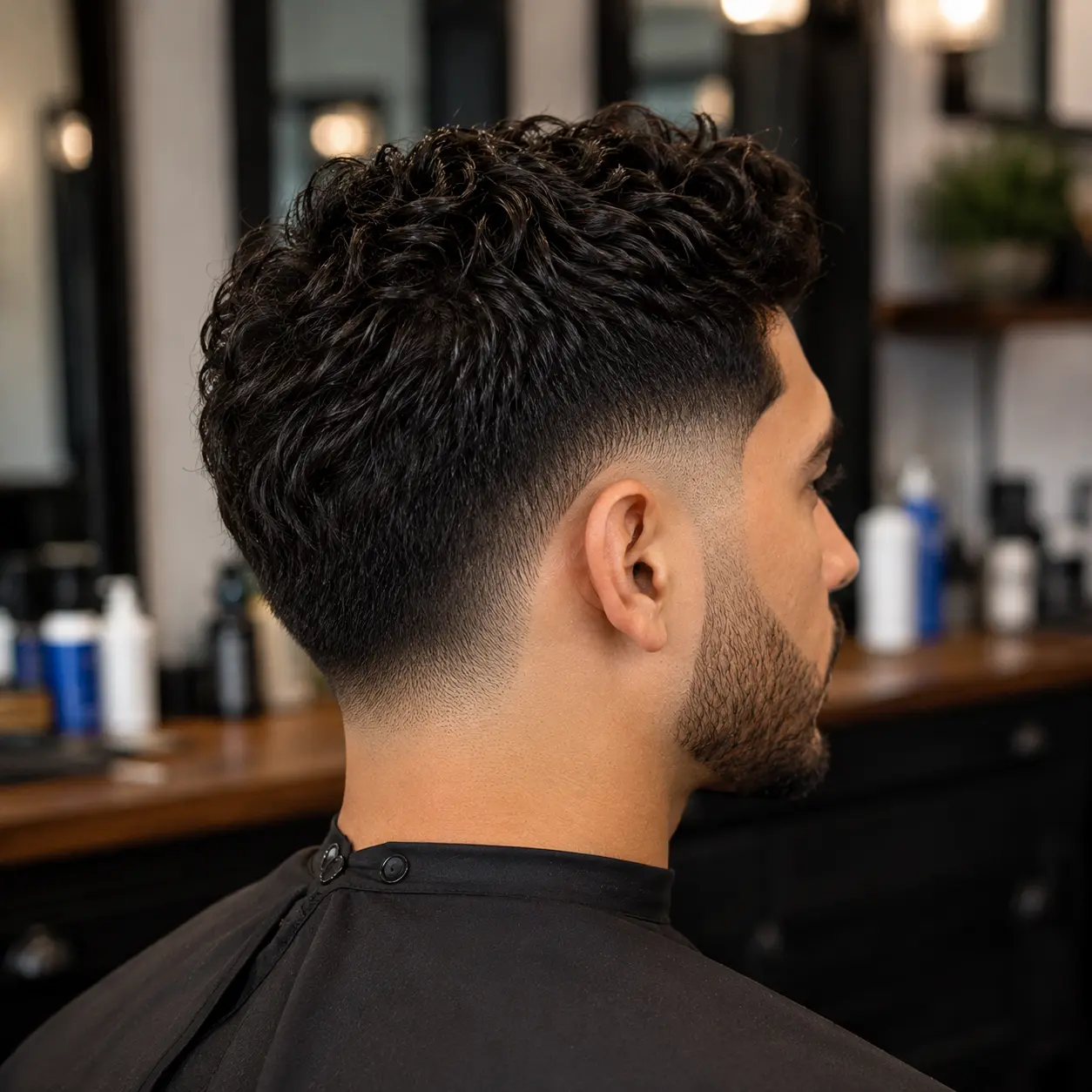
6. Drop Fade
A drop fade changes the path of the blend. Instead of maintaining roughly the same height around the head, the transition drops lower behind the ear and continues around the back.
That descending path can complement rounded and textured shapes because it follows more of the natural contour of the head.
Drop Fade Quick Facts
- Defining feature: the fade drops lower behind the ear
- Contrast: depends on the shortest finish
- Pairs with: curls, afros, textured crops and longer tops
- Barber wording: bring a back-view reference because the rear path is an important part of the cut
7. Burst Fade
A burst fade curves the blend around the ear instead of carrying a similar fade height continuously around the entire back. The semicircular shape is why the style pairs naturally with mullets, faux hawks, mohawk-inspired cuts and textured silhouettes that preserve rear length.

Burst Fade Quick Facts
- Defining feature: curved blend around the ear
- Rear length: commonly preserved more than with a full continuous fade
- Pairs with: mullets, faux hawks, textured curls and longer-back silhouettes
- Barber wording: specify how wide you want the burst and how much rear length you want retained
See the geometry in more detail in our burst fade vs drop fade comparison. If you want to preserve more of the natural perimeter, compare burst fade vs taper fade.

8. Temple Fade
A temple fade concentrates the shortest graduation around the temple and sideburn area instead of removing a broad band of hair across the entire side. It is particularly useful when you want the front perimeter to look sharper while keeping substantial density elsewhere.
Temple Fade Quick Facts
- Placement: temples and sideburns
- Contrast: localized
- Side weight: largely retained
- Pairs with: waves, curls, afros and beard blends
9. Taper
Barbershop terminology varies, but a taper generally refers to shorter localized graduation around the perimeter—particularly the temples, sideburns and neckline—while preserving more of the sides than a full fade.
If keeping side weight matters to you, explain that directly rather than relying on the word “taper” alone.
Taper Quick Facts
- Placement: perimeter-focused
- Contrast: subtle to moderate
- Side weight: mostly retained
- Useful for: classic, natural-looking and professional silhouettes
10. Zero Fade
A zero fade finishes the shortest area around clipper-zero rather than necessarily taking the base all the way to bare skin. As with a skin finish, zero can be combined with different fade heights.
Zero Fade Quick Facts
- Shortest point: around clipper-zero
- Bare skin required: no
- Contrast: crisp without requiring a shaved base
- Barber wording: specify the height as well as the zero finish
24 Popular Fade Haircut Combinations
Knowing the fade type is only half of the decision. The hair left on top determines much of the finished style, styling routine and overall character of the haircut.
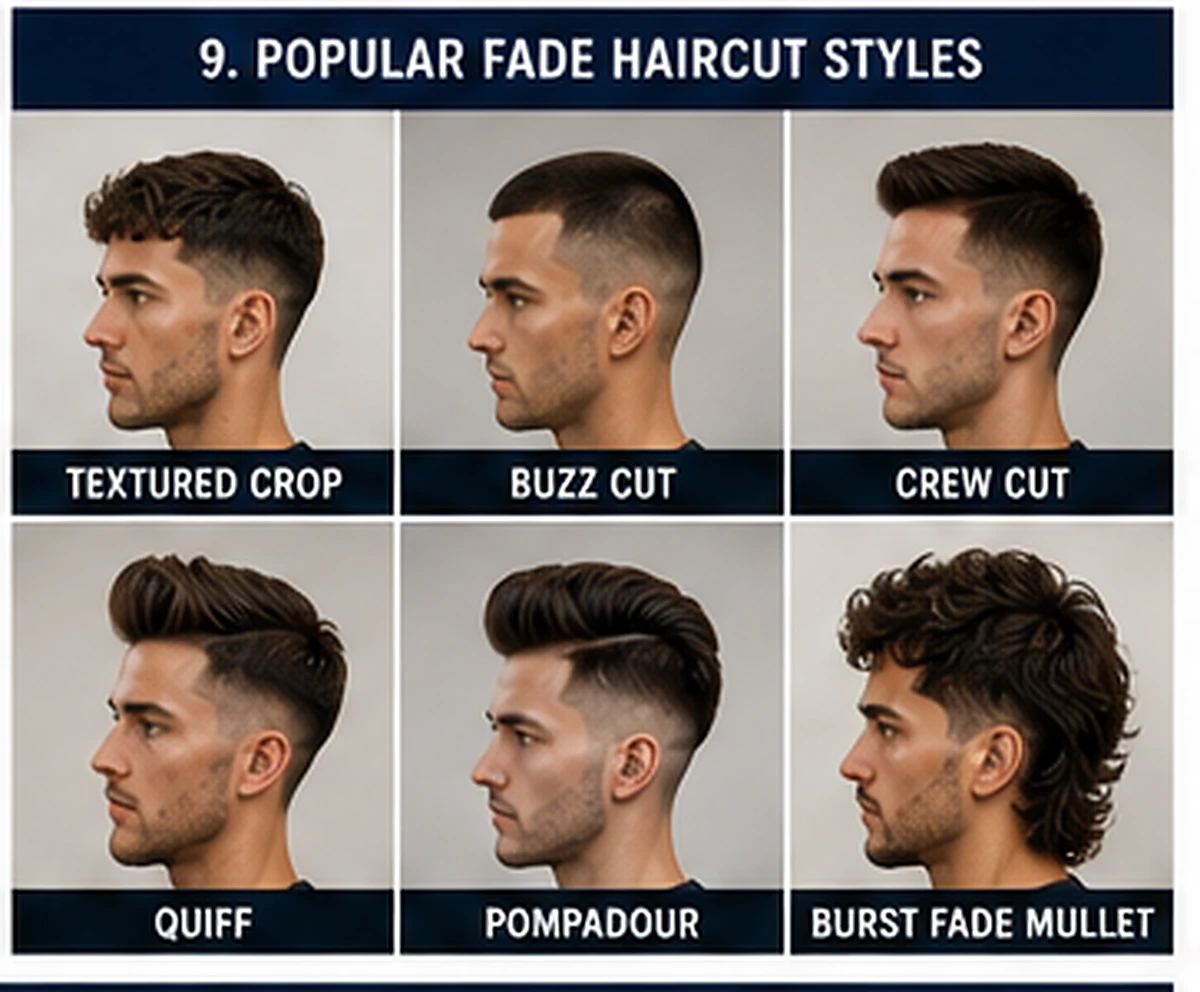
11. Textured Crop With Mid Fade
Short separated texture on top plus a mid fade creates a balanced modern silhouette. It gives definition without requiring a tall or heavily styled top.
12. French Crop With Low Fade
A low fade cleans the perimeter while allowing the French crop’s compact fringe and short top to stay visually connected to the sides.
13. Buzz Cut With Skin Fade
Because the top is already short, taking the lower sides to skin creates strong definition without requiring daily styling product.
14. Crew Cut With Mid Fade
The slightly longer front of a crew cut gives the top enough structure to contrast with a mid fade while remaining practical and easy to manage.
15. Quiff With Mid Fade
A quiff adds height and movement at the front. A mid fade reduces side bulk without making the top look completely disconnected.
16. Pompadour With Mid or High Fade
Pompadours rely on volume and backward movement. A mid fade retains a smoother transition; a higher fade creates much stronger separation.
17. Slick Back With Mid Fade
The cleaner side profile of a mid fade can modernize a slicked-back top while keeping the hairstyle’s backward direction intact.
18. Side Part With Low Fade
A low fade pairs naturally with a side part because it cleans the perimeter while preserving enough density for the part and top to stay connected.
19. Comb Over With Low or Mid Fade
Choose a lower fade for a softer silhouette, or move the fade higher if you want the combed top to separate more visibly from the sides.
20. Messy Fringe With Low Fade
Keeping the fade low allows the loose, forward-moving fringe to remain the main visual focus instead of competing with highly exposed sides.
21. Textured Fringe With Mid Fade
Moving the fade slightly higher creates more contrast below a heavier textured fringe and gives the lower silhouette a cleaner edge.
22. Curly Top With Mid Fade
A mid fade can reduce side bulk while retaining enough length above for natural curls to remain defined and visually connected.
23. Coily Top With Drop Fade
The descending line of a drop fade can frame a rounded coily top without forcing the whole haircut into a straight horizontal fade path.
24. Afro With Fade
Afro shapes work with several fade heights. The best placement depends on how much width and density you want to keep through the sides.
25. Burst Fade Mullet
This combination cleans the area around the ear while intentionally preserving more length toward the back, creating the signature modern mullet outline.
26. Faux Hawk With Burst Fade
A burst fade emphasizes a central strip of volume without requiring the sides to follow a full high fade continuously around the head.
27. Mohawk With Burst or High Fade
Choose a burst fade when retained rear length is part of the design. Choose a higher continuous fade for cleaner separation from the central strip.
28. Edgar With Low or Mid Fade
The blunt front line remains the strongest visual feature. Fade height mainly determines how much contrast appears beneath the top shape.
29. Hard Part With Mid Fade
A hard part already gives the haircut a defined line. A mid fade continues the structured effect without requiring extreme height.
30. Waves With Temple or Low Fade
A localized temple fade or low fade can sharpen the perimeter while leaving more of the established wave pattern intact.
31. Braids With Fade
Braids can sit above low, mid or skin finishes depending on the scalp exposure and side density you want. Agree on braid sectioning before fading begins.
32. Long Top With Drop Fade
The descending fade path creates a clean frame beneath longer flowing, swept-back or textured hair without flattening the rear silhouette.
33. Undercut Fade
An undercut intentionally emphasizes separation between the top and sides. Adding graduation to the lower area softens some of that transition while retaining the disconnected character.
34. Fade With Beard Blend
A fade can continue into facial hair, but the sideburn connection needs to be planned as part of the full silhouette. Decide whether you want a seamless transition or clear separation.
For a deeper look at the longer-back version, see our burst fade mullet guide.
Which Fade Works With Your Hair Texture?
Hair texture changes the way a fade reads visually because straight, wavy, curly and coily hair distribute volume differently.

Straight Hair
Straight hair can make blend lines and changes in side weight particularly visible. Low and mid fades work well when you want a smooth connection into a crop, quiff, side part or longer top.
Wavy Hair
Waves already create movement and visual texture. The main decision is how much side weight you want removed. A low or mid fade can clean the perimeter while allowing natural flow to remain above.

Curly Hair
Curly hair can develop substantial side volume as it grows. Low, mid, drop and burst placements can all work, but each one changes the outline and the amount of curl density that remains through the side profile.
Coily Hair
Coily hair provides strong shape and density, which makes fade placement especially visible. Decide whether your priority is preserving width, emphasizing top height, or creating stronger clearance around the ear.
For care between haircuts, see our natural hair care for fades guide.
Does Face Shape Decide Which Fade You Should Get?
Face shape can be a useful styling clue, but it should not be treated as a rigid formula. The same fade height can look different depending on top length, head shape, hair density, facial hair, natural texture and how much width remains through the sides.
Instead of choosing a fade only because you have been told your face is round, square, oval or diamond, think about the visual result you want:
- Want more apparent height? Keep usable length and volume on top.
- Want to preserve width? Avoid unnecessarily removing all of the side weight.
- Want stronger contrast? Move the fade higher or choose a shorter finish at the base.
- Want a softer outline? Keep the fade lower or leave a visible shadow at the bottom.
A reference photo with a similar hair texture and top length is usually more useful than choosing a haircut from a face-shape label alone.
Fade vs Taper: What’s the Difference?
A full fade normally changes a larger portion of the sides and/or back. A taper is generally more localized around the perimeter and keeps more side weight intact.
The vocabulary can vary from one barber to another, so explain where you want the shortest graduation to appear and how much density you want left above and behind the ear.
See our complete burst fade vs taper fade comparison for a strong visual example of the difference between a localized perimeter blend and a more dramatic ear-centered fade.
Which Fade Is Easiest to Maintain?
There is no universal appointment schedule. Hair-growth rate, the shortest finish, line-up sharpness and your personal tolerance for regrowth all affect how quickly a haircut stops looking fresh.
| Finish | Typical grow-out behavior |
|---|---|
| Skin fade | Regrowth at the bare-skin area becomes noticeable relatively quickly. |
| High fade | The strong separation between top and sides gradually softens. |
| Mid fade | Moderate maintenance depending heavily on the shortest finish. |
| Low fade | Can grow out more softly because greater side weight remains. |
| Shadow fade | Retained base hair can make the earliest regrowth less visually dramatic. |
| Taper | Because the blend is localized, more of the overall haircut remains unchanged as the edges grow. |
Many people refresh a faded haircut every few weeks, but the more useful rule is to return when the silhouette, perimeter or contrast no longer looks the way you want it to.
What to Tell Your Barber
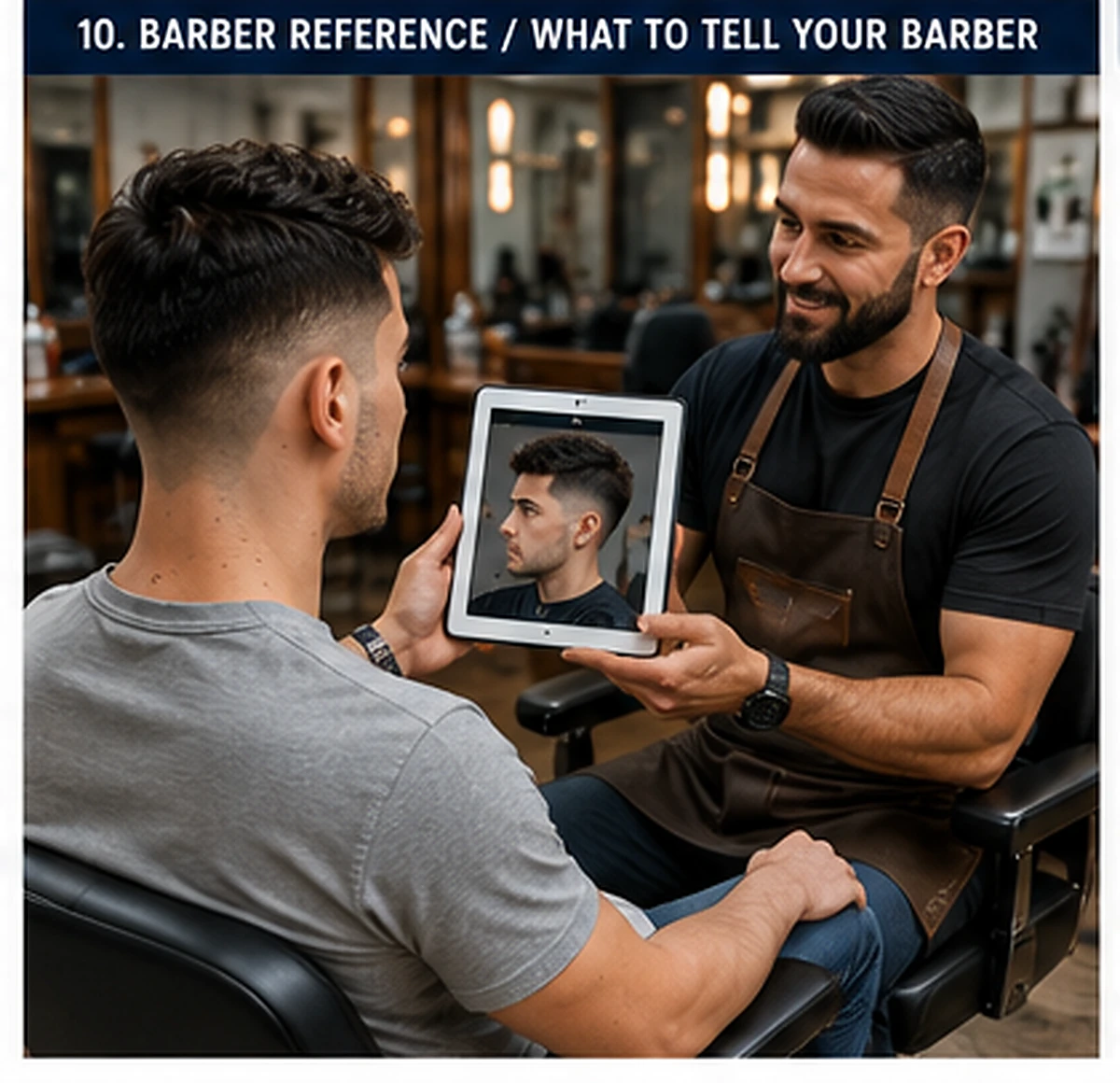
A useful reference request contains more information than simply saying “give me a fade.” Tell your barber:
- Where you want the fade to sit: low, mid or high.
- How short you want the bottom: shadow, zero or skin.
- Whether you want a standard path, drop path, burst shape or localized taper.
- How much length you want left on top.
- How much side and rear weight you want preserved.
- How you normally style your hair.
- Whether you want a sharp line-up or softer natural edges.
Example Low Fade Request
I want a low fade that stays close to the ears, with a visible shadow at the bottom. Keep enough weight through the upper sides to connect naturally into my textured top.
Example Mid Skin Fade Request
I want a mid fade through the middle of the sides and taken to skin at the bottom. Keep enough length on top for a textured crop and avoid pushing the fade too high.
Example Burst Fade Request
I want the blend to curve around the ear rather than continue at the same height around the whole back. Keep more length through the rear and show me how wide the burst will be before you start.
Example Taper Request
Keep most of the sides full and concentrate the shortest graduation around the temples, sideburns and neckline. I do not want a full fade through the entire side.
Reference photos reduce ambiguity. When rear shape matters, bring both a side-view and back-view example. A 2026 GQ guide to communicating at the barbershop likewise emphasizes clear communication with your barber rather than relying on vague haircut language alone.
Common Fade Haircut Mistakes
Asking Only for “a Fade”
That does not explain the height, shortest length or path you want. Two fades can look completely different while technically using the same basic graduation technique.
Assuming Every Fade Means Skin
A fade can retain visible hair at the shortest point, finish around clipper-zero or be taken to bare skin.
Ignoring the Back View
The rear silhouette matters on many cuts, and it is particularly important when choosing between a burst fade and drop fade.
Using a Reference With Completely Different Hair Behavior
A reference is more useful when the hair texture, density and approximate top length resemble your own.
Choosing a Trend That Does Not Fit Your Routine
A haircut can look excellent immediately after the appointment and still be a poor practical choice if you dislike frequent cleanups or daily styling.
Still Not Sure Which Fade to Choose?
Use our interactive Fade Calculator as a starting point. Choose your hair texture and general preferences, then use the result to narrow down the reference photos you bring to your barber.
Try the Fade Calculator →Frequently Asked Questions
What is a fade haircut?
A fade haircut gradually transitions from shorter hair into longer hair through the sides and/or back. Fade height, shortest length and the path of the blend can all change the finished result.
What are the main types of fade haircuts?
The main height-based categories are low, mid and high fades. Other common terms include skin fade, shadow fade, drop fade, burst fade, temple fade, zero fade and taper.
What is the difference between a low, mid and high fade?
The main difference is placement. A low fade keeps the transition close to the lower sides and ears, a mid fade moves it through the middle of the side profile, and a high fade begins farther up the sides and removes more visible side weight.
Does a fade haircut have to go to skin?
No. A fade can retain visible hair at the shortest point, finish around clipper-zero or blend down to bare skin.
Is a taper the same as a fade?
Not exactly. In common barbershop usage, a taper is usually more localized around the temples, sideburns and neckline, while a full fade changes a larger section of the sides or back. Terminology can vary between shops.
Which fade works best with curly hair?
There is no single best fade for every curl pattern. Low and mid fades remove different amounts of side bulk, while drop and burst fades alter the outline around the ear and back. The right choice depends on the silhouette and curl density you want to preserve.
Which fade is easiest to maintain?
Lower, softer and shadow finishes generally make early regrowth less visually dramatic than very tight high or skin finishes. Your growth rate and preferred level of sharpness matter more than the haircut name alone.
How often should a fade be refreshed?
There is no required schedule. Many people refresh faded haircuts every few weeks, while skin finishes and sharp line-ups may look grown out sooner. Return when the shape and contrast no longer look the way you want them to.
What should I show my barber?
Bring at least one clear side-view reference with similar hair texture and top length. Add a back view when the neckline, burst path or drop shape is important to the haircut.
Can straight hair get a fade?
Yes. Straight hair works with low, mid, high, skin and other fade placements. Because straight hair can make weight lines more visible, the transition into the longer hair above deserves particular attention.
How to Make Your Final Choice
The best fade is not determined by whichever haircut name happens to be trending. Start with the result you want to see in the mirror.
- Choose a low fade when you want to keep more side weight and a softer transition.
- Choose a mid fade when you want balanced contrast.
- Choose a high fade when you intentionally want stronger separation between the top and sides.
- Choose a skin fade when a bare-skin base is part of the look.
- Choose a shadow fade when you want visible density at the shortest point.
- Choose a drop fade when you want the blend to descend behind the ear.
- Choose a burst fade when you want the blend to curve around the ear and preserve a different rear silhouette.
- Choose a taper when you want to clean the perimeter while keeping most of the sides intact.
Most importantly, bring a useful reference photo and describe the placement, shortest length and amount of side or rear weight you want to keep. Those details give your barber far more actionable information than a haircut name by itself.
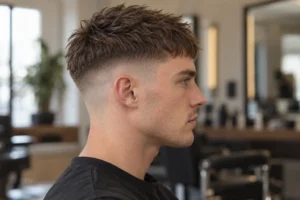 Textured Crop Haircut: Styles, Fades and How to Ask Your Barber
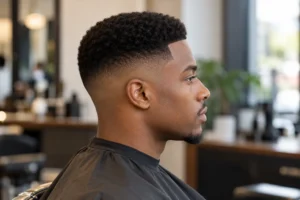 Boosie Fade: What It Is, 7 Styles and How to Ask for It
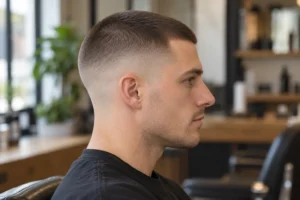 Buzz Cut Fade: Low, Mid, High and Skin Fade Styles With Photos
One Comment