Burst Fade vs Drop Fade: Differences, Photos & Which to Choose
On this page
- Burst fade vs drop fade: five matched visual comparisons
- Burst Fade vs Drop Fade: Three Placement References
- Burst Fade vs Drop Fade at a Glance
- What a Burst Fade Actually Does
- What a Drop Fade Actually Does
- The Ear and Nape Test
- Choose the Finish Separately
- Which One Should You Choose?
- Drop Burst Fade: Can You Combine Them?
- How to Ask Your Barber
- Maintenance and Grow-Out
- Reference for Fade Technique
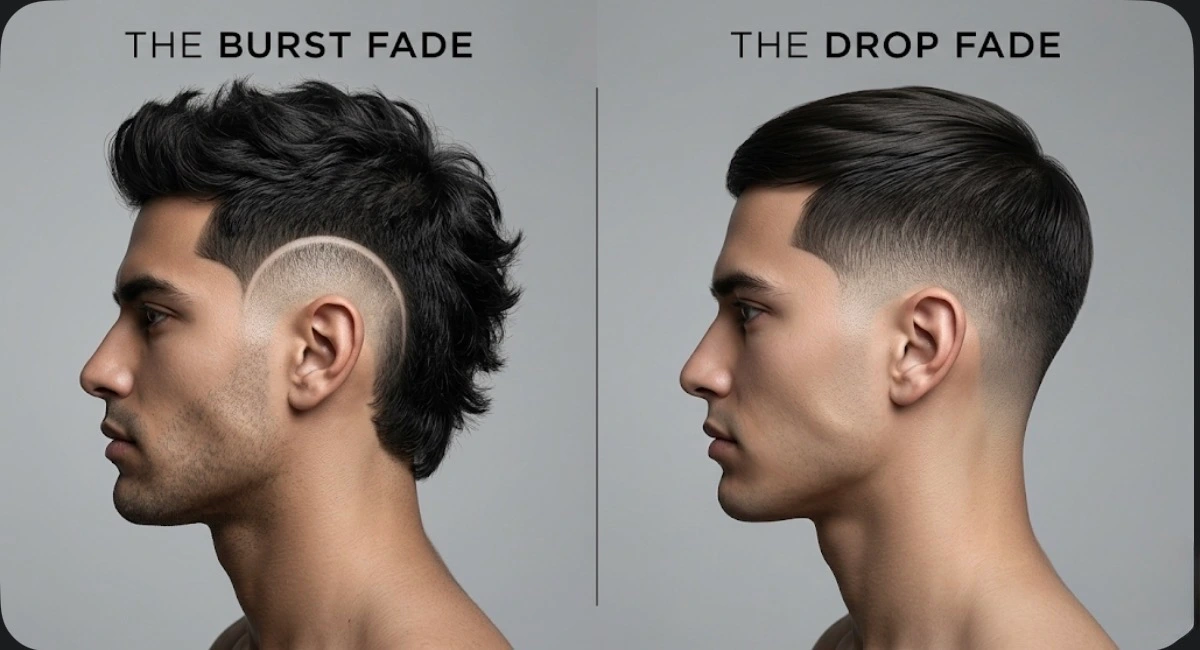
Burst fade vs drop fade is mainly a question of where the fade travels after it reaches the ear. A burst fade concentrates its shortest area in a rounded arc around the ear and usually keeps more length through the back. A drop fade continues around the head but dips lower behind the ear, creating a curved band through the back. Both can be low, mid, skin, or shadow finishes, so the shape matters more than the shortest guard.
Burst fade vs drop fade: five matched visual comparisons
Follow the fade past the ear and into the back. In each matched pair, Burst comes first and Drop second: above/below on desktop, left/right on mobile. The top texture and viewpoint stay similar so you can compare the fade path.
Straight textured crop
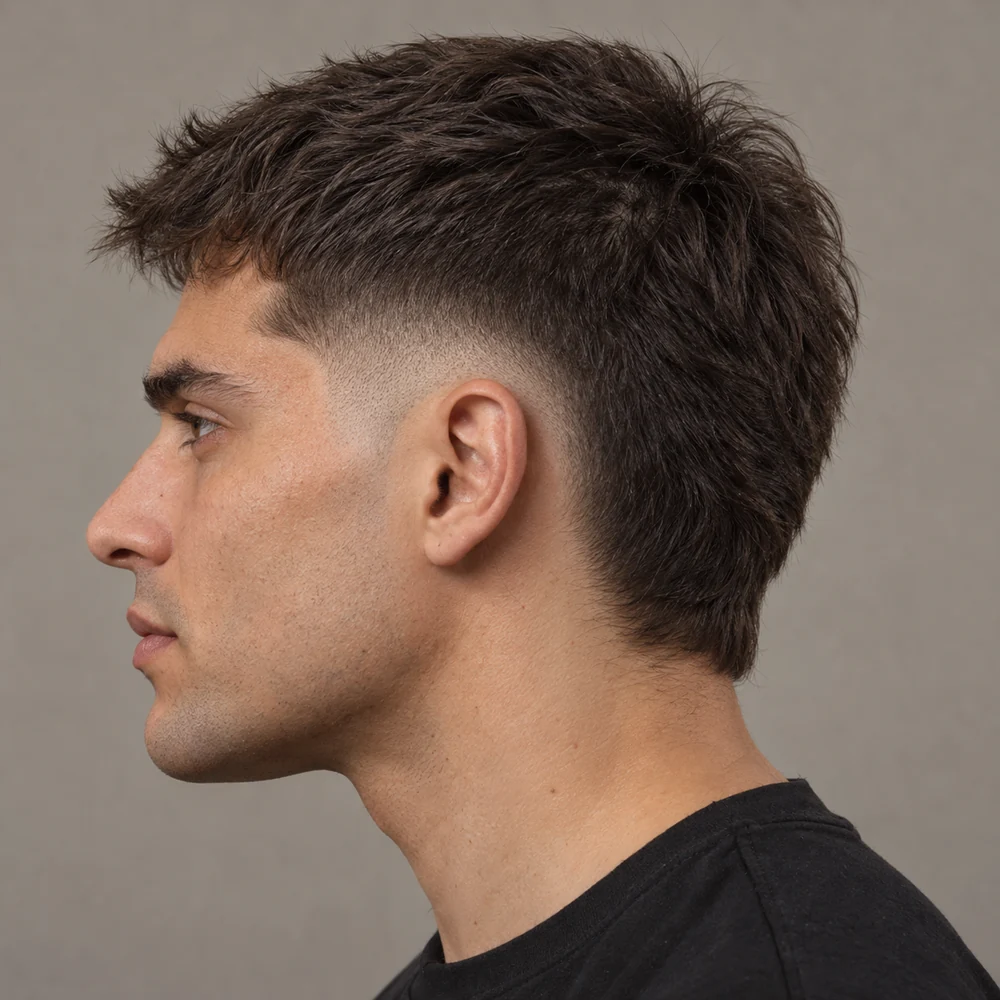
A rounded fade around the ear leaves a darker nape behind the straight textured crop.
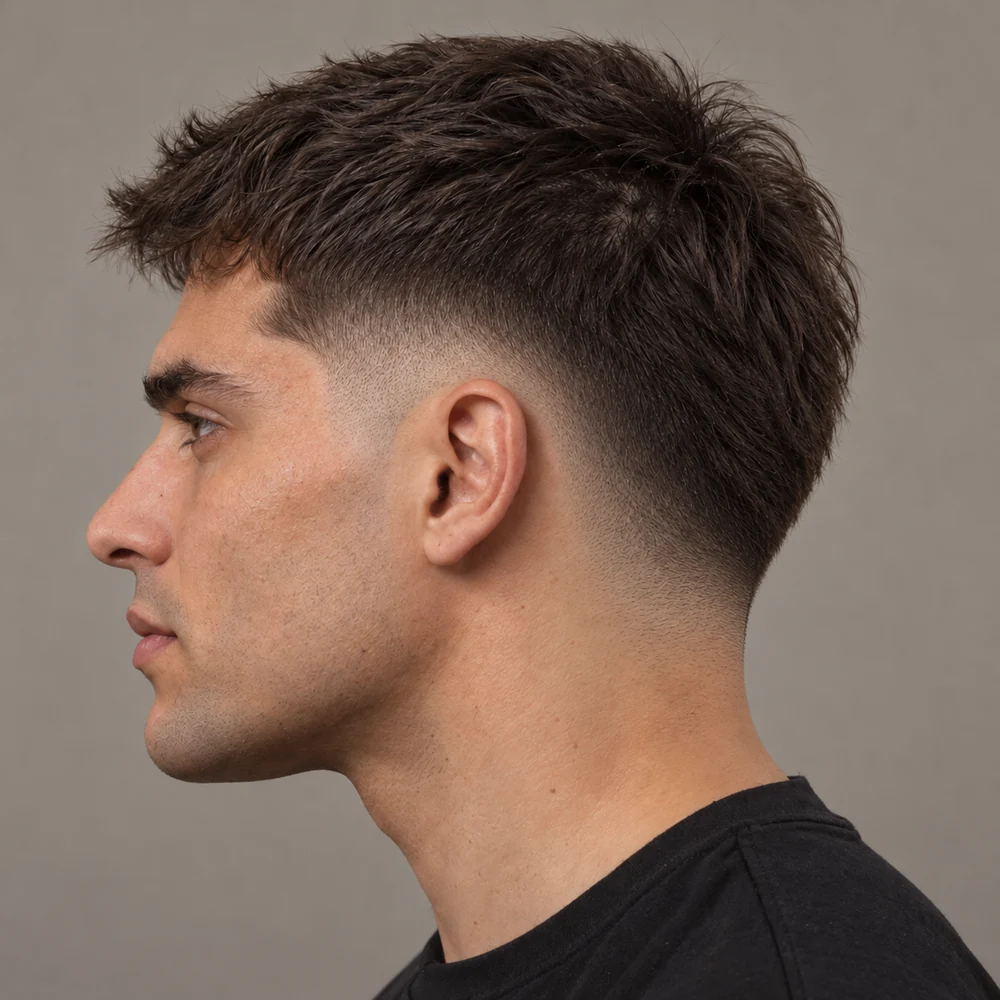
The crop stays similar; the side blend connects into a shorter lower back.
Curly top
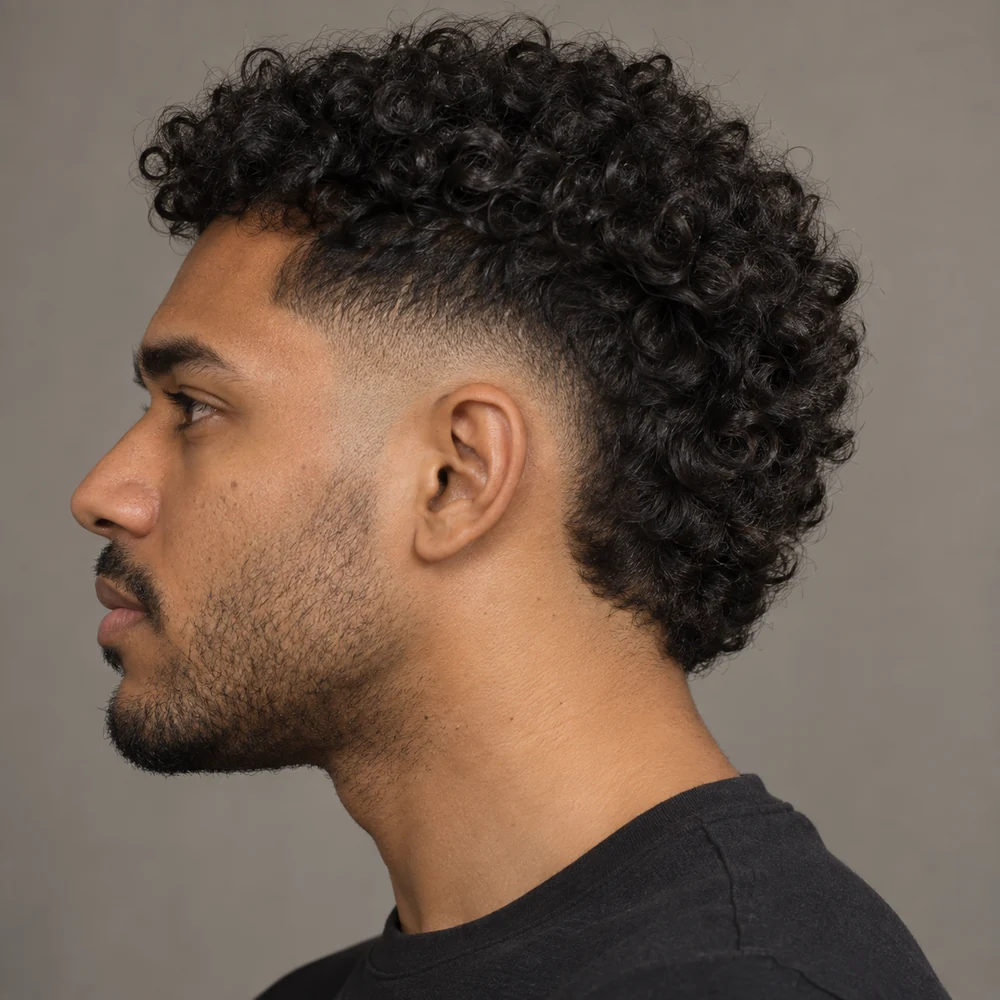
The close ear arc keeps fuller curls behind it and through the nape.
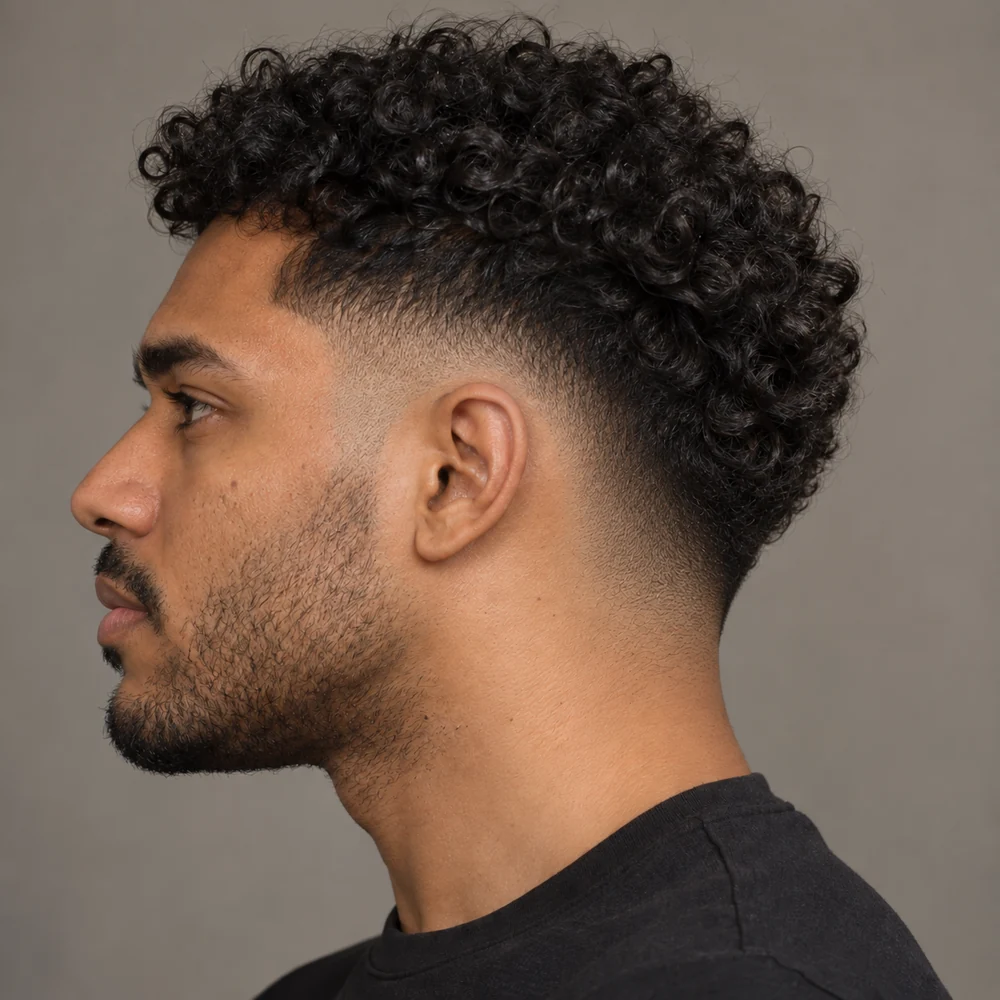
The curved blend continues behind the ear, shortening the lower curly back.
Coily top
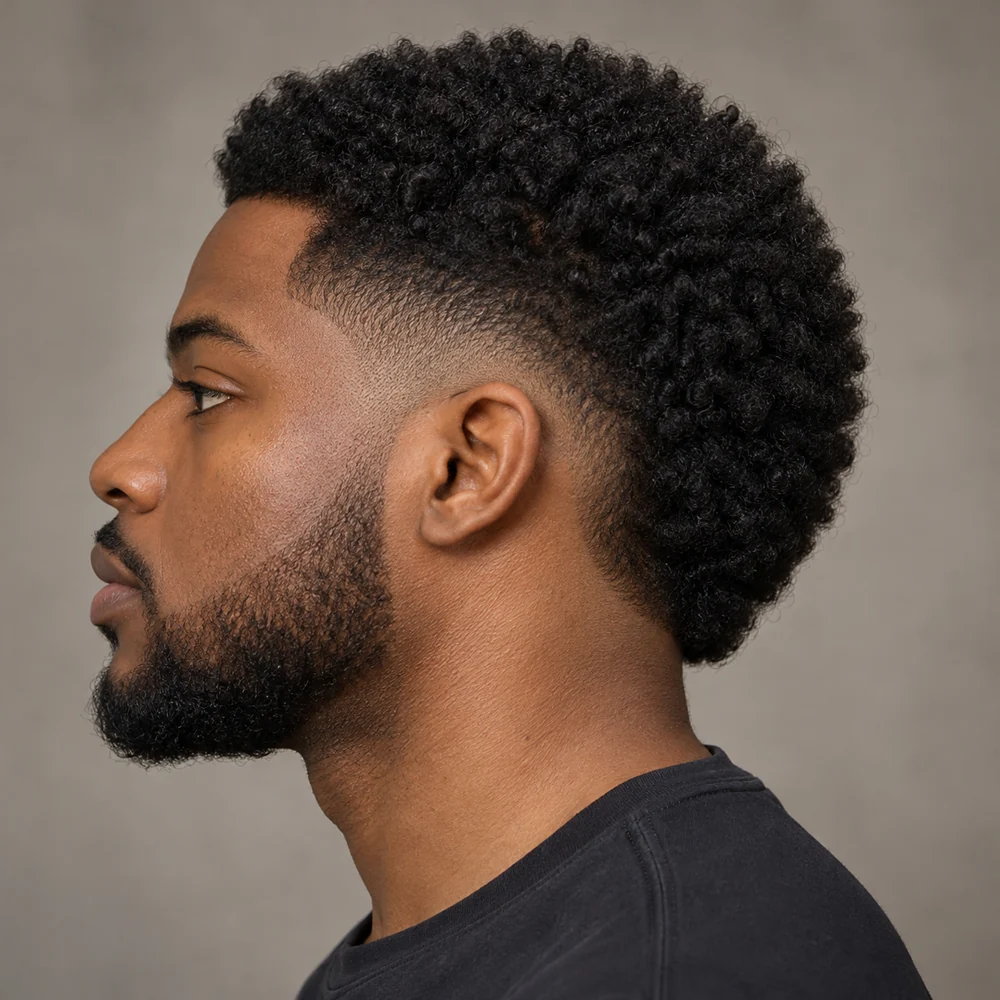
The rounded ear area contrasts with the coily ridge retained through the back.
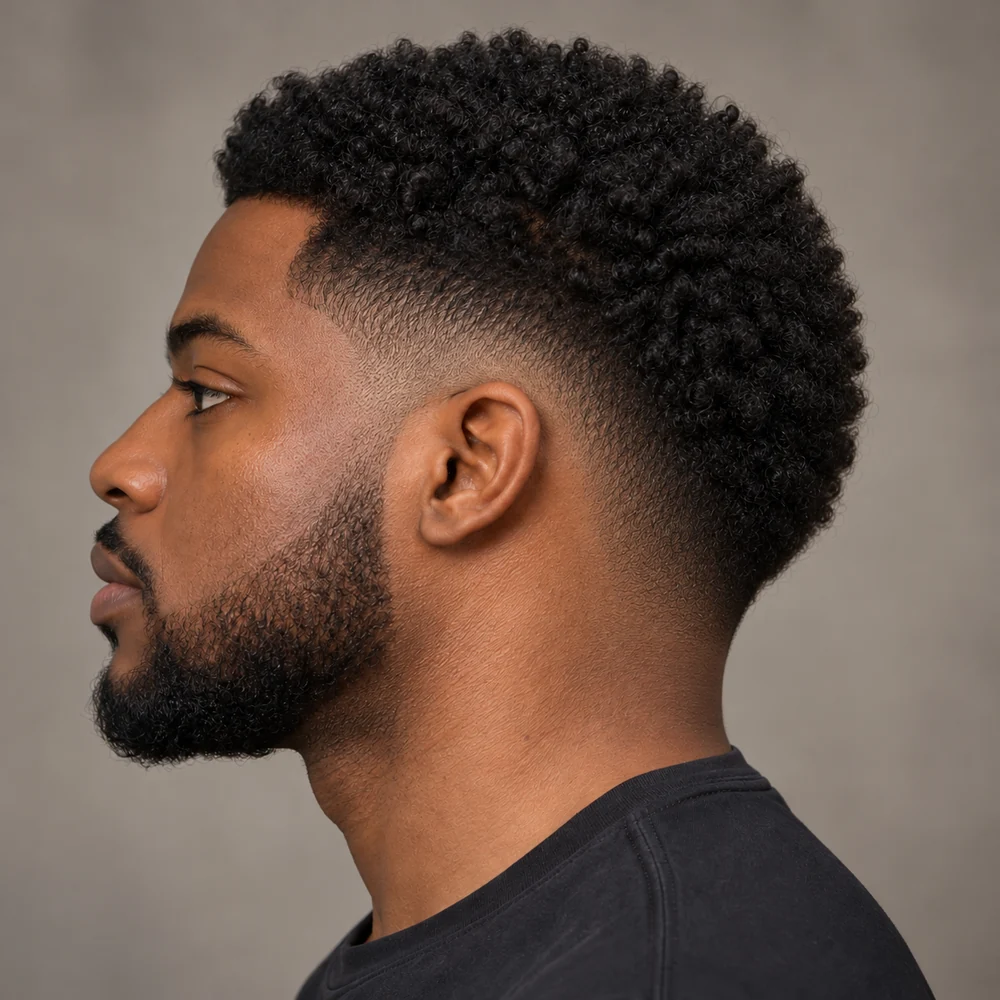
The coily crown remains; the fade continues down into the lower rear.
Wavy rear three-quarter
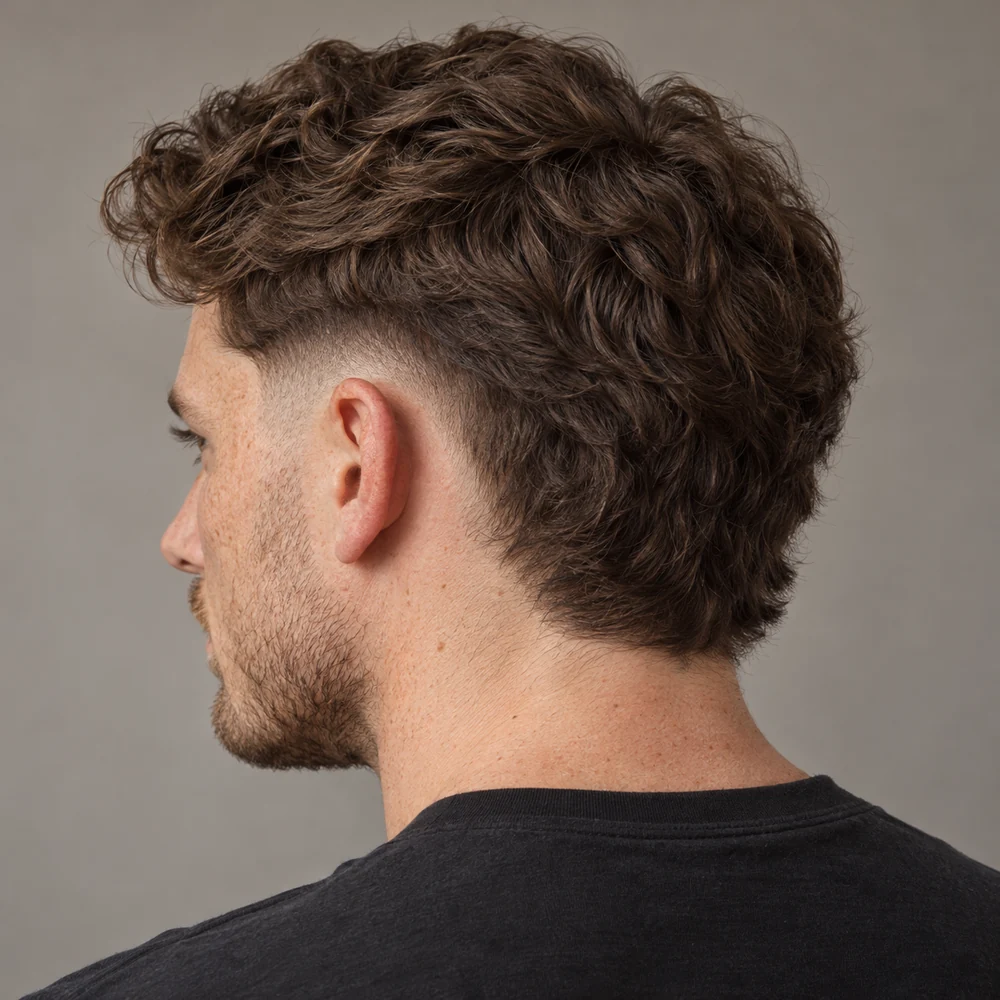
From this angle, the ear arc ends beside a fuller wavy back.
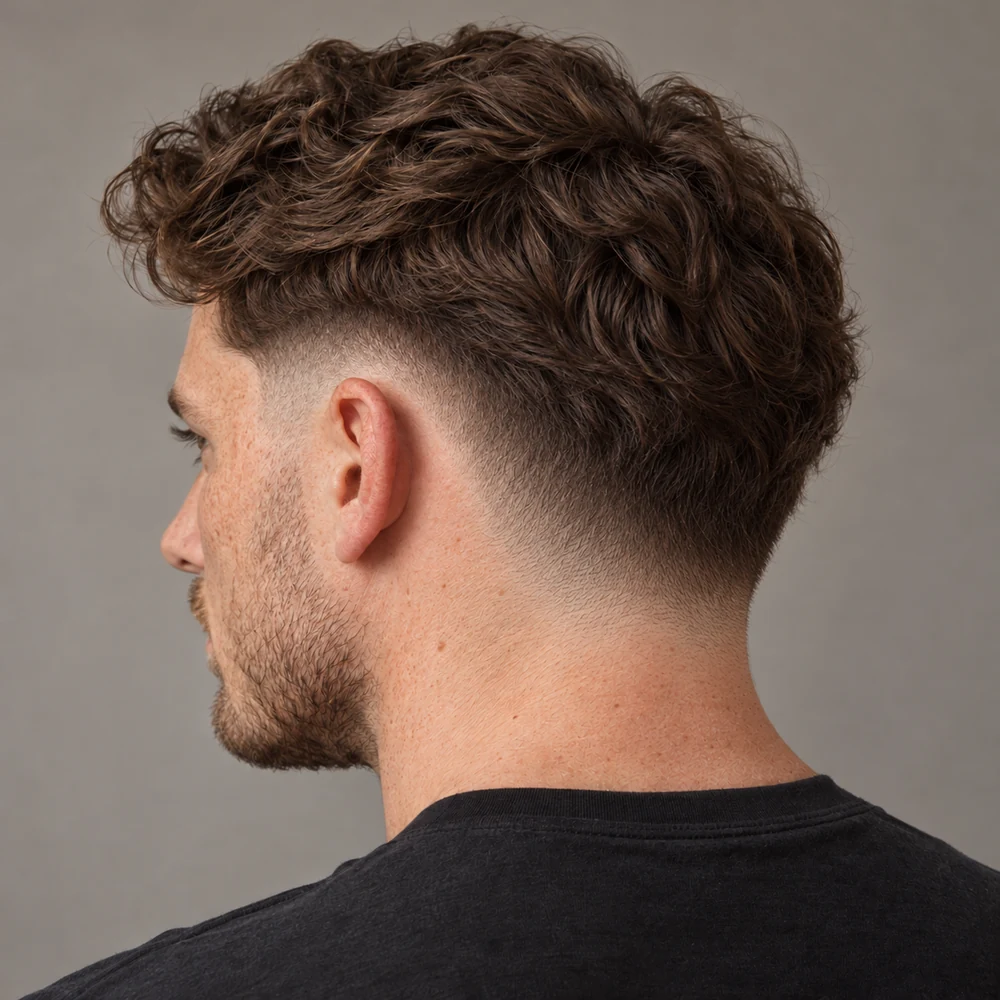
The rear blend joins the side fade instead of preserving a longer wavy nape.
Straight rear outline
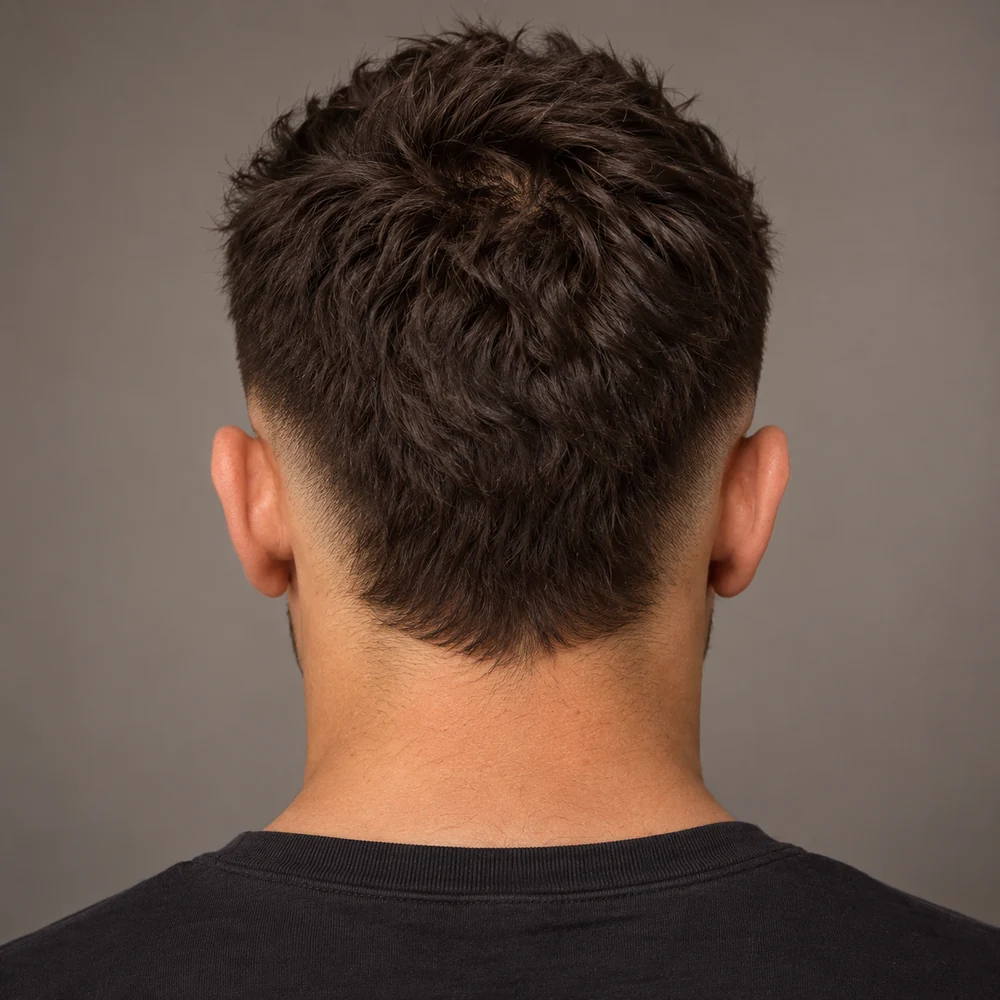
Darker center-back hair remains between the clipped areas beside the ears.
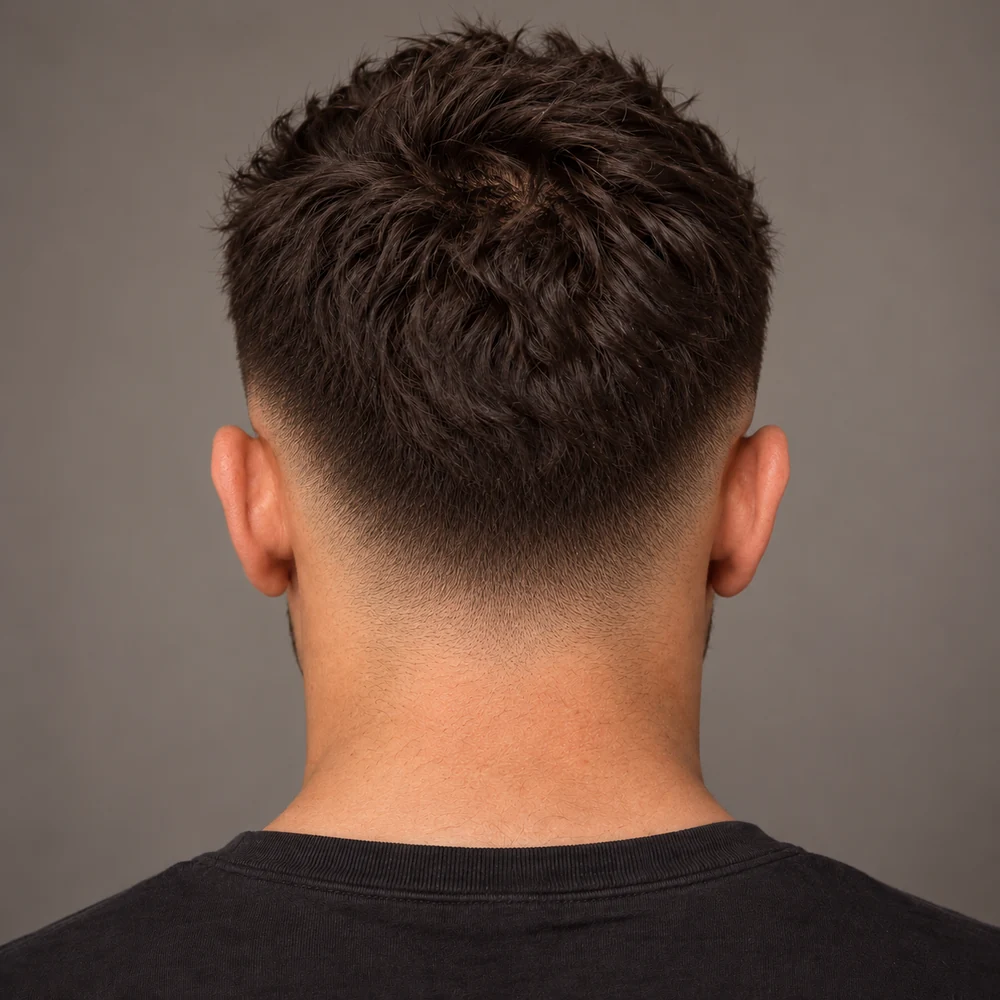
A connected curved blend crosses the lower back beneath the textured crown.
Visual disclosure: These paired references are original AI-generated editorial illustrations of fictional adults. Each pair holds the model, top texture and viewpoint similar while illustrating different fade paths. They are simulated comparisons, not before-and-after client photographs, a cutting tutorial or guaranteed results. Select any image to view it larger.

Quick answer: choose a burst fade when you want the ear to be the visual center and you plan to keep a mullet, faux-hawk, mohawk, curly back, or other length through the nape. Choose a drop fade when you want the whole side-and-back fade to follow the head in a lower curve.
Burst Fade vs Drop Fade: Three Placement References
Look for the route of the fade: a burst circles the ear, while a drop fade continues through the side and descends toward the back.


Burst Fade vs Drop Fade at a Glance
| Feature | Burst fade | Drop fade |
|---|---|---|
| Signature shape | Rounded arc centered around the ear | Fade line dips lower behind the ear and continues around the back |
| Back length | Often keeps noticeably more length at the nape | Back is still part of the fade |
| Best-known pairings | Mullet, faux-hawk, mohawk, curly or coily top | Crop, quiff, curls, side part, short or medium tops |
| Visual emphasis | Side profile and ear area | Continuous head shape from side to back |
| Grow-out | Rounded edge around ear becomes softer first | Curved band through sides/back gradually loses contrast |

What a Burst Fade Actually Does
A burst fade radiates around the ear instead of carrying the same fade band all the way through the back. That is why it works so naturally with hairstyles that need length behind the ear. In a burst fade mullet, for example, the curved fade cleans the side profile without cutting away the longer tail at the nape.
The exact bottom length is optional. You can ask for a skin burst, a clipper-zero burst, or a softer shadow burst. If your skin is sensitive or you simply prefer an easier grow-out, you do not need to take the fade to bare skin.
What a Drop Fade Actually Does
A drop fade is still a continuous fade around the head. The difference is that its guideline drops lower behind the ear instead of staying level. The back therefore forms a deeper U-shaped or curved silhouette. That makes the drop fade useful when you want a full fade but prefer the back to sit lower and follow the natural shape of the skull.
As barber Herson Rodriguez explains in GQ’s guide to fade haircuts, a drop fade is defined by the way it sits lower around the ear and carries into the back, while a burst expands from the ear in a circular pattern. That distinction is more useful than trying to identify the cut only by whether skin is visible.
The Ear and Nape Test

If two reference photos look similar, use this test. First look directly behind the ear. If the shortest area forms a focused semicircle and the nape keeps substantial length, you are probably looking at a burst fade. If the fade continues through the back but drops lower behind the ear, it is a drop fade.
This is also why the two cuts should not be treated as interchangeable. Removing the back of a planned mullet with a drop fade changes the silhouette. Leaving the back heavy when a client expects a continuous drop fade changes it in the opposite direction.
Choose the Finish Separately
Burst and drop describe the shape and path of the fade. Shadow, zero and skin describe its shortest finish. Either shape can be left softer or taken tighter; terminology varies, so tell your barber whether you do or do not want bare skin.

Which One Should You Choose?
Choose a burst fade if…
- You want a mullet, faux-hawk, mohawk, or longer nape.
- You want the haircut to look most distinctive from the side.
- You have curls or coils you want to keep full through the top and back.
- You like a strong contrast around the ear without removing the entire back.
Choose a drop fade if…
- You want a full fade that still follows a lower, curved path.
- You prefer a cleaner transition through the back rather than a preserved tail.
- Your top style does not depend on keeping substantial nape length.
- You want the fade shape to follow the head continuously from side to side.
Drop Burst Fade: Can You Combine Them?
Yes. A drop burst fade, also searched as burst drop fade, keeps the burst’s curve around the ear but lets the line keep dropping behind the ear toward the nape instead of closing the half-circle. From the side it still reads as a burst; from the back it shows the lower curve of a drop fade. Barbers use the name for slightly different cuts, so agree on two things before the clippers start: how far the line drops behind the ear, and whether the center of the back stays long or is blended.
It works well when you want the burst’s shape at the sides but a cleaner neckline, for example with a short mullet or a curly top that you don’t want growing over the collar.
“Burst shape around the ear, then drop the line behind the ear toward the nape. Keep the center of the back [long / blended]. Finish at [shadow / zero / skin].”
How to Ask Your Barber
For a burst fade, try: “Keep the fade rounded around the ear and leave the back length intact. I want a [skin/zero/shadow] finish at the shortest point.”
For a drop fade, try: “Carry the fade around the head, but let it drop lower behind the ear instead of keeping the guideline level.”
Bring a side-profile and rear reference image if the back shape is important. A photo removes ambiguity around how much nape length you want to keep.
Maintenance and Grow-Out
Neither cut has a universal maintenance schedule. If you want the shortest area to stay very crisp, many people refresh a fade roughly every two to three weeks; a softer shadow finish can usually look intentional for longer. The more contrast you choose at the bottom, the sooner regrowth becomes visible.
For a broader overview of fade heights, finishes, and pairings, use our guide to fade haircuts for men. If you are deciding between a burst and a localized taper rather than a full fade, see burst fade vs taper fade.
Reference for Fade Technique
For a professional overview of how barbers build and blend fade guidelines, see Wahl’s fade education guide. Guard systems and finishing choices vary by barber, but the principle is the same: the shape of the guideline and the way each transition is blended determine the finished silhouette.
Is a burst fade the same as a drop fade?
No. A burst fade is concentrated in a rounded arc around the ear and commonly keeps more length at the back. A drop fade continues around the head but dips lower behind the ear.
Which is better for a mullet, burst fade or drop fade?
A burst fade is usually the more natural match because it can clean the area around the ears while preserving the longer nape that defines a mullet.
Can both a burst fade and drop fade be skin fades?
Yes. “Burst” and “drop” describe the shape or path of the fade; “skin,” “zero,” or “shadow” describes how short the bottom is.
Which fade grows out better?
That depends more on how short the bottom is and how much contrast you choose than on the name alone. Softer shadow finishes generally show regrowth less abruptly than bare-skin finishes.
 Fade vs Taper: Differences, Photos & Barber Scripts
 Fade vs Undercut: Key Differences & Which to Choose
 Mid Taper vs Low Taper: Differences, Height & Which to Choose
One Comment