Burst Fade Mullet: Shape, Barber Script & Maintenance
On this page
- Burst fade mullet gallery: back lengths and textures
- Burst Fade Mullet: Side, Back and Coily Variation
- The Anatomy of a Burst Fade Mullet
- Burst Fade Mullet vs Taper Mullet
- Choose How Dramatic You Want the Back
- What to Say to Your Barber
- How Hair Texture Changes the Cut
- Styling: Front, Crown and Tail
- Maintenance Without Losing the Mullet
- Industry Reference
A burst fade mullet combines two separate ideas: a rounded fade centered around the ear and deliberate length left through the back. The burst cleans the side profile without carrying a full fade through the nape; the mullet supplies the longer rear silhouette. Getting both parts right matters more than choosing an extreme skin finish.
Comparing every mullet fade, from a low taper to a drop fade? See the modern mullet guide.
Burst fade mullet gallery: back lengths and textures
Compare shorter, medium and longer backs across straight, wavy, curly and coily textures. Select an image to view it larger.
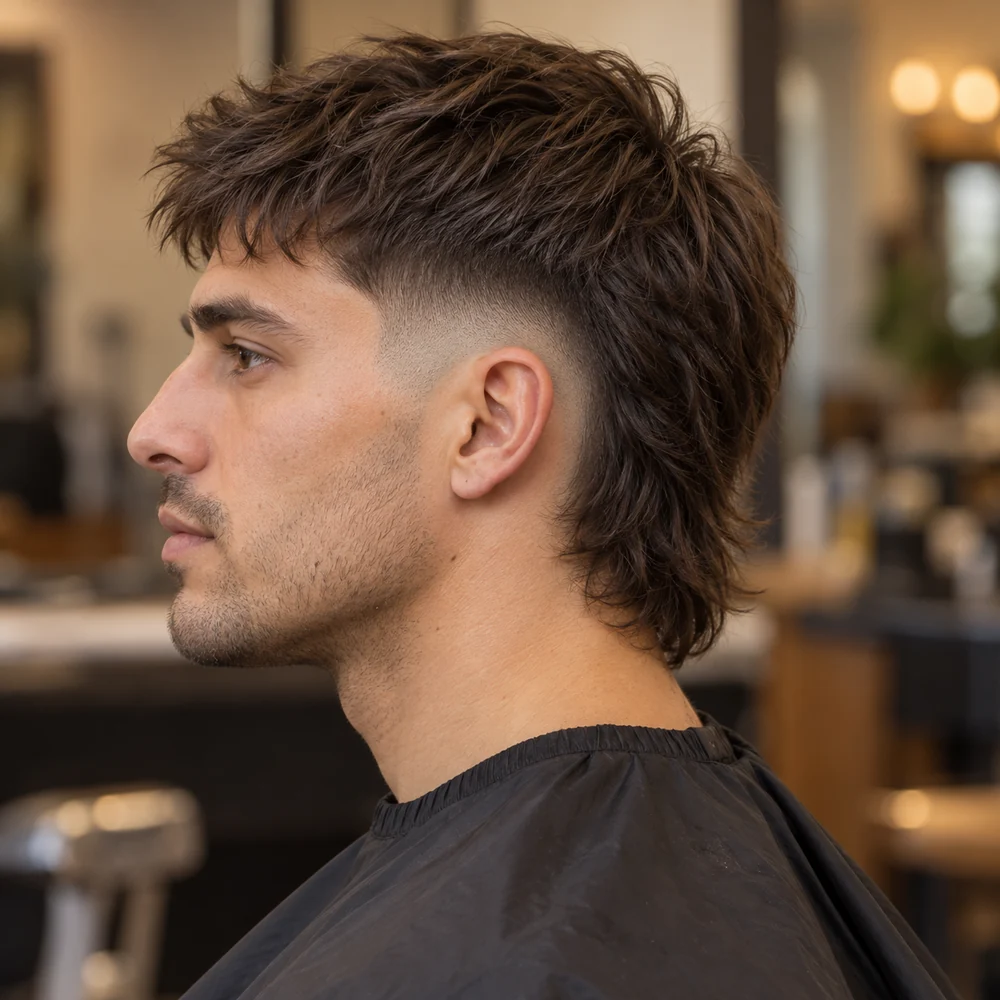
The compact ear arc leaves a shorter, layered straight tail behind it.
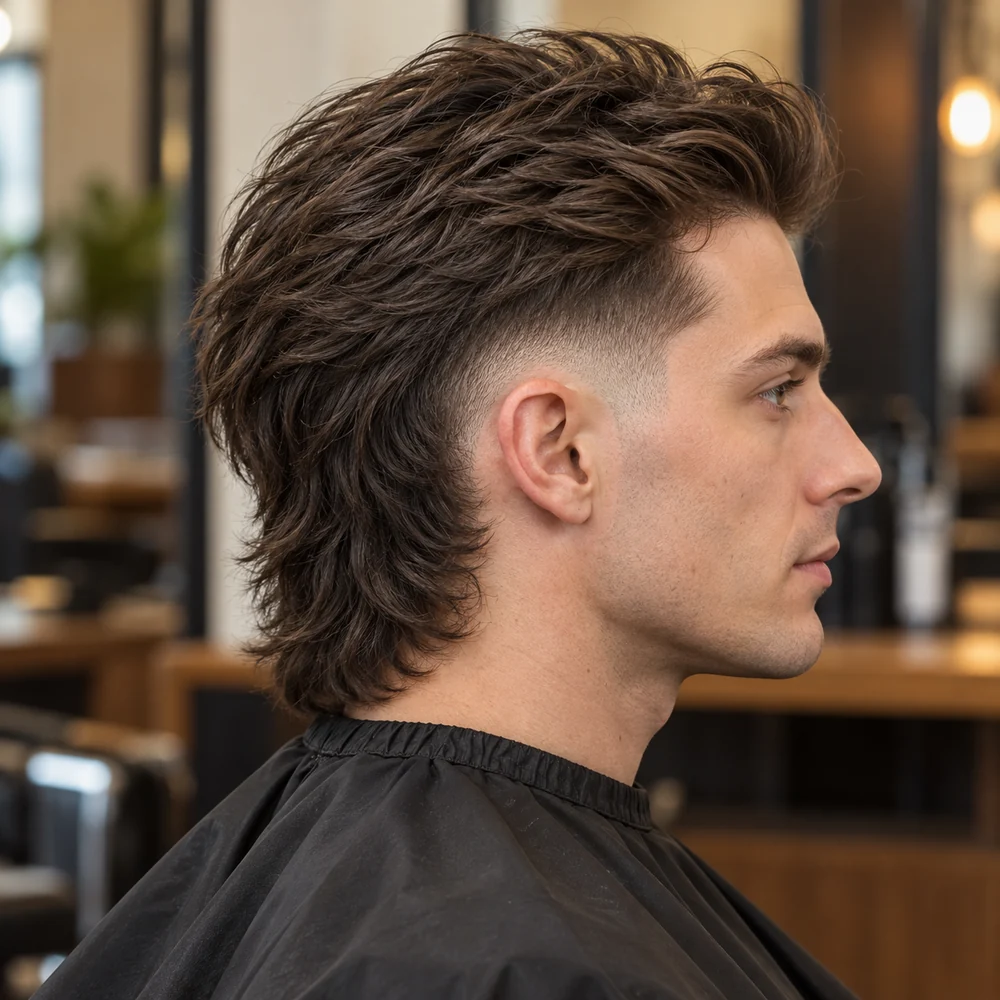
A swept top connects into medium rear length while the fade stays around the ear.
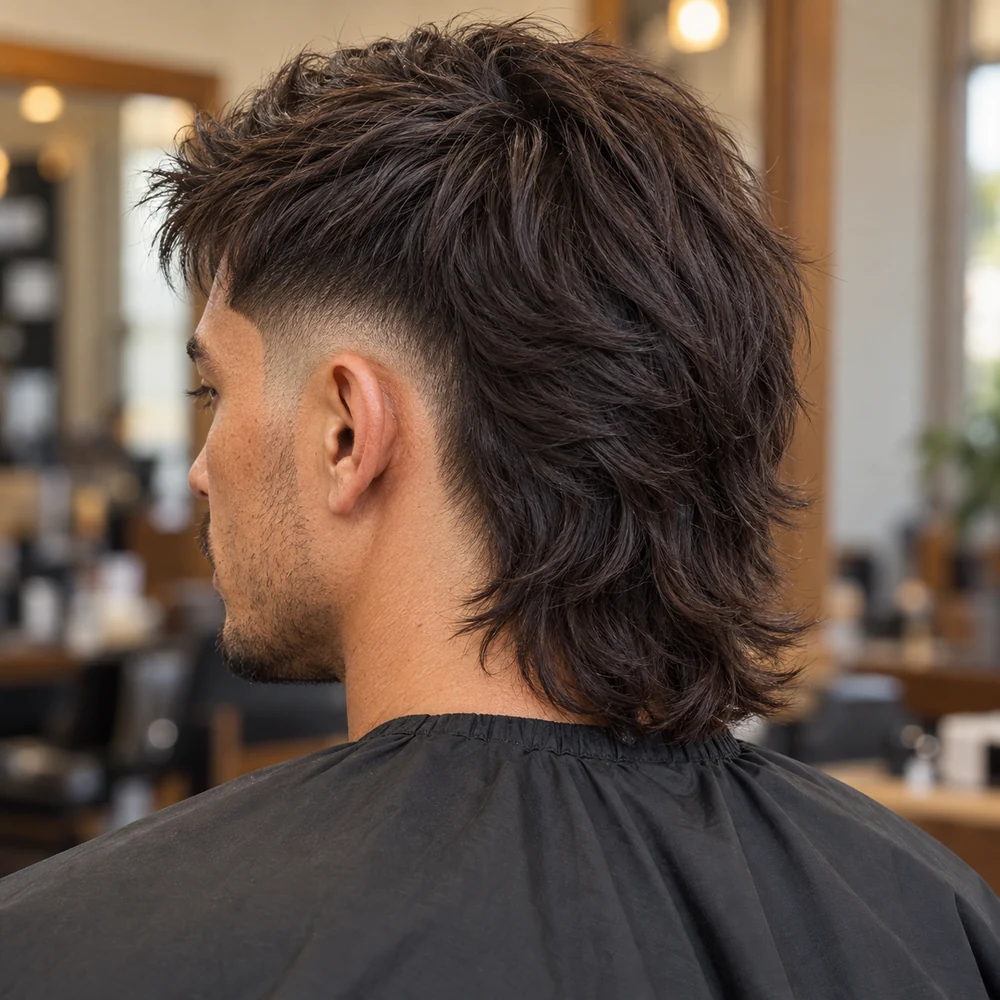
The rear angle shows longer straight layers retained through the center back.
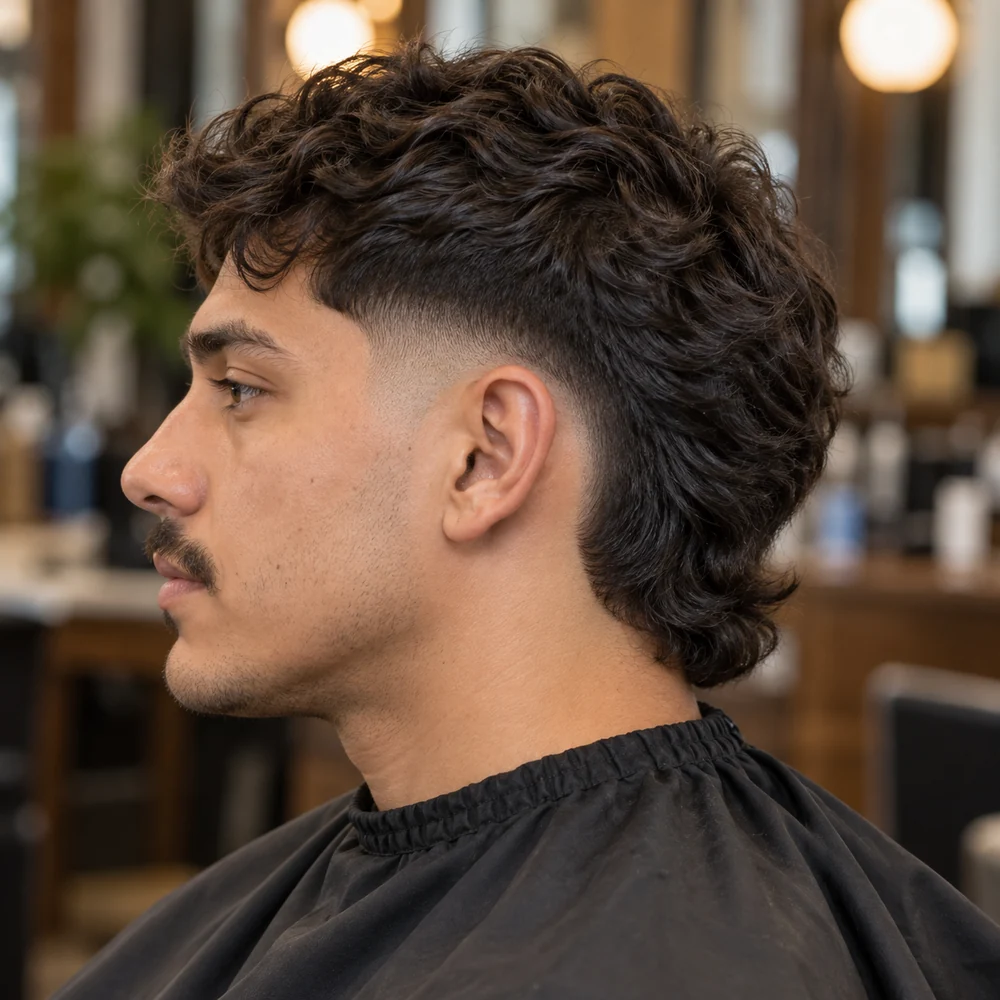
Short waves and a compact back keep the mullet outline relatively subtle.
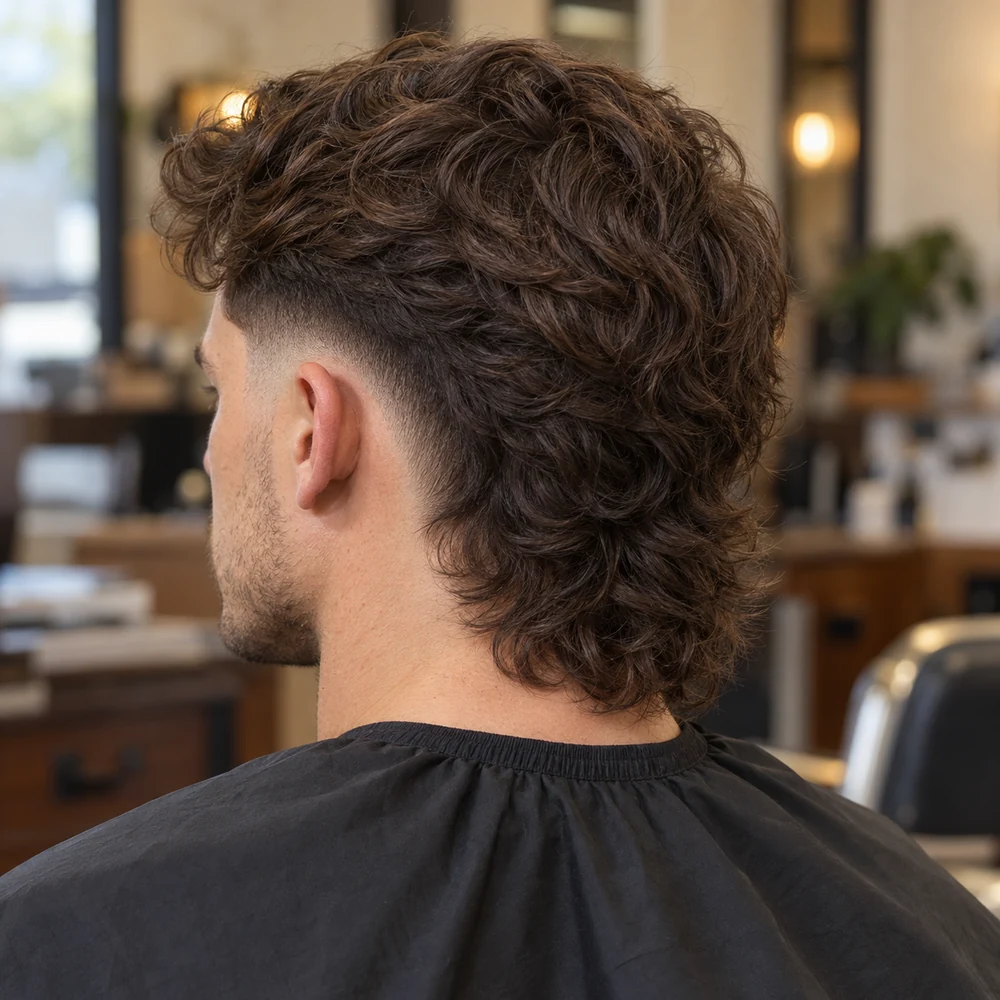
Loose waves connect the crown to a fuller, medium-length rear outline.
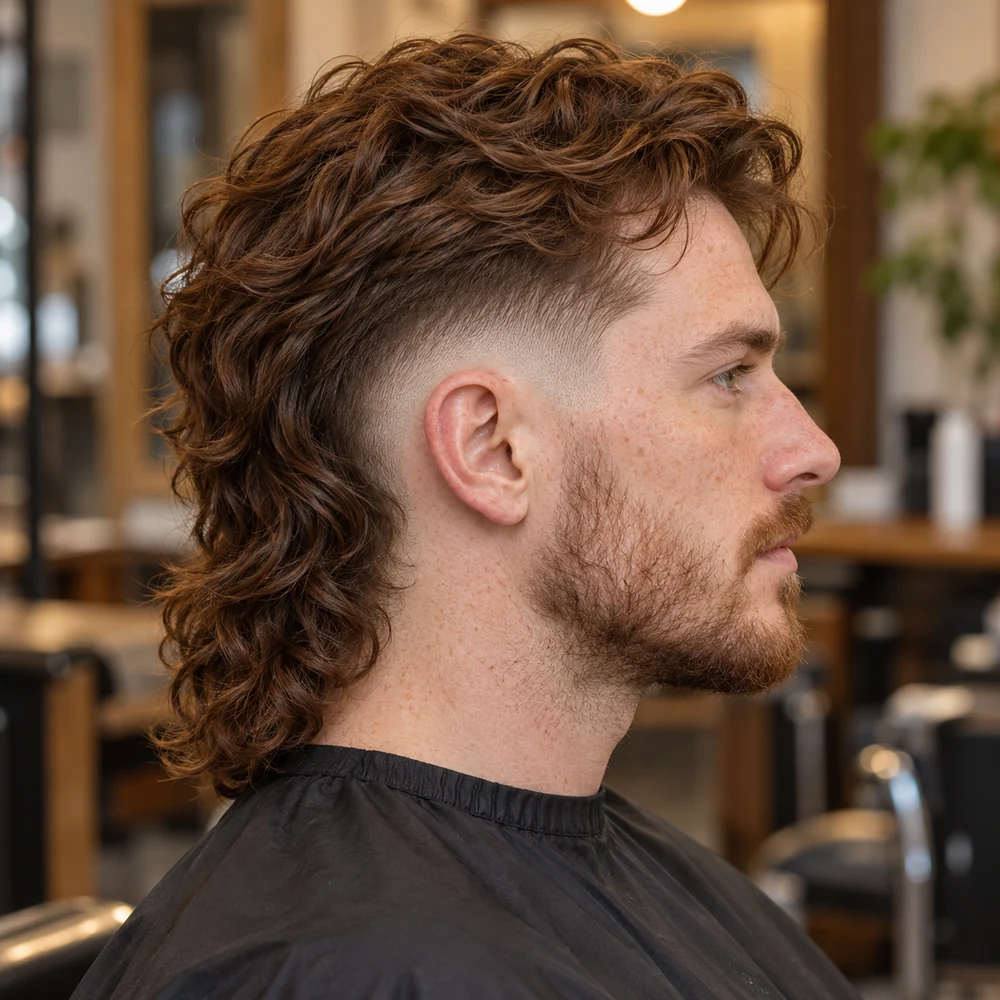
Longer wavy layers make the back a prominent part of the side silhouette.
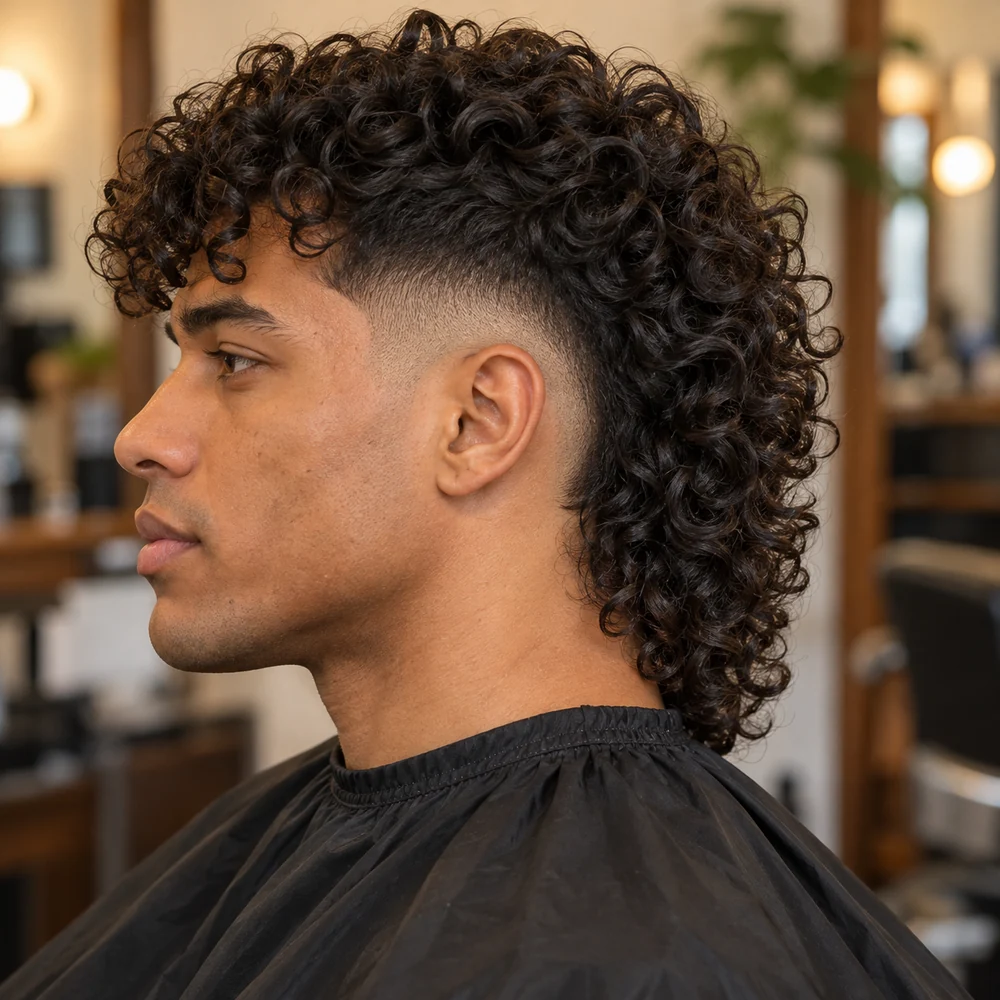
Loose curls continue from the top into a distinct longer curly tail.
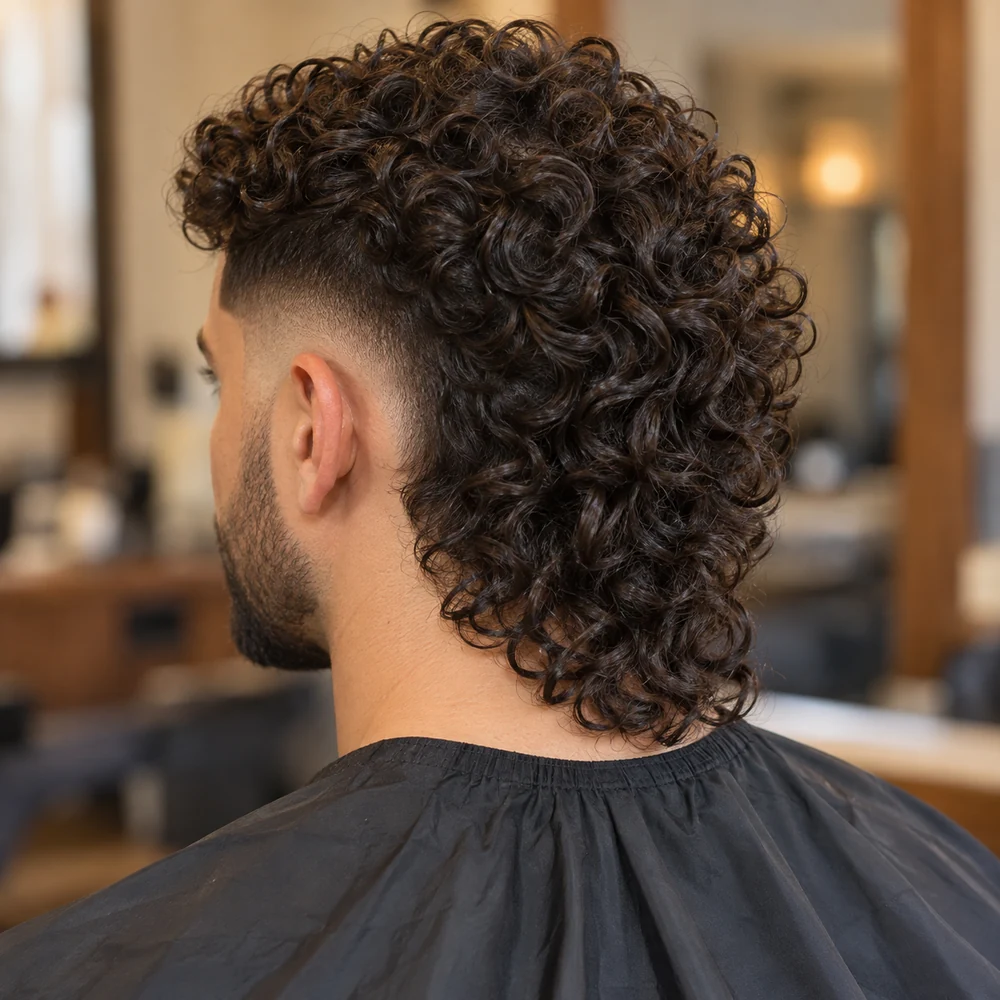
This rear angle shows the retained curly length behind the compact ear fade.
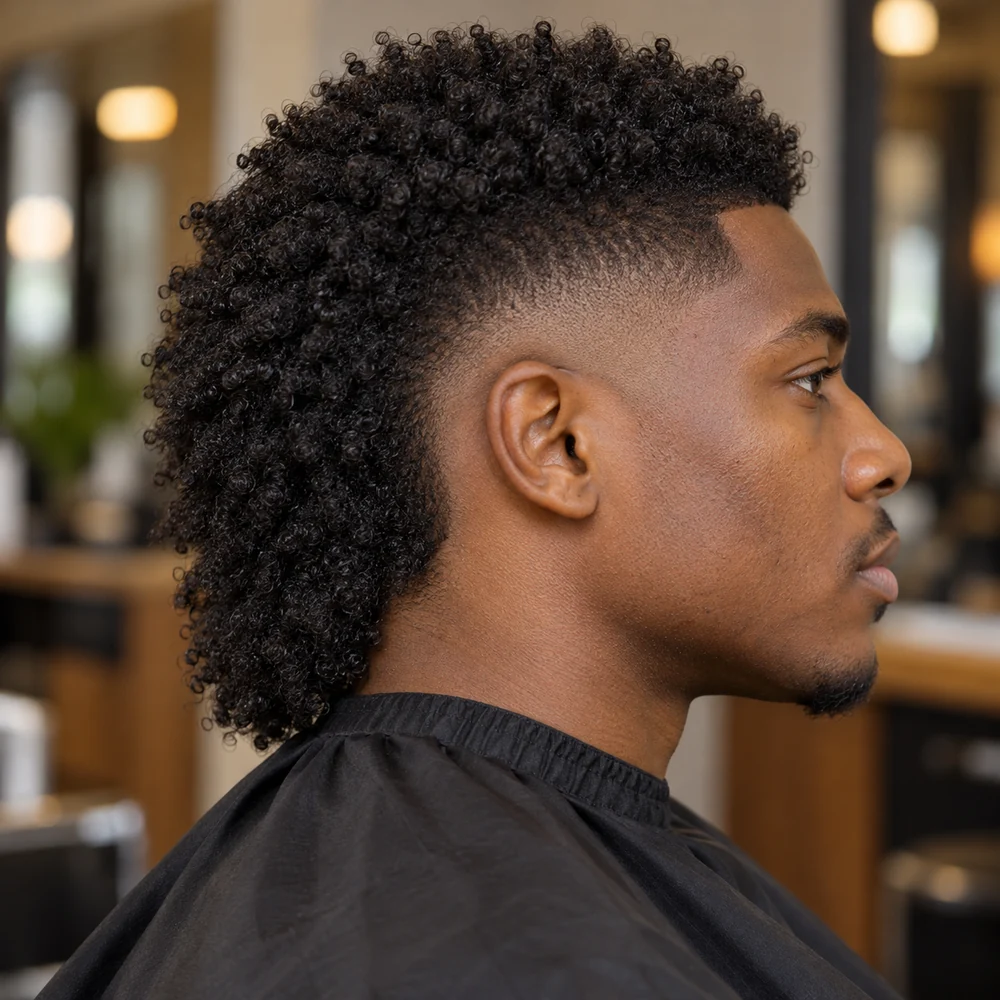
Tight coils form an elongated rear section while the ear arc stays compact.
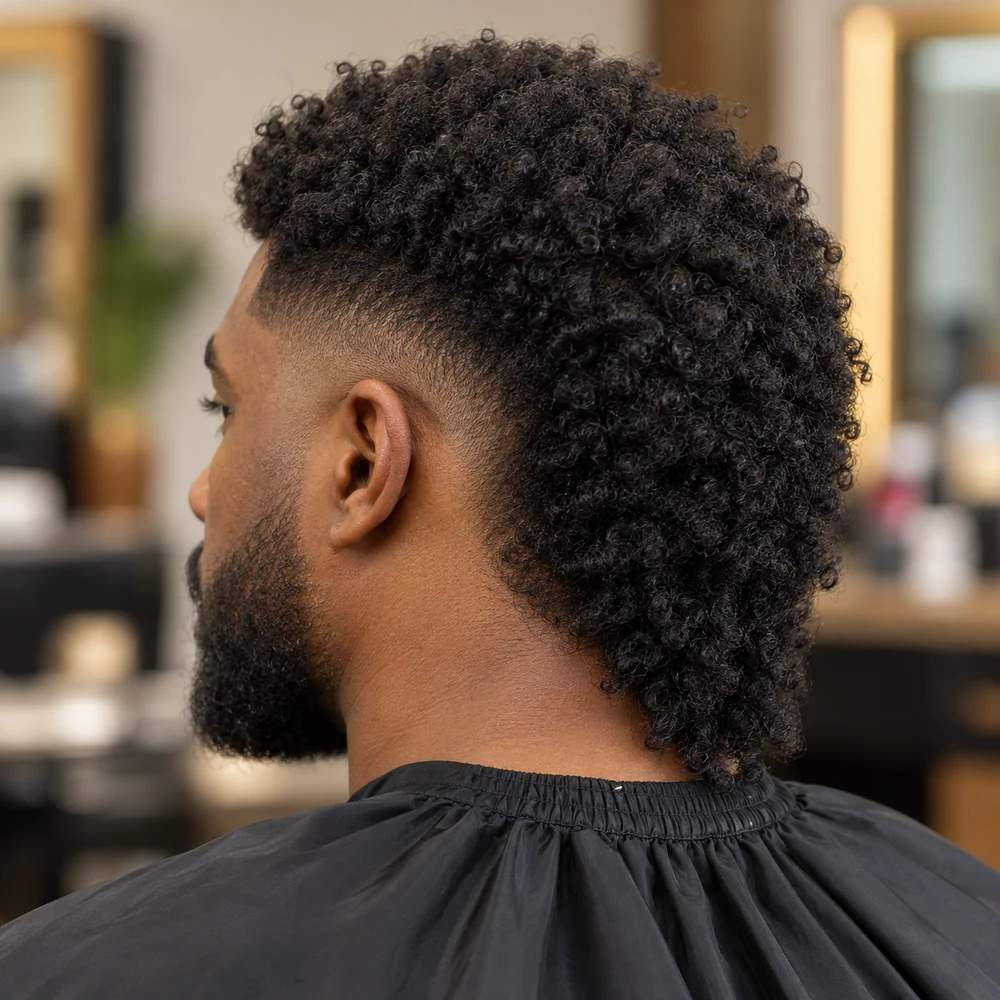
The rear angle shows dense coils retained through the crown and nape.
Visual disclosure: These ten references are original AI-generated editorial illustrations of fictional adults. They illustrate the article’s back-length and texture choices, not real clients, verified barber work or guaranteed results. The models are different references, not before-and-after photographs. Existing images and explanations continue below.
Barber brief: “Give me a rounded burst fade around each ear, keep the back length for the mullet, and connect the top into the back instead of fading the nape away. Finish the burst at [shadow/zero/skin].”
Burst Fade Mullet: Side, Back and Coily Variation
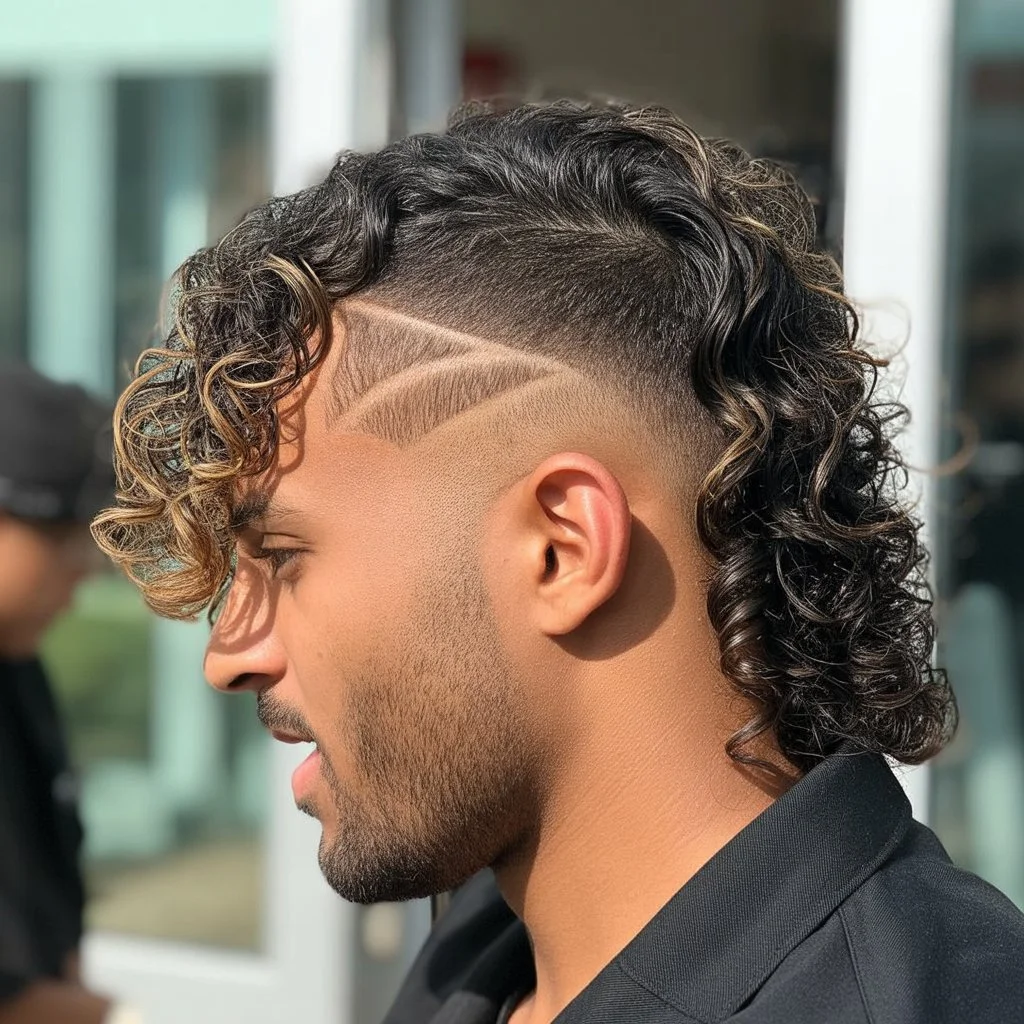
The side view identifies the ear-centered burst; the rear view shows the mullet length that remains behind it.


The Anatomy of a Burst Fade Mullet
Look at the haircut from three angles. From the side, the fade should create a rounded arc around the ear. From the back, the nape must retain enough length to read as a mullet. From the top, the front and crown need a shape that connects into the rear rather than looking like a separate short haircut sitting in front of a tail.
This is why a burst fade differs from a drop fade. A drop fade continues through the back; a burst can stop around the ear and preserve the nape. If you are choosing between them, read burst fade vs drop fade.
Burst Fade Mullet vs Taper Mullet
Both keep the back long. A burst fade mullet carves a curved arc around the ear, so the sides look sharper and the long back stands out more. A taper mullet only blends the sideburn and around the ear, low and subtle, which suits you if you want the mullet without a visible fade shape. For the most contrast, take the burst to zero or skin; a shadow finish grows out softer.
“Burst fade mullet: curved burst around the ear finished at [zero / skin], keep the back long.”
“Taper mullet: low taper at the sideburns and around the ear only, keep the back long.”
Choose How Dramatic You Want the Back
Subtle / short mullet
The back extends only modestly beyond the rest of the cut. This is easier to wear if you want the burst shape without a long tail.
Medium modern mullet
Enough rear length to be obvious from the side and back, while still keeping the shape controlled around the neckline.
Longer statement mullet
The back becomes a major part of the silhouette. Layering and weight distribution matter more as length increases.
What to Say to Your Barber
“I want a burst fade mullet, with the fade rounded around the ear rather than wrapping through the back. Keep [short/medium/long] length at the nape. Leave enough crown length to connect into the back, and finish the burst at [shadow/zero/skin].”
Show the barber a rear photo as well as a side profile. The rear length and crown connection are the two details most likely to be misunderstood if you show only the ear fade.
How Hair Texture Changes the Cut
Straight hair
Layers and texture can stop the back from hanging as one flat sheet or flipping out awkwardly. A matte product can add separation on top.
Wavy hair
Natural movement makes the transition from crown to back feel softer. If you prefer more flowing rear length, see our wavy burst fade mullet guide.
Curly and coily hair
The back can hold more volume and shape. Keep the outline deliberate and avoid cutting away the center length that creates the mullet or faux-hawk silhouette.
Styling: Front, Crown and Tail
Do not treat the whole haircut as one styling zone. The front may need lift or forward texture, the crown needs enough control to connect the top to the back, and the tail usually needs movement rather than stiff hold. Start with a small amount of product and add only where the shape needs help.
- For straight hair: light pre-styler plus matte paste for separation.
- For waves: light cream or wave product; avoid brushing out useful movement.
- For curls/coils: moisture and definition first, then shape.
Maintenance Without Losing the Mullet
The burst can be refreshed more often than the back is shortened. Tell the barber when you are actively growing the mullet so a “cleanup” does not quietly remove the length you have been building. Ask for the ear fade and outline to be refreshed while the back is only shaped where needed.
For the larger burst family, see fade haircuts for men and our burst fade vs taper fade comparison.
Industry Reference
Modern Barber describes the burst as a circular fade around the ear that leaves length at the back, which is exactly why the geometry pairs so naturally with mullets and mohawk-inspired shapes.
If you want to preserve noticeably more length through the back, see our wavy burst fade mullet guide.
Is every burst fade a mullet?
No. A burst fade describes the rounded fade around the ear. It becomes a burst fade mullet when the haircut also keeps a deliberate longer-back mullet silhouette.
Can a burst fade mullet be low maintenance?
The longer back can be forgiving, but the short rounded fade around the ear shows regrowth sooner. A shadow finish generally looks softer as it grows than a bare-skin finish.
What should I show my barber for a burst fade mullet?
Bring at least a side and rear reference. The side shows the burst arc; the rear shows how much nape length and crown connection you actually want.
 Low Burst Fade: 5 Styles & What to Tell Your Barber
 Burst Fade Haircuts: Types, Placement & Barber Guide
 Straight Hair Burst Fade Crop: Shape & Barber Guide
2 Comments