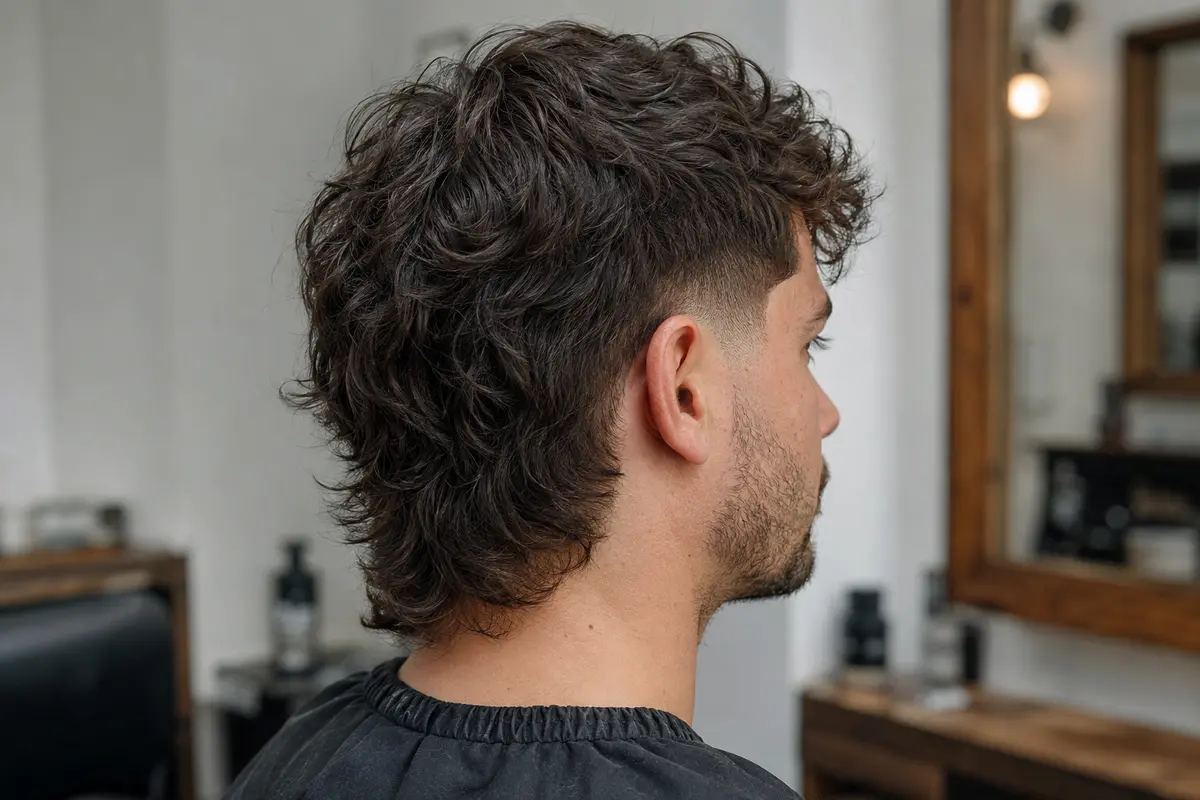
Wavy Burst Fade Mullet: Shape, Styling & Barber Guide
On this page
For every mullet fade and back length, see the modern mullet guide.
A wavy burst fade mullet combines an ear-centered curved fade with deliberate length flowing through the crown and nape. The wavy pattern supplies movement; the burst exposes the area around the ear without requiring a full fade through the center back.
Quick answer: show your barber both side and rear references. Specify the burst height, the shortest finish, where the fade stops behind the ear, the dry nape endpoint and how much weight should connect the top to the back.

The Two Shapes Must Work Together
A burst fade and a mullet describe different parts of the cut. The burst is the curved short zone around the ear. The mullet is the retained back length. If the fade crosses and removes the center nape, the mullet weakens. If the ear area remains too full, the rounded burst is harder to see.
| Decision | Options | What changes |
|---|---|---|
| Ear arc | Subtle/lower or stronger/higher | Amount of side contrast |
| Top connection | Compact, layered or fuller | How the wave flows into the crown |
| Back length | Short, medium or pronounced | How clearly the mullet reads |
| Finish | Shadow, zero or skin | Scalp exposure and visible grow-out |
Modern Barber’s professional overview describes the burst as a dramatic arc around the ear and notes that current mullets range from subtle to statement shapes across hair textures. That range is why exact side and rear references are more useful than a trend label.
Wavy Mullet Length Options
Short and Subtle
The nape remains longer than the sides but does not extend far below the neckline. This version keeps the silhouette easy to soften and works when the goal is movement rather than an extreme tail.
Medium and Connected
Layered length through the crown and back allows the wave pattern to form without one abrupt step. This is the most adaptable version when you want the haircut to read as a mullet from the side and rear without a severe disconnection.
Longer Statement Back
More nape length creates the strongest profile, but the back still needs internal shape. Cutting every layer to one length can produce bulk at the crown and a thin tail below it. Ask the barber to preserve the wave groups while shaping the overall outline.
Burst vs Drop Fade on a Mullet
A burst concentrates the short curve around the ear and can stop before the center back. A drop fade descends behind the ear and continues as a broader band across the rear. Either can accompany longer hair, but only the burst naturally preserves a clearly separate center-back area. See burst fade vs drop fade for a direct placement comparison.
How to Ask Your Barber
“I want a wavy burst fade mullet. Keep this dry length through the crown and nape, preserve the wave pattern, and use a rounded burst centered around the ear. Stop the fade behind the ear instead of carrying it across the center back. Keep the arc below this point and finish the shortest area at [shadow/zero/skin].”
Use a side photo for the ear curve and a rear photo for the nape. If you want the broader haircut family first, compare the parent burst fade mullet guide and burst fade haircuts.
Styling Wavy Length
- Start damp and avoid rough towel friction that breaks the wave pattern.
- Apply a light cream, foam or gel only if it supports the hold and finish you prefer.
- Scrunch or finger-direct the waves through the crown and back.
- Diffuse on controlled heat/airflow or let the hair dry in its intended direction.
- Once dry, separate only the sections that need definition.
Heavy product can flatten fine waves, while very dry or coarse hair may need more conditioning. Use the lightest routine that maintains movement and scalp comfort.
Maintenance and Grow-Out
The short ear zone usually loses sharpness before the nape needs major length removal. A burst-only refresh can preserve the growing back, while a shape appointment can rebalance crown bulk and the nape outline. Tell the barber when growth—not maximum sharpness—is the priority.
Avoid promising one fixed schedule. Hair growth, wave spring, finish and desired contrast vary. Return when the ear arc or rear silhouette no longer matches the reference you chose.
Frequently Asked Questions
Does a wavy burst fade mullet need a skin fade?
No. Shadow, zero and skin finishes can all be used; the ear-centered placement defines the burst.
How is this different from a drop fade mullet?
A burst can stop behind the ear and preserve the center back. A drop fade continues as a broader descending band across the rear.
Can the mullet be subtle?
Yes. A short nape with connected layers can show the intended profile without a long or extreme tail.
Should wavy hair be cut wet or dry?
Technique varies, but the barber should account for the usual dry pattern and spring before choosing the final fringe, crown and nape endpoints.
Which photos should I bring?
Bring one side view showing the burst curve and one rear view showing the crown-to-nape connection and final length.
Wavy burst fade mullet: compare the rear endpoint
Visual disclosure: The new realistic references below are original AI-generated editorial illustrations of fictional adults. They illustrate haircut choices, not real client results. Compare the visible shape with your own hair and discuss adaptations with your barber.
These new examples add a length decision to the existing shape guide. They are independently generated illustrations, not verified matching angles of one real haircut. Compare the dry outline and the point where the nape ends rather than expecting the same result from the same guard.
Compact wavy rear length
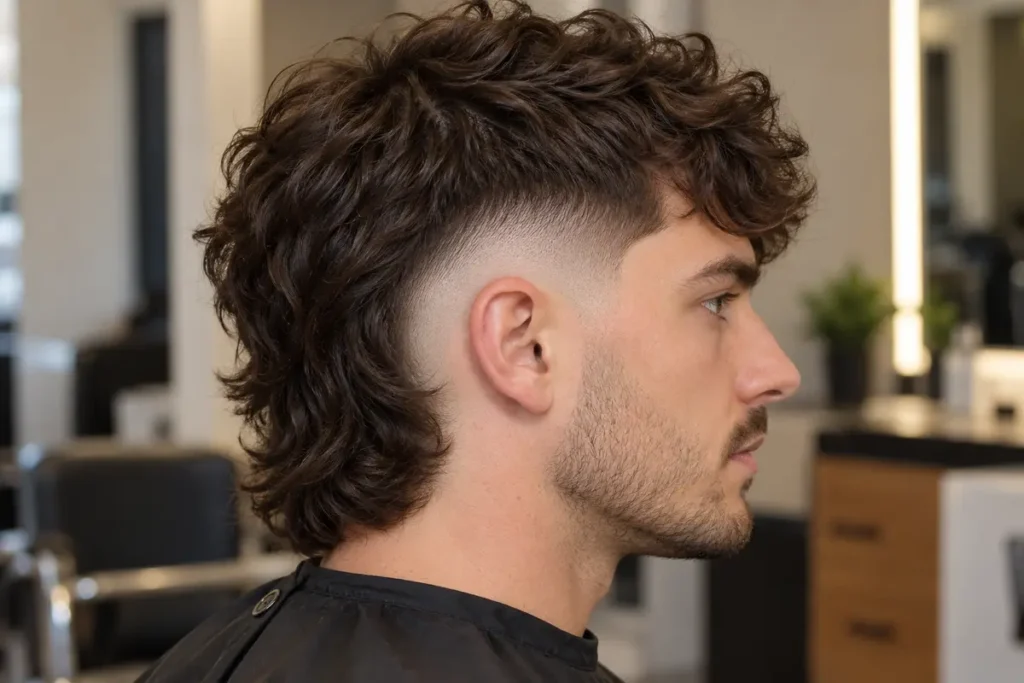
The waves continue from the crown into a short retained nape. The rounded ear area remains visible without taking the fade through the center back. Use this reference when you want a mullet shape that is apparent from the side but has less hanging rear length. Ask how the layers will connect when your own waves dry.
Longer connected wavy nape
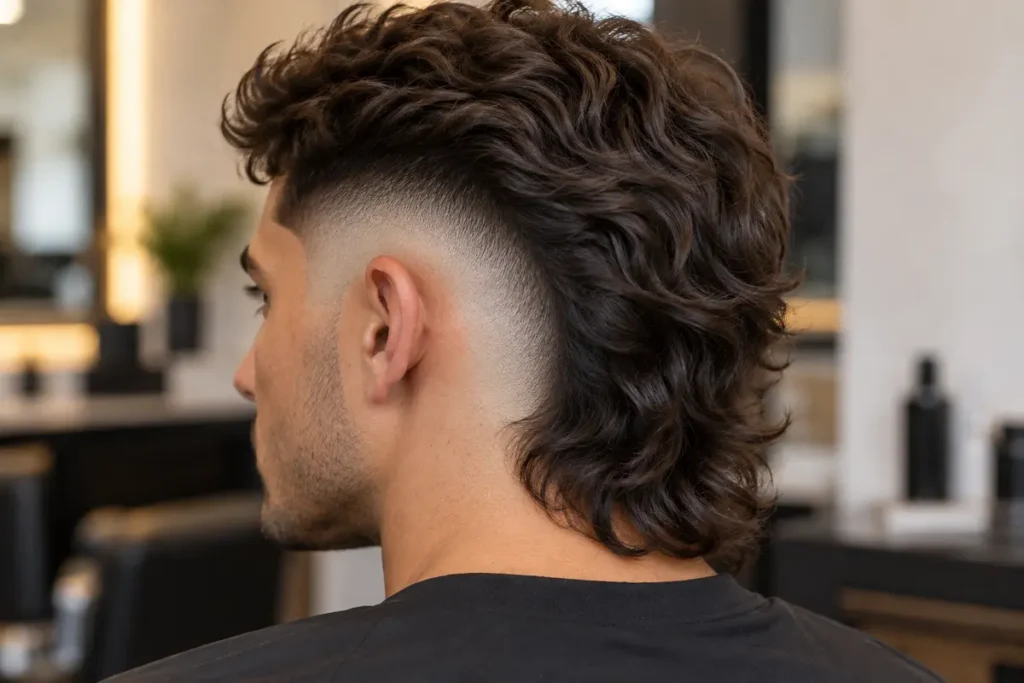
The rear three-quarter reference makes the longer center-back outline visible alongside the shorter ear area. The rear length has wave groups and a connection through the crown rather than only an isolated thin tail. Show your barber where you want the dry nape to finish and how much fullness should remain at the sides of the back.
Use both views in the consultation
Set the ear arc boundary first, then the dry rear endpoint, crown connection and shortest finish. Ask whether your current length is sufficient to create those waves without removing more than you want. A longer back does not require a higher burst, and a compact nape does not automatically make the cut a drop fade.
For the general family, see the burst fade mullet guide. For the rounded fade boundary, compare burst fade vs drop fade.
 Low Burst Fade: 5 Styles & What to Tell Your Barber
 Burst Fade Haircuts: Types, Placement & Barber Guide
 Straight Hair Burst Fade Crop: Shape & Barber Guide