
Short Burst Fade: The Low-Maintenance Trade-Off
On this page
A short burst fade keeps the overall haircut compact while using the rounded fade around the ear as the main design feature. It is a practical option if you like the burst shape but do not want to style a long mullet, faux-hawk, or high-volume top every morning.
The trade-off: the top can be genuinely low-maintenance, but a very tight burst around the ear still shows regrowth quickly. Choose a shadow or zero finish if you want the fade to grow out more softly than a bare-skin burst.
What Counts as a Short Burst Fade?
The burst describes the shape of the fade, not the top length. On a short version, the top might be a buzz, crew cut, short textured crop, short curls, or a compact faux-hawk. The fade still curves around the ear instead of running as one full band through the back.
Best Short Top Pairings
Buzz or very short crop
The easiest daily routine. The rounded burst adds shape so the haircut does not read like one uniform clipper length.
Textured crop
Keep enough length on top for visible separation, then use a small amount of matte product if needed.
Short curls or coils
The burst can create a clean outline while the top keeps natural texture. Ask the barber to shape the top rather than reducing it to the same clipper length as the sides.
Compact faux-hawk
Leave a little extra center length through the top and crown while keeping the back controlled.
What to Ask Your Barber
“I want a short burst fade with the fade rounded around the ear. Keep the top [buzzed / cropped / short curls] and keep the back short but do not turn the burst into a drop fade. Finish the shortest point at [shadow/zero/skin].”
If the distinction between burst and drop is unclear, use our burst fade vs drop fade guide and show the comparison image to your barber.
Why It Is Low Maintenance—And Why It Isn’t
Short tops need less drying, brushing and product. That is the real low-maintenance advantage. The burst itself is still a precision fade: if you choose a high-contrast skin finish, the rounded edge will become less crisp as the hair grows. In other words, daily styling maintenance is low; barber-maintenance depends on how sharp you want the fade to stay.
Shadow, Zero or Skin?
- Shadow: softest contrast and easiest grow-out.
- Zero: very tight clipper finish; crisp without necessarily going bare.
- Skin: strongest contrast and most obvious regrowth.
Choose based on your skin comfort and how often you want to refresh the edge, not because one finish is automatically more “correct.”
Styling in Under a Minute
For a buzz or very short crop, you may need no product at all. For a short textured top, rub a tiny amount of matte paste or cream between your hands and work it through dry or slightly damp hair. For curls/coils, prioritize moisture and shape rather than heavy hold.
How It Compares with Longer Burst Styles
The classic burst fade mullet keeps much more rear length and needs more shape management through the crown and nape. The short burst keeps the same ear-centered fade idea but removes most of that styling commitment.
For a complete map of fade types and finishes, see fade haircuts for men.
Professional Fade Reference
Wahl’s professional fade tutorial shows the guard progression and detailing that create a smooth gradient. See Wahl’s fade guide for the technique reference.
Is a short burst fade easy to maintain?
The short top is easy to style, but the fade around the ear still loses crispness as it grows. A softer shadow finish needs less frequent precision cleanup than a skin finish if you are comfortable with a more natural grow-out.
What can I wear on top with a short burst fade?
Buzz cuts, crew cuts, textured crops, short curls, coils and compact faux-hawks all work. The top does not have to be a mullet.
Does a short burst fade have to be a skin fade?
No. Shadow, zero and skin finishes can all be used; the burst name describes the rounded shape around the ear.
Short burst fade: compare a crop with short coils
Visual disclosure: The new realistic references below are original AI-generated editorial illustrations of fictional adults. They illustrate haircut choices, not real client results. Compare the visible shape with your own hair and discuss adaptations with your barber.
Both references keep the haircut compact while retaining the rounded ear-centered fade. The top texture changes, but neither example needs a long rear tail. Use the images to choose top shape and ear placement separately.
Short textured crop with a burst fade
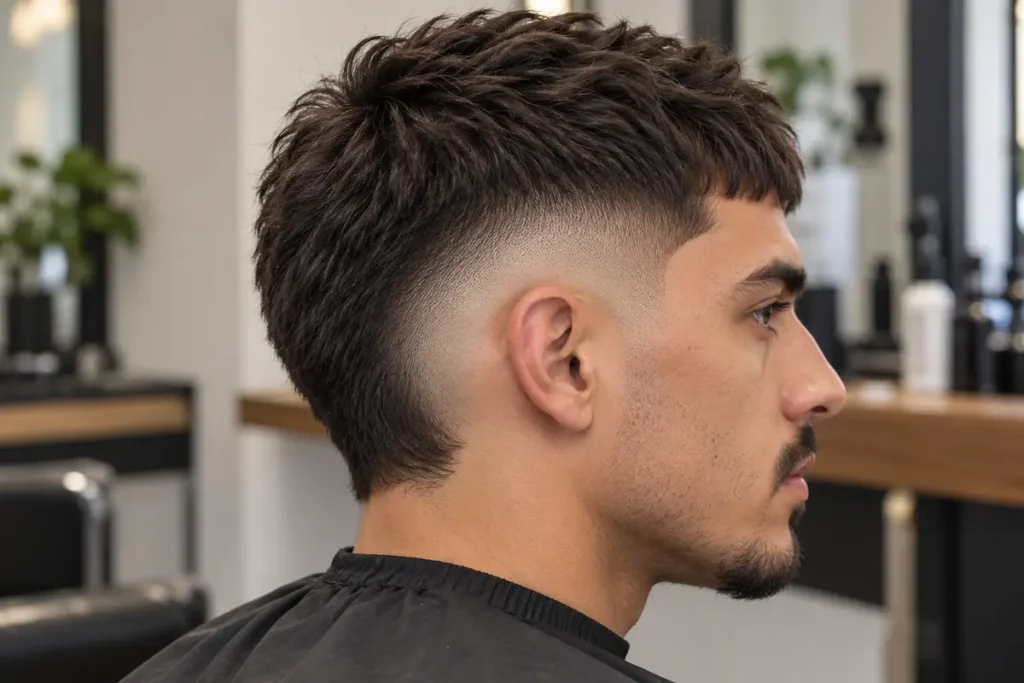
The short fringe sits forward and the top has small separated sections rather than a tall center ridge. The ear area is lighter and rounded; the dark rear remains short. Ask for enough dry top length to create the separation you want, and indicate where the fringe should sit. Product is optional if the cut already falls into place.
Short coils with a compact rear
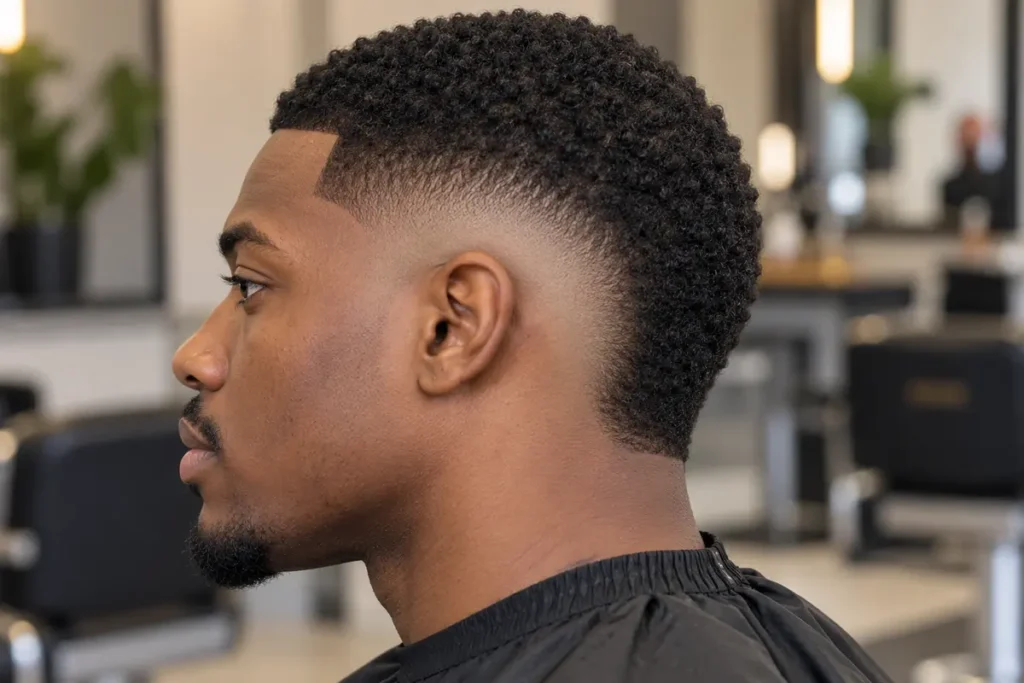
The short coiled top supplies texture without an extended mullet silhouette. Compare the dark top with the shorter ear area, then show how much rear hair you want retained. A short-hair finish can keep a softer contrast than bare skin; do not infer an exact guard from the illustration.
Choose by routine, not by the label alone
A buzzed top may need little styling; a crop may need direction at the fringe; short coils may need a texture-appropriate wash and conditioning routine. The fade can still need precision touch-ups if you prefer a fresh edge. Daily styling effort and barber maintenance are different decisions.
Barber request: “Keep this compact top and short back. Round the fade around the ear rather than running it across the center back. I want this fringe or coiled outline, and this amount of contrast at the shortest point.”
If you are deciding between a short back and a longer tail, compare burst fade mullet shapes. For a placement comparison, see burst fade vs drop fade.
 Low Burst Fade: 5 Styles & What to Tell Your Barber
 Burst Fade Haircuts: Types, Placement & Barber Guide
 Straight Hair Burst Fade Crop: Shape & Barber Guide
One Comment