
Textured Fringe Haircuts for Men: Types, Length & Styling
On this page
- Textured fringe visual references
- What Makes a Fringe “Textured”?
- Textured Fringe Haircut Types
- Which Textured Fringe Works With Your Hair?
- How Long Should a Textured Fringe Be?
- How to Ask Your Barber
- How to Style a Textured Fringe
- Maintenance and Common Problems
- Sources and Further Reading
- Frequently Asked Questions
Pairing your fringe with a taper? See the low taper fade with textured fringe.
A textured fringe is a forward-facing front section broken into visible pieces, bends or layers instead of one solid straight edge. It can be short or long, soft or choppy, and worn with scissor-cut sides, a taper or a full fade. The phrase describes the fringe and surface movement; it does not require one exact haircut underneath.
Quick answer: choose the fringe length first, then decide how separated the edge should look, how much weight to keep on top and whether the sides should stay full, taper only at the perimeter or fade through a broader band. Bring front and side photos because “textured fringe” alone does not define all four choices.
Textured fringe visual references
Select an image to view it larger.


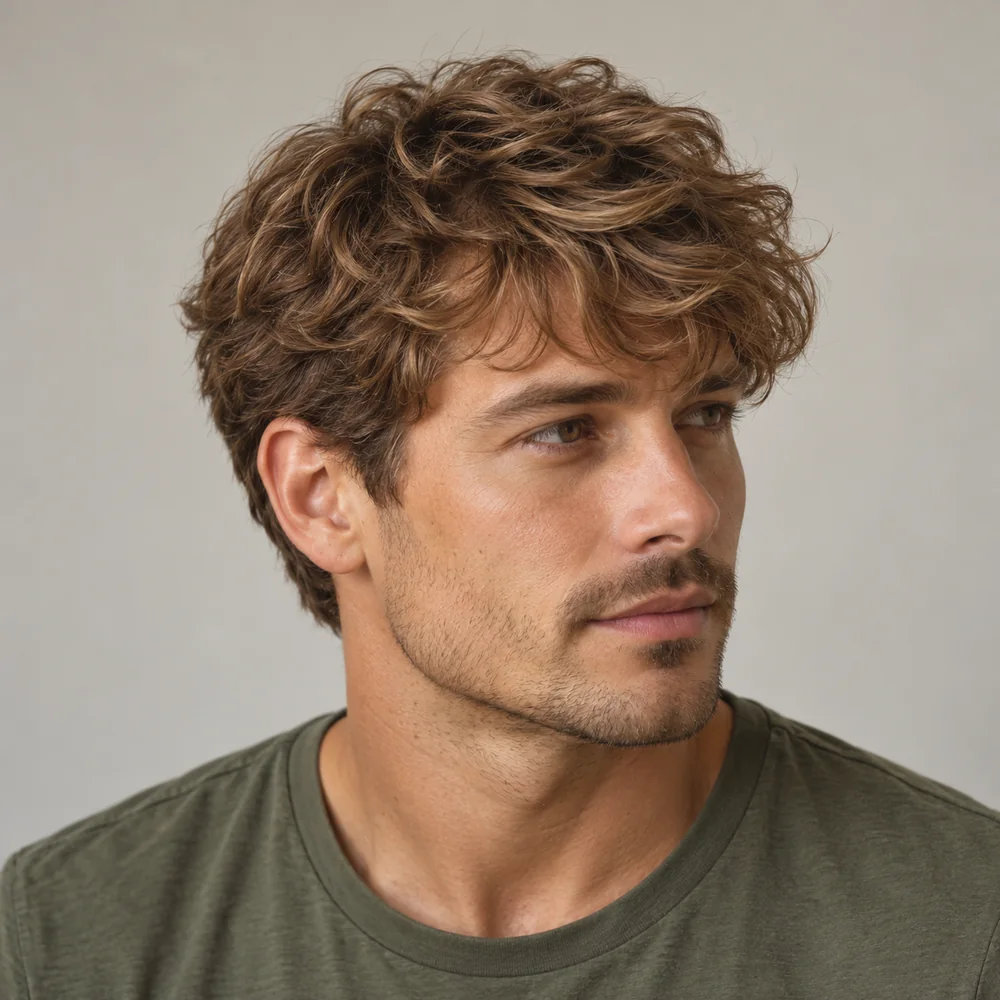
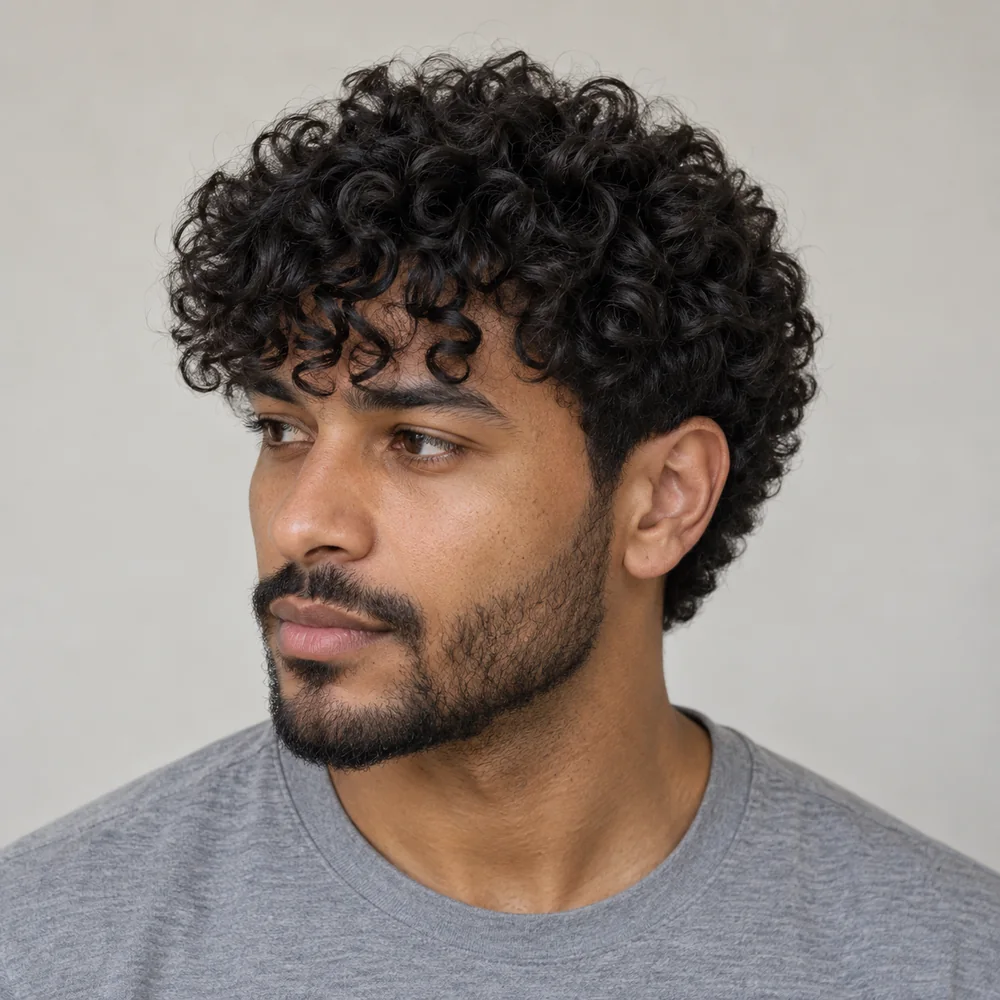
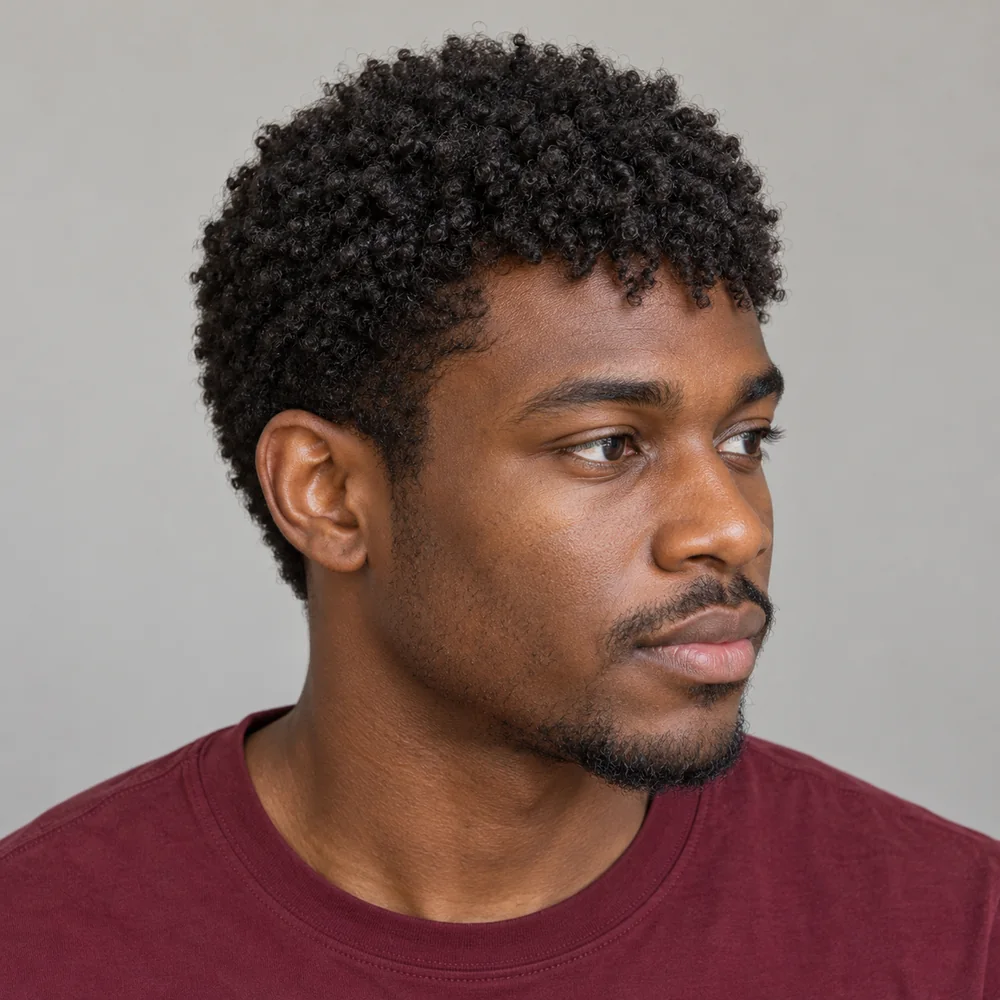
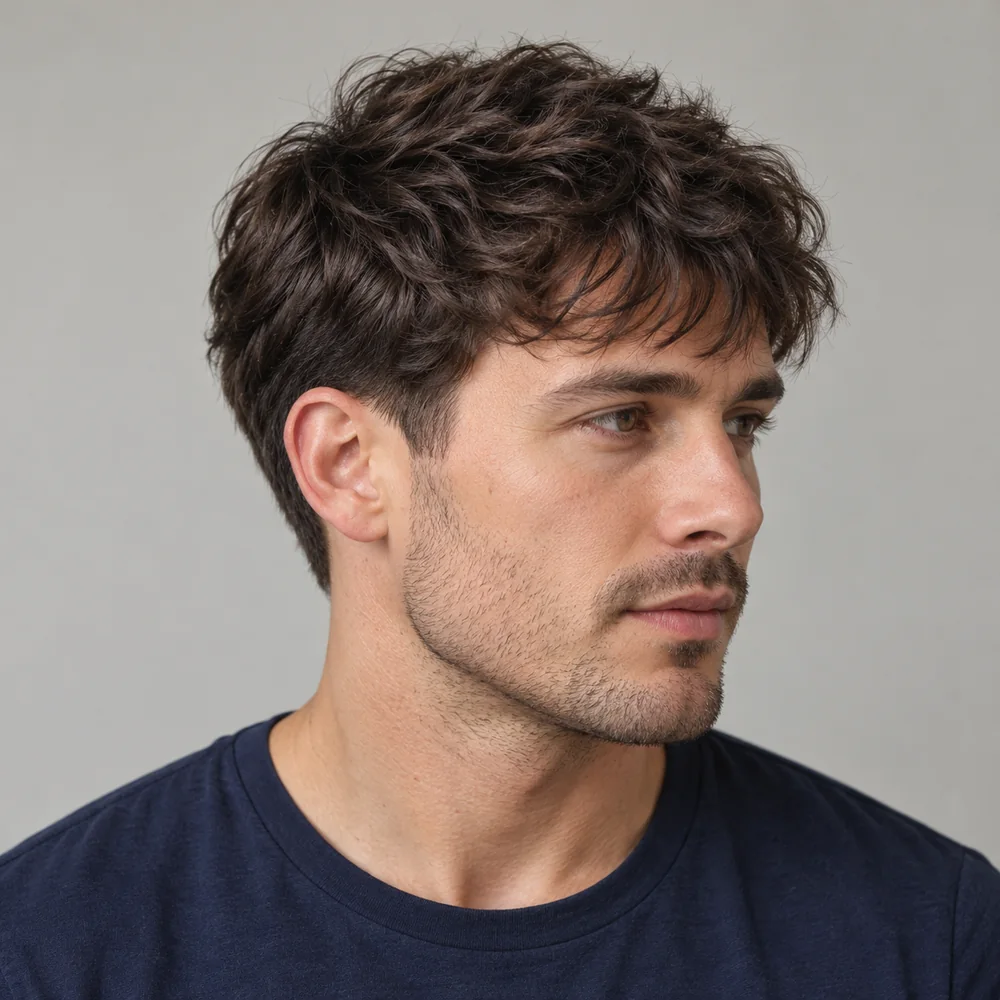
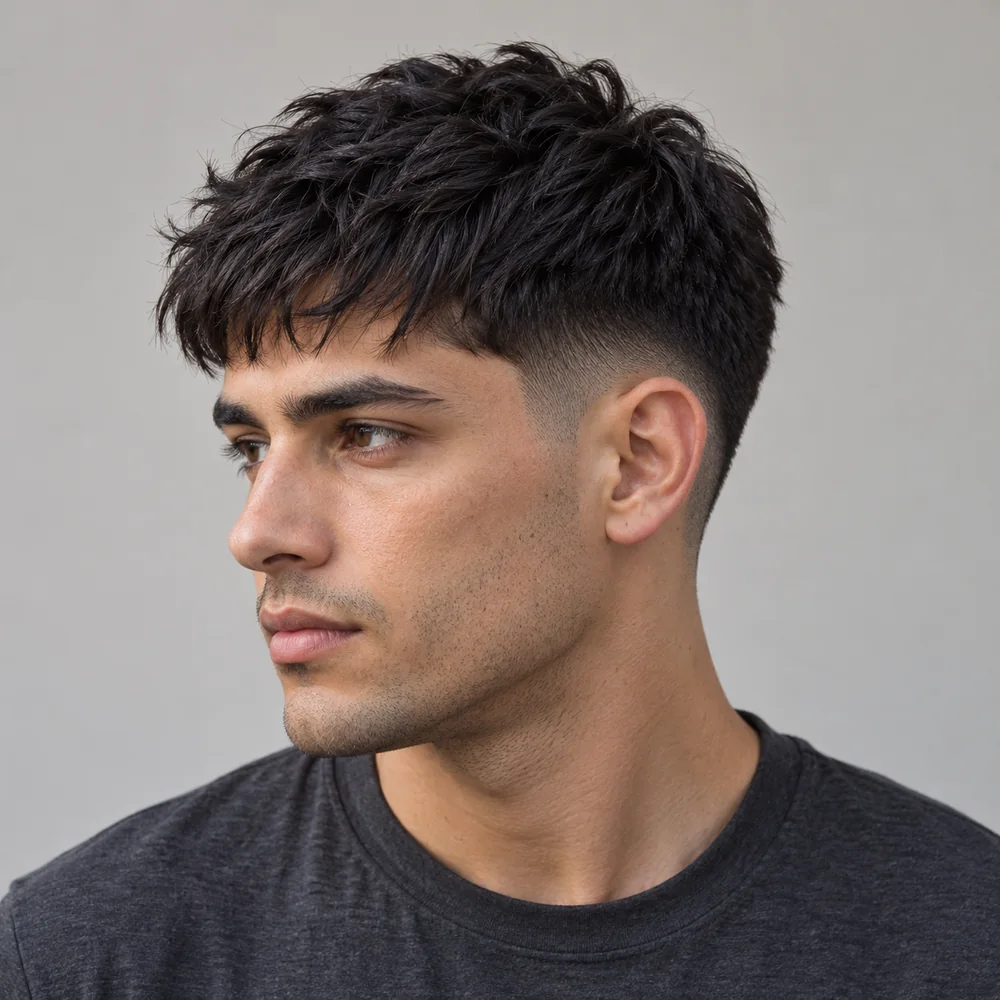
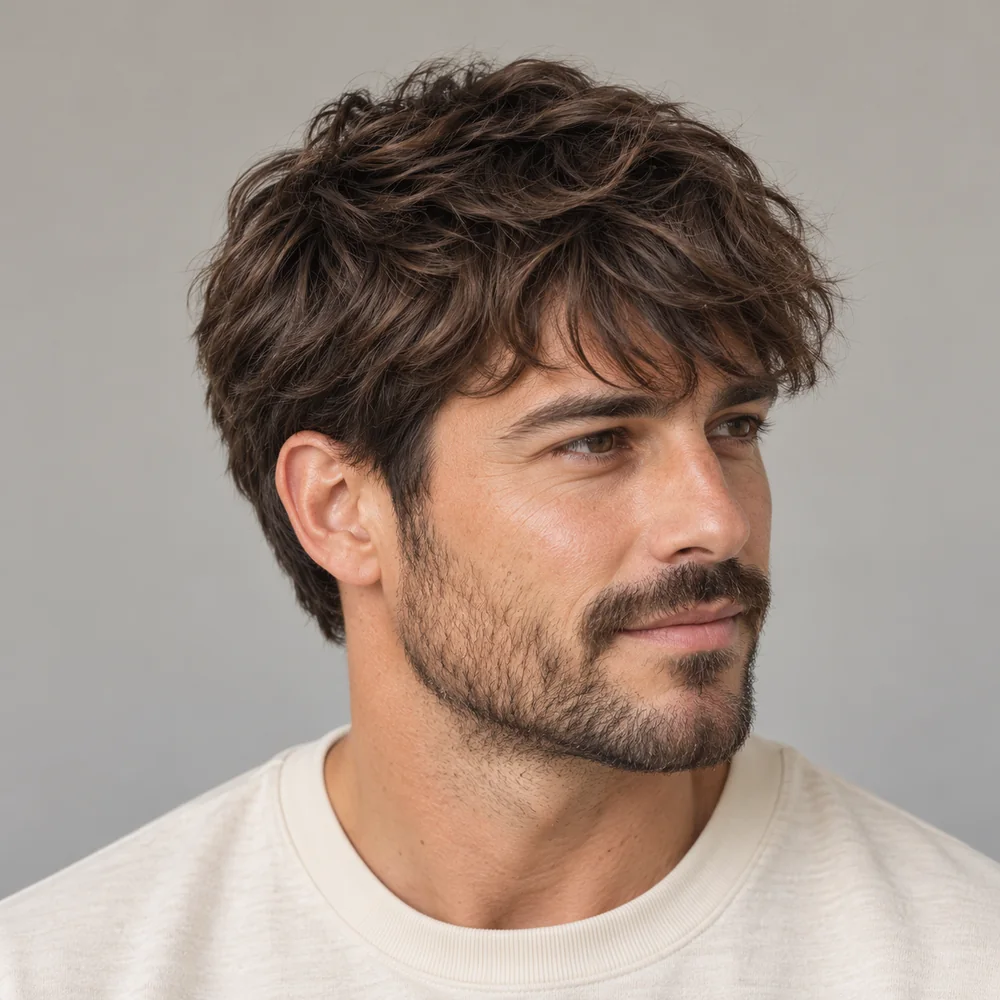

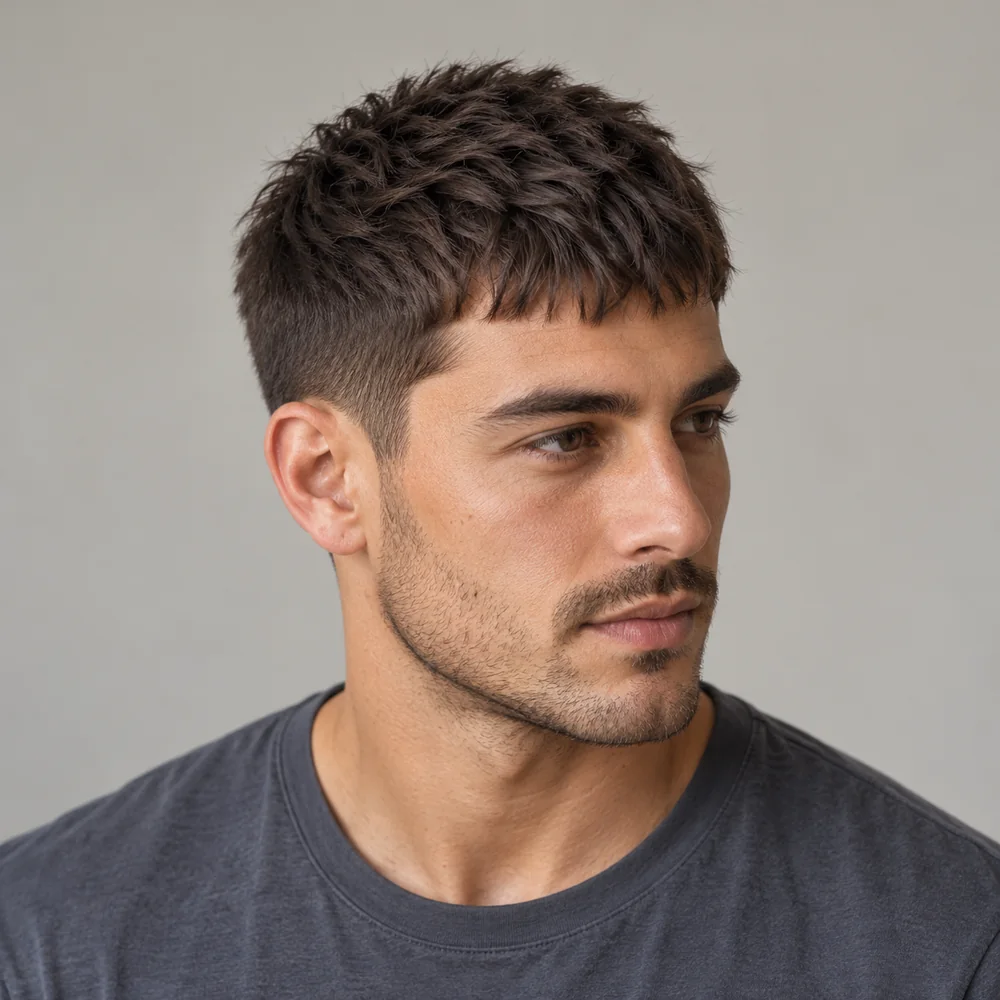
Visual disclosure: These ten new references are original AI-generated editorial illustrations of fictional adults. They show haircut choices, not real clients or guaranteed results. Existing references and explanations continue below.

What Makes a Fringe “Textured”?
Texture is the visible pattern created by the hair’s natural movement, the cut and the styling method. A barber may use point cutting, slicing, layering or carefully chosen weight removal, but the technique should match the density and curl pattern. “Add texture” should not automatically mean thinning every section. Fine hair can lose coverage if too much weight is removed; curls and coils can become frizzy if their groups are broken without a plan.
| Decision | Options | What changes |
|---|---|---|
| Fringe length | Short, eyebrow-skimming or longer | Coverage, movement and daily control |
| Front edge | Soft, choppy, piecey or deliberately blunt | How separated and graphic the front looks |
| Top weight | Compact, layered or fuller | Volume, scalp coverage and movement |
| Side treatment | Scissor cut, taper, low/mid fade or burst | Connection and contrast around the head |
| Finish | Natural, matte or lightly defined | Shine, separation and hold |
Textured Fringe Haircut Types
Short Choppy Textured Fringe
This version keeps the front compact and separates it into irregular points. It is easier to keep away from the eyes and can pair with a crop, taper or fade. Ask the barber to retain enough density for the fringe to read as intentional rather than wispy.
Long Textured Fringe
A longer fringe can reach the eyebrows or fall beyond them in selected pieces. The extra length shows waves and movement but needs more deliberate drying direction. Agree on the dry length before cutting because wet hair, especially wavy or curly hair, may spring upward.
Wavy Textured Fringe

Waves create natural direction changes. A useful cut protects the strongest bends, removes only obstructive bulk and leaves enough length for the wave to reform after washing. Heavy wax can collapse this shape; start with a light cream, foam or small amount of matte product suited to your hair.
Curly or Coily Textured Fringe
Curly and coily fringes rely on curl grouping and shrinkage rather than straight, separated spikes. Ask for the front to be assessed in its usual dry state and specify how much forehead coverage you want. A localized taper can clean the temple and nape while preserving side volume.
Textured Crop or French Crop
A textured crop usually keeps the top and fringe relatively compact. A French crop fade often uses a more defined forward front, while the textured-fringe family can be longer, softer or less geometric. An Edgar haircut is another distinct crop family whose front edge is often more deliberate and graphic.
Textured Fringe With a Low Taper
A low taper cleans the sideburn/temple and nape while retaining more hair around the sides. This is useful when the top needs support or you prefer softer grow-out. For the exact combination of a localized mid taper and textured front, use the dedicated mid taper textured fringe guide.
Textured Fringe With a Fade
A low, mid or high fade changes a broader band through the sides and back. The stronger contrast can make the fringe look more prominent, but taking the fade too high may remove the side weight needed for a connected shape. Compare fade vs taper before choosing coverage.
Textured Fringe With Scissor-Cut Sides
No fade is required. Scissor-cut sides can retain softness, movement and a fuller outline. This version suits people who want less exposed scalp or a more grown-in silhouette. The side length still needs shaping so the haircut does not expand into an unintended shelf.
Which Textured Fringe Works With Your Hair?
| Hair | Useful direction | Common mistake |
|---|---|---|
| Straight and fine | Moderate length, restrained layering, light matte product | Over-thinning and revealing more scalp |
| Straight and thick | Internal weight control with a defined front direction | Leaving a heavy shelf or removing too much density |
| Wavy | Follow the strongest bends and dry with the pattern | Brushing all movement flat |
| Curly | Cut for dry shrinkage and preserve curl groups | Using a straight-hair length reference without adjustment |
| Coily | Shape the front silhouette and protect the hairline | Taking the temple fade higher than requested |
| Thinning/receding | Keep useful coverage and avoid forced forward density | Using an excessively heavy fringe to hide every change |
If density or recession is the main concern, see the fade options for a receding hairline. A fringe can change visual balance, but it does not treat hair loss.
How Long Should a Textured Fringe Be?
- Short: sits well above the eyebrows and is easier to keep controlled, but gives less movement and coverage.
- Medium: approaches the upper forehead or brows and offers a balance of separation and manageability.
- Long: reaches the brows or beyond in selected pieces, showing more movement but demanding more drying and regular reshaping.
Do not rely on a single wet measurement. Show the dry endpoint and explain whether the fringe should touch the forehead, hover above it or split naturally.
How to Ask Your Barber
“I want a textured fringe that finishes around [dry reference point]. Keep the front [soft/choppy/piecey], preserve enough weight for my [fine/thick/wavy/curly] hair, and connect it into [fuller scissor sides / a low or mid taper / a low or mid fade]. Finish the shortest area at [shadow/zero/skin], and do not take the side treatment higher than this point.”
Bring one front photo for the edge, one side photo for the connection and one image showing the dry texture. The Fade Calculator can help organize the side-treatment decision.
How to Style a Textured Fringe
- Start with damp hair and gently establish the intended forward direction.
- Use a light pre-styler or heat protectant when the product instructions and your hair needs support it.
- Dry from the roots while separating sections with fingers. Use a diffuser or lower airflow when preserving curls or waves.
- Once dry, use a small amount of matte paste, clay, cream or light hold product appropriate for your texture.
- Pinch only the pieces that need definition. Stop before the fringe becomes one stiff strip.
Product labels are less important than weight and finish. Fine hair usually needs less product; coarse, curly or dry hair may respond better to a cream than a dry clay.
Maintenance and Common Problems
- Trim when the dry fringe blocks vision or no longer forms the intended edge.
- Refresh a tight fade or skin taper separately from the top if the fringe length still works.
- Avoid cutting the fringe at home while wet unless you understand shrinkage and your natural growth pattern.
- Do not chase viral references that show a different density or curl pattern without adapting the shape.
- If the fringe splits in one place, work with the growth pattern or ask for a revised dry direction rather than adding more product indefinitely.
Sources and Further Reading
Frequently Asked Questions
What is a textured fringe?
It is a forward front section shaped into visible pieces, layers, bends or curl groups rather than one uniform solid edge.
Does a textured fringe require a fade?
No. It can be paired with scissor-cut sides, a localized taper or a broader fade. Choose the side treatment separately.
Is a textured fringe the same as a French crop?
Not always. A French crop is one compact haircut family; a textured fringe can be longer, softer and combined with many different side and back shapes.
Can wavy or curly hair wear a textured fringe?
Yes. The cut should account for the natural pattern and dry shrinkage instead of forcing it to behave like straight hair.
What should I tell my barber?
Specify dry fringe length, edge softness, retained top weight, side treatment, shortest finish and the highest point the taper or fade should reach.
 Buzz Cut Guard Sizes: Every Length From #0 to #16, With Photos
 Two Block Haircut: 5 Styles, Lengths & Barber Tips
 Wolf Cut for Men: 6 Layered Styles & Barber Requests
3 Comments