
French Crop Fade: Fringe, Styles & Barber Script
On this page
- French crop fade gallery: fringe, texture and side choices
- What Actually Defines a French Crop Fade?
- French Crop Fade vs Edgar
- French Crop vs Caesar
- Which Fade Works Best Under a French Crop?
- French Crop for a Receding Hairline
- How to Style a French Crop Fade
- Hair Texture Adjustments
- What to Tell Your Barber
- French Crop Fade Maintenance
- Sources and Further Reading
- Frequently Asked Questions
A French crop fade combines a compact top worn forward with short faded or tapered sides. The fringe is the defining front feature, but it does not have to be one exact texture: professional barber guides describe French crops with both blunt and softer textured fringes. The practical choices are fringe edge, top texture, fade height and shortest finish.
Prefer the front swept up rather than down? A crew cut keeps a similar short top with the longest hair at the front. Want a choppier, messier fringe instead of a straight line? See the textured crop.
French crop fade gallery: fringe, texture and side choices
Compare compact forward fringes, natural textures and side treatments already discussed below. These are different fictional models. Select an image to enlarge it.
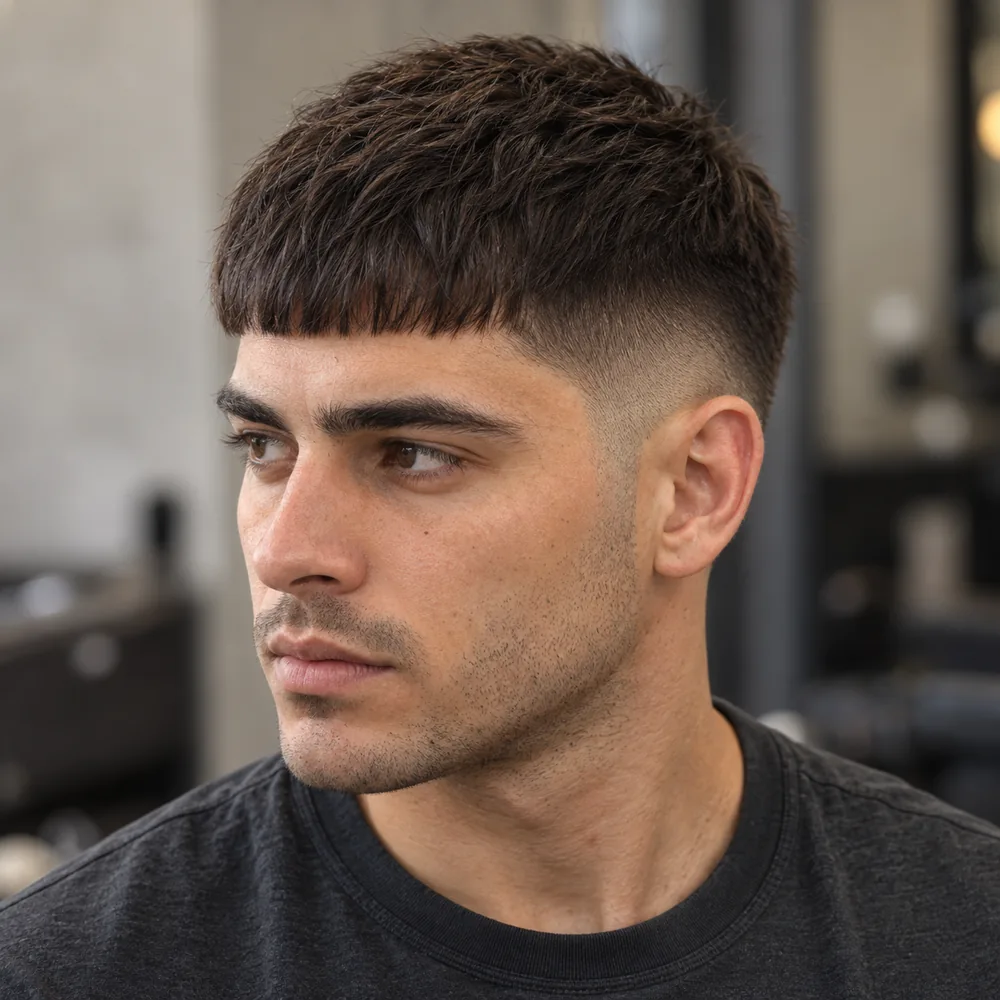
A compact forward fringe pairs with a low shadow fade that retains more upper-side weight.

Separated forward pieces soften the fringe above a smoothly graduated side.
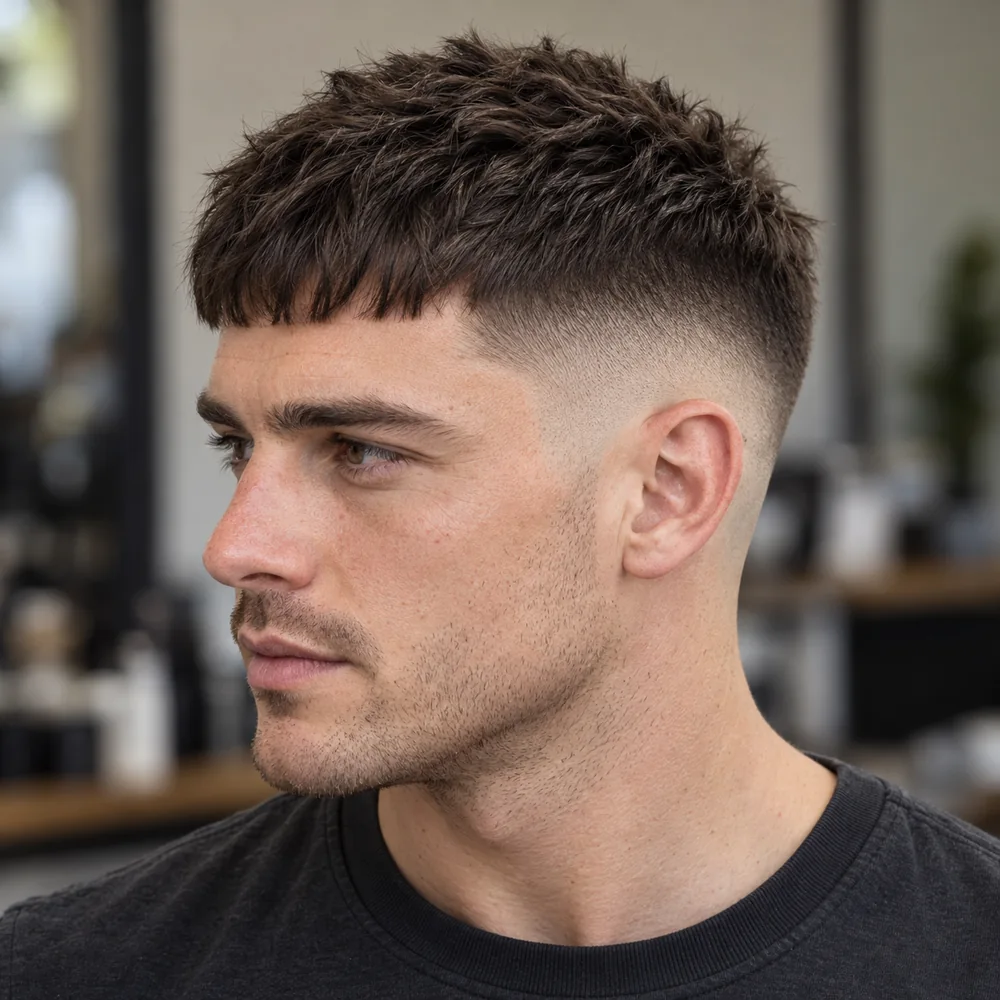
Choppy forward texture contrasts with a mid fade taken to skin at its lowest section.
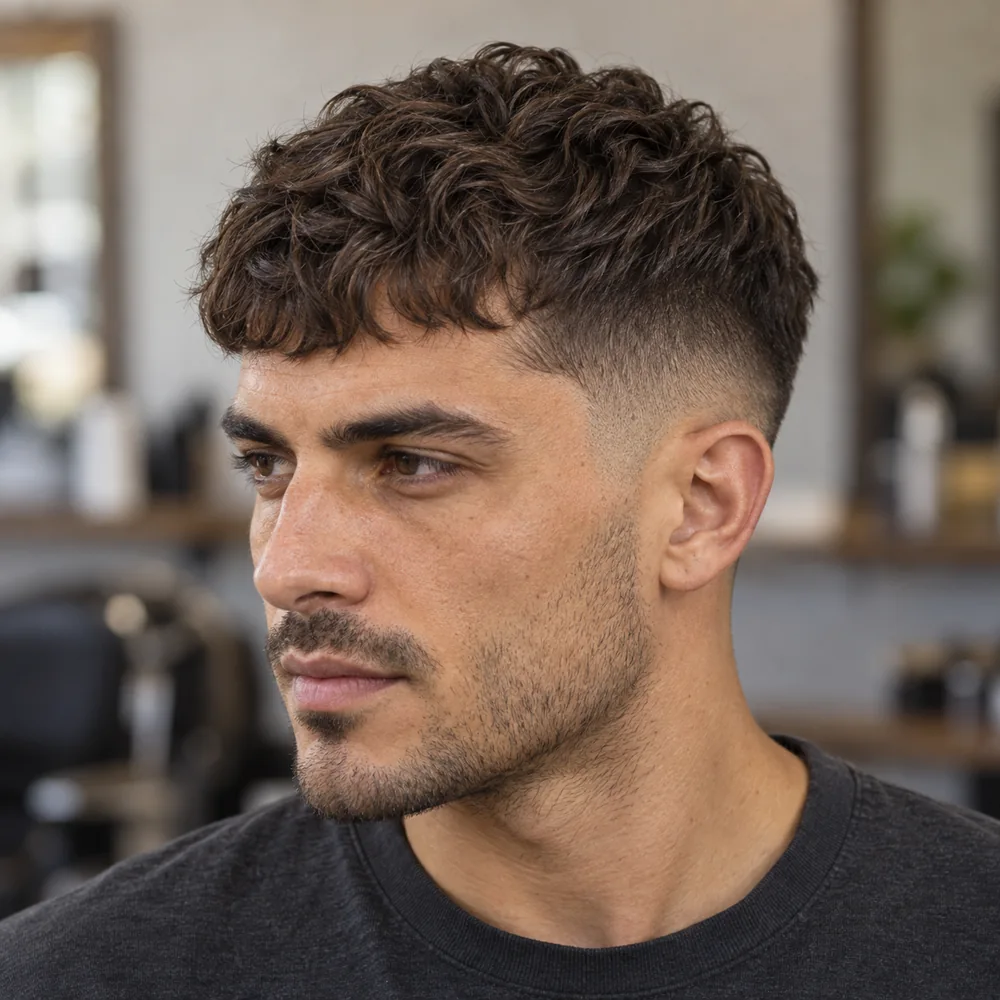
Natural waves create a softer fringe above closely faded sides.
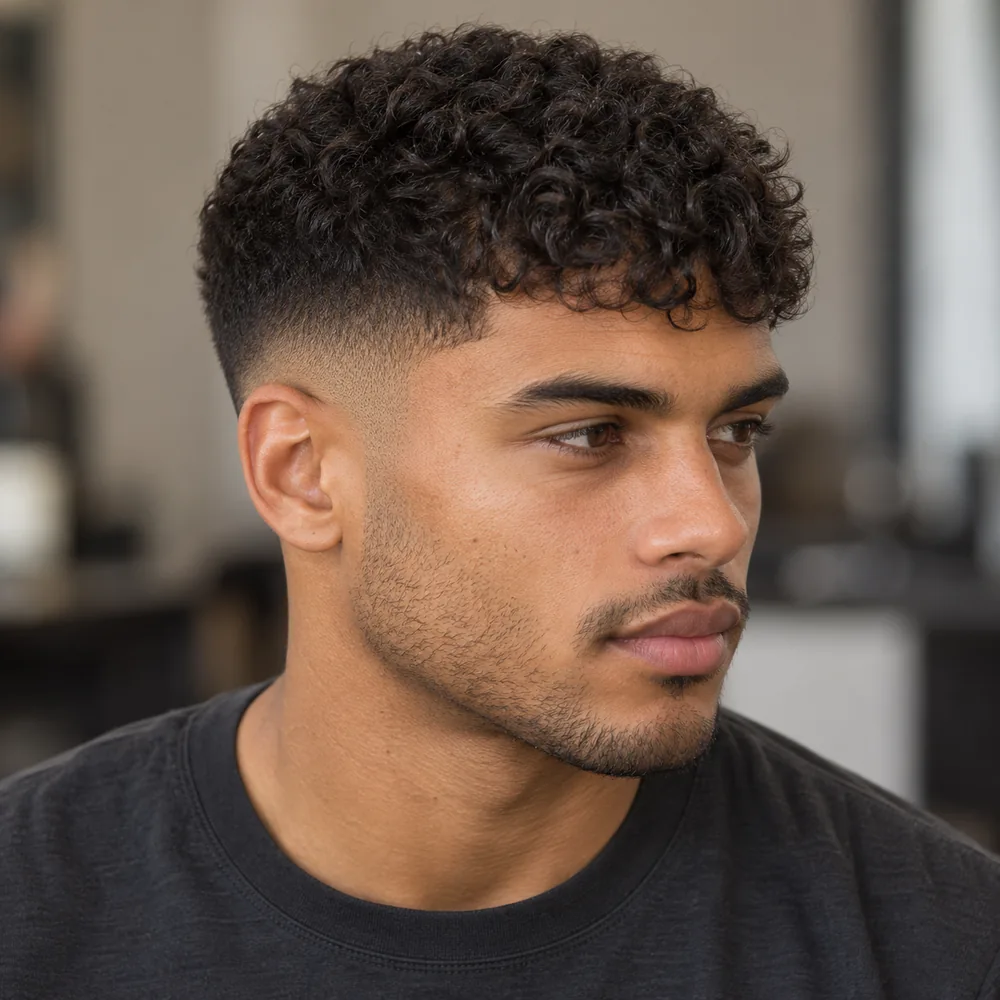
Short curls form the forward edge; their dry shape determines the apparent fringe length.
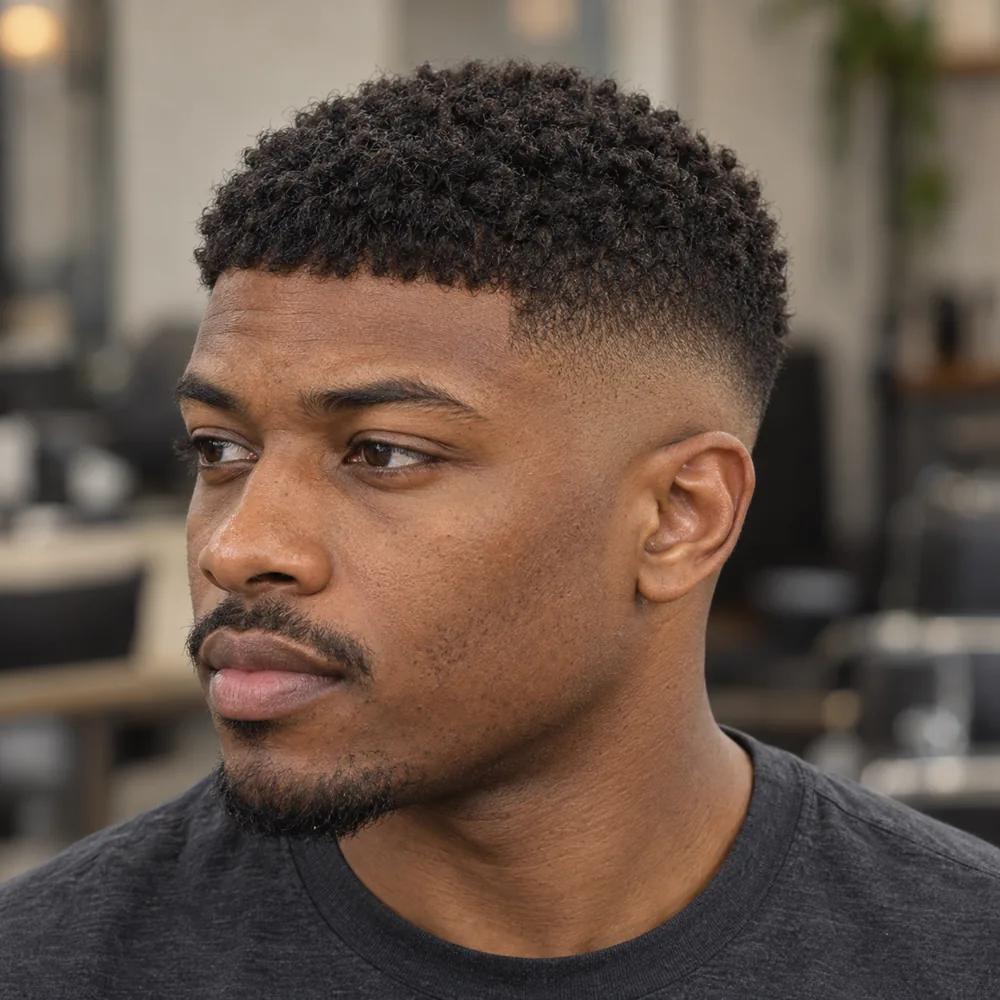
The coily example follows the article’s forward-shape guidance without forcing a straight fringe.

Light, natural separation keeps the fine-haired fringe realistic without exaggerated scalp contrast.
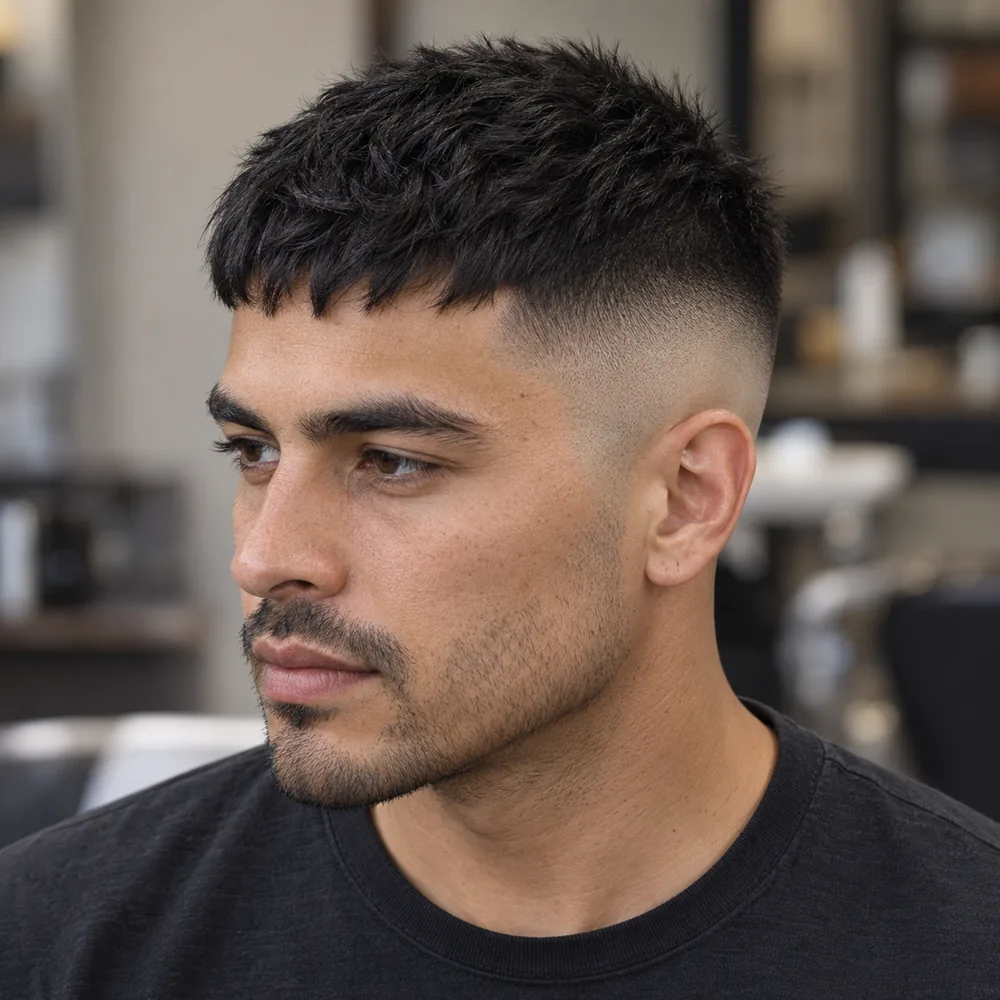
A higher fade creates stronger separation beneath the dense forward crop.
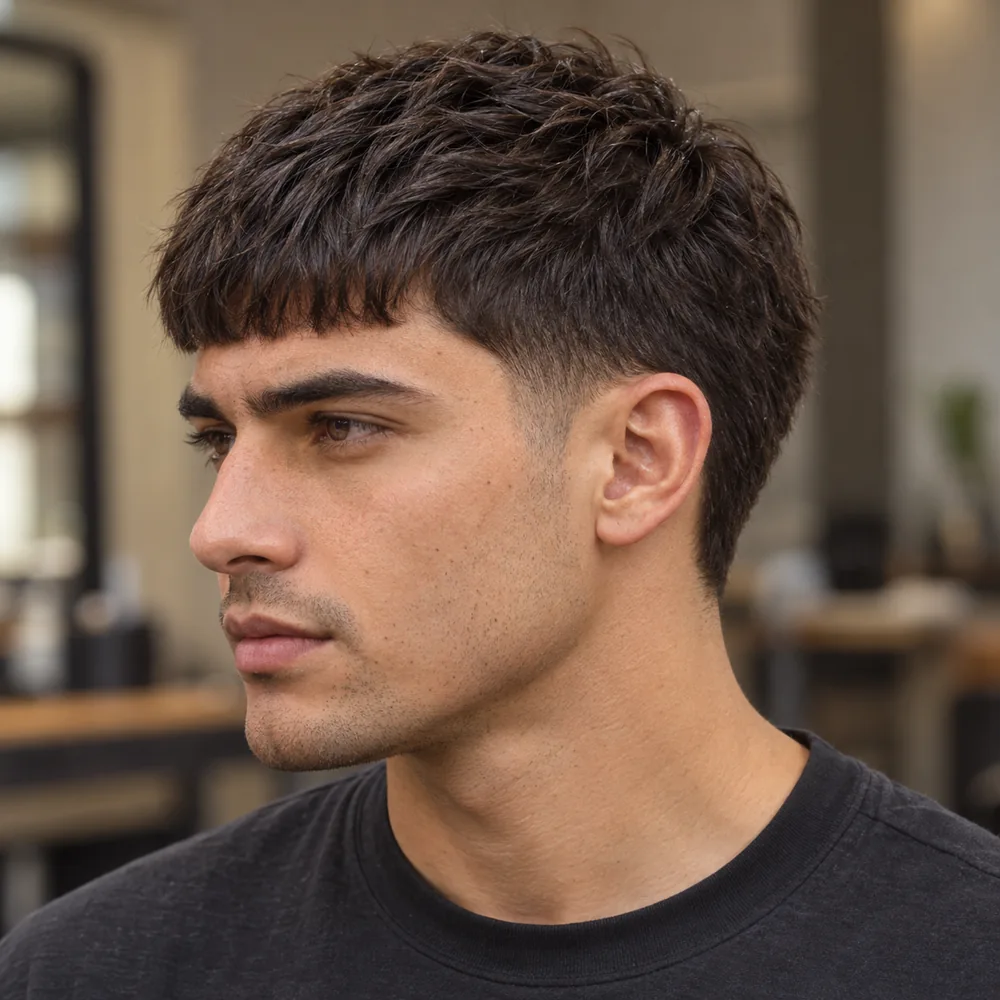
This taper option keeps the area around and behind the ear fuller than a continuous full fade.
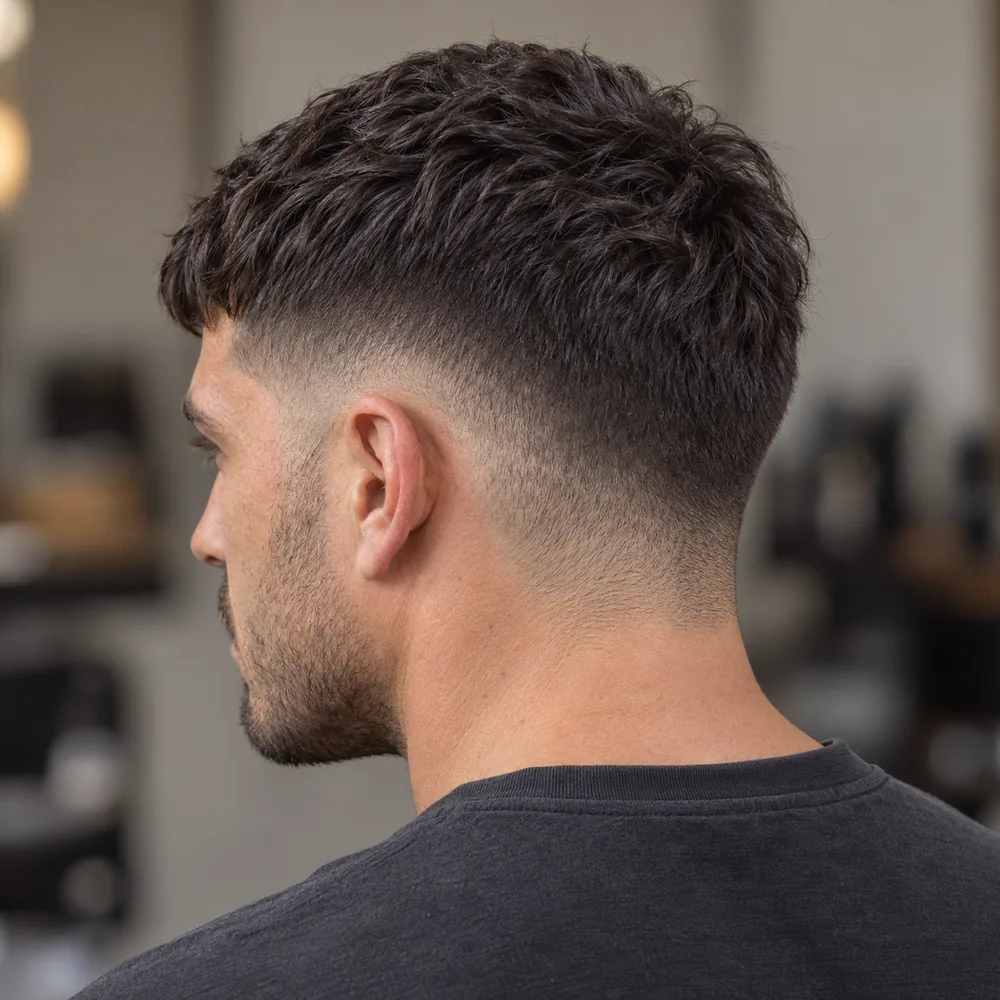
The rear angle shows the compact crown and connected upper-side weight supporting the forward crop.
Visual disclosure: These ten references are original AI-generated editorial illustrations of different fictional adults. They illustrate the haircut choices discussed in this article, not real clients, verified barber work, before-and-after results or guaranteed outcomes. Existing images and explanations remain below.
Quick answer: ask for a French crop if you want a short top that naturally styles forward with a cropped fringe. Choose a low taper/low fade for a softer side profile, a mid fade for more contrast, or a skin finish if you want the bottom very tight. If you want a more graphic straight front line and Edgar identity, compare the Edgar haircut guide.

What Actually Defines a French Crop Fade?
The common structure is simple: short sides, a compact top and a fringe worn forward. Modern Barber describes the French crop as a short men’s haircut with faded sides and a blunt fringe, while other current barber education shows the fringe can range from razor-clean to softer and textured. The forward direction matters more than pretending every French crop has the same edge.
| Part of the cut | Typical French crop | Choices to confirm |
|---|---|---|
| Fringe | Short and forward | Blunt, broken/textured, shorter or longer |
| Top | Compact, often textured | Natural, choppy, curly or smoother |
| Sides | Short | Taper, low/mid/high fade, or scissor-short |
| Bottom finish | Varies | Shadow, zero or skin |
French Crop Fade vs Edgar
The difference is a spectrum rather than a hard legal boundary. Both can use a forward fringe and faded sides. The Edgar is usually identified by a stronger graphic front edge and its distinct Latino cultural/style identity. A French crop is a broader barbering family that can look soft and textured or quite blunt depending on the version.
If the reference you like has a hard horizontal front line, do not assume the barber will know whether you want an Edgar, French crop or Caesar from the name alone. Show the photo and describe the edge.
French Crop vs Caesar
The Caesar is another short forward-fringe family. Modern versions overlap heavily. A French crop often uses more contrast in the sides and more separation through the top, while a classic Caesar can stay more uniform and compact. Again, the reference photo matters more than enforcing a rigid taxonomy.
Which Fade Works Best Under a French Crop?
- Low taper: keeps more side weight and makes the crop feel softer. See the low taper fade guide.
- Low fade: gives a visible but still controlled gradient around more of the lower sides.
- Mid fade: creates stronger separation between the compact top and sides.
- High fade: makes the top feel more isolated and graphic; useful only if that is the contrast you want.
- Skin finish: can be applied at different fade heights; it changes the shortest length, not the top style.
French Crop for a Receding Hairline
A short forward fringe is one reason French crops are often recommended when the hairline is receding. Modern Barber specifically notes the style can work with thinning/receding hair, and GQ includes Caesar-style forward fringe among useful short-hair options. But no haircut treats hair loss, and the best fringe length depends on where density remains.
If this is your main concern, use our fade for a receding hairline guide rather than assuming the French crop is automatically right.
How to Style a French Crop Fade
- Start with towel-dried or slightly damp hair.
- Push the top and fringe forward using fingers rather than flattening everything with a fine comb.
- If you want texture, use a small amount of matte paste, clay or light texturizing product and separate pieces with your fingertips.
- If your fringe is intentionally blunt, refine the edge without overworking the top.
- For curls/waves, use less product and let the natural pattern provide separation.
Heavy shiny pomade can work for a deliberate wet/slick crop, but it is not the default if your reference shows airy texture.
Hair Texture Adjustments
- Straight: easiest to control into a crisp forward edge; texture needs to be cut or styled in.
- Wavy: naturally creates broken movement and a softer fringe.
- Curly: leave enough length for curl formation and shrinkage; the fringe may sit higher once dry.
- Coily: treat the crop as a forward shape rather than trying to force a flat fringe; keep moisture and shrinkage in mind.
- Fine/thinning: avoid over-thinning the top; a compact forward shape can preserve the impression of density.
What to Tell Your Barber
“I want a French crop with the top short and worn forward. Keep the fringe [blunt / broken and textured] at about this height [show photo]. On the sides I want a [low taper / low fade / mid fade], finishing at [shadow / zero / skin]. Keep enough weight above the fade so the crop doesn’t look disconnected unless the reference shows that.”
French Crop Fade Maintenance
The fade and fringe may soften at different speeds. A skin fade shows regrowth quickly, while a shadow taper can look intentional longer. The fringe only needs cutting when it stops sitting at the length and shape you want. Avoid rigid “every two weeks” schedules unless you personally want a permanently fresh-barber finish.
Sources and Further Reading
- Modern Barber — professional French crop overview
- CADMEN Academy — French crop structure, fringe and side options
- GQ — current short haircut guidance and Caesar/receding-hairline context
Frequently Asked Questions
What is a French crop fade?
It is a compact short top worn forward with a cropped fringe, paired with faded sides. The fringe can be blunt or textured and the fade can be low, mid, high, shadow, zero or skin depending on the version.
Is a French crop the same as an Edgar?
No, although they overlap. The Edgar typically emphasizes a stronger graphic front line and distinct cultural identity; the French crop is a broader crop family that can be blunt or softer/textured.
Is a French crop good for a receding hairline?
It can be useful because the hair is worn forward and kept compact, but it is not a treatment and it will not suit every recession pattern or density level.
What fade should I get with a French crop?
Use a low taper or low fade for softer contrast, a mid fade for more visible separation, or a higher/skin finish only if you want a more dramatic result.
What product should I use for a French crop?
For a natural textured finish, start with a small amount of matte paste, clay or lightweight texturizer. Use less product on wavy, curly or coily hair so the natural pattern stays visible.
 Textured Crop Haircut: Styles, Fades and How to Ask Your Barber
 Boosie Fade: What It Is, 7 Styles and How to Ask for It
 Buzz Cut Fade: Low, Mid, High and Skin Fade Styles With Photos
2 Comments