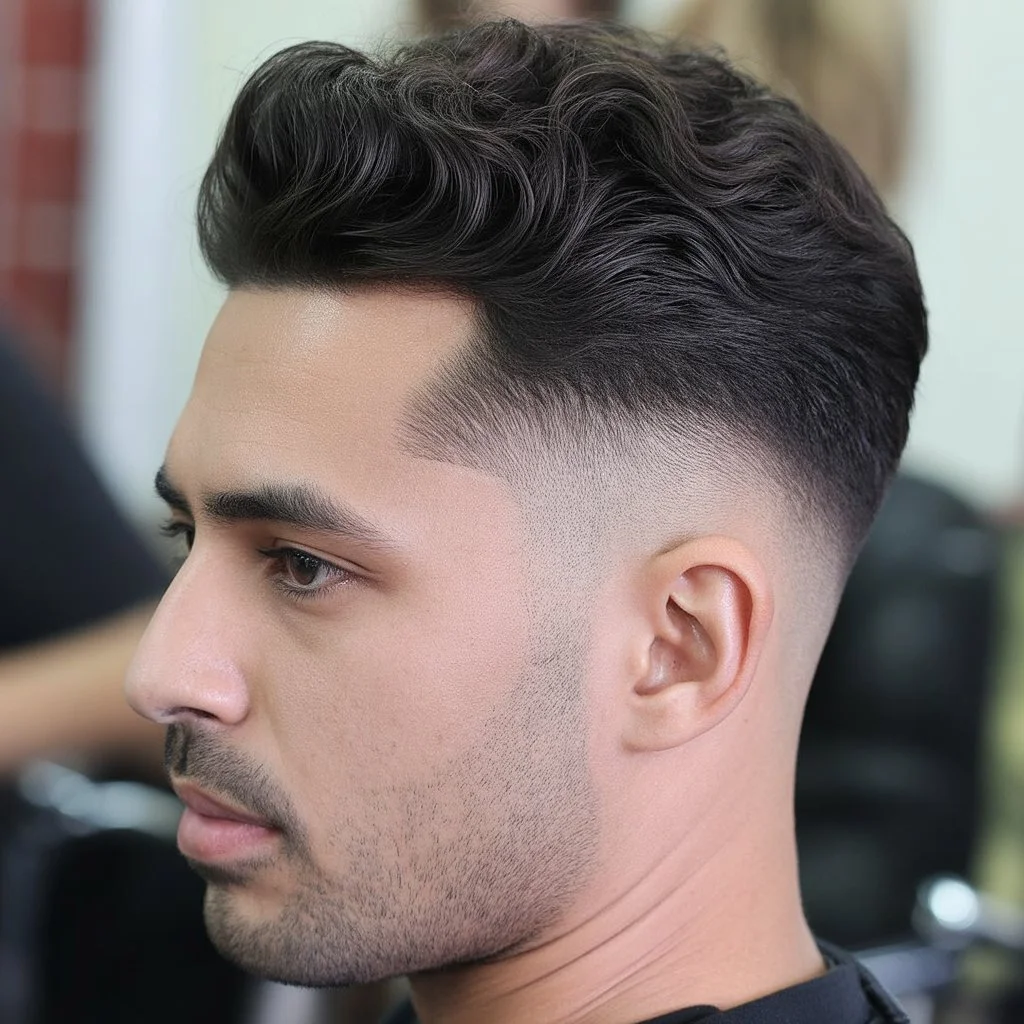
Mid Taper Fade Pompadour: Length, Blow-Dry, Hold & Finish
On this page
- Mid taper pompadour gallery: lift, sweep and finish
- What Makes It a Pompadour, Not Just a Quiff?
- Why a Mid Taper Works with the Shape
- Mid Fade Pompadour vs Mid Taper Pompadour
- How Much Length Do You Need?
- What to Say to Your Barber
- The Blow-Dry Routine That Creates the Shape
- Choose the Finish: Classic or Modern
- Maintenance: What Actually Needs Cutting?
- Styling Reference
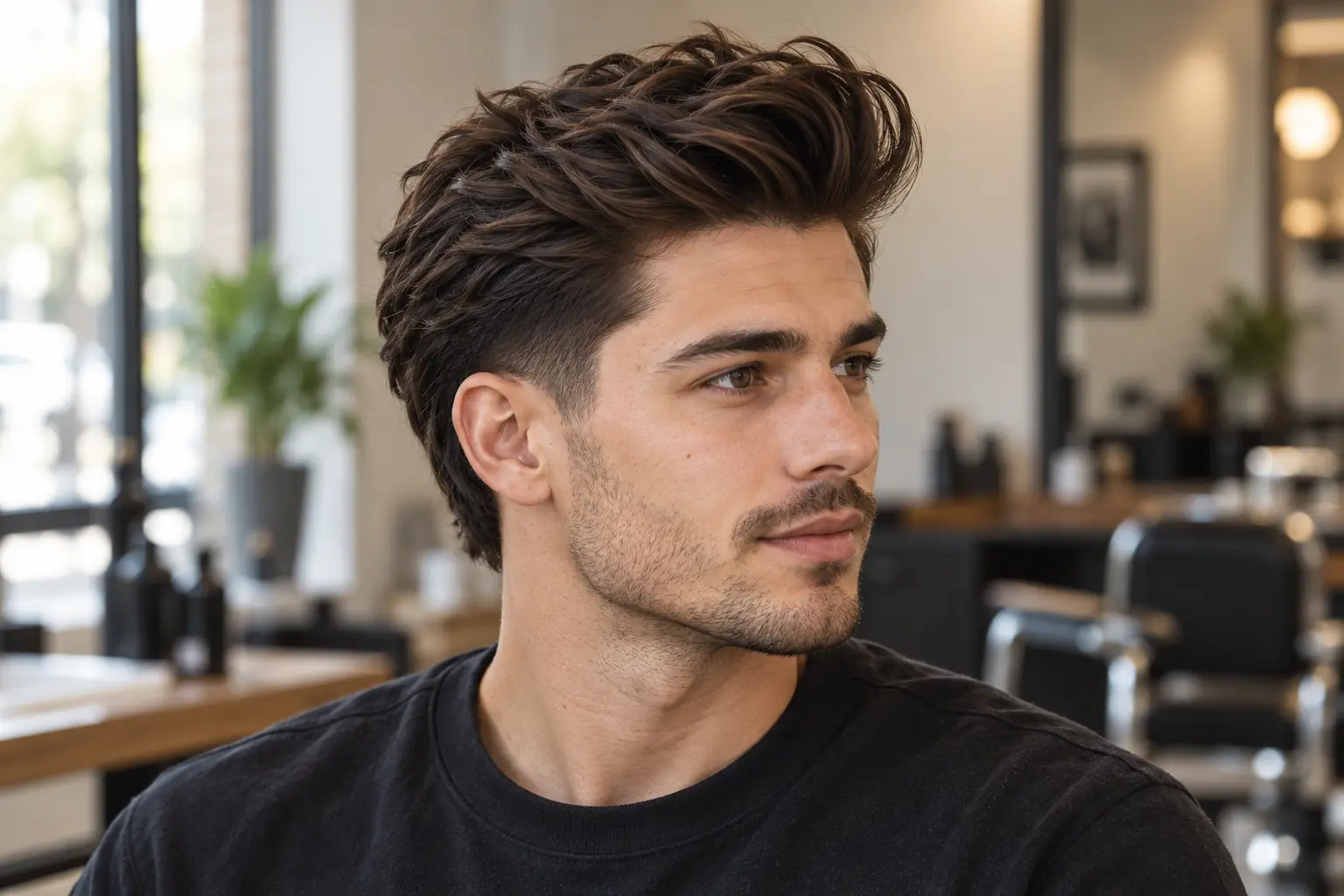
A mid taper fade pompadour works because the two parts of the haircut do different jobs. The pompadour needs enough length at the front to lift and sweep back; the taper cleans the temple/sideburn and neckline without removing the side weight that helps the top blend naturally. The result can look classic and polished or modern and matte depending on how you finish it.
Mid taper pompadour gallery: lift, sweep and finish
Ten new references for the choices explained below. Select an image to enlarge it; numbered references are different fictional models.
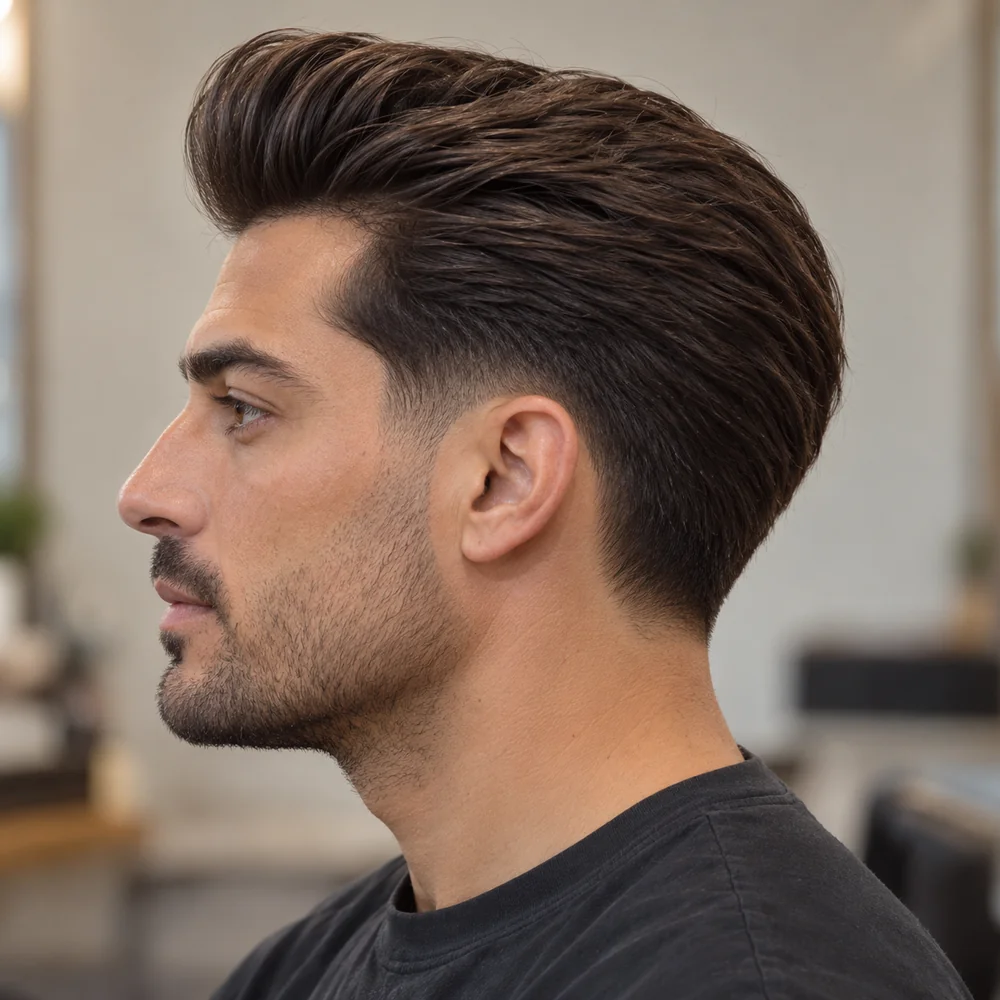
A smooth lifted front sweeps back above a localized temple taper.
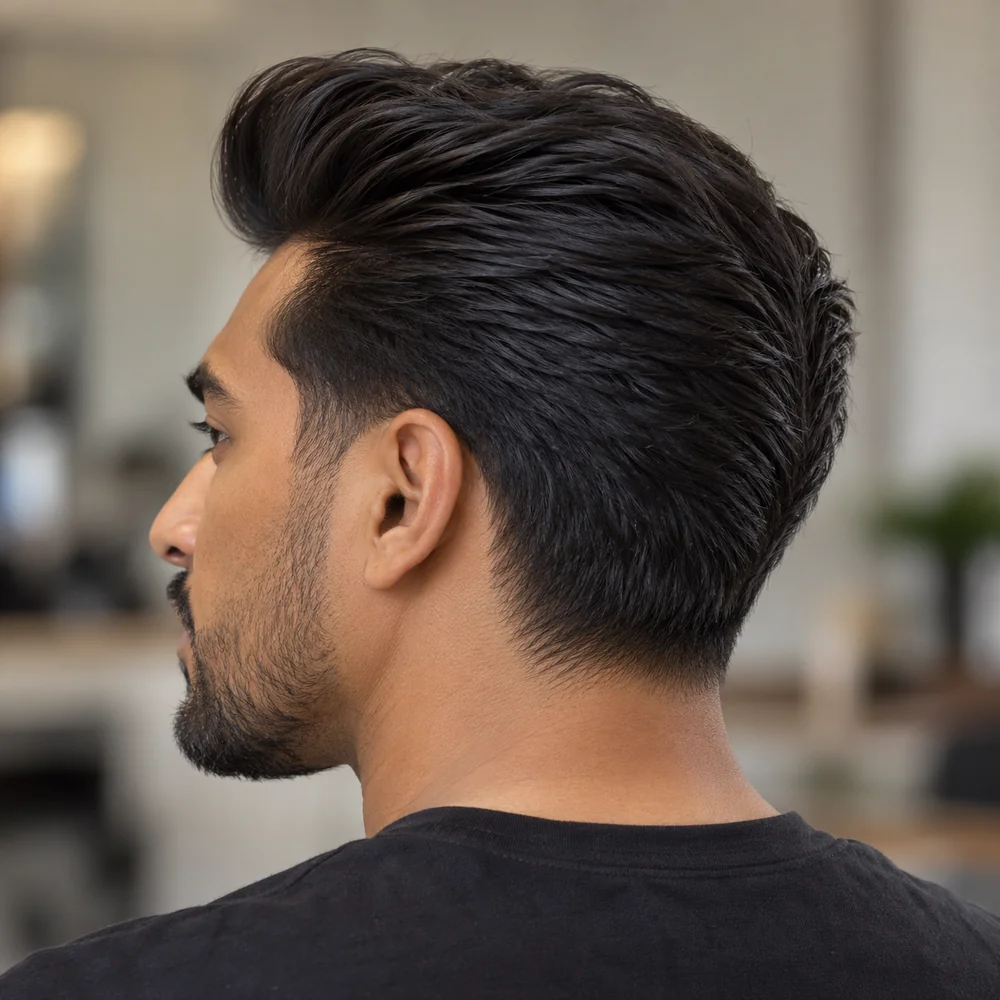
The rear angle shows connected back weight and a separate short neckline transition.
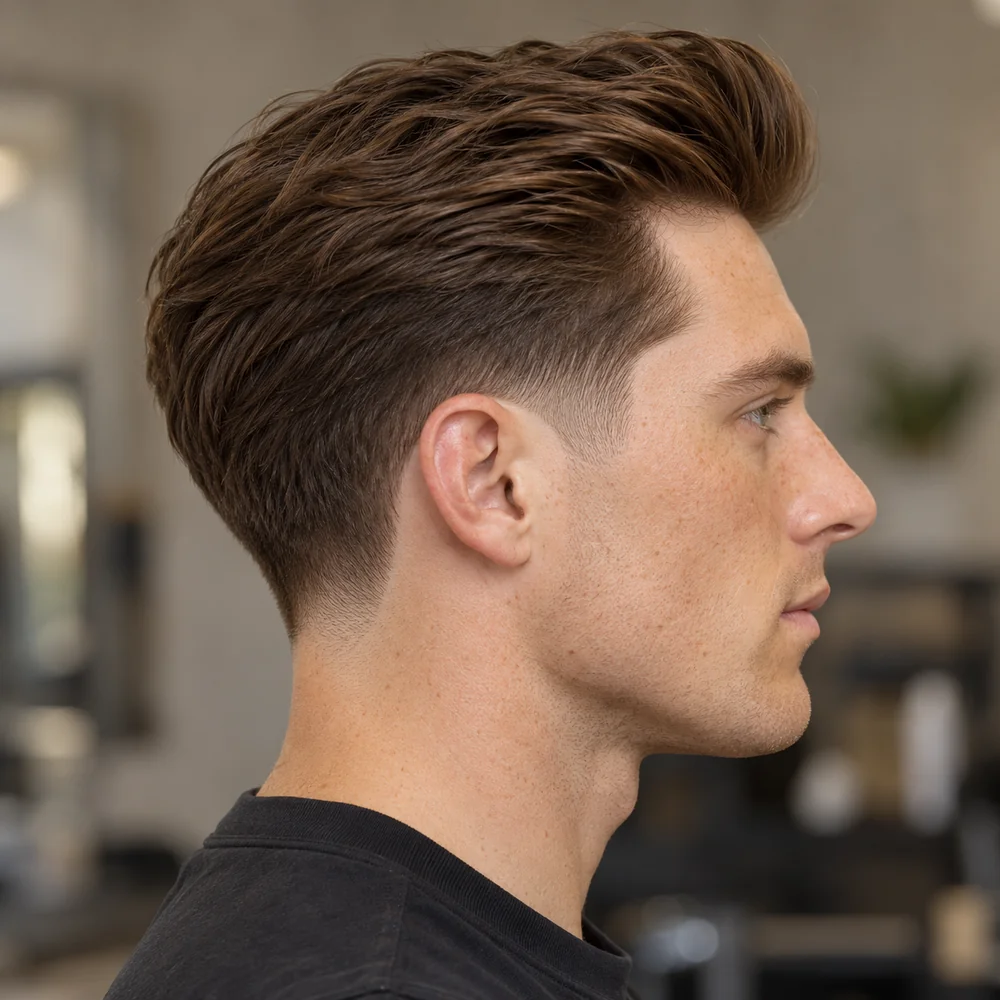
A lower crest keeps the swept-back outline compact while the sides stay connected.

The front angle shows controlled lift without an oversized crest.
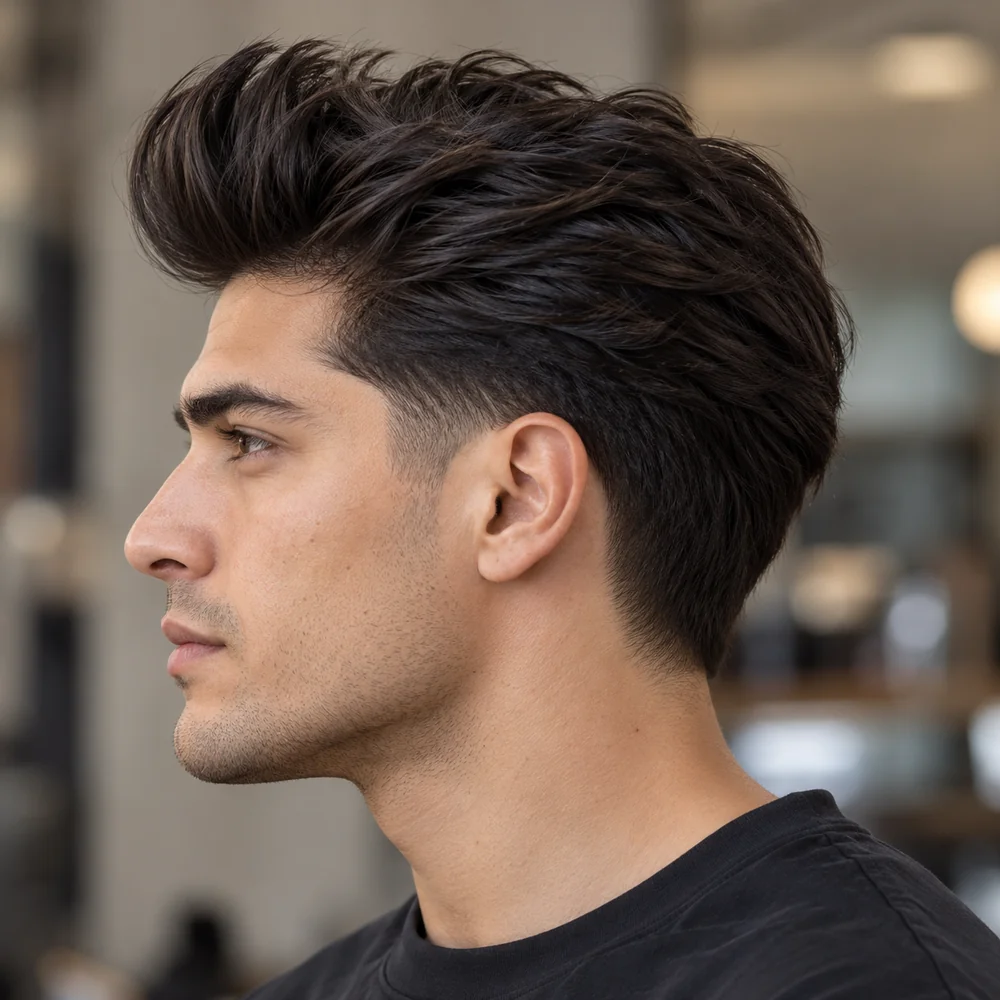
Separated strands give the lifted, backward-flowing top a lower-shine finish.
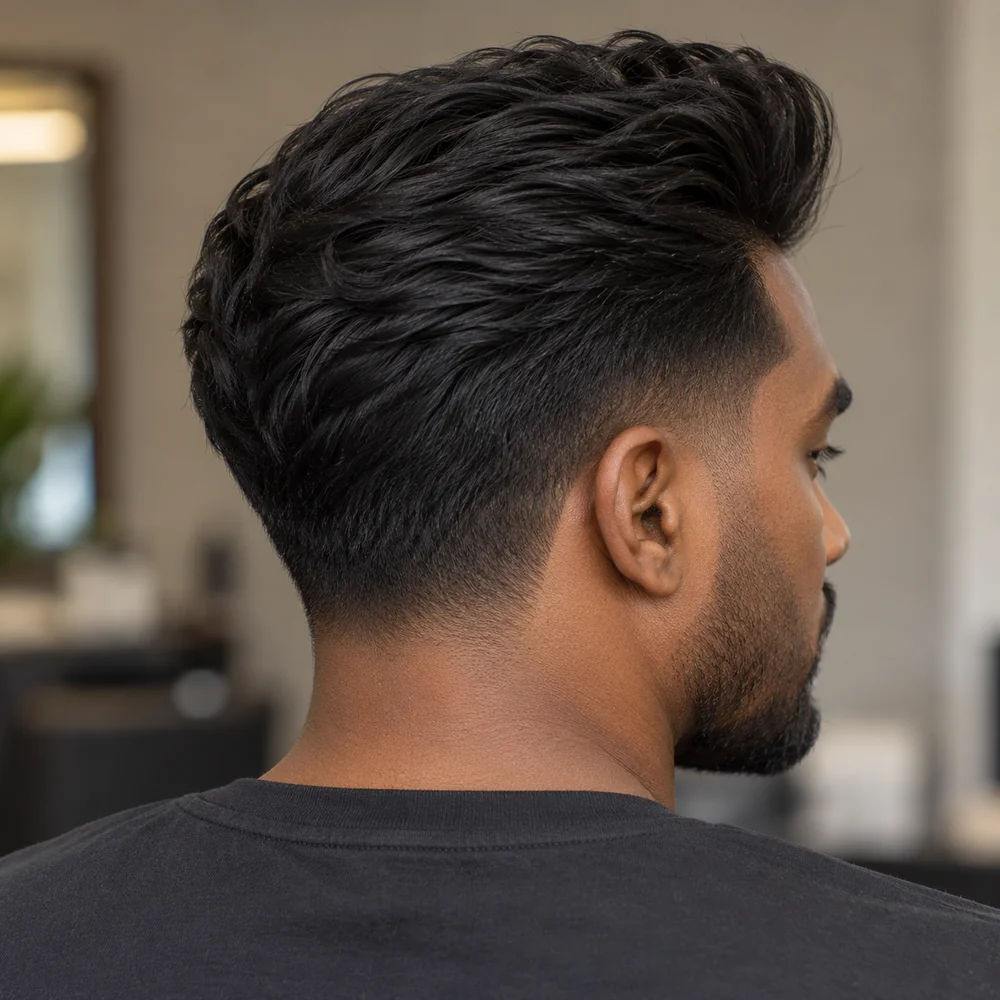
The dark rear and controlled side outline connect into the swept-back top.
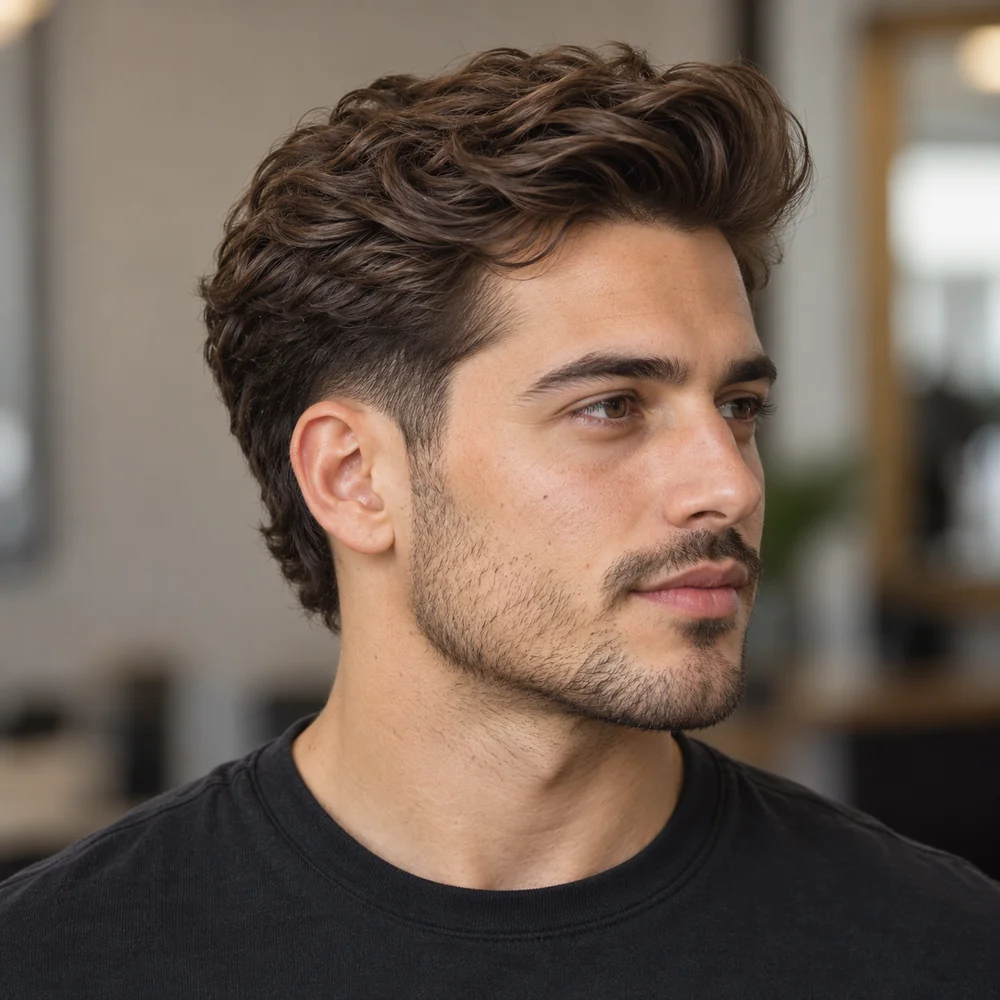
Loose waves rise at the front and move back rather than forming a forward fringe.
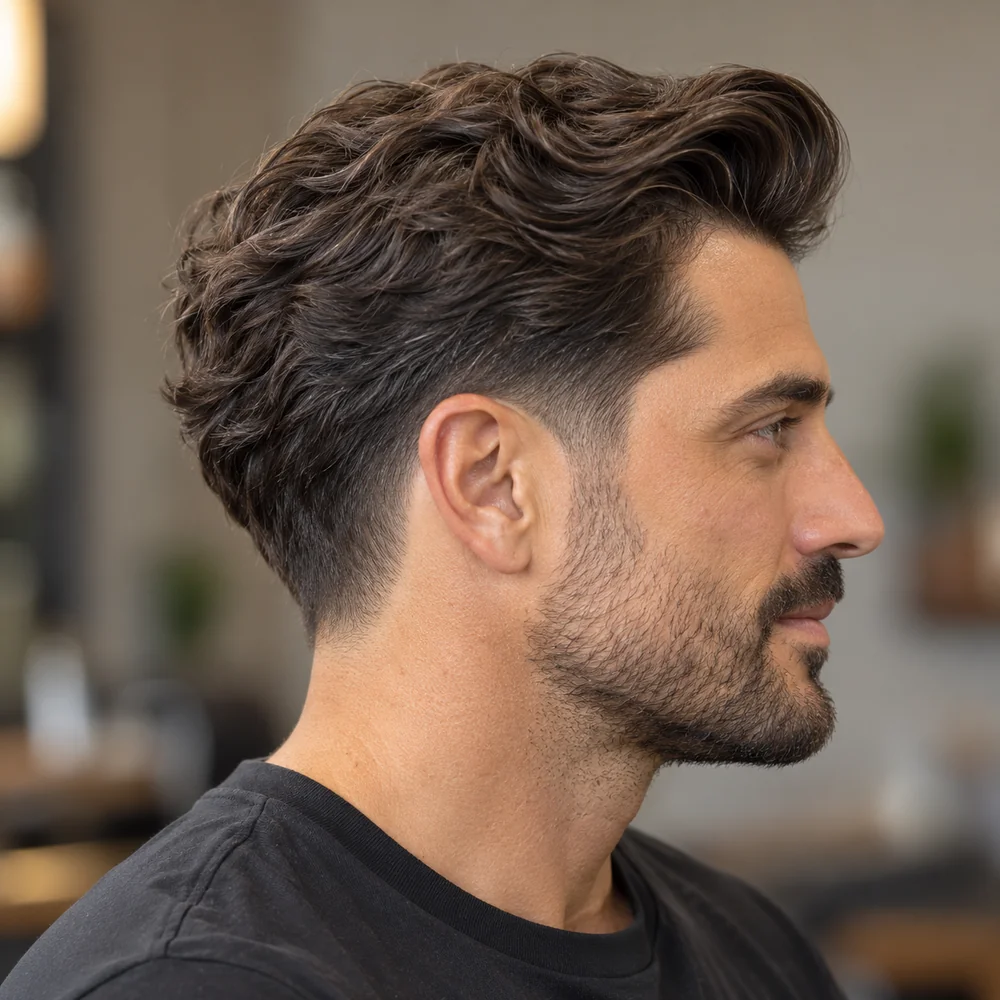
The side view makes the backward wave direction and retained side weight clearer.

A natural part directs the compact front lift without a shaved line.
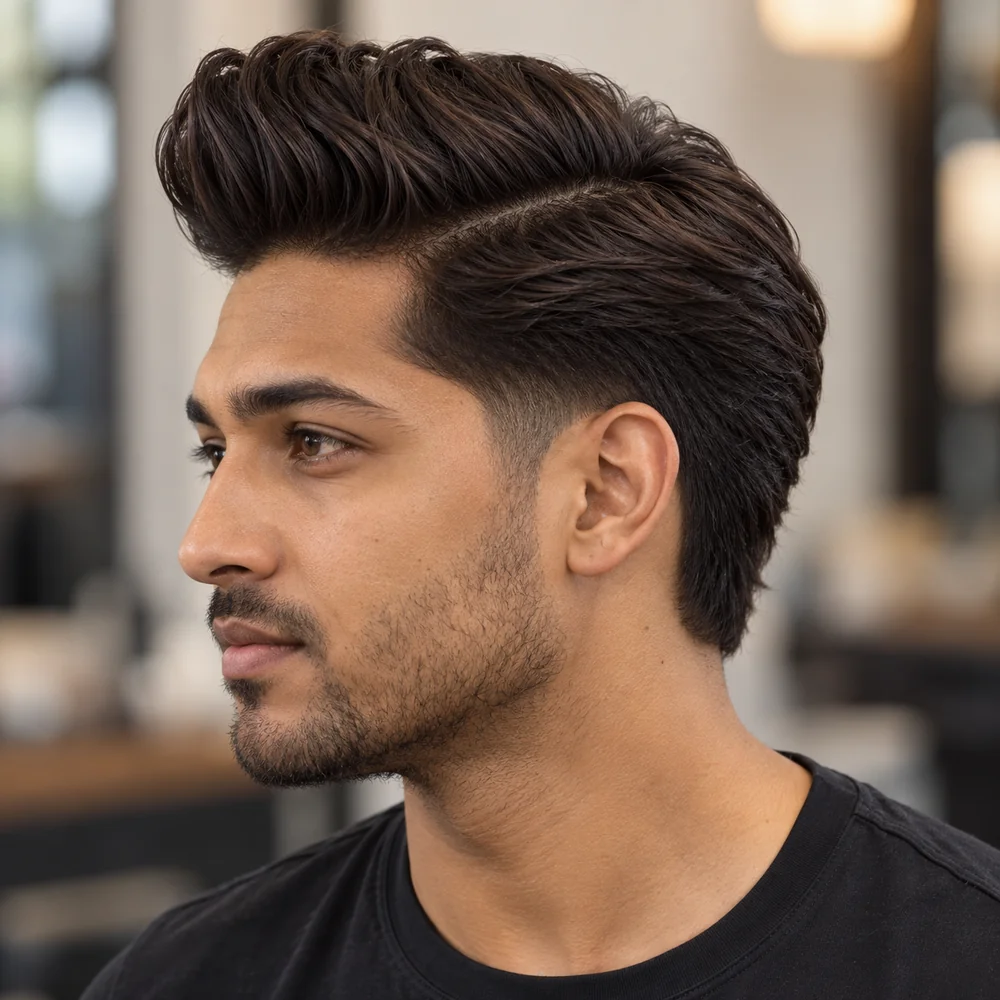
A more defined combed part changes the styling direction while the sides remain dark.
Visual disclosure: These ten references are original AI-generated editorial illustrations of fictional adults. They illustrate the article’s length, backward sweep and finish choices, not real clients, verified barber work or guaranteed results. The models are different references, not before-and-after photographs. Existing images and explanations continue below.
Best starting point: keep roughly 3–5 inches at the front if you want a recognizable pompadour, preserve enough weight through the upper sides to connect the top, and use the taper only where you actually want the perimeter cleaned up.
What Makes It a Pompadour, Not Just a Quiff?
The defining feature is controlled height at the front that moves upward and back into the rest of the top. A quiff often allows more forward or irregular texture; a pompadour is built around a more deliberate swept-back shape. You do not need extreme height. A shorter modern pomp can still read clearly if the front has lift and the silhouette flows backward.
Why a Mid Taper Works with the Shape
A taper is more localized than a full mid fade. It can clean the temple/sideburn area and nape while leaving the upper sides darker. That preserved weight is useful on a pompadour because it stops the top from looking disconnected from the sides. If you want the sides much lighter all the way around, ask for a mid fade instead and understand that the silhouette will be more contrasted.
Mid Fade Pompadour vs Mid Taper Pompadour
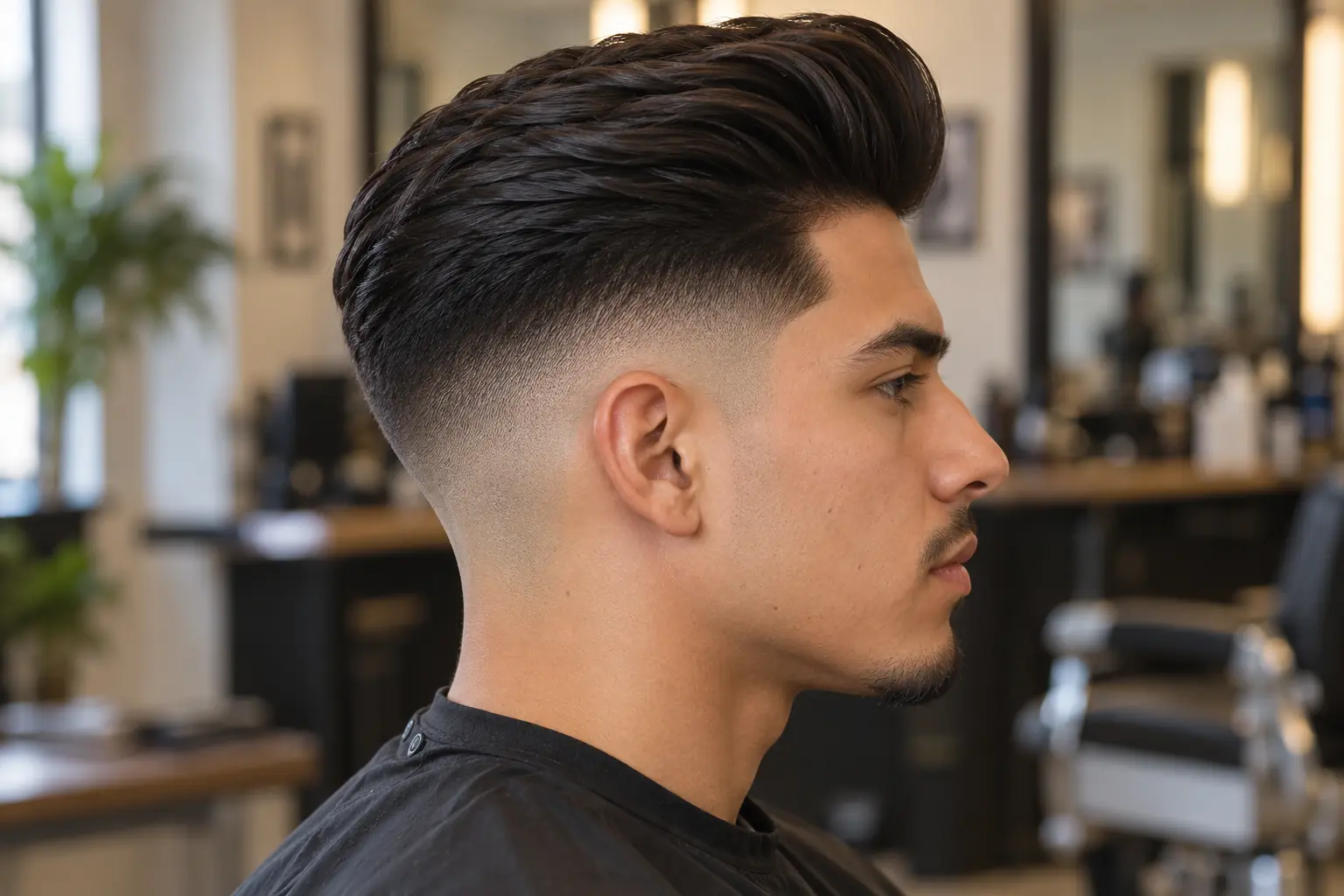
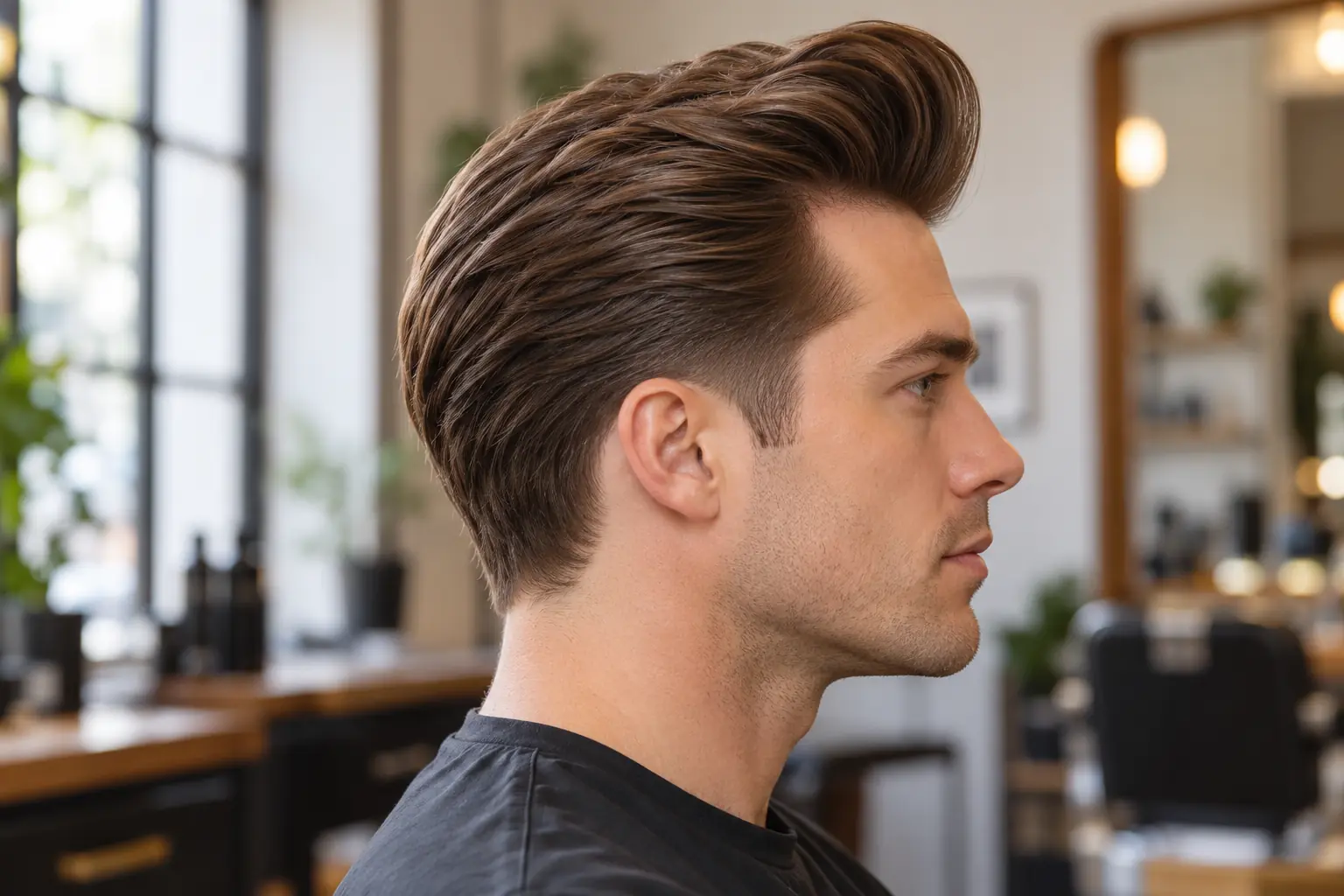
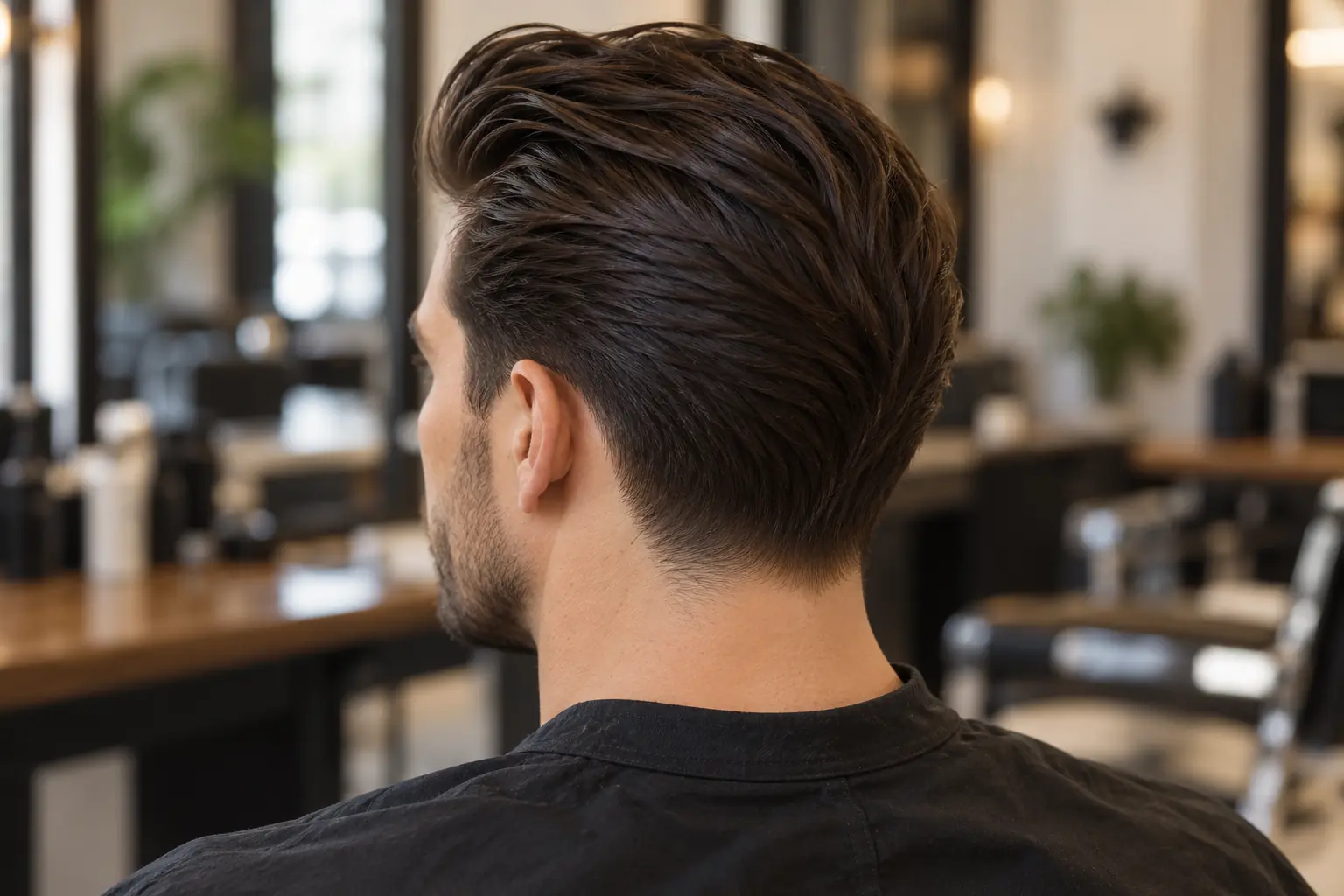
Both put the pompadour on top of a mid-height blend. A mid fade pompadour takes the sides and back shorter all the way around, so the pompadour looks taller and the contrast is sharper. A mid taper pompadour only blends the temples and the nape, keeps more weight on the sides, and looks more classic. If thick sides push out, ask about removing bulk first (see the thick hair guide) before switching to a fade.
Fade: “Mid fade all the way around, leave the top long enough for a pompadour.”
Taper: “Mid taper at the temples and the nape only, keep the sides, pompadour on top.”
How Much Length Do You Need?
- About 2–3 inches: compact, lower-volume pomp; easier to control but less dramatic.
- About 3–5 inches: the most flexible range for visible lift, sweep and shape.
- Longer than 5 inches: more movement and height, but also more drying time and more weight to control.
Straight hair usually shows a clean combed shape; wavy hair can create a softer, more natural pomp. Very thick hair may need internal weight removal so the sides do not flare out. Our mid taper for thick hair guide explains that problem in more detail.
What to Say to Your Barber
Use a simple brief: “I want a mid taper at the temple/sideburn and nape, but keep enough weight through the upper sides to connect into a pompadour. Leave the front longest so I can blow-dry it up and back.”
Then specify the finish at the taper: skin, clipper-zero, or a softer shadow. If you wear a side part, say whether you want it natural or more defined. Showing a photo from the front and side is more useful than asking for a fixed guard recipe because density, growth pattern, and head shape change the blend.
The Blow-Dry Routine That Creates the Shape
- Start with towel-dried hair rather than soaking-wet hair.
- Apply a light pre-styler or a small amount of styling cream if you need control.
- Dry the roots upward first. Root direction creates the height; piling product on flat roots does not.
- Use your fingers, a vent brush, or a round brush to guide the front up and back.
- Once the basic shape is dry, refine the sweep rather than repeatedly flattening and rebuilding it.
- Finish with a small amount of product, adding more only if the style genuinely needs it.
Choose the Finish: Classic or Modern
Classic: smoother and shinier
A water-based pomade or grooming cream gives a more polished surface and makes comb lines easier to control. American Crew describes traditional pomade as a medium-hold, higher-shine option suited to slicked-back looks.
Modern: more texture and lower shine
A matte paste or clay keeps more separation and avoids the glossy finish. This works well when the pomp is deliberately looser rather than sculpted into one smooth shell.
Whichever route you choose, use less product than you think at first. Too much heavy product can collapse the height you created with the dryer.
Maintenance: What Actually Needs Cutting?
The taper and the top often need attention on different schedules. The perimeter may lose its crispness before the top needs much length removed. When you return, ask the barber to refresh the taper and tidy split or uneven ends without automatically cutting away the front length you have been growing for volume.
If you prefer a flatter, more controlled straight-hair version, compare this with our mid taper for straight hair. For the broader family of options, see fade haircuts for men.
Styling Reference
For product hold/shine categories and basic application guidance, see American Crew’s grooming tips. Product choice should support the finish you want; it should not substitute for the cut and blow-dry shape.
How long should hair be for a mid taper pompadour?
About 3–5 inches at the front is a useful range for many pompadours, although a shorter modern version can work with less. Your density and growth direction matter as much as the number.
Is a mid taper the same as a mid fade with a pompadour?
No. A taper is more localized around the temple/sideburn and neckline, while a mid fade generally removes more hair through the sides and back.
Do you need pomade for a pompadour?
No. Pomade gives a smoother, shinier finish, while matte paste or clay can create a more modern textured pomp. Blow-drying the roots into shape is more important than choosing one specific product.
 Low Taper Fade for Black Men: Styles, Line-Ups and What to Ask For
 Low Taper Fade with Textured Fringe: Styles, Barber Script and Styling
 Taper Fade for Curly Hair: Low, Mid and Blowout Tapers by Curl Type