Low Burst Fade: 5 Styles & What to Tell Your Barber
On this page
The useful question is how much of the side you want to expose. If you like the ear-centered curve but want to keep a fuller silhouette, a low burst fade gives you that starting point. This guide helps you pick the top, explain the boundary and check the finished cut from more than one angle.
What makes a burst fade low?
Look at the side view. The blend curves close to the ear instead of forming a wide, level strip across the head. In a low version, that exposed area stays compact and a clear area of longer hair remains between the curve and the top. From the rear, the center back can remain dark and full.
There is no universal centimeter mark for “low.” Ear position, head shape and the amount of side hair change how the same placement looks. Point to the highest area you are comfortable exposing before the barber sets the first guideline. Agree on that visible boundary rather than relying on the name alone.
A short burst fade describes a short overall style, particularly the top. A low burst describes the placement around the ear. You can combine them, but you can also keep a longer fringe, curls or a longer back above a low burst.
Choose height, finish and the back separately
“Low” does not mean barely visible: a small skin-faded area can still create strong contrast against dark hair. For a softer effect, keep some visible hair at the shortest point. If you discuss clipper numbers, also ask about the blade setting; a number alone cannot show exactly how much scalp will be visible. Our haircut numbers guide explains that distinction.
Decide on the neckline too. Keeping length through the back does not mean leaving its edge untidy, and cleaning that edge does not require carrying the burst across the whole nape. Ask your barber to show the planned back outline in a mirror.
Low burst fade: six visual references
Compare five style choices and one separate rear view. Select any image to enlarge it; use the arrows to move through the references.
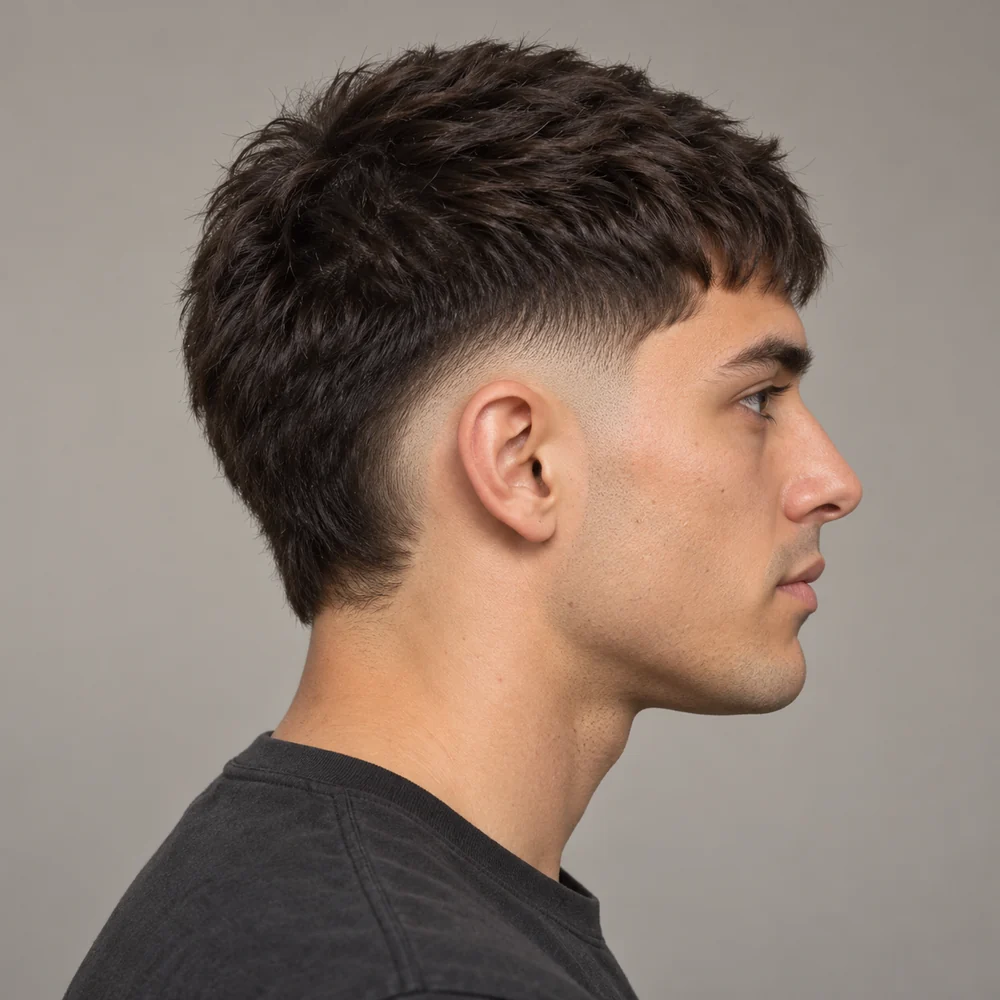
A small curved side blend sits beneath a short forward crop, with darker hair retained through the back.
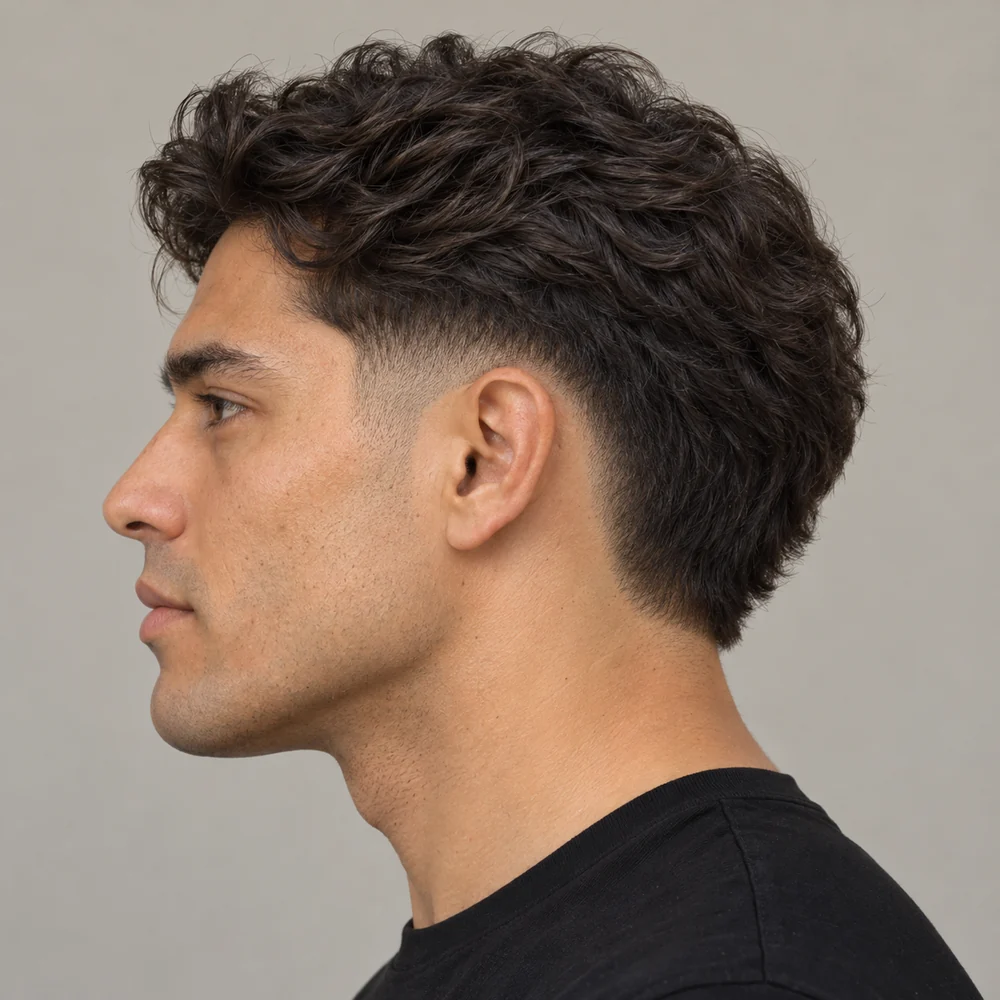
Visible short hair at the tightest area gives this wavy version a softer contrast than a bare-skin finish.
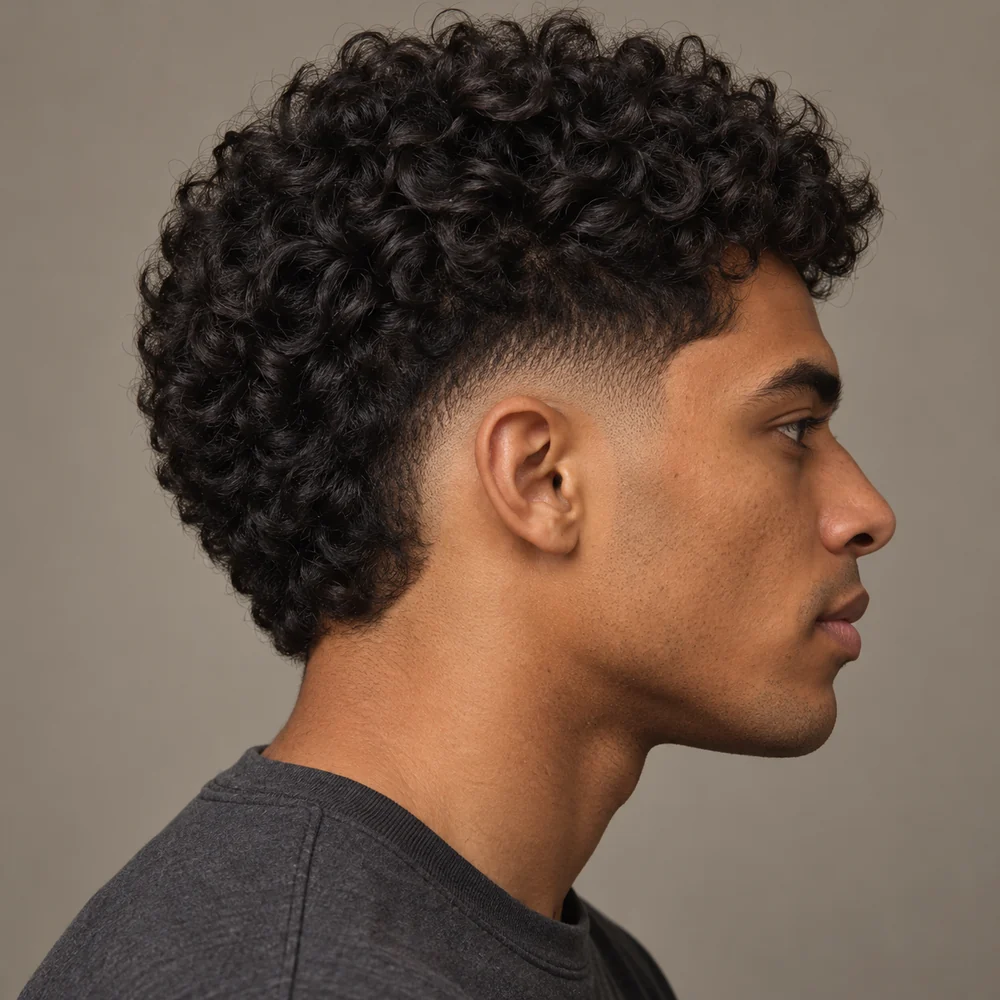
Loose curls remain full above a small curved ear area. Use the dry curl shape when discussing the upper length.
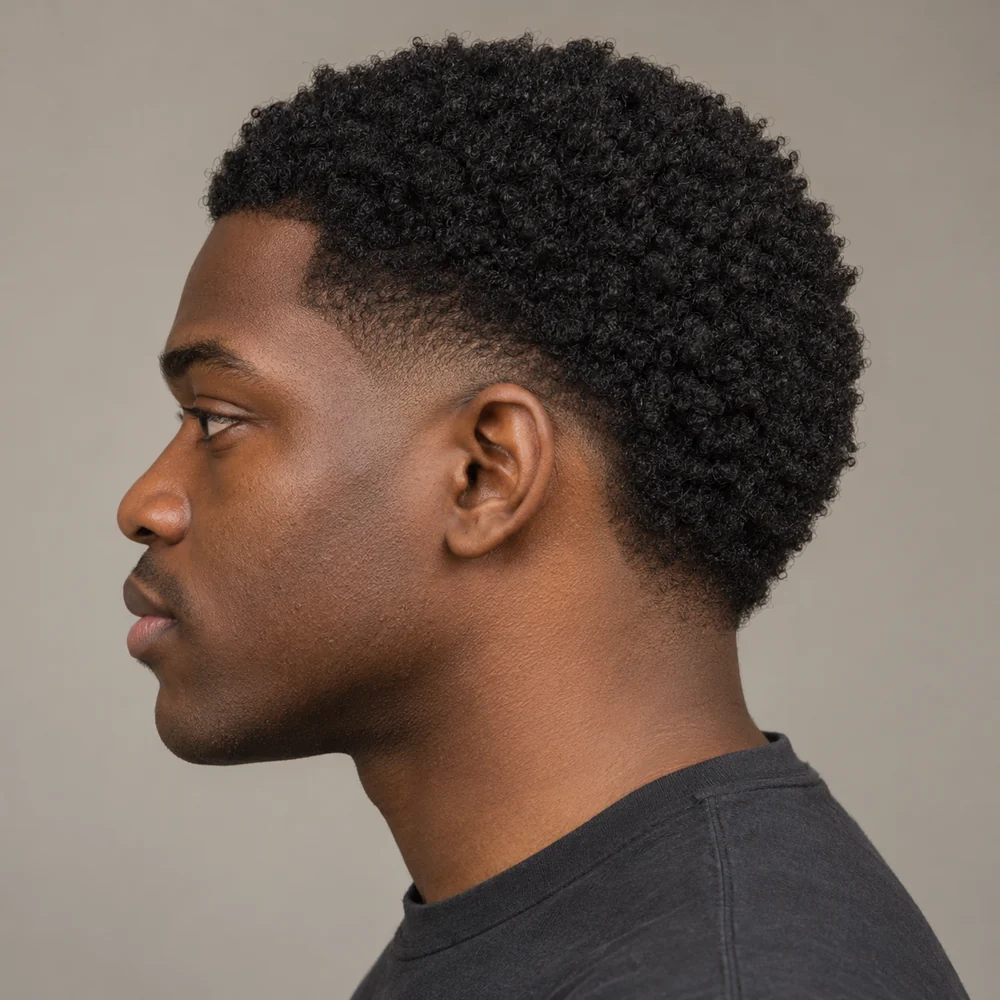
The coily upper shape retains height and width above the compact side blend.
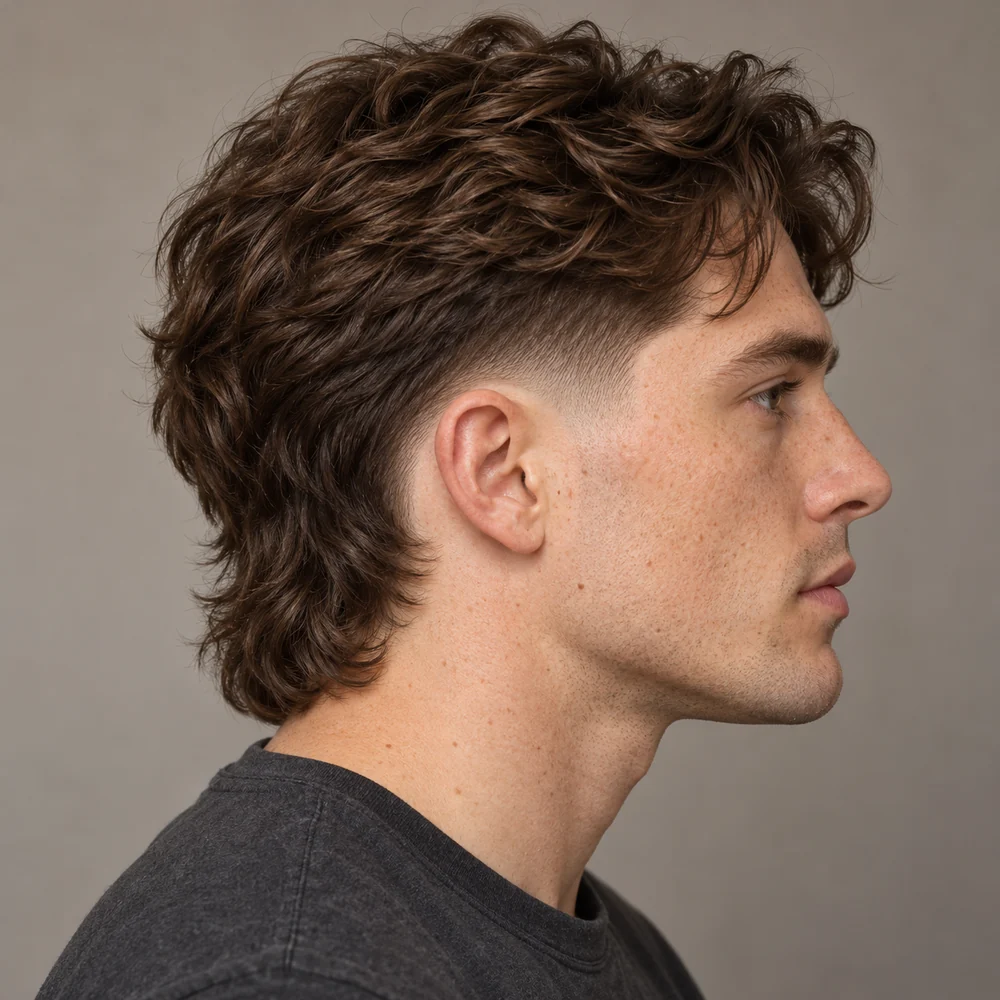
The side blend stays near the ear while an intentional longer tail remains at the nape.
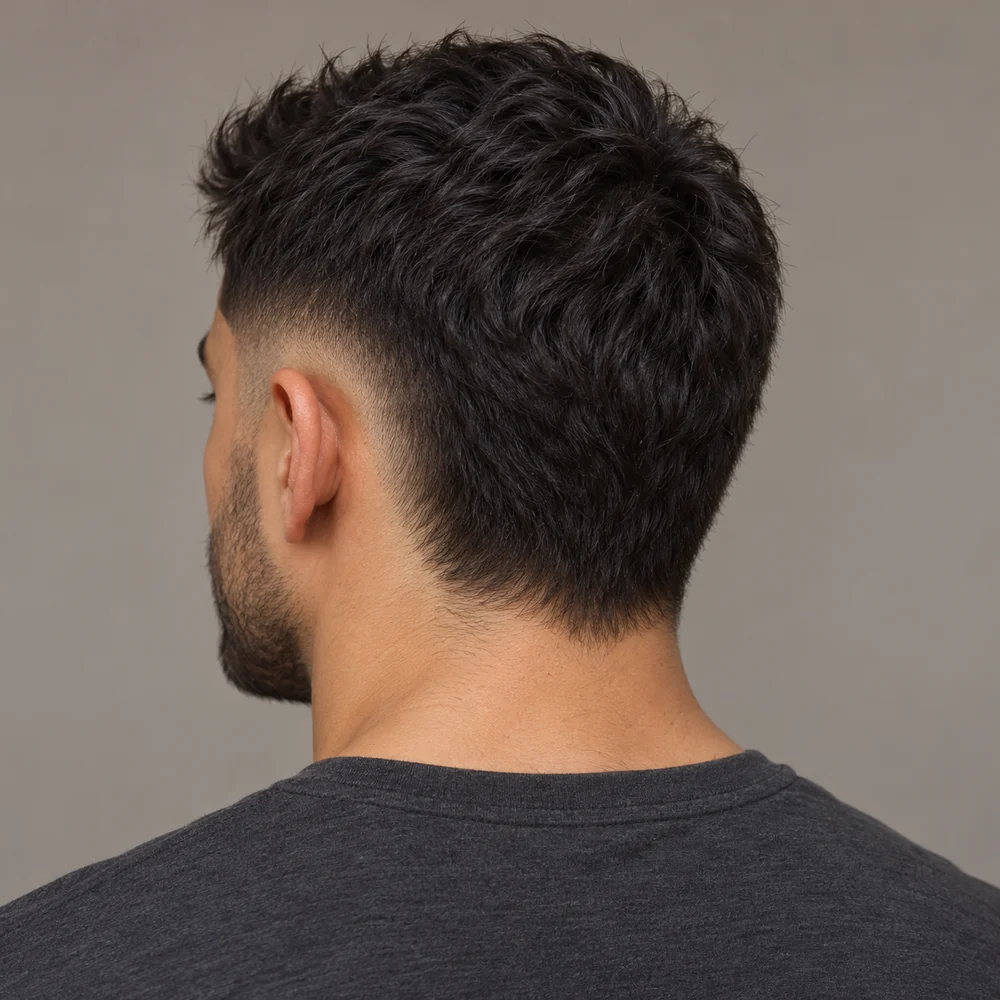
A separate rear reference shows the ear area ending beside a fuller central back, without a shaved strip across the nape.
Five low burst fade styles to consider
The first five references show different top and back choices. The sixth shows a separate rear view. They are different fictional adults, so use them to explain individual details rather than as a matched set of angles of one haircut.
1. Low burst fade with a textured crop
A short, broken-up fringe keeps attention on the small curve around the ear. Ask for texture that you can recreate with your fingers and keep enough side weight above the fade to preserve the compact shape. If the fringe has a strong cowlick, check its dry position before choosing its final length.
For straight hair, decide whether the front should sit forward or lift slightly. These need different styling directions even when the side is identical. For more crop options, see our French crop fade guide.
2. Low burst fade with a wavy top
Keep enough upper length for the wave to bend rather than cutting every section uniformly short. Ask where the longer side will sit when it dries: it should support the shape without covering all of the curve. A softer shortest finish is useful if you prefer a less exposed side.
3. Low burst fade with curls
Pick a reference with a curl size and dry volume close to yours. The important instruction is the finished silhouette, not copying a stretched length from someone else. Ask the barber to check the curls after they settle, especially where they meet the faded side. State whether you want a rounded top or a more directional front.
4. Low burst fade with a coily top
A compact ear area can sit beneath a fuller coily shape. Agree on how much height and width to retain before the side is reduced. If you want a hairline cleanup, discuss its shape separately; a burst fade does not require a sharp, squared front edge. The finish should work with your existing outline and density.
5. Low burst fade with a short mullet
This version deliberately retains more length at the back. Point out where you want the tail to end and how much width should remain behind each ear. If you only want a rounded, tidy nape, say so: a burst does not automatically mean a mullet. Our burst fade mullet guide covers longer back shapes in detail.
Low burst fade vs low taper and drop fade
A low taper usually concentrates the shortest work at the sideburns and neckline. A burst has a more visible curved area around the ear. A drop fade generally follows a descending route behind the ear toward the back. Shop terminology overlaps, so compare the path of the short area and the hair that remains at the center back.
If you want to keep most of your side hair, compare the low taper fade. If you want the fade to continue around the rear, compare our burst fade vs drop fade examples. Neither name alone decides the top length or whether the shortest point reaches skin.
What to tell your barber
Bring a clear side reference and a rear reference with compatible back shapes. If the pictures show different cuts, identify exactly which detail you want from each. A useful request is:
“Please keep a small burst around my ears, with the top of the blend below the point I’m showing. I want [visible stubble / skin] at the shortest area. Leave this much weight above it and keep the center back [tidy and full / longer like this reference]. On top, I want [style] falling to [dry position]. Please show me the planned boundary before cutting.”
Before starting, also mention glasses, helmet use or a part you wear every day. These change where hair sits. Ask whether the reference can be adapted to your current length; styling product cannot replace hair that has already been cut away.
Check these details before leaving the chair
- Side: can you still see longer hair above a compact ear-centered curve?
- Rear: has the intended central back shape been retained?
- Other side: do the two curves look balanced with your ears and head shape?
- Top: does the front fall where agreed when the hair is dry?
If something differs, point to that area while the barber can assess it. Correcting one darker spot may be possible without raising the whole fade. If too much hair has been removed, ask about a grow-out plan rather than automatically shortening the other areas to match.
Style the top and plan the upkeep
The side shape comes from the cut; your daily routine mainly concerns the top. For a crop, direct the front into place while drying and add a small amount of a product whose hold you already like. For waves or curls, arrange the damp shape gently and let it settle before deciding whether more product is needed. Follow heat-tool and product directions.
Keep a quick reference photo after your first wash. That shows how the haircut behaves with your own routine, rather than only with the barber’s finish. Note whether the issue is a flat front, excess side width or a fading curve; each calls for a different adjustment.
Use a two-to-four-week check-in as an initial discussion with your barber, not a guaranteed schedule. A skin finish can lose its crisp contrast sooner than you prefer, while visible stubble may still look acceptable as it softens. Rebook based on your own growth and the look you want. Ask whether you need a perimeter refresh or a full top-and-back reshape.
Avoid repeatedly carving higher around the ears at home to chase the original outline. For the next appointment, show your first-wash photo and describe what became difficult between visits. That is more useful than asking to make everything shorter.
Low burst fade FAQs
Is a low burst fade a skin fade?
It can be. “Low” describes placement and “burst” describes the curved side shape. A skin finish is a separate choice. Ask for visible stubble if you do not want the tightest area taken to bare skin.
Does it work with straight hair?
Yes. Choose a top that behaves well with your growth pattern, such as a crop or textured fringe. Check the side profile so the longer hair above the burst does not collapse over the detail you wanted to show.
Is a low burst fade the same as a mullet?
No. The burst is the side treatment. A mullet deliberately keeps a longer back. You can combine them, or keep the back shorter and rounded.
Can I keep the top long?
Yes. Show where the top should fall when dry and agree on its connection to the sides. Longer hair may cover part of the burst when worn down, which can be an intentional choice.
What if I want less upkeep?
Discuss a softer shortest finish and a top you can wear with minimal restyling. If preserving the small arc matters less to you than keeping the sides tidy, compare a low taper before booking.
References and related reading
For professional descriptions of the curved shape and consultation choices, see CADMEN Barber Academy’s burst fade guide. Barber Industries’ fade examples show how a localized burst can retain back length. Names vary between shops; use the visual boundary and your barber’s assessment to agree on your version.
 Burst Fade Haircuts: Types, Placement & Barber Guide
 Straight Hair Burst Fade Crop: Shape & Barber Guide
 Coily Burst Fade Faux-Hawk: Shape & Barber Guide