The South of France Reinvented: Master the Coily Burst Fade Faux-Hawk
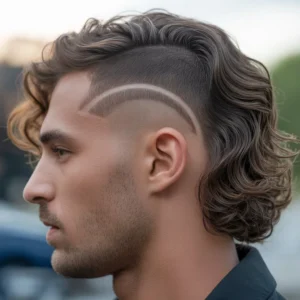
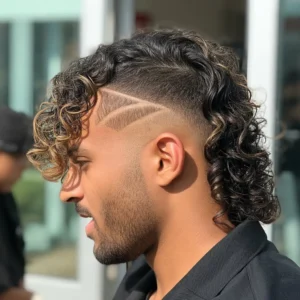
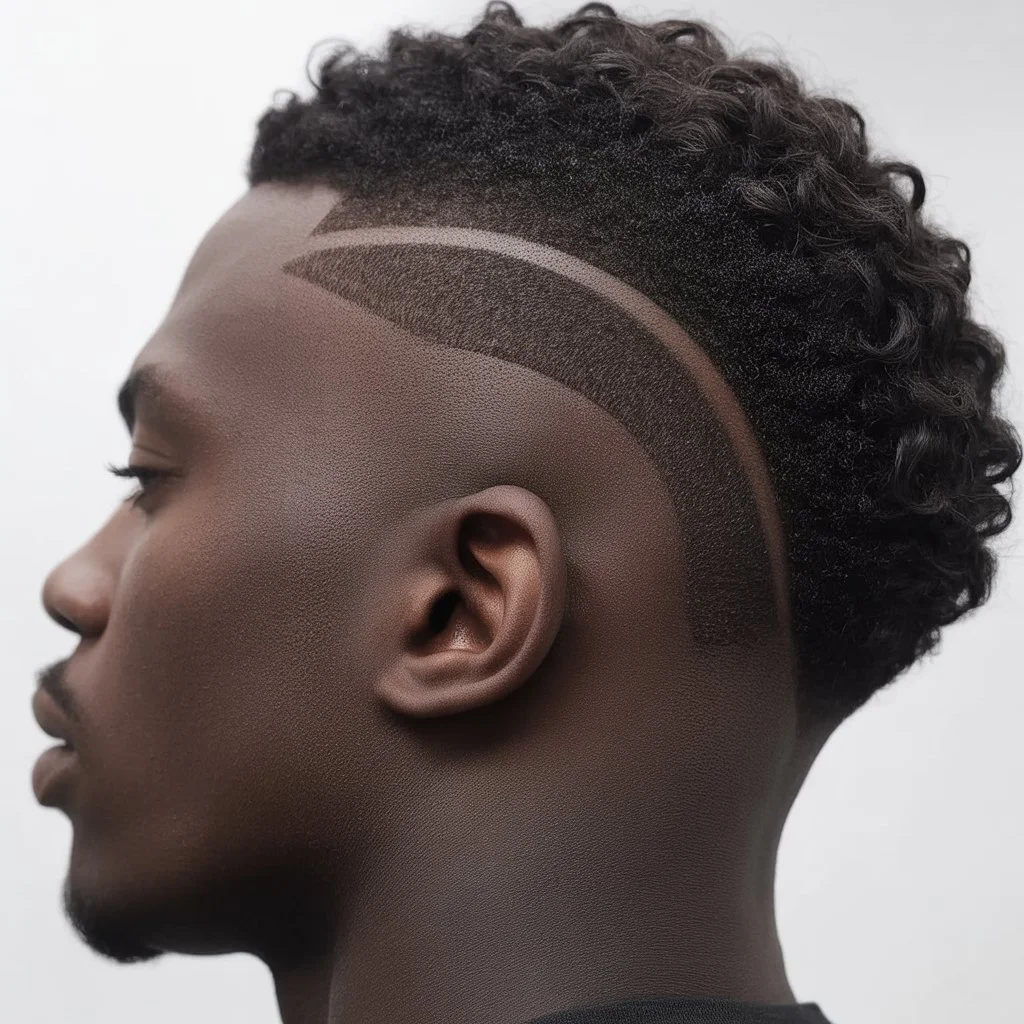
The modern men’s grooming landscape is dominated by heavy texture and architectural contrast. Sitting at the absolute peak of this movement is the highly technical variation known as the coily burst fade faux-hawk. This is not merely a haircut; it is a bold geometric intervention that completely isolates natural hair texture. By shaving the hair immediate to the ear into a clean semi-circular arc and blending it down to bare skin, this style creates an elongated, aerodynamic profile that celebrates natural dense coils, transforming them into a high-impact faux-hawk or modern mullet silhouette.
Historically, this cut evolved from the classic ‘South of France’ fade, made famous by figures like Raymond Usher. The South of France was defined by a wider Mohawk strip. However, the modern coily burst fade faux-hawk (or sometimes called the South of France fade) has been reinvented, defined by a far more aggressive “burst” that exposes massive amounts of skin around the ear, allowing the curls on top and down the neck to become the central artistic focus of the entire look.
The Silhouette Analysis and the modern “South of France”
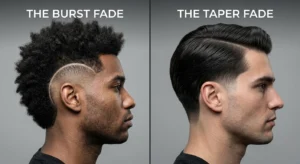
To understand why the coily burst fade faux-hawk is so impactful, you have to look at the contrast. A standard drop fade creates a continuous halo of fade all the way around the back of the head. A burst fade, however, is a targeted, localized intervention. It is designed to be a sharp, semicircular bald arc that begins at the sideburn and pushes high up into the temple area, separating the front canopy of curls from the heavy volume cascading down the neck. The result is a profile that is clean and sharp from the side, but wild, voluminous, and voluminous from the front and back.
How to Ask Your Barber for a Coily Burst Fade Faux-Hawk (Barber Guide)
Because this style relies on extreme geometry and handling dense coily hair, precision is key. Do not make the mistake of just asking for a mohawk or a South of France. You must provide the exact technical specifications to your barber. Use this section to populate your HowTo Schema in Rank Math.
- Step 1: Define the Mohawk/Faux-Hawk Width. Before any fading begins, you must agree on the final width of the coily section. A coily burst fade faux-hawk can be narrow and aggressive, creating a tight faux-hawk, or it can be wider, leaning into a more classic South of France profile. A master barber will recommend a width that balances your head shape, typically allowing the coils to act as a structured canopy rather than a flat strip.
- Step 2: Carve the Semicircular Skin Burst Arc. This is the defining feature. Tell your barber you want a bald burst fade or skin burst directly around the ear. Specify the width of the “burst” you want to see. This style thrives on maximum visual impact, requiring the blend to initiate at foliage length and drop seamlessly to the skin, creating that immaculate semi-circle that isolates the ear.
- Step 3: Texturize and Blend the Coils. Handling coily hair requires specialized tools. To create that structured halo effect, your barber must use free-form clipper cutting and specialized texture shears to remove internal bulk without altering the length of the mohawk section. This is crucial for preventing the coily burst fade faux-hawk from looking too rounded or blocky.
- Step 4: The Neckline Finish. The transition from the bald burst fade to the heavy back section is what creates the “faux-hawk” tail. Request that the neckline be left long and natural, or have the very bottom of the nape slightly tapered. Avoid any heavy squaring-off or blunt lines at the back, which can destroy the natural flow of the coily burst fade faux-hawk mullet silhouette.
Face Shape Compatibility: Who Should Wear It?
Because the coily burst fade faux-hawk relies on extreme volume on top and in the back while keeping the sides skin-tight, it interacts uniquely with different facial structures. This cut is highly effective at adding vertical height, making it universally complimentary for almost any face shape that needs elongation.
- Oval and Diamond Faces: This is the ideal canvas. The tight sides highlight sharp cheekbones, while the voluminous coily canopy balances out a narrower chin. The coily burst fade faux-hawk creates a highly harmonious and dramatic silhouette.
- Square Faces: Excellent choice. The natural rounded nature of the coils softens the hard, angular lines of a strong jaw, creating a complementary and stylish look.
- Heart and Round Faces: Proceed with caution. Because the sides are completely shaved down, this cut can sometimes make a round face appear wider if the top is not kept tall enough. If you have a round face, you must ensure the top fringe is styled upward (like a faux-hawk) to create height. If you need a more conservative option to add structural width, a mid taper fade is usually a safer alternative to manage the width of your head.
The Maintenance Cycle: Keeping the Burst Razor-Sharp
Do not let the effortless look of the coils fool you; the coily burst fade faux-hawk requires strict maintenance. This is the trade-off for such a high-impact aesthetic. To keep the semi-circular burst arc around the ear looking sharp, you will need to sit in the barber’s chair every 10 to 14 days. Once the hair around the ear grows past a #1 guard, the sharp architectural geometry is lost. The longer coily section is far more forgiving, only requiring a minor texturizing trim every 4 to 6 weeks to manage split ends and internal weight.
Product & Styling Guide for Defined Coils
The biggest mistake men with coily hair make is using heavy, petroleum-based products that suffocate the follicle and create buildup. Coily hair needs specialized hydration and definition. This daily styling protocol will lock in hydration and define the texture of your coily burst fade faux-hawk:
- The Pre-Styler (Hydration is Key): Coily hair is naturally dry. After washing, towel dry until slightly damp, then apply a generous amount of a high-quality leave-in conditioner. This hydrates the coily hair from within, preventing frizz and damage. For advanced moisture-lock, we recommend authoritative grooming brands like Davines for superior follicle hold and health.
- The Detailer (Define the Curl): Next, apply a curl-defining cream or a lightweight styling gel. This product acts as a sealant, encouraging the coils to clump together into defined curl patterns. This prevents the mohawk section of your coily burst fade faux-hawk from looking messy or unkempt.
- The Curl Sponge (Final Texture Lock): Once the product is applied, use a curl sponge or a twist brush. Lightly rub the sponge in circular motions over the mohawk section to encourage the coils to define into perfect spirals. This step is what separates a messy fro from a high-impact, defined coily burst fade faux-hawk.
Frequently Asked Questions
Is a burst fade good for coily hair? Yes, it is arguably the best texture for a burst fade. The naturally dense coils create a massive, structured halo of volume that contrasts perfectly with the bald semi-circular arc around the ear. This makes the coily burst fade faux-hawk one of the most popular and technical styles in modern barbering.
What is the “South of France” fade? The South of France fade is the classic precursor to the modern burst fade faux-hawk. It typically features a wider Mohawk section and a more rounded fade profile than the high-contrast burst fade we see today.
How long does coily hair need to be for a burst fade faux-hawk? For a high-impact look that provides significant volume, your coily hair should be at least 3 to 4 inches long on top and down the neck before attempting this haircut.
Does a burst fade work with a receding hairline? Yes, but you must be strategic. A barber can use a high burst fade to draw the eye away from the receding hairline and up toward the volume of the coils on top.
Written by The Master Barber
With over a decade of high-end editorial grooming experience, our team breaks down complex barbering geometry into actionable styling advice for the modern man.