
Mid Fade Haircut: Photos, Placement & Barber Script
On this page
- Where Does a Mid Fade Haircut Sit?
- Mid Fade vs Low Fade vs High Fade
- Mid Fade vs Mid Taper: The Important Difference
- Shadow, Zero or Skin Mid Fade?
- Mid Fade Haircut Styles That Change the Top
- How Hair Texture and Density Change the Result
- What to Ask Your Barber
- Maintenance and Grow-Out
- Common Mid Fade Mistakes
- Sources and Editorial Method
- Frequently Asked Questions
- Choose the Next Decision
A mid fade haircut uses one connected short-to-long gradient through the middle of the sides and around the back. It normally begins around temple height, above a low fade and below a high fade. “Mid” describes placement; it does not tell the barber whether the base should remain as a shadow, finish around clipper-zero or go to bare skin.
Quick answer: ask for a continuous fade beginning around your temple, then separately choose the shortest finish, the path across the back and the top length. If you want the temple and neckline cleaned while keeping fuller hair around the ear, you probably want a mid taper rather than a full mid fade.
Where Does a Mid Fade Haircut Sit?

The visible transition usually occupies the central zone of the side profile. The precise starting point changes with head shape, ear position, density and the barber’s visual judgment, so “halfway up” should be treated as a direction rather than a fixed measurement.
The defining feature is connected coverage. A full mid fade continues through the side and into the back instead of appearing only at the sideburn and nape. The rear can stay approximately level or descend slightly behind the ear, but a pronounced downward curve becomes closer to a drop-fade decision.
| Decision | What “mid fade” tells the barber | What you still need to specify |
|---|---|---|
| Height | Transition sits around the middle/temple zone | Exact landmark on your head |
| Coverage | Connected gradient around sides and back | How much upper-side weight stays |
| Shortest finish | Not specified | Shadow, zero, skin or bald |
| Rear path | Not fully specified | Level, slightly dropped or another shape |
| Top | Not specified | Length, texture, direction and connection |
Mid Fade vs Low Fade vs High Fade

Fade height changes how much side weight remains and how strongly the top separates from the sides. A low fade stays close to the lower perimeter and preserves more visible density above it. A mid fade removes more of that density but leaves more connection than a high fade. A high fade pushes the short zone toward the upper corner of the head, producing the strongest separation.
| Fade height | Side weight retained | Typical visual effect | Useful starting point when… |
|---|---|---|---|
| Low fade | Most | Softer, lower transition | You want the fade to stay secondary to the top |
| Mid fade | Balanced | Visible contrast without maximum height | You want the side profile to look deliberately faded |
| High fade | Least | Strong top-to-side separation | You want a compact or highly contrasted silhouette |
For the full family of shapes and finishes, start with the fade haircuts for men visual guide. Do not choose height from a face-shape label alone: top volume, head shape, density, facial hair and personal preference change how the same placement reads.
Mid Fade vs Mid Taper: The Important Difference
A mid fade and a mid taper can begin at a similar vertical level, but they do not remove the same amount of hair. In the terminology used on this site:
- Mid fade: one continuous gradient travels around the side and back, changing a broader area.
- Mid taper: shorter graduation is concentrated around perimeter zones such as the sideburn/temple and nape, with more hair preserved around and above the ear.
Shop vocabulary varies. Some barbers use “taper fade” for any smooth gradient and others reserve “taper” for localized edge work. Show the coverage you want instead of treating the label as a regulated specification. Use the dedicated fade vs taper comparison when retained side weight is your main decision.
Shadow, Zero or Skin Mid Fade?

The shortest finish controls base contrast and early grow-out. It is separate from the mid-height placement:
- Mid shadow fade: visible short hair remains at the base. It gives the fade a softer lower edge.
- Mid zero fade: the base is cut very close with clippers or trimmers, but the phrase does not automatically promise a foil-shaved finish.
- Mid skin fade: the lowest area is taken to bare skin. Ask whether the shop means trimmer-close skin or a fully shaved/bald finish.
If your scalp is easily irritated or you simply prefer less exposure, say that you want visible shadow left at the bottom. A shorter finish can make the contrast look sharper, but it does not make the fade “more mid.”
Mid Fade Haircut Styles That Change the Top
The fade defines the sides and back; the top remains a separate style choice. The most useful references show a similar hair texture, density and top length—not only a similar fade height.
Textured Crop or Fringe
A compact crop keeps the silhouette balanced and requires relatively little height. Ask whether the fringe should sit blunt, broken or swept forward, and decide how much corner weight should connect the crop to the fade. If your priority is a broader fringe library, compare the textured fringe haircuts for men.
Buzz Cut or Crew Cut
Short tops make the transition especially visible. With a buzz cut, choose the top guard independently and decide whether the fade should blend softly into it or create a stronger ridge of contrast. A crew cut keeps more length toward the front, so the barber must preserve enough top weight for that direction.
Curly or Coily Top

A mid fade can remove side bulk while leaving curls or coils to form the top silhouette. Account for shrinkage and growth direction before setting the transition. Avoid forcing a perfectly straight hairline if preserving the natural perimeter matters to you. For between-cut care, use the natural hair care for fades guide.
Quiff, Pompadour or Longer Wavy Top

Longer tops need enough corner and upper-side weight to connect cleanly. Removing that weight too abruptly can turn the result into an unintended disconnected undercut. State how you style the top—forward, upward, back or parted—and bring a reference that shows the side connection as clearly as the front.
How Hair Texture and Density Change the Result
| Hair characteristic | What to review before cutting | Useful request |
|---|---|---|
| Straight hair | Blend lines and shelves can show clearly | Ask for a smooth connection and show the desired corner weight |
| Wavy hair | Natural movement can collapse if upper sides are over-thinned | Keep the length needed to support the top direction |
| Curly/coily hair | Shrinkage and side density change the silhouette | Set the shape before chasing the shortest possible base |
| Fine or thinning hair | Scalp exposure may appear stronger than expected | Consider a shadow finish and avoid rigid universal prescriptions |
| Very dense hair | Bulk above the fade can form a shelf | Ask for controlled debulking without hollowing the connection |
What to Ask Your Barber

Use this script as a starting point:
“I want a continuous mid fade beginning around this temple landmark and carrying around the back. Keep the shortest point at [shadow/zero/skin]. I want the rear to stay [level/drop slightly], and connect it into this [top length and style]. Please show me where the fade will sit before taking out the side weight.”
Bring one side reference and one rear reference. A front-only image hides the two areas most likely to be misunderstood. The Fade Calculator can help organize your contrast, finish and maintenance preferences before the appointment.
Maintenance and Grow-Out
There is no single correct rebooking interval. A skin base, sharp line-up and very dark hair can make new growth visible quickly; a shadow finish softens more gradually. The top style may need attention on a different schedule from the fade itself.
- Rebook when the side silhouette no longer matches your preference—not because a generic calendar says the cut has expired.
- Do not raise the fade at every appointment unless you intentionally want the placement to move higher.
- Use light styling product near the blend; heavy residue can make the lower hair look patchy.
- Let a barber handle structural corrections. Re-cutting the fade line at home can force the next appointment higher.
Common Mid Fade Mistakes
- Requesting “mid” without pointing to a landmark on your own head.
- Assuming every mid fade must go to skin.
- Showing only a front photo and leaving the rear path undefined.
- Confusing a localized mid taper with a continuous mid fade.
- Removing so much upper-side weight that a longer top becomes accidentally disconnected.
- Using one reference with a completely different texture or density and expecting an identical result.
- Letting a line-up move beyond the natural hairline to imitate a generated or heavily edited image.
Sources and Editorial Method
This guide separates fade height, finish, path and top style because professional barber guidance treats them as individual consultation decisions. Terminology still varies between shops, so the page uses visual landmarks and request wording rather than presenting one label as universal.
- GQ — Everything You Need to Know About Fade Haircuts
- GQ — What to Say to Your Barber
- Byrdie — Barber-reviewed fade haircut overview
Frequently Asked Questions
What is a mid fade haircut?
It is a connected short-to-long gradient positioned through the middle of the sides and around the back, commonly near temple height. The shortest finish and top style are separate decisions.
Is a mid fade the same as a mid taper?
Not in the terminology used here. A mid fade changes a broader connected band through the sides and back, while a mid taper concentrates shorter graduation around perimeter zones and keeps more side weight.
Does a mid fade have to show bare skin?
No. A mid fade can finish at shadow, zero or skin. “Mid” describes height; the finish describes how short the base becomes.
What top styles work with a mid fade?
A mid fade can sit beneath crops, fringes, buzz cuts, crew cuts, curls, coils, quiffs, pompadours and longer wavy tops. The connection and retained corner weight should be planned for the chosen top.
What should I show my barber?
Bring side and rear references with a similar texture and top length. Point to the fade height on your head and specify the shortest finish, rear path and top connection.
Choose the Next Decision
If you want more side weight and localized edge cleanup, move to the mid taper fade guide. If you want the transition closer to the lower perimeter, compare the low taper fade and the broad fade haircut visual guide. The next dedicated height pages will be linked here only after they are published and indexed.
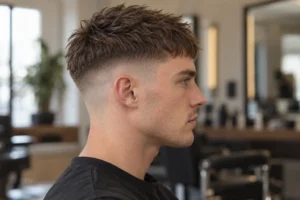 Textured Crop Haircut: Styles, Fades and How to Ask Your Barber
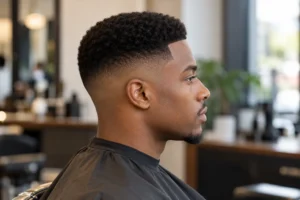 Boosie Fade: What It Is, 7 Styles and How to Ask for It
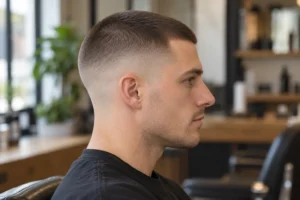 Buzz Cut Fade: Low, Mid, High and Skin Fade Styles With Photos
3 Comments