Skin Fade Haircut: 10 Low, Mid, High & Curved Styles
On this page
- Skin fade haircut gallery: five placements, ten references
- What makes a skin fade haircut different?
- Pick the skin fade placement before the top style
- 10 skin fade references and what to ask for
- Skin fade vs zero fade and taper fade
- What to confirm before the haircut
- Upkeep: the close finish and the top are separate
- Skin fade haircut questions
- Research and visual notes
A skin fade haircut blends into bare skin at its shortest point. It can sit low, mid or high, and its outline can drop behind the ear or curve around it in a burst. Choosing a skin finish does not decide the length on top. Start with the amount of exposed scalp you want, then match the height, rear shape and top to a clear reference.
For a short, even top over a skin fade, see buzz cut guard sizes to pick the guard.
Skin fade haircut gallery: five placements, ten references
Select a numbered reference to enlarge it. Gallery order matches the explanations below.
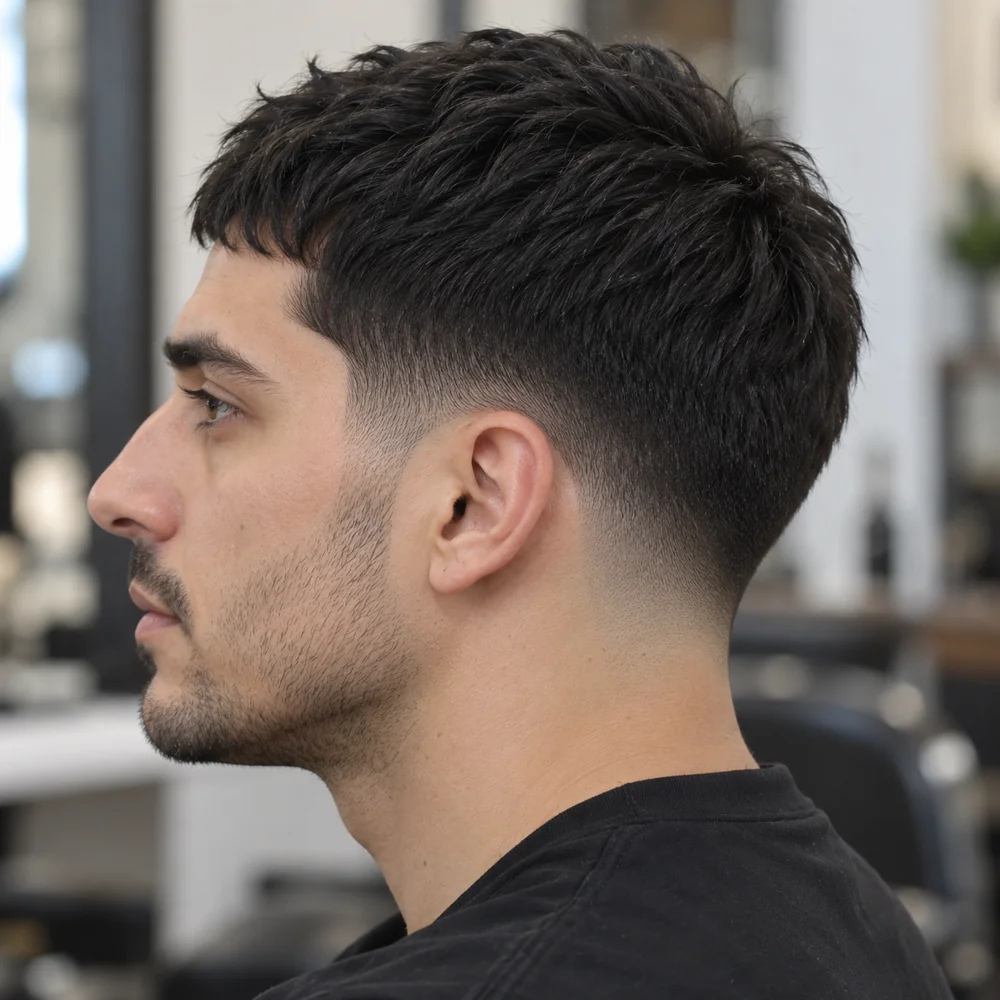
A narrow low skin section leaves darker coverage above the ear.
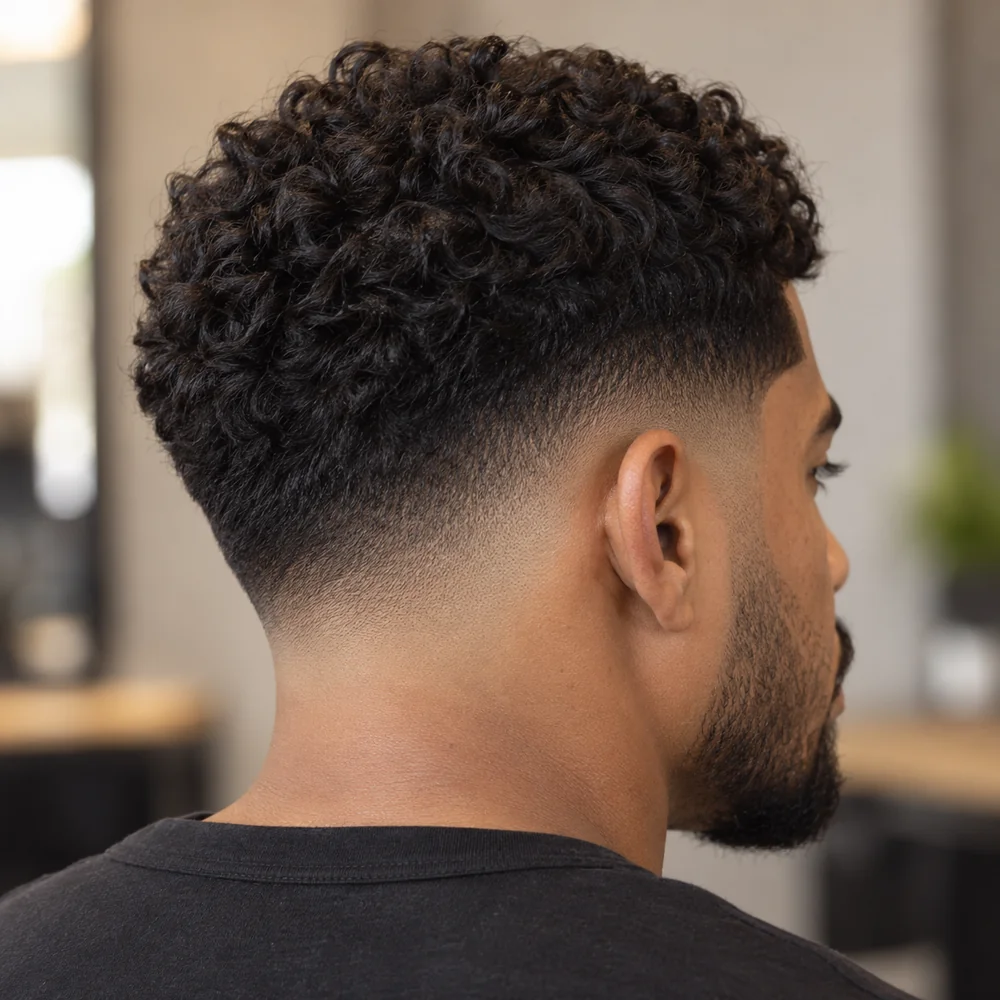
The low nape transition preserves a darker back beneath the curls.

The middle-side graduation connects a close base to a short directional top.
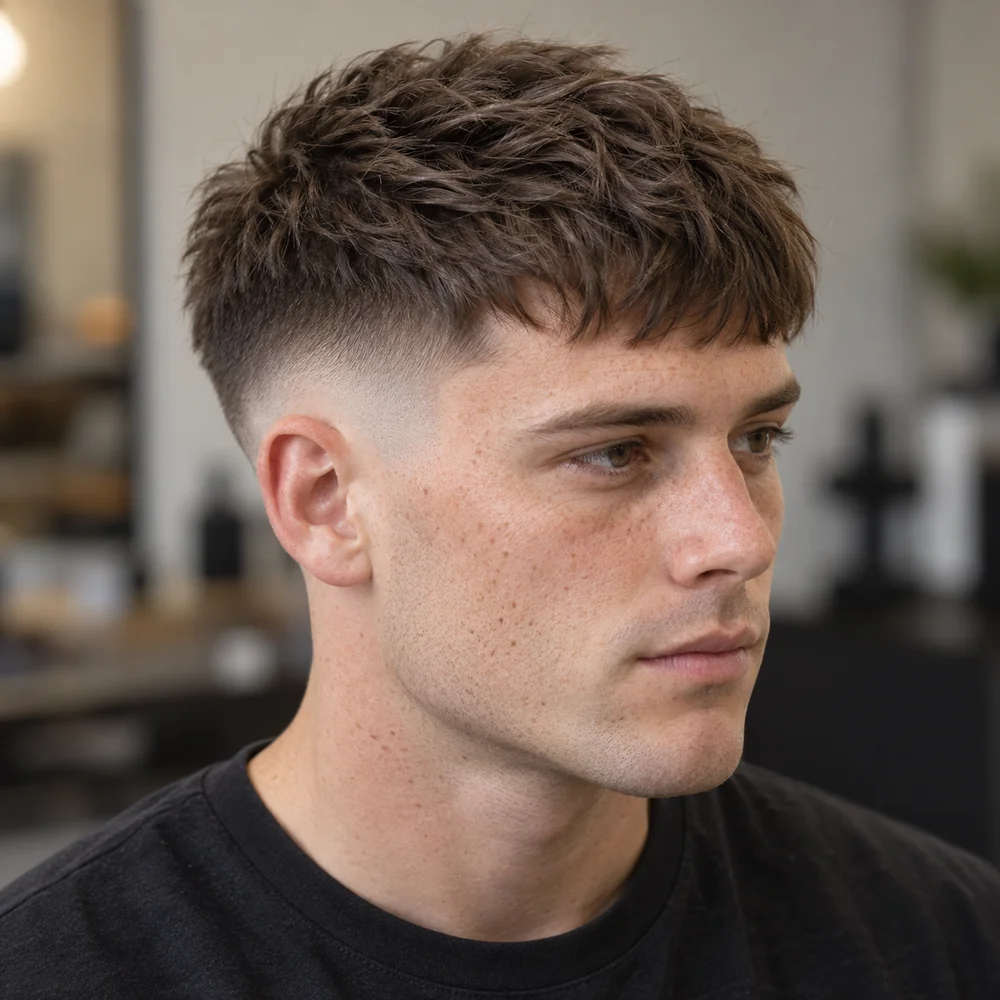
The close-finished side frames a textured fringe directed forward.
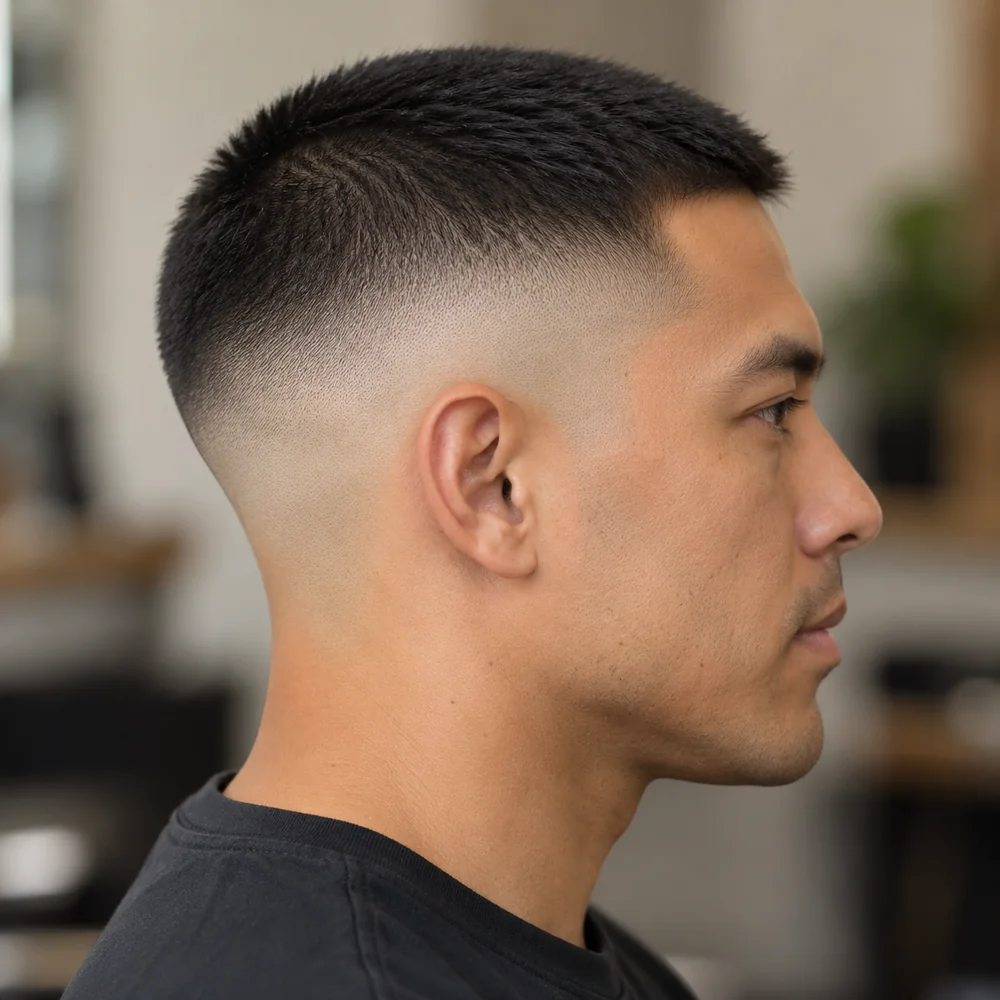
A higher transition exposes more of the side beneath the short buzz top.

The rear angle shows how the high graduation continues beneath the waves.

The transition descends behind the ear and retains more rear coverage above the curve.

A lower rear curve sits beneath the connected swept-back top.
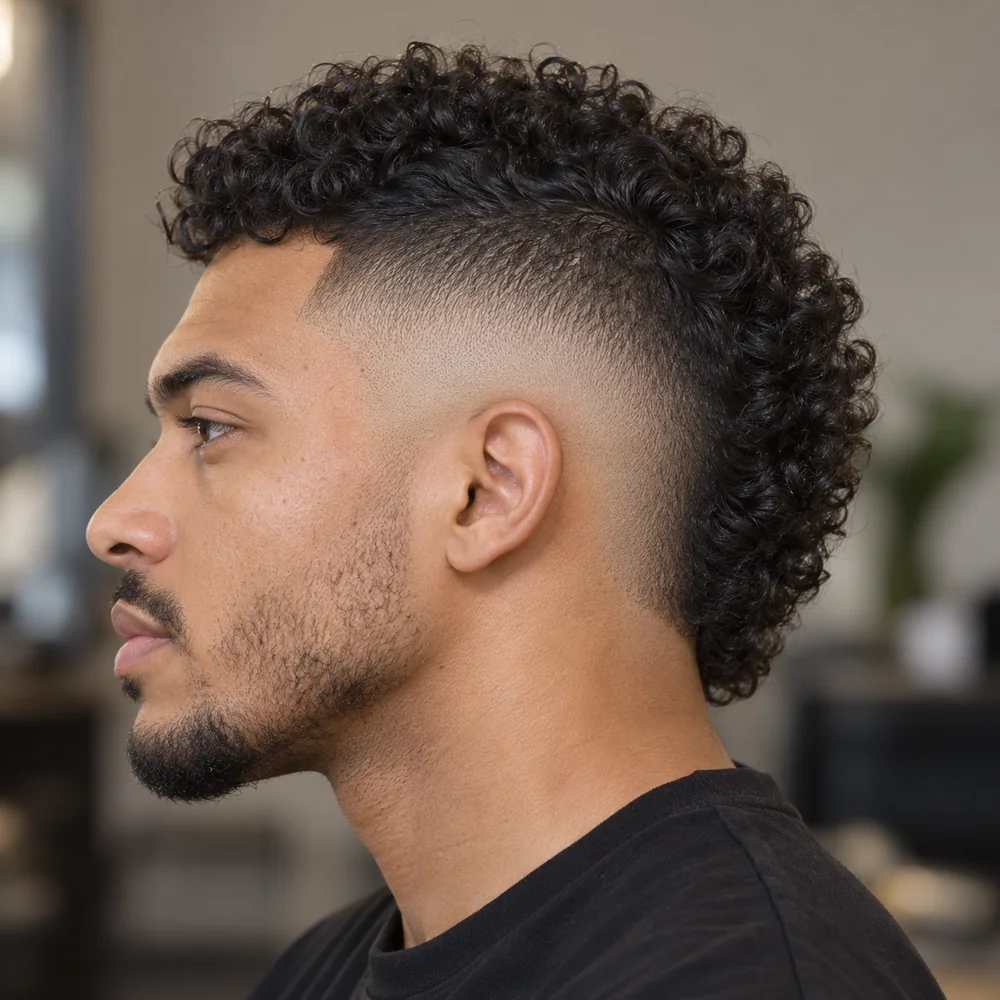
The close ear-centered arc stops before the darker center-back ridge.

A rounded skin burst frames the ear while the short central ridge continues behind it.
Visual disclosure: These ten original AI-generated editorial illustrations depict different fictional adults. They explain placement, texture and finish choices; they are not real client photographs, verified barber work, before-and-after pictures or guaranteed results.
Quick distinction: “Skin” names the shortest finish. “Low,” “mid” and “high” describe placement. “Drop” and “burst” describe the path. A low skin fade and a high skin fade share a finish but can leave very different amounts of hair on the sides.
What makes a skin fade haircut different?
The lowest part reaches bare skin, followed by a gradual transition into longer hair. A shadow fade leaves a short layer of visible hair instead. Lighting and hair-to-scalp contrast can make these finishes hard to judge in a small picture, so confirm the intended base in words as well as showing the image.
Crew Barbers’ explanation of its skin fade service describes a skin base finished with a foil shaver or straight razor. Tools and sequences vary between barbers; the term describes the intended result, rather than requiring one tool for every client. Ask how close the finish will be, especially if you have disliked close shaving before.
Pick the skin fade placement before the top style
| Choice | Look for | Confirm with the barber |
|---|---|---|
| Low skin fade | A low close-finished area with more darker hair above | How much side and rear coverage should remain |
| Mid skin fade | The graduation through the middle of the sides | Where the transition should cross the temples |
| High skin fade | Shortness carried toward the upper sides | The highest acceptable point at both side and back |
| Drop skin fade | A graduation descending behind the ear | The amount of lower rear curvature |
| Burst skin fade | A rounded ear-centered fade with rear hair retained | Where the ear arc should stop |
CADMEN Barber Academy separates low, mid and high placement within the skin fade family. These are reference categories, not precise measurements that fit every head. Compare the low fade, mid fade, drop fade and burst fade guides when you want more detail about a particular outline.
10 skin fade references and what to ask for
Gallery numbers follow reading order. Each pair explores one placement or path on different fictional models; they are not matched front-and-back photographs of the same person. Use a rear reference as well as a side reference when explaining how the fade should travel.
1–2. Low skin fade: straight crop and curl top
Reference 1 shows a short straight crop with the graduation kept lower around the ear. Reference 2 turns toward the rear so you can inspect the low nape transition and the darker hair retained above it. The curly top is a separate choice from that low placement. Tell the barber whether preserving side weight is more important to you than exposing a larger skin section.
Useful request: “Keep the skin section low and leave darker coverage through the upper sides. At the back, keep the transition down near this reference.”
3–4. Mid skin fade: crew cut and textured fringe
Reference 3 combines a short top with a slightly longer front and a close-finished side. Reference 4 has a forward textured fringe; the fade does not require that fringe shape. Decide whether the top should lift, sweep or fall forward, then confirm how much darker upper-side hair will connect into it. A clipped side alone does not explain what should happen across the forehead.
Useful request: “Use a mid skin fade, keep this upper-side connection and copy the direction of this top. Please leave the natural front edge unless we agree otherwise.”
5–6. High skin fade: buzz cut and wavy top
Reference 5 uses a short buzz to show the high side transition clearly. Reference 6 shows how a higher fade continues across the rear beneath a longer wavy top. The amount of visible skin is a significant part of the decision. Check it on your own head before cutting starts rather than assuming that a larger top will hide a higher side.
Useful request: “I want the skin finish high around the sides and back, but no higher than this point. Keep the top length separate from the fade refresh.”
7–8. Drop skin fade: coily top and slick back
The rearward angles show a graduation that descends behind the ear. Reference 7 retains a compact coily top; reference 8 keeps straight hair swept back. Follow the curved transition rather than judging the style by the top alone. Ask how much rear weight should stay above the lower curve, and whether that coverage fits the shape you want as the cut grows.
Useful request: “Blend to skin, then let the fade drop behind the ear. Keep more rear coverage here rather than taking the whole back equally high.”
9–10. Burst skin fade: curly ridge and short faux hawk
The close section curves around the ear while the center back remains darker. Reference 9 has a curly central ridge; reference 10 has a shorter textured faux hawk. Neither requires a long mullet tail. Make the stopping point of the arc clear, because carrying it across the entire back would change the outline. For that distinction, compare our burst fade vs drop fade guide.
Useful request: “Use a rounded skin burst around the ear, stop the arc here and keep this center-back weight. Leave the rear short rather than creating a long tail.”
Skin fade vs zero fade and taper fade
“Zero” can refer to a clipper setting or a very close appearance, and does not reliably promise the same bare-skin result in every shop. If you want visible stubble, say so. If you want a bare base, say that instead of relying on a number. The guard-size reference explains why numbers are only part of the conversation.
Coverage is another separate issue. A taper may clean localized temple and neckline areas while leaving more hair elsewhere on the sides; a continuous skin fade changes a broader area. A localized taper can also have a skin finish. This is why “taper never reaches skin” is not a safe universal rule. Our fade vs taper comparison helps you discuss the coverage you want without treating regional labels as fixed standards.
What to confirm before the haircut
- Placement: point to the highest acceptable part of the fade on the side and rear.
- Finish: agree on bare skin versus a short shadow, and mention previous discomfort with close shaving.
- Top: confirm dry length, fringe direction and whether natural curls or coils should remain.
- Edges: specify whether you want a natural hairline, a sharper lineup, a beard blend or a shaved part.
- Rear view: ask to inspect the curve and neckline, not just the front in the mirror.
A reference helps communicate the goal; it does not guarantee the same result on another density, growth pattern or head shape. A barber can explain what needs adapting before making the close section larger.
Upkeep: the close finish and the top are separate
Regrowth changes a bare finish into a visible shadow, even while the overall outline still looks tidy. Decide whether your next appointment is for restoring that close contrast or for reshaping the whole top. Those can be different needs. Show the barber which part has stopped working for you rather than automatically asking to shorten everything.
For home styling, keep the routine appropriate to the retained top. Short curls, a forward fringe and a slick back need different directions and amounts of product. Use your normal cleansing routine and follow product instructions. Avoid trying to chase the original skin line with an unfamiliar razor or clipper technique; discuss a manageable refresh plan with the barber instead.
Skin fade haircut questions
Is a skin fade the same as a bald fade?
The terms commonly describe a fade reaching bare skin. They still do not settle height, rear path or top style. Confirm those details even if the barber recognizes both names.
Can a skin fade be low?
Yes. “Skin” describes the base finish and “low” describes placement. A low skin fade can preserve more darker side hair than a high skin fade.
Does a skin fade need a razor?
No single tool defines every service. Barbers may use a foil shaver, razor or other equipment as part of their process. Discuss the intended closeness and your previous experience rather than prescribing a tool.
Does a skin fade suit only straight hair?
No. The top can retain straight, wavy, curly or coily texture. Choose a workable top length and confirm the blend with the barber; ethnicity alone does not determine either choice.
How often does it need refreshing?
There is no required interval. Return when regrowth or shape no longer fits your preference and budget. A person who wants a freshly bare base may choose more frequent appointments than someone happy with a softened shadow.
Research and visual notes
This editorial guide was checked on 18 October 2026 against the barber resources linked above. It explains choices for a consultation rather than a do-it-yourself blade sequence. The original AI illustrations depict fictional adults and do not document real clients or verified barber work. See the fade haircut hub for the wider family of styles.
 Textured Crop Haircut: Styles, Fades and How to Ask Your Barber
 Boosie Fade: What It Is, 7 Styles and How to Ask for It
 Buzz Cut Fade: Low, Mid, High and Skin Fade Styles With Photos