Taper Fade for Curly Hair: Low, Mid and Blowout Tapers by Curl Type
On this page
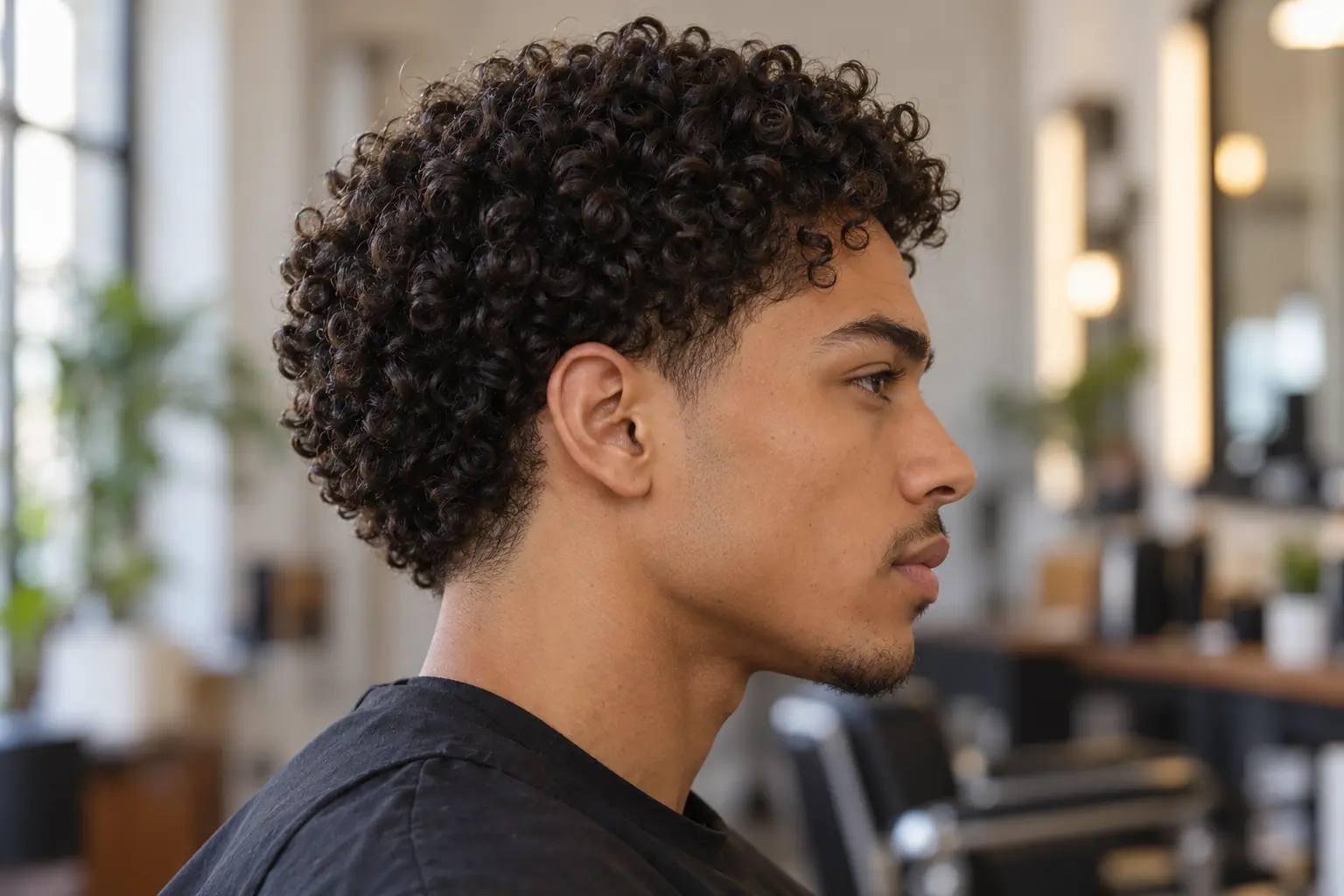
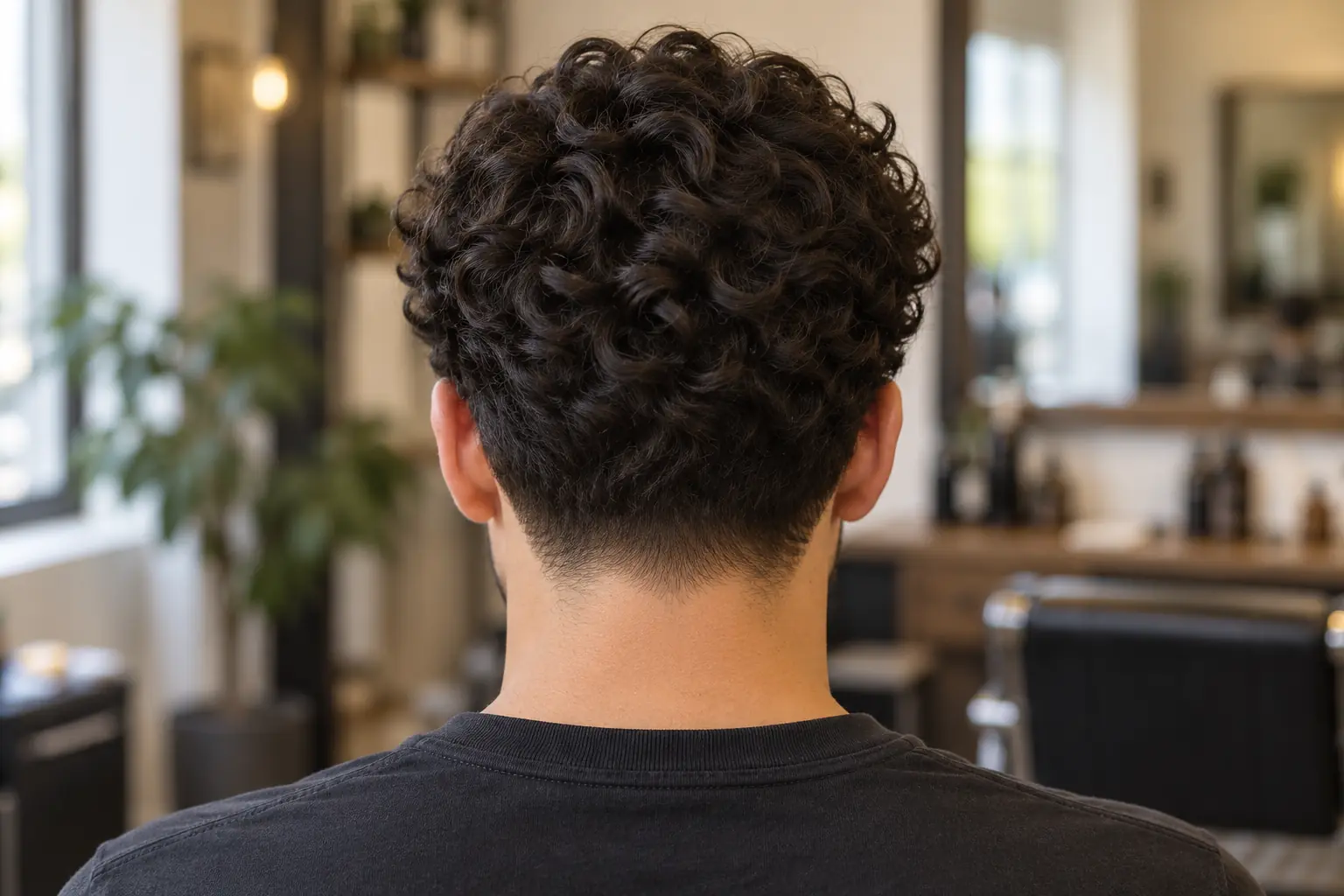
A taper fade for curly hair keeps the curls full on top and shortens only the sideburns and the neckline. Because the sides above the ears keep some length, the head shape stays rounded and natural instead of looking like a curly top sitting on a shaved base. A low taper suits most curl types; a mid taper or a blowout adds more shape and contrast.
Why a Taper Works So Well on Curly Hair
Curly hair grows out as well as down, so the sides puff out sooner than straight hair. A taper fixes the two places where that shows first, the sideburns and the neckline, and leaves the rest of the shape alone. The result looks neat for longer and grows out without a visible line.
For how tapers work in general, see the taper fade guide.
Curly taper fade at a glance
| Feature | Taper fade for curly hair |
|---|---|
| Top length | 2 to 4 inches, more for loose curls |
| Taper height | Low for most; mid for tight curls |
| Finish | Shadow or zero for sensitive skin; skin for maximum contrast |
| Styling | Curl cream or leave-in, scrunch, air-dry or diffuse |
| Touch-up | Every 3 to 4 weeks |
| Top trim | Every 6 to 8 weeks |
Low, Mid or High Taper for Curls
Low taper fade on curly hair
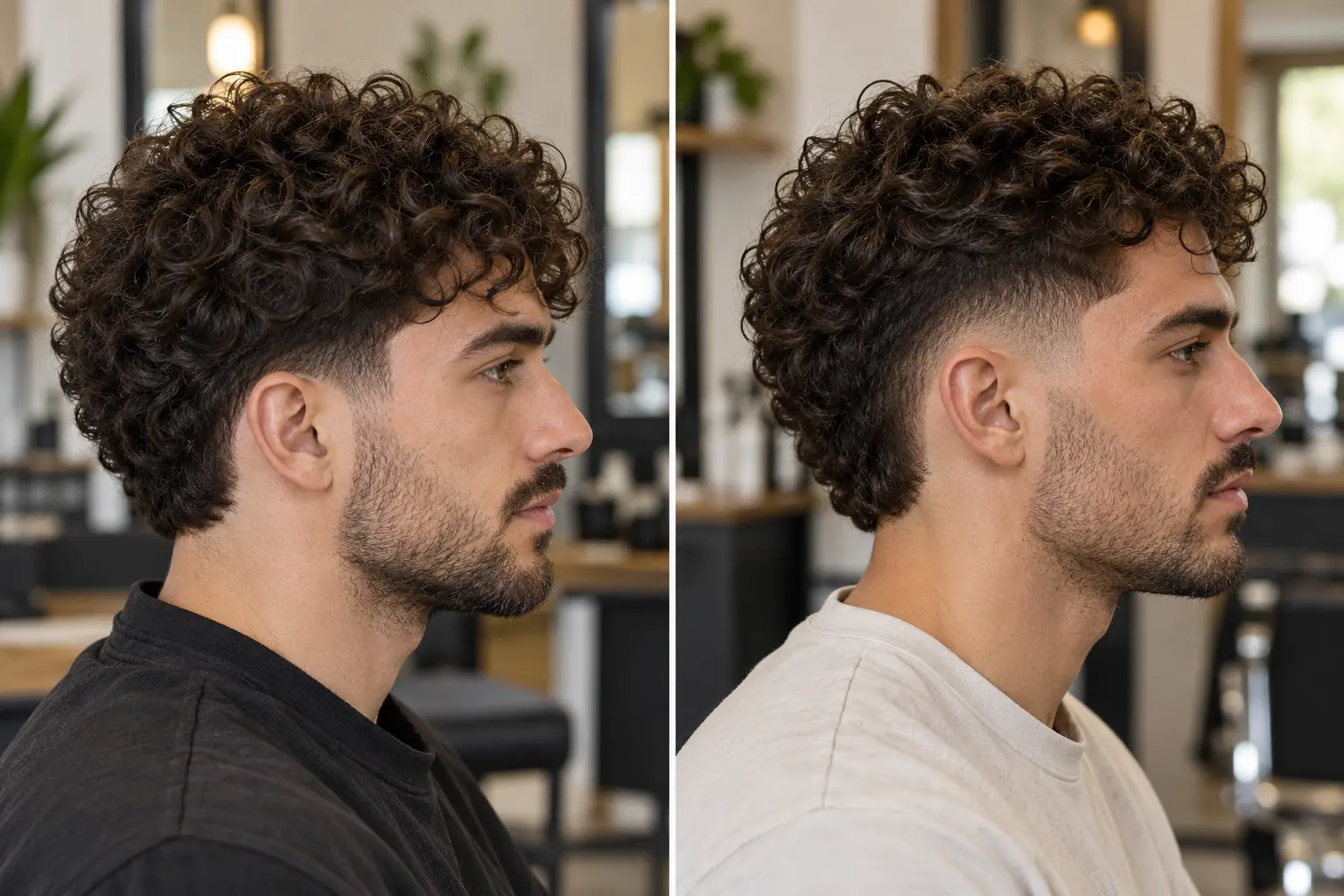
The blend starts at the bottom of the sideburn. It keeps the most width at the sides, which suits loose and medium curls and round faces. This is the version most people search for, and the low taper fade guide shows it across textures.
Mid taper fade on curly hair
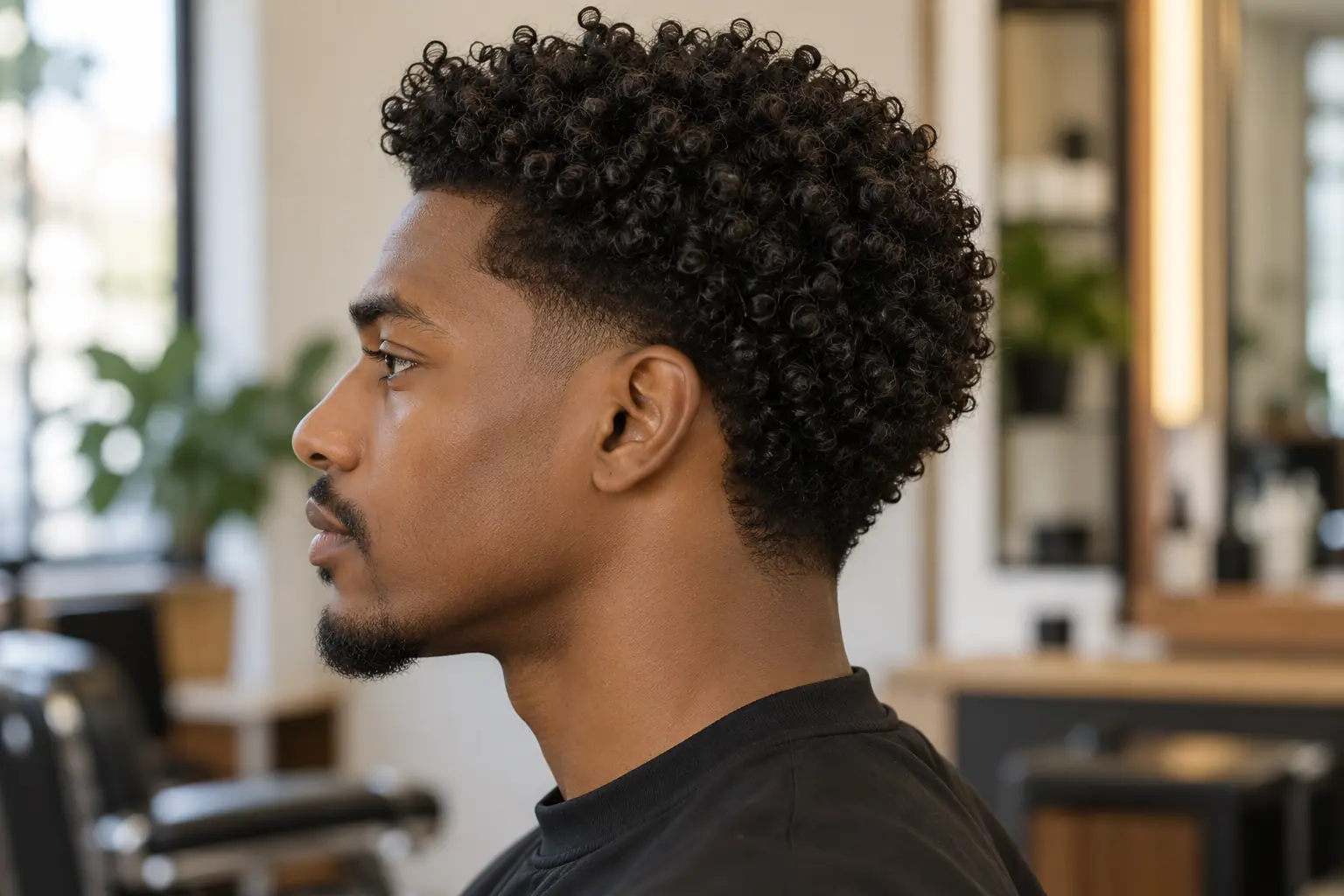
The blend starts around the middle of the ear. It removes more puff at the sides, so it suits tight curls and thick hair that expands fast. Compare the two below and in mid taper vs low taper.
High taper fade on curly hair
The blend starts near the top of the ear. It gives the strongest contrast between short sides and a curly top and works best with a line-up. See the high taper fade guide.
Blowout Low Taper on Curly Hair
A blowout taper keeps the curls and blows the top out into a fuller, rounded shape, so it looks bigger and softer than defined curls. It is one of the most searched curly styles. Ask for a low taper so the sides don’t look too short under all that volume. The blowout taper guide covers how it is styled.
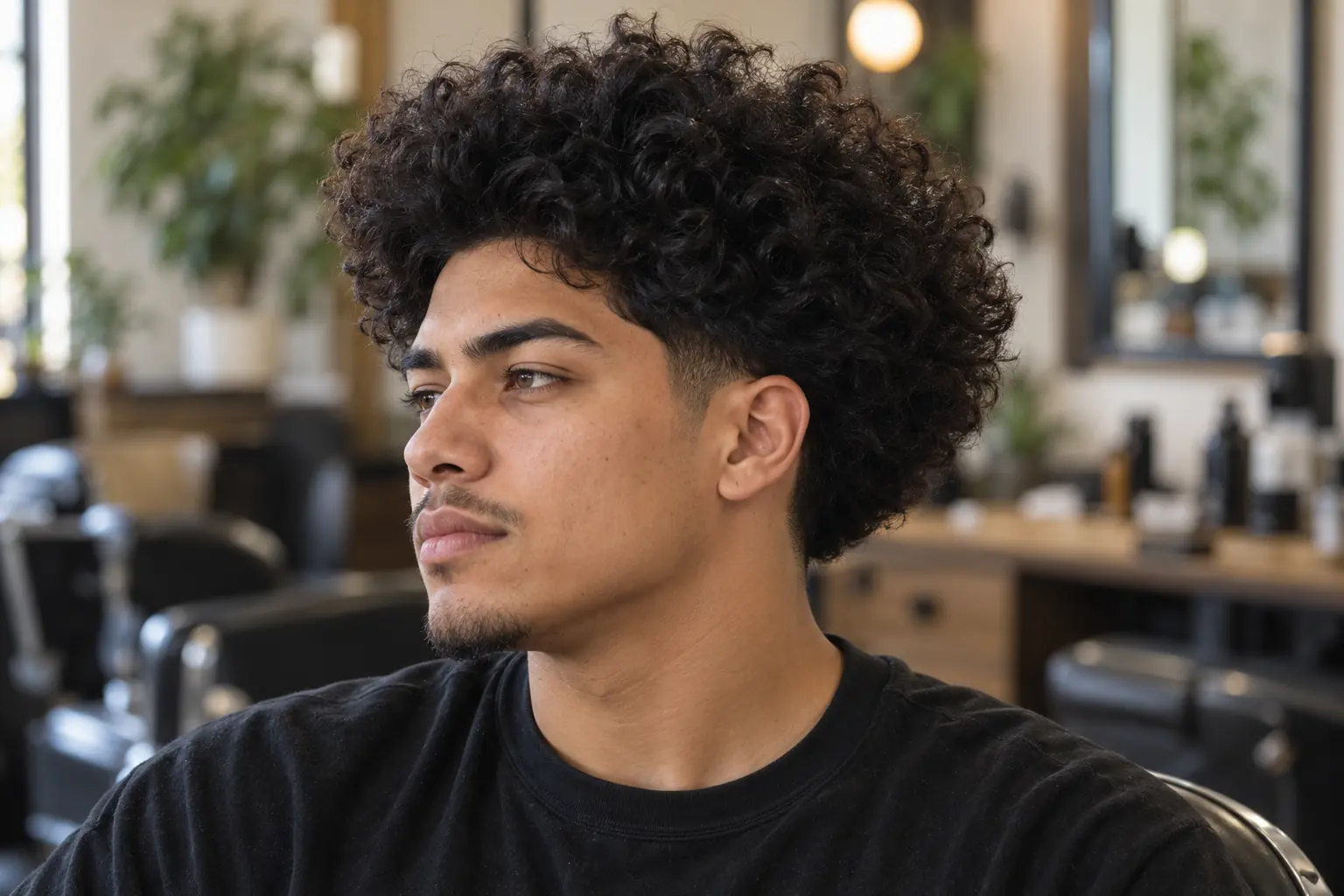
Taper Fade by Curl Type
Curl types run from 2C (loose S-shaped waves) to 3A to 3C (defined curls) to 4A to 4C (tight coils). The tighter the curl, the more it shrinks, so the top needs to be cut longer than the look you want.
Loose curls (2C to 3A)
Keep 3 to 4 inches on top so the curl pattern shows. A low taper works best; anything higher makes the top look heavy.
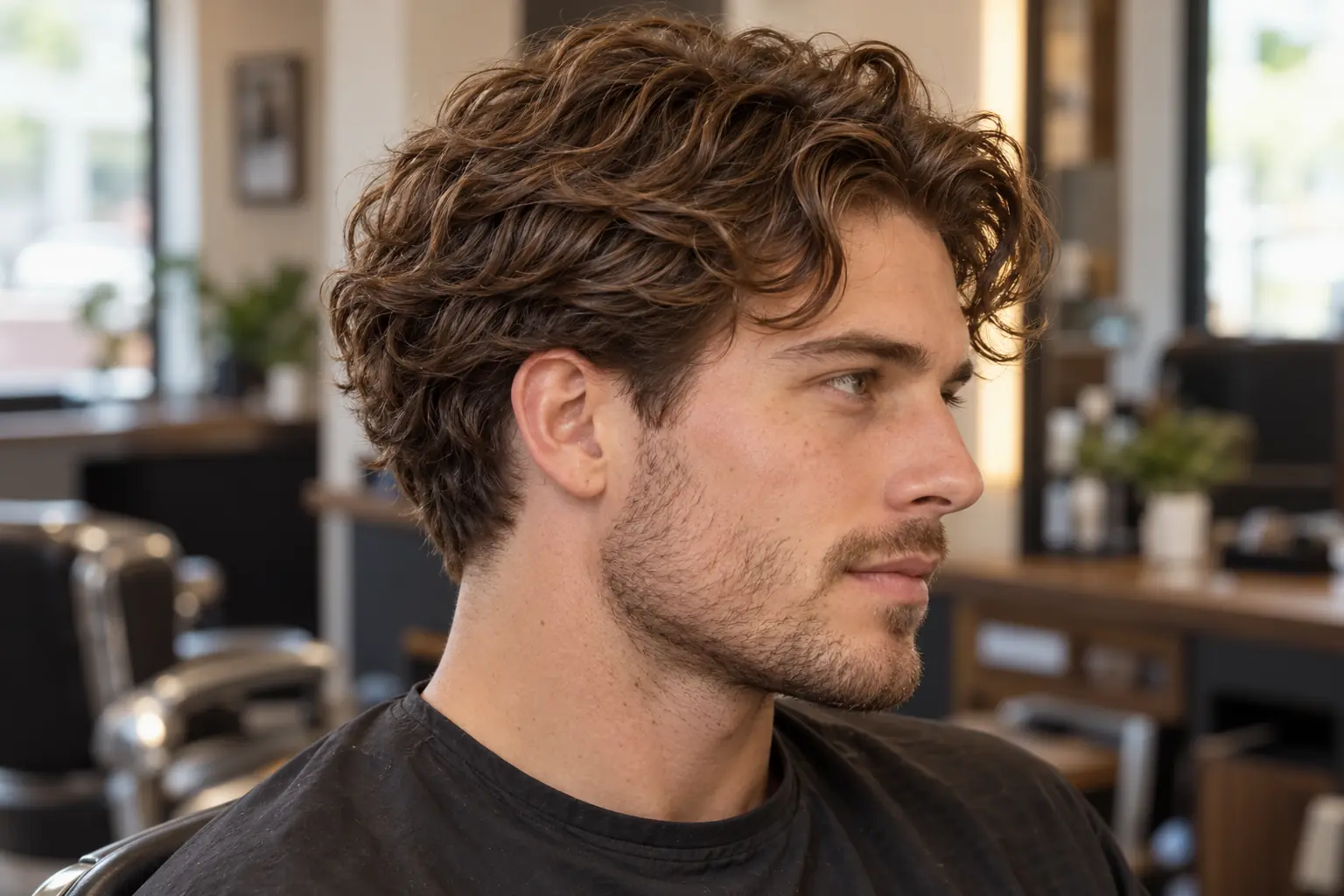
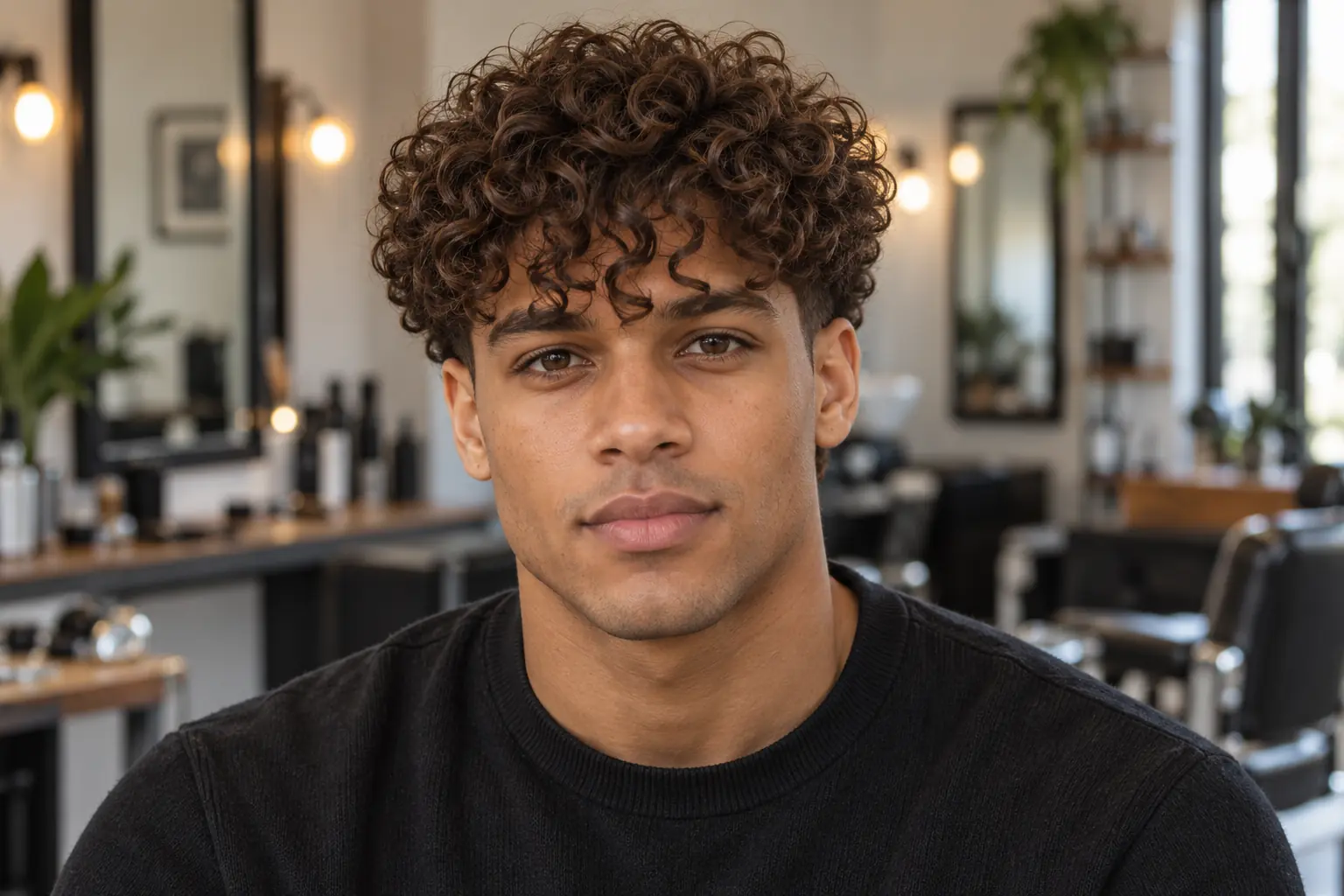
Defined curls (3B to 3C)
The classic curly taper. Keep 2.5 to 3.5 inches on top and choose a low or mid taper. A curly fringe is a popular way to wear it; see the low taper with textured fringe.
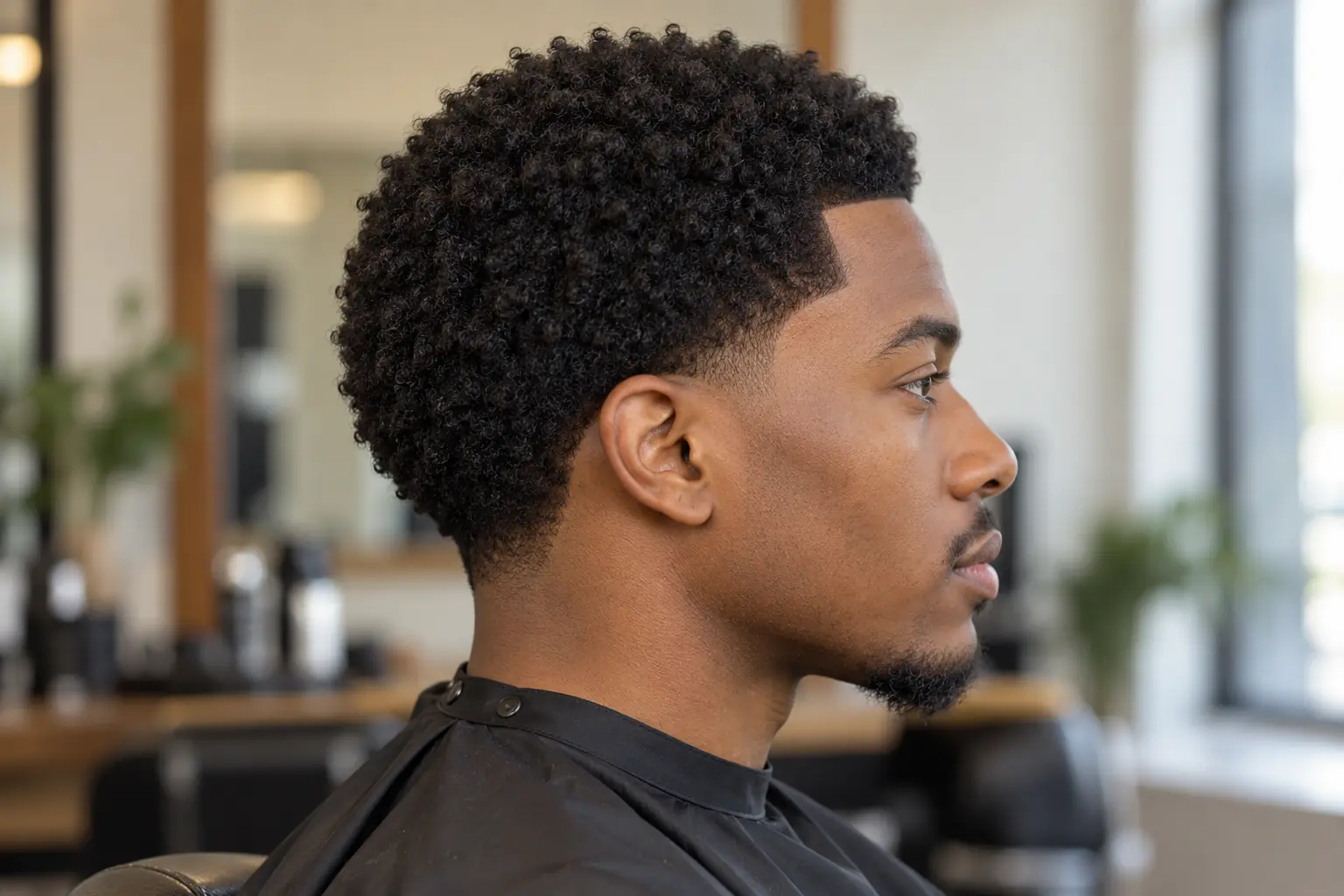
Coily hair (4A to 4C)
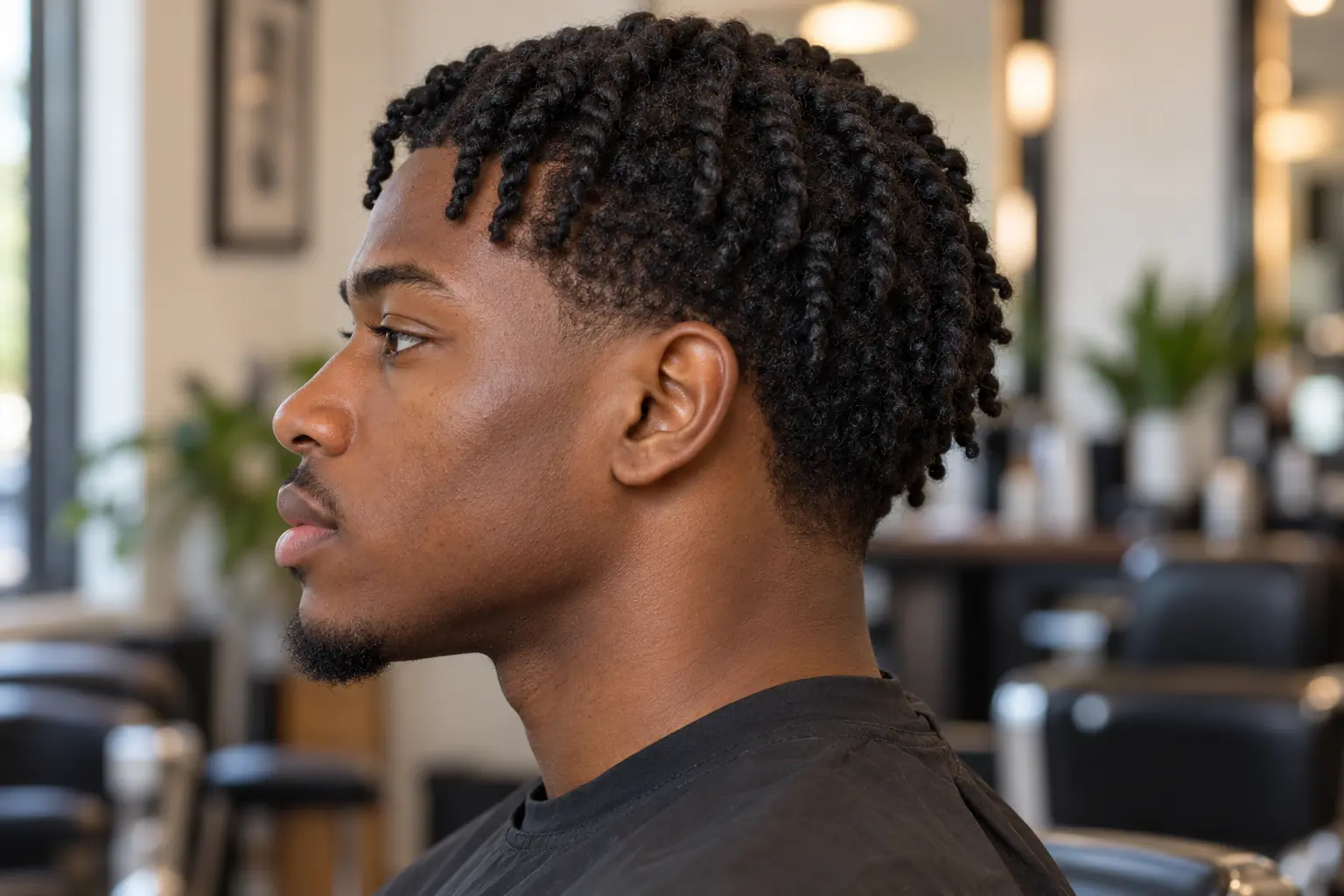
Keep the top 1.5 to 3 inches, add a sharp line-up and choose a low or high taper. Twists and sponge curls on top also pair well. See the mid taper for coily hair and fade haircuts for Black men.
Shadow, Zero or Skin Finish on Curly Hair
Curly hair often grows back curly at the skin too, which makes ingrown hairs and razor bumps more likely after a skin finish. A shadow or zero finish is gentler and grows out softer. If you want a skin taper, ask your barber to shave in the direction the hair grows, as the American Academy of Dermatology recommends for preventing razor bumps, and to finish with an aftershave balm.

What to Tell Your Barber
- Taper: “A low (or mid) taper, only at the sideburns and neckline. Keep the curls full on the sides above the ears.”
- Finish: “Shadow or zero at the bottom” (or skin, if your skin handles it).
- Top: “Cut the curls with scissors and shape them dry or lightly damp. I want about 3 inches after they dry.”
- Shape: “Round on top, not flat” or “blown out” for a blowout taper.
- Edges: “A natural line-up” or “no line-up,” depending on how sharp you want the front.
Barbers who cut curls often shape them dry, because wet curls can look twice as long as they will be once they spring back.
How to Style Curls with a Taper
- Wash with a sulfate-free shampoo no more than every few days, and condition every wash.
- Apply a leave-in conditioner or curl cream to soaking wet hair.
- Scrunch the curls upward with your hands; don’t rub with a towel.
- Air-dry or diffuse on low heat. For a blowout look, blow-dry the top upward with a brush instead.
Maintenance and Cost
Touch up the taper every 3 to 4 weeks and trim the curls on top every 6 to 8 weeks to keep their shape. Most shops charge the same as a regular men’s taper; see our fade cost guide for typical prices.
Common Mistakes
- Cutting curls wet and short. They shrink as they dry, so the top ends up much shorter than planned.
- Tapering too high. A high taper under a big curly top looks unbalanced. Start low.
- Skin finish on bump-prone skin. Choose a shadow finish if you get razor bumps.
- Brushing dry curls. It turns them into frizz. Style curls only when they are wet.
Frequently Asked Questions
What is a taper fade for curly hair?
It is a haircut that shortens curly hair only at the sideburns and the neckline, keeping the curls full on top and on the sides above the ears.
Is a low or mid taper better for curly hair?
A low taper suits most curls and keeps a rounded shape. A mid taper suits tight or thick curls that puff out quickly at the sides.
How long should curly hair be on top for a taper?
About 2 to 4 inches, depending on the curl. Tighter curls shrink more, so leave extra length.
What is a blowout taper on curly hair?
It is a low taper with the curly top blown out into a fuller, rounded shape instead of defined curls.
Can you get a skin taper with curly hair?
Yes, but curly hair is more prone to razor bumps. A shadow or zero finish is gentler; if you choose skin, ask for shaving with the grain.
How often should I get a curly taper fade?
Touch up the taper every 3 to 4 weeks and trim the top every 6 to 8 weeks.
Related Guides
- Taper Fade
- Low Taper Fade
- Blowout Taper
- Mid Taper for Coily Hair
- Mid Taper for Wavy Hair
- Fade Haircuts for Black Men
 Low Taper Fade for Black Men: Styles, Line-Ups and What to Ask For
 Low Taper Fade with Textured Fringe: Styles, Barber Script and Styling
 Taper Fade: What It Is, Every Height and What to Ask Your Barber
One Comment