Two Block Haircut: 5 Styles, Lengths & Barber Tips
On this page
- What are the two blocks?
- Choose a dry length, not only a number
- Two block haircut: six visual references
- Five two block haircut styles
- Adapt the structure to your hair
- How to ask for a two block haircut
- How to style a two block at home
- Maintenance and growing it out
- Two block haircut FAQs
- References and related reading
Also written “2 block haircut,” this structure appears in many Korean-inspired hairstyles. A middle part or comma-shaped fringe describes how the front is styled; the two-block name describes the underlying cut. Getting that distinction right makes it easier to ask for a look you can wear after the first wash.
What are the two blocks?
The upper block includes the longer hair through the top and fringe. Its ends can fall over part of the shorter lower block around the sides and back. That difference in length gives the haircut its structure. It can look rounded and soft, or show a clearer ledge when the upper hair moves.
Some barbers use “two block” for a clear disconnect; others soften the connection and corners. Neither a particular guard number nor a bald fade is required by the name. Ask to see where the shorter section will stop and how much of it will show when the top hangs naturally.
The cut is associated with Korean hairstyling, but it is not restricted to one ethnicity. Describe your actual density, texture and growth direction instead of assuming every reference will behave the same way. Our Korean hairstyles for men guide compares the broader family of looks; this page focuses on building the two-block base.
Two block vs undercut vs curtains
A disconnected two block can overlap with an undercut: both can put a longer upper section over a shorter lower one. There is no reliable rule that every two block is blended while every undercut is harsh. Show the connection you want. Fade vs undercut explains the broader structural difference.
Curtains are a parted fringe arrangement. You can style curtains on a two block or on a more connected layered haircut. Likewise, a fade describes a graduation in the lower section. It can be added to a two block, but raising it changes how much side coverage remains.
Choose a dry length, not only a number
Use landmarks to describe the result: above the eyebrows, at the eyebrows, or falling farther toward the cheek. These are discussion points rather than measurements every person should copy. Curl, head shape and the direction in which the front is dried all affect its apparent length.
For the lower section, decide whether you want dark coverage, a visible short panel or a fade near the edge. Ask the barber to lift the upper hair and show what will be underneath. If you use guard numbers, confirm the setting and location with our clipper guard guide; one number does not describe the whole haircut.
Two block haircut: six visual references
Compare five upper-section styles and one separate rear view. Select an image to enlarge it; each illustration shows a different fictional adult.
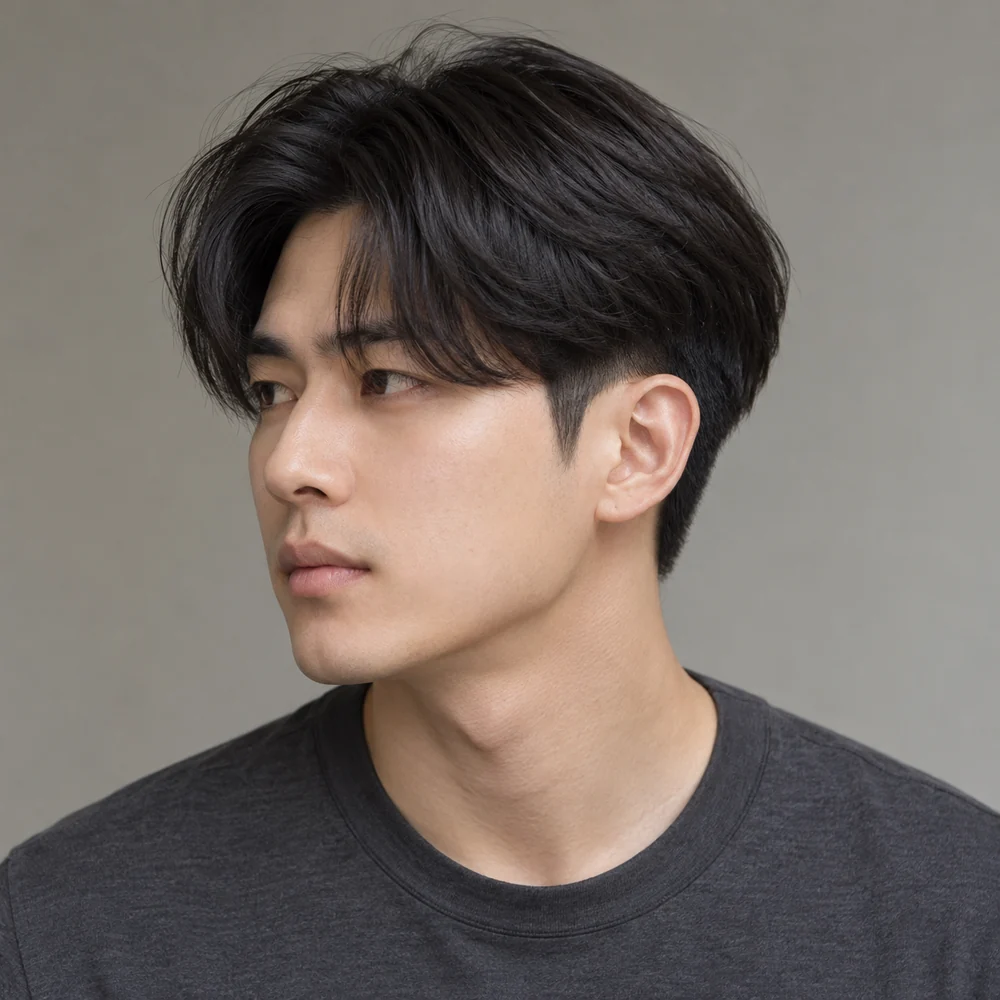
Soft curtains sit over a shorter lower section visible around the ear.
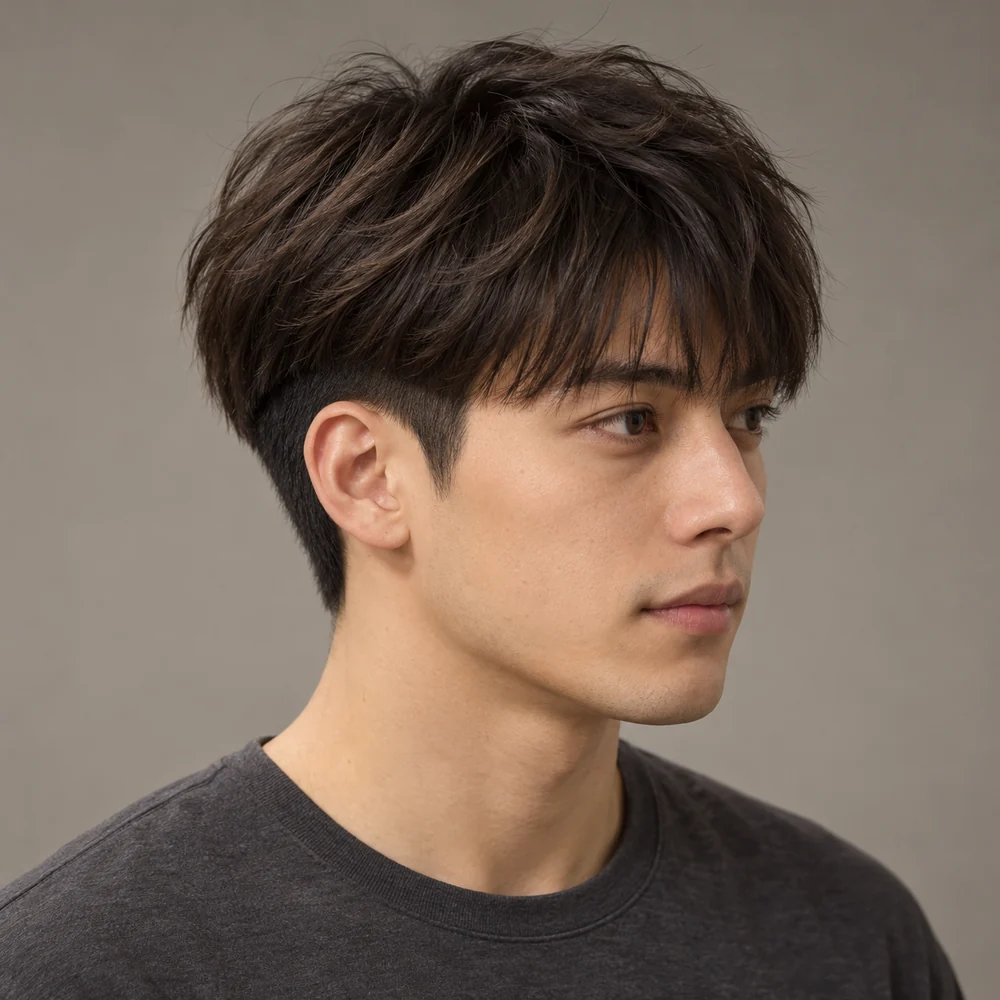
A broken-up forward fringe keeps the upper section fuller than the short lower side.
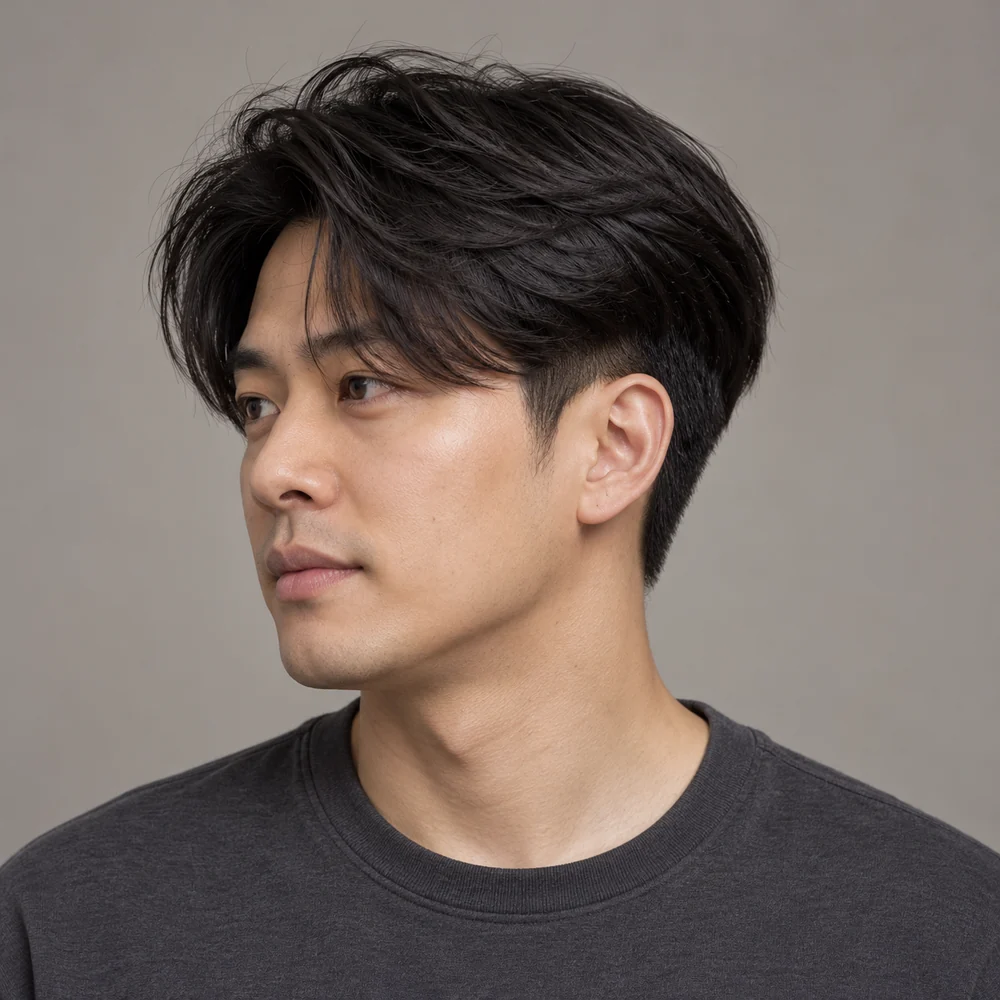
The top sweeps to one side while the shorter panel stays visible around the ear.
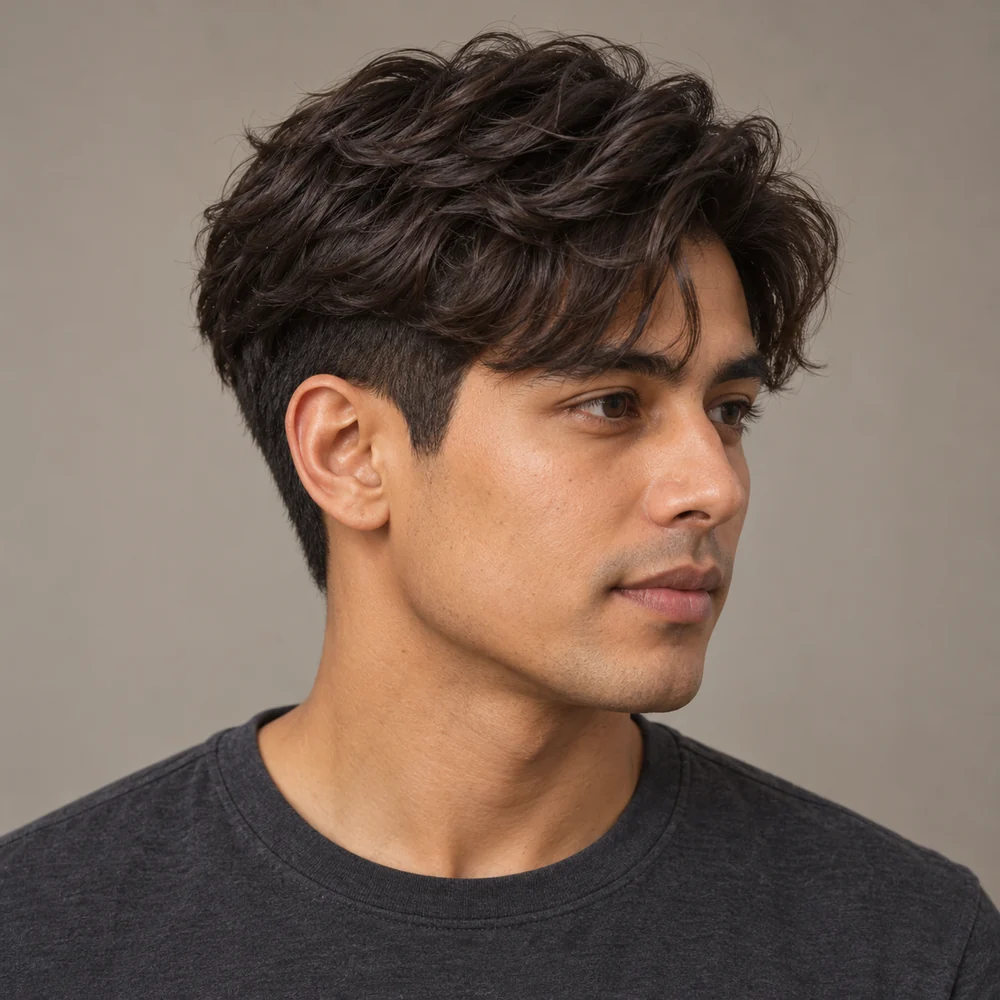
Loose waves add movement to the upper section. The illustration does not establish whether a perm was used.
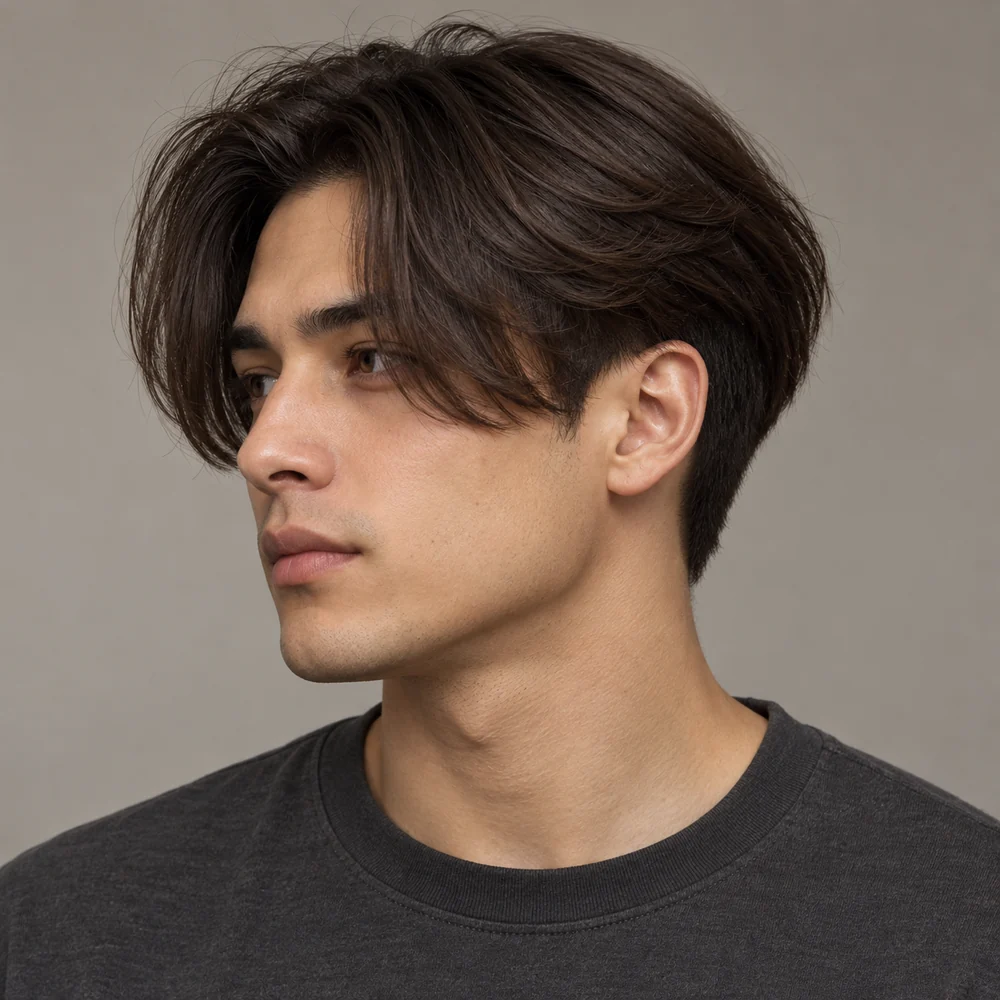
Longer front pieces fall toward the upper cheeks while the short lower section remains visible near the ear.
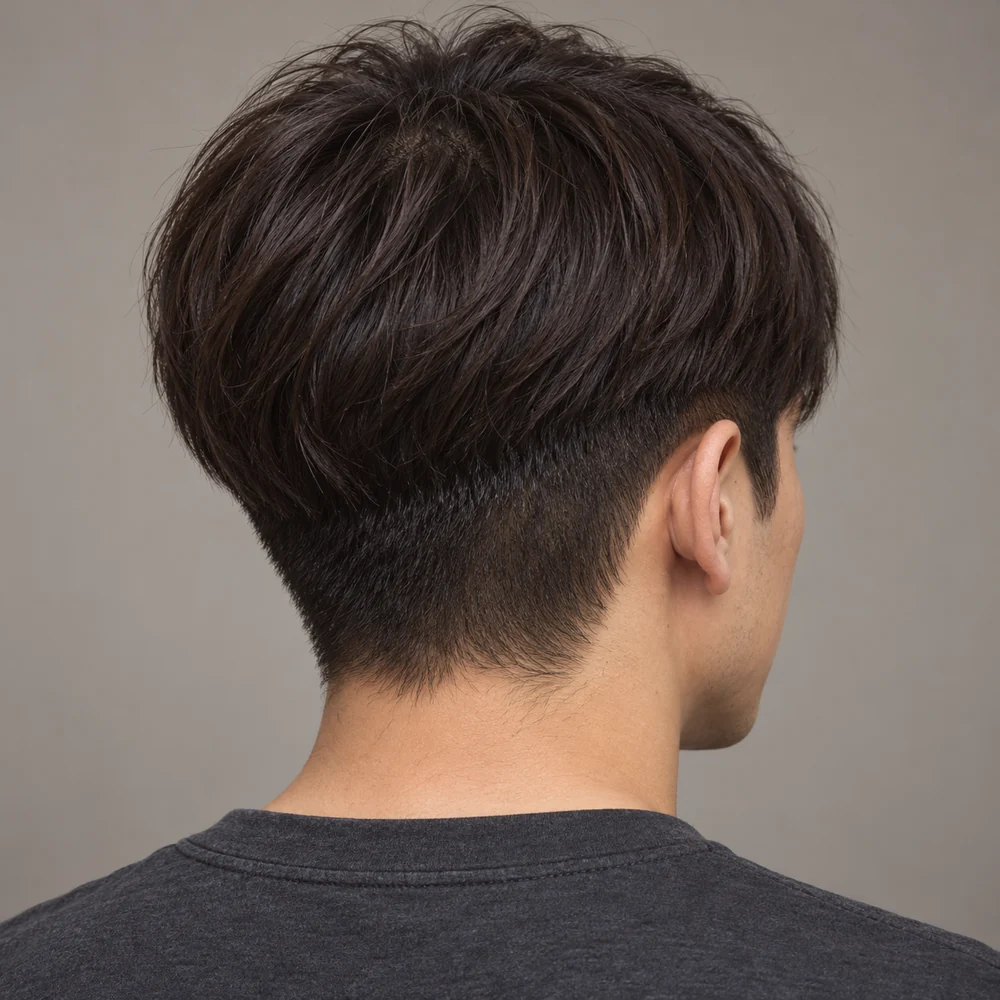
A separate rear reference shows the longer upper layer over a distinctly shorter lower back and tidy nape.
Five two block haircut styles
The first five references illustrate different arrangements; the sixth shows a separate rear view. Each depicts a different fictional adult. A hidden lower section cannot be judged from a front view alone, so discuss both the visible style and the section underneath it.
1. Middle-part two block
The upper hair separates into soft curtains, while the short side remains visible around the ear. Ask for enough front length to fall outward rather than stick straight up. Choose the part after checking your natural direction; a slightly off-center part may be easier to wear than forcing exact symmetry.
A center part alone does not prove a haircut is two block. In the reference, look for longer upper hair falling over the shorter side section. That is the detail to show your barber.
2. Short two block with textured fringe
A forward fringe makes a compact version without requiring long curtains. Keep a clear difference between the upper and lower lengths, even when the top is shorter. Ask how much texture your hair can support before the fringe loses the coverage you want. The textured fringe guide offers more ways to arrange the front.
3. Side-part two block
This places more upper hair to one side and leaves a cleaner opening at the forehead. Show your normal part and agree on how much lower side should be exposed. Ask to see it with the hair relaxed as well as freshly styled; an exposed panel may become less visible once the top falls back into place.
4. Wavy two block
Movement through the top softens the outline above the short sides. If your hair is naturally wavy, discuss its dry shape before reducing the ends. If it is straight, ask whether the illustrated movement needs blow-drying, a styling tool or a professional texture service. The image alone cannot tell you how the wave was created.
5. Long curtain two block
The longer upper layer can cover more of the lower section. Decide where it should end around the cheek, ears and rear, and whether you want to tuck it back. Preserve enough length at the back of the upper section to support the intended silhouette; taking that area short can change the whole cut even if the fringe stays long.
Adapt the structure to your hair
If your sides stand outward: discuss their growth direction and whether leaving more lower-section length would help them lie in a shape you prefer. Going shorter is one option, but it exposes more of the side. Ask to compare that tradeoff before choosing a tight clipper setting.
If the top feels very dense: ask where weight can be adjusted while preserving the outer shape. Removing bulk everywhere is a different request from refining a heavy corner. Show the area that feels wide rather than asking for an unspecified amount of thinning.
If coverage is limited: inspect the proposed part in ordinary light and keep the coverage you value. A short lower panel creates contrast but does not guarantee a fuller-looking top. Choose the visible result, rather than treating a haircut as a solution to a hair-loss concern.
If you have curls or a strong crown: judge the upper section when it is dry and settled. Its fall and separation may differ from a straight-haired reference. Ask the barber to adapt the two lengths to that behavior instead of copying the outline exactly.
How to ask for a two block haircut
Save a front or three-quarter reference and a compatible side or back view. Identify the fringe, lower length and connection separately. Try this request:
“I want a longer upper section over shorter sides and back. I usually wear the front [forward / middle-parted / side-parted], ending here when dry. Keep the lower section [dark and short / visibly clipped / softly tapered]. Please show where the two sections meet and keep that join [clearly disconnected / softened]. At the back, I want this outline rather than a longer tail.”
Tell the barber how much styling you will actually do. If you want to air-dry, ask to assess the cut in that state. If you are growing a short top into curtains, ask for an interim shape that keeps the necessary front and upper-side length.
How to style a two block at home
- Set the direction first. After washing, gently remove excess water and arrange the part or forward fringe before it dries into another direction.
- Dry for the intended fall. If you blow-dry, use a comfortable setting, keep the dryer moving and follow its instructions. Guide the roots, then let the ends settle instead of repeatedly forcing them into place.
- Add a small amount of hold. Start with less of a product you know works for you. Spread it through your hands and apply gradually, checking whether the fringe still moves as intended.
- Check the side and back. Look for a heavy corner, an exposed section you did not expect or a crown that splits. Record the issue to discuss at your next trim.
A perm is optional. It is a separate chemical service, not part of the haircut’s definition, and the illustrations do not prove that a perm was used. If you want one, discuss suitability and aftercare with a qualified stylist rather than assuming it removes the need for daily styling.
Maintenance and growing it out
A three-to-four-week review of the short section can be a starting point, but your preferred contrast and growth determine when it needs attention. The upper section may need a different schedule. Book a sides-and-back cleanup only when the top still falls well; request a full reshape if the fringe, crown or upper corners have become difficult.
Before leaving the chair, lift the top to inspect the lower section, then let it drop naturally. Check that the fringe lands where agreed and that the rear outline suits the side view. Do not judge the cut only while the upper hair is held away or heavily fixed in place.
To grow out a two block, tell the barber whether you want more connected layers or simply a longer version. Repeatedly clipping the entire lower section short preserves the contrast you may be trying to reduce. Keep useful length, refine the perimeter as needed and review the connection as the lower hair catches up. There is no single grow-out deadline for every starting cut.
Two block haircut FAQs
What is the difference between “2 block” and “two block”?
They are two spellings of the same haircut name. Both refer to the longer upper and shorter lower sections. The exact connection and styling still need to be agreed with the barber.
Do I need a perm for a two block?
No. You can wear the cut with straight, wavy or curly hair. A perm changes texture and is a separate choice; decide on the underlying cut and your realistic routine first.
Can I get a two block with short hair?
Yes, if enough upper length remains to create the contrast you want. A short forward fringe needs less length than flowing curtains. Your barber can assess whether your preferred version needs a grow-in stage.
Can the sides have a fade?
Yes. Agree on the fade’s height and finish and on how much of the upper section should overhang it. If you only want a small edge cleanup, compare a low taper fade rather than assuming the whole side must be faded.
Will a two block always look like a bowl cut?
No. The outline depends on the upper length, layers, connection and how you arrange the fringe. Show whether you want a rounded edge, separated curtains or a textured front, and ask to see that shape with the hair relaxed.
References and related reading
MIIN Hair & Beauty’s two block guide describes the upper/lower structure and salon variations. Forte Series’ two block collection provides examples of different top arrangements. Labels and product recommendations vary; this guide prioritizes an agreed section boundary, dry fall and a routine you can reproduce.
 Buzz Cut Guard Sizes: Every Length From #0 to #16, With Photos
 Wolf Cut for Men: 6 Layered Styles & Barber Requests
 Professional Hairstyles for Men: 8 Practical Work Styles