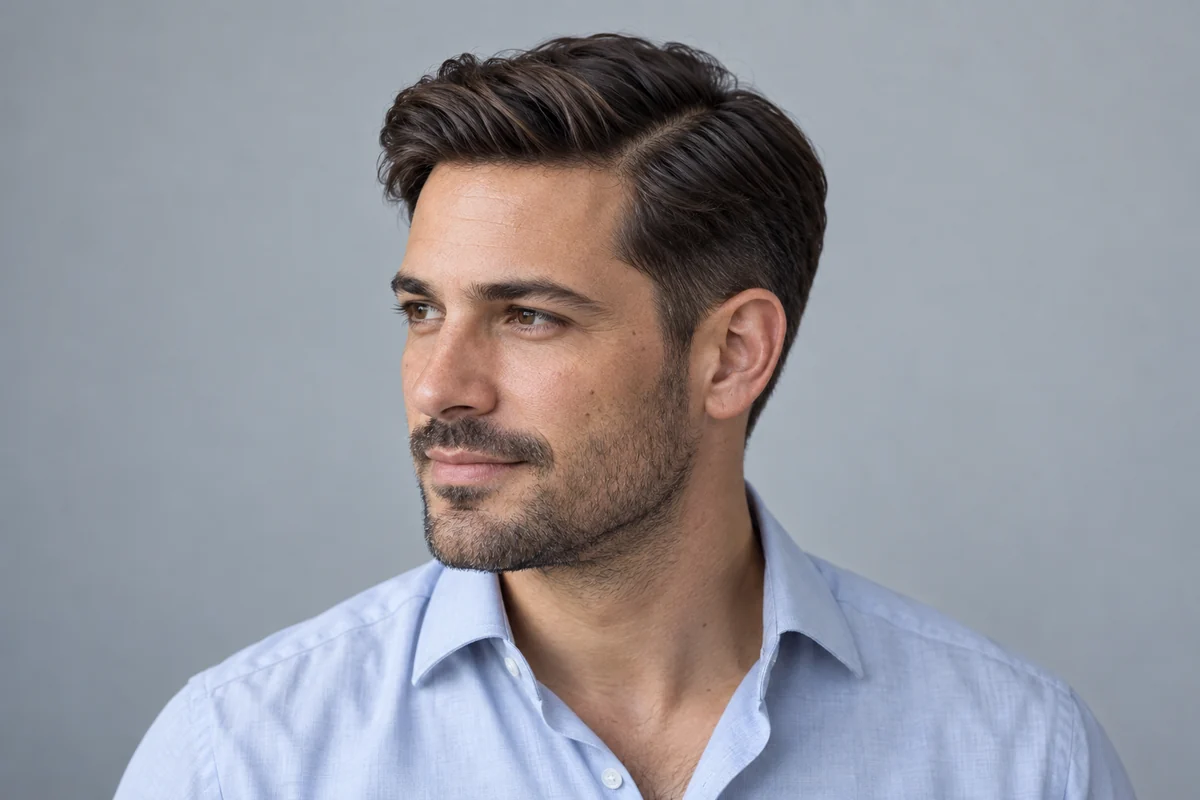
Professional Hairstyles for Men: 8 Practical Work Styles
On this page
- Choose a work hairstyle by the task it needs to do
- 1. Classic side part with a soft taper
- 2. Crew cut
- 3. Short textured crop
- 4. Short coily top with a taper
- 5. Curly scissor-shaped cut
- 6. Wavy brush-back
- 7. Short quiff with a taper
- 8. Longer hair in a low bun
- Low daily styling and low maintenance are different
- What to tell your barber before a work haircut
- Frequently asked questions
Professional hairstyles for men can be short, medium-length or long, and can retain straight, wavy, curly or coily texture. A useful work haircut fits your routine, stays comfortable through the day and accommodates any actual equipment or hair-restraint requirements in your role. It does not need to copy one universal office look.
Two of the easiest office-friendly options are the crew cut and a neat buzz cut (see buzz cut guard sizes).
Start with three decisions: how much morning styling you want, how much forehead coverage you prefer and how often you want to visit the barber. Compare the eight references below, then discuss the top, sides and neckline separately. These are practical options, not a ranking of which hair textures look more professional.
Choose a work hairstyle by the task it needs to do
- Compact front: compare the crew cut and short textured crop.
- A visible part: start with the classic side part and a gradual taper.
- Keep natural texture: compare the coily taper, curly scissor shape and wavy brush-back.
- Add front height: consider a short quiff if you enjoy shaping it.
- Keep long hair: a comfortable low tie can move it away from the face.
Glasses, headphones, helmets and hair coverings can change how a style behaves. Describe what you actually wear to your appointment. For work around machinery, food or other settings with specific restraints, follow the relevant workplace instructions; a hairstyle photograph cannot establish compliance.
1. Classic side part with a soft taper
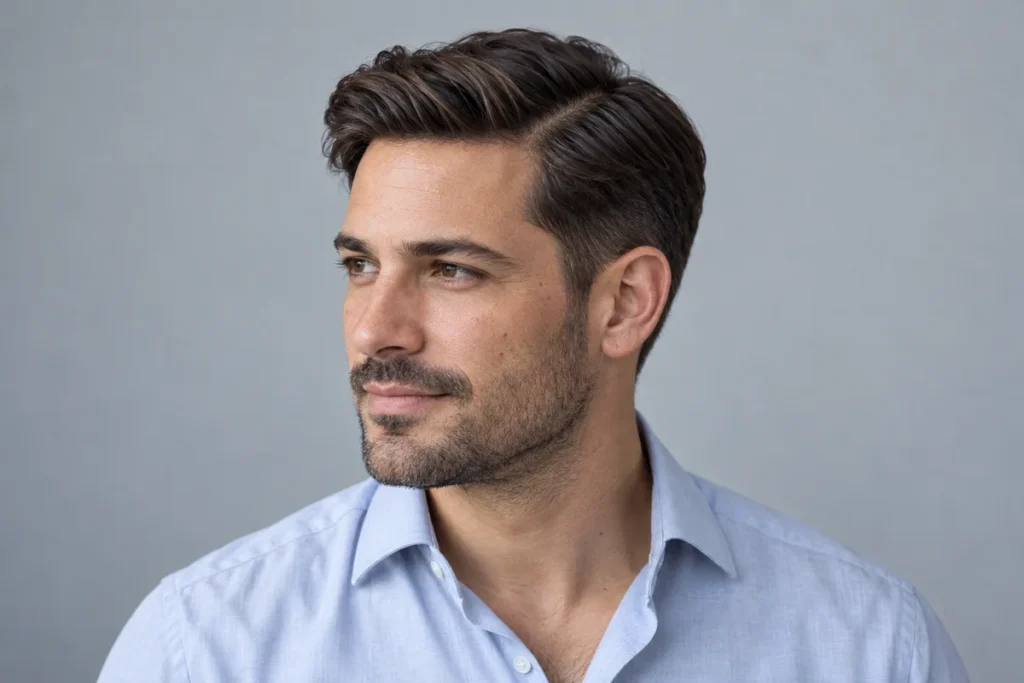
The reference combines a natural part with a diagonally combed top and gradually shorter sides. There is no shaved line marking the part. This gives you a clear direction to style without requiring the high contrast of a skin fade.
Barber request: “Follow my natural part, keep enough top length to comb across, and blend the sides gradually. Leave the part unshaved and show me the neckline options.”
Morning routine: arrange the part and smooth the top in its intended direction, using only as much hold as you need. Grow-out check: watch for side bulk pushing against glasses or changing the outline. Our low taper guide explains localized edge cleanup if you want that as a separate detail.
2. Crew cut
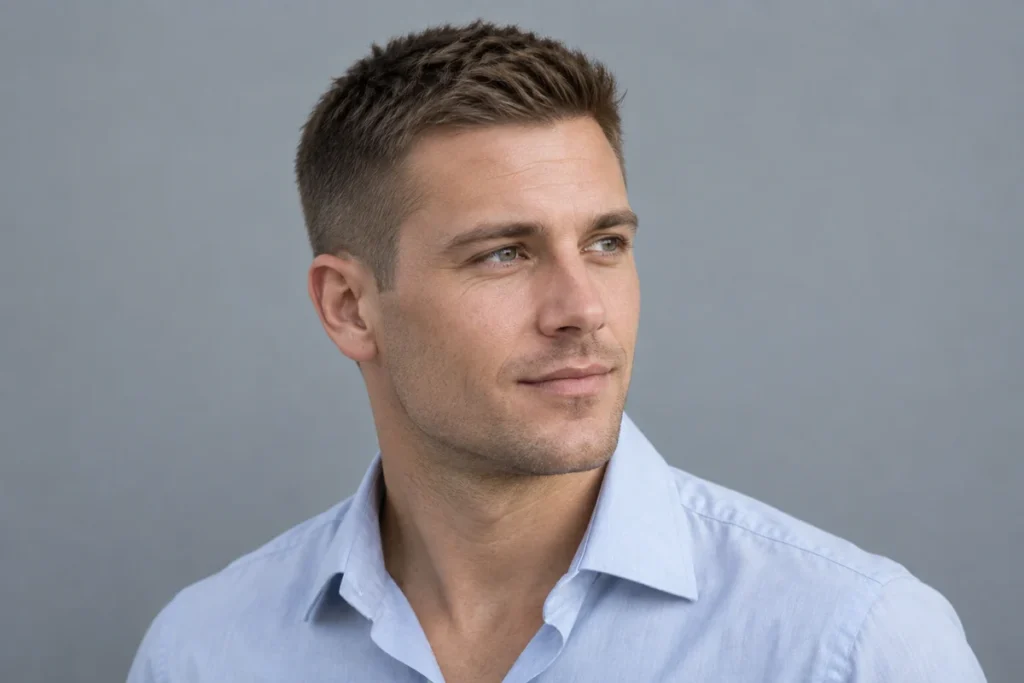
This illustration has a compact upright top, slightly more length toward the front and closely tapered sides. It keeps hair away from the eyes without asking you to arrange a long fringe. A crew cut is not necessarily one guard length all over.
Barber request: “Keep the crown compact, leave a little more at the front and blend the sides. Start longer if needed so we can agree the final length.” Wahl’s crew-cut reference describes the basic short-side, longer-top structure; the final proportions should be adapted for you.
Morning routine: settle the front and crown rather than forcing them into a long style. Grow-out check: decide when extra length stops looking compact to you. Short does not mean maintenance-free, and a cowlick can still affect the outline.
3. Short textured crop
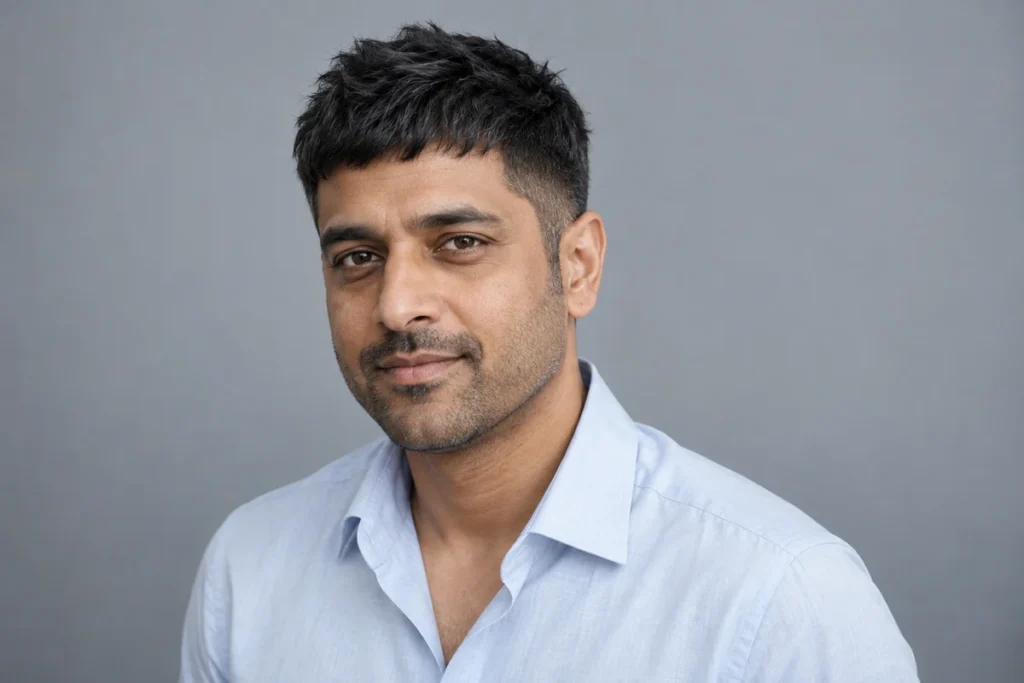
The crop directs short pieces forward into an irregular fringe high above the eyebrows. It offers a little forehead coverage while leaving the eyes clear. The reference is softer at the front than a deliberately solid, blunt crop.
Barber request: “Keep the front this short when dry, with a separated edge and modest forward texture. Retain enough density rather than thinning the whole top.”
Morning routine: arrange the front where you want it, then lightly separate a few pieces if desired. Grow-out check: check fringe length with your glasses on. For a fuller explanation of crop edges and side treatments, see our French crop fade guide; this article focuses on the workday choice rather than repeating that haircut tutorial.
4. Short coily top with a taper
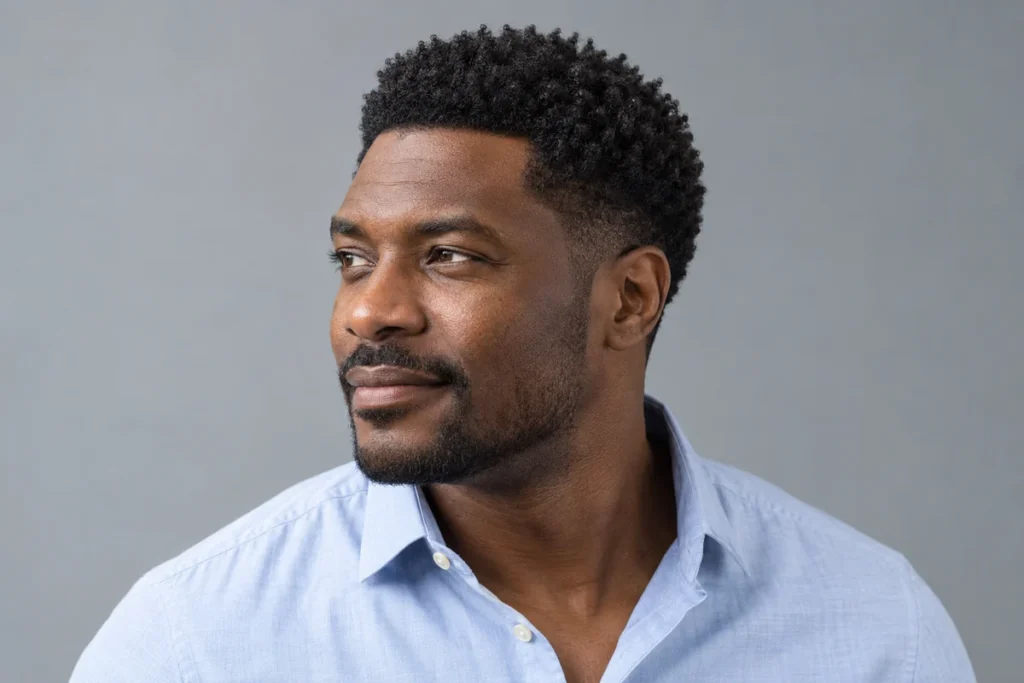
This image retains a rounded coily top and visible texture on the sides, with shorter hair near the temple. The texture is part of the intended shape. There is no requirement to straighten it or shave the sides to make it suitable for an office.
Barber request: “Keep this rounded volume and my natural texture. Tidy the perimeter without taking the taper too high, and agree the dry height before removing length.”
Morning routine: use the care and shaping routine that suits your coils instead of repeatedly combing them into a straight-hair pattern. Grow-out check: decide whether you need only perimeter attention or a full reshape. The fade placement guide for Black men explores side-treatment options without treating ethnicity as a haircut rule.
5. Curly scissor-shaped cut

The reference keeps defined ringlets through the top and fuller sides. The outline is rounded rather than clipped into a high fade. Leaving side length can be useful when you want the curl pattern visible throughout the style.
Barber request: “Keep these curl groups and this rounded shape. Please assess how it sits in my usual dry state before deciding the final fringe and side lengths.”
Morning routine: arrange the curls with your usual suitable product and drying method; do not assume they need brushing into a side part. Grow-out check: look for sections that obstruct your eyes or change the balance you wanted. Shrinkage and curl direction make a dry-length conversation especially useful.
6. Wavy brush-back

In this example, waves travel backward from the forehead, and the side hair remains relatively full. The bends are visible rather than flattened into a rigid wet finish. It is an option for keeping some length while moving the front away from the eyes.
Barber request: “Keep enough front length to go back, retain my waves and blend the sides softly. I want movement rather than a hard slicked shape.”
Morning routine: direct the front back while styling and use hold only where it is needed. Grow-out check: monitor whether the front still stays back comfortably. For a naturally forward-growing fringe, discuss the effort involved before choosing this reference.
7. Short quiff with a taper
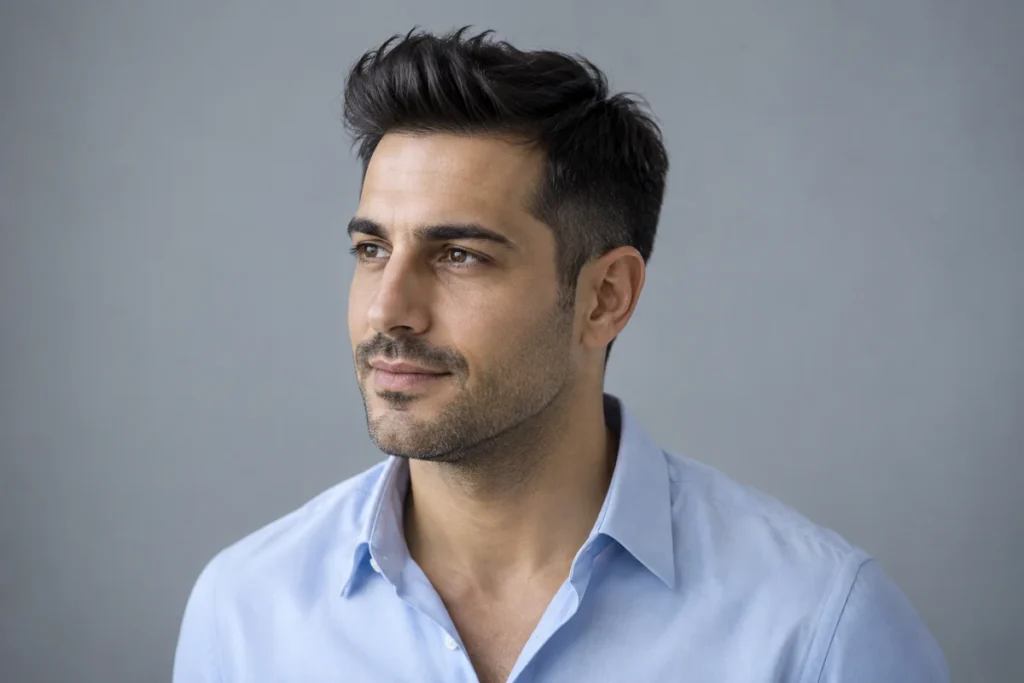
The front rises above a shorter surrounding shape and travels slightly backward. It adds more height than the side part or crop without using the large swept volume of a full pompadour.
Barber request: “Leave enough front length for this lift, keep the rest compact and blend the sides. Show me a smaller version if my routine or headwear makes this height impractical.”
Morning routine: expect to spend time arranging the front; it is a choice for someone who wants that styling step. Grow-out check: decide whether the front still holds the shape you like without excessive product. A taller quiff is not automatically better, and the picture does not prescribe a face-shape rule.
8. Longer hair in a low bun
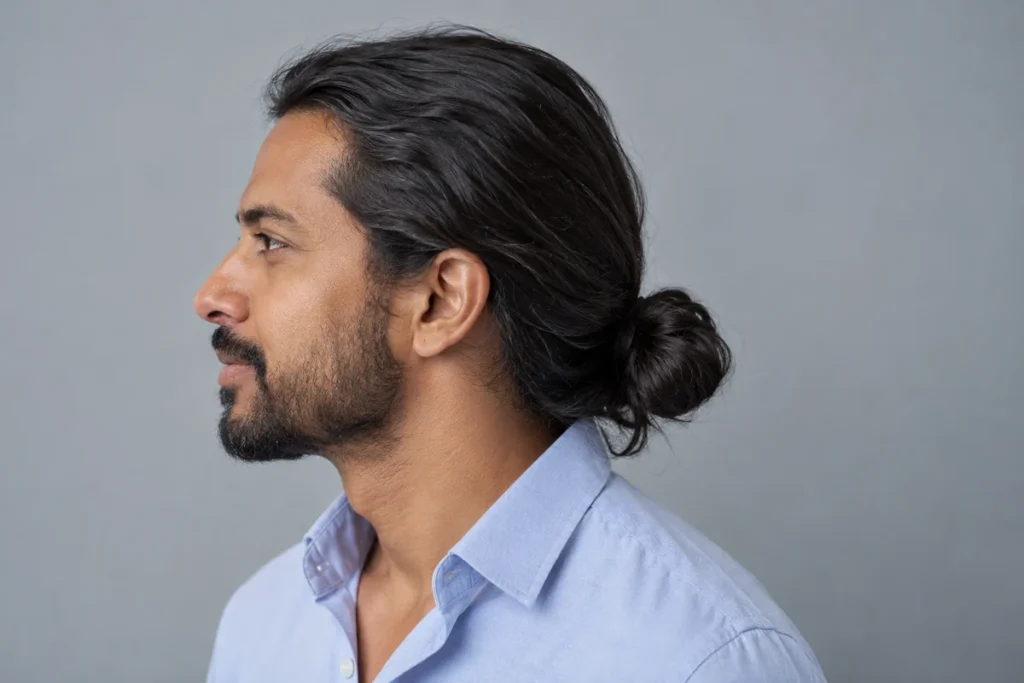
The side view shows long hair gathered near the nape, keeping the front away from the face. It is an option for retaining length rather than cutting it short solely for work. The practical questions are comfort, secure placement and any actual hair-restraint needs in your role.
Stylist request: “Preserve enough length to tie it back comfortably. Check which shorter pieces will escape the tie and whether I want to keep them.”
Morning routine: gather it without painful pulling. The American Academy of Dermatology advises avoiding repeated tension from tight styles; a painful hairstyle is too tight. Grow-out check: assess ends, comfort and the parts that no longer stay where you want them, rather than following a short-cut trimming schedule.
Low daily styling and low maintenance are different
A compact cut may take little arranging in the morning but need more frequent reshaping to preserve its original silhouette. Longer hair may need more drying or tying while allowing you to keep its length between appointments. Separate the time you spend each day from the time and money you spend at the salon.
Instead of accepting a universal “every two weeks” rule, agree which change will trigger your next visit: fringe in your eyes, unwanted side bulk, lost front shape or a perimeter you want sharpened. Golden Scissors’ office haircut guide also highlights maintenance and the outline as practical considerations; its salon-specific schedules are not mandatory for every reader.
What to tell your barber before a work haircut
- Describe the ordinary day. Mention glasses, headwear, exercise, and whether you restyle after commuting.
- Set the top direction. Forward, across, up and backward are different requests.
- Agree the shortest side length. A taper can stay dark; it does not automatically mean skin.
- Check the neckline. Ask to see the proposed outline from the rear.
- Explain the upkeep you will do. Ask for a simpler version if the demonstration requires more time than you want to spend.
Bring the reference you like and one detail you do not want, such as a shaved part or a high skin finish. If terminology is the obstacle, read fade versus taper before the appointment. A haircut name alone cannot communicate all the details.
Frequently asked questions
What is the best professional haircut for men?
There is no universal winner. Choose a shape that fits your texture, preferred length, daily routine and actual work requirements. The eight examples provide different starting points rather than a hierarchy of acceptability.
Is a fade suitable for an office?
It can be. Decide how much contrast you want and whether you want to maintain the shortest finish. A subtle taper and a high skin fade create different outlines; neither tells you someone’s competence or professionalism.
Can curly or coily hair look professional without straightening?
Yes. Natural texture can be retained. Discuss the volume, outline and care routine you want instead of assuming it must be changed to match a straight-haired reference.
Which option needs the least morning styling?
A compact crew cut or short crop may need less arranging than a deliberately shaped quiff, but your growth direction still matters. Ask to see how the proposed cut sits with minimal styling.
Should I change my haircut before an interview?
You do not need a new identity or an unfamiliar haircut for an interview. If you want a change, allow time to learn how it behaves and choose something comfortable for you.
Editorial note: researched by Burst & Taper. These are editorial style suggestions, not employer approval, legal guidance or an individual barber consultation. The linked sources support specific definitions and care notes; the illustrations are original AI-generated references.
 Buzz Cut Guard Sizes: Every Length From #0 to #16, With Photos
 Two Block Haircut: 5 Styles, Lengths & Barber Tips
 Wolf Cut for Men: 6 Layered Styles & Barber Requests