High Fade Haircut: 10 Styles & Barber Request Guide
On this page
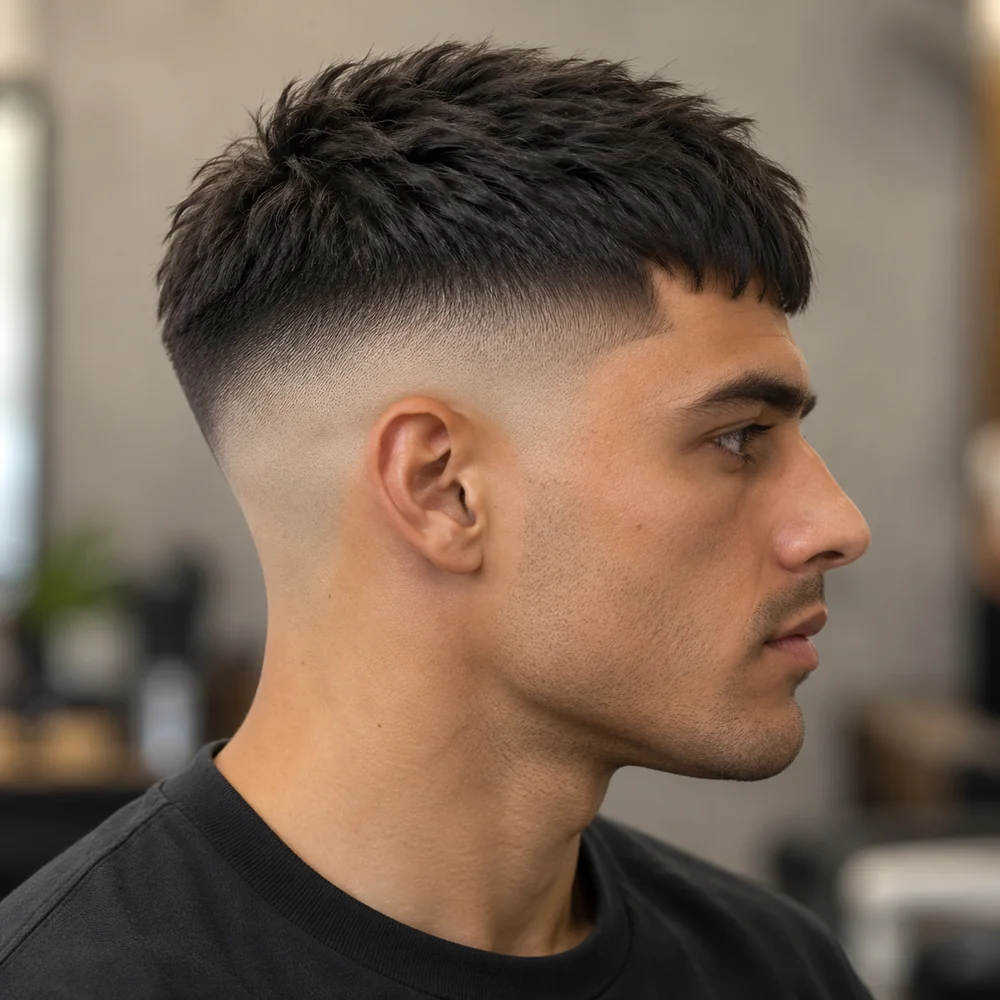
A high fade haircut keeps the graduation high on the sides and back, bringing the shorter area closer to the top. You can pair that placement with a buzz cut, crop, curls or a longer swept-back style. The useful decision is how much side coverage you want to keep, followed by whether the shortest section should show stubble or bare skin.
Two popular ways to wear a high fade: with a shaped, level top in the Boosie fade, or with a short buzzed top in the buzz cut fade.
High fade haircut gallery: 10 style references
Select a numbered reference to enlarge it. Gallery order matches the explanations below.
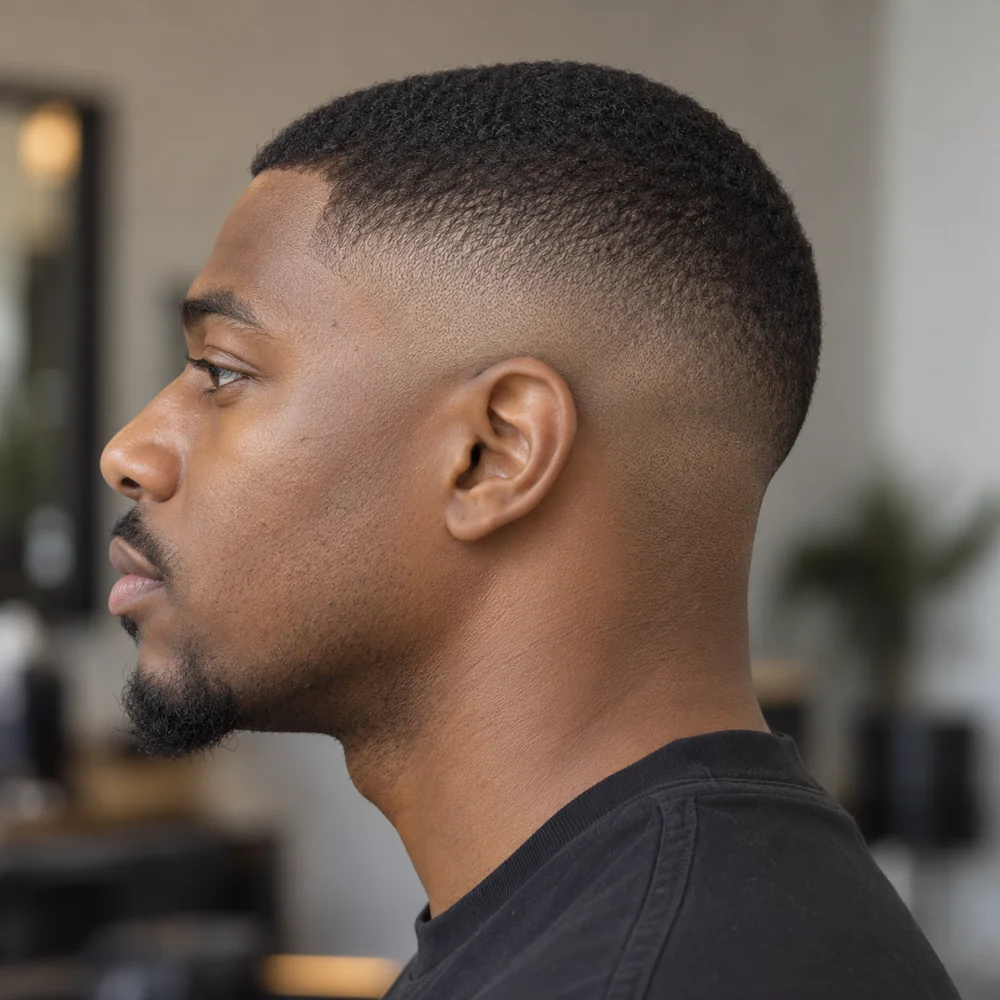
A short buzz top meets a high graduation with a stubbled base.
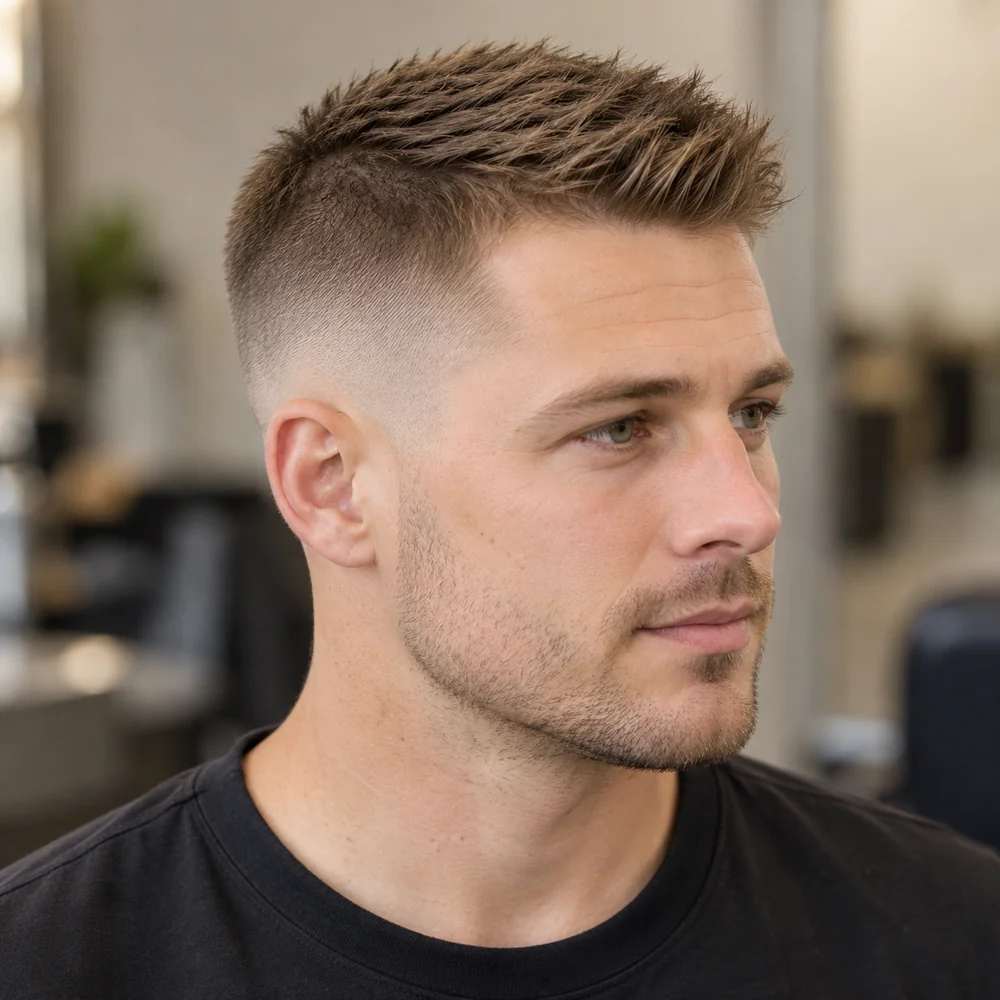
The crew-cut front retains a little more length than the crown.
The high close-finished side contrasts with a short forward crop and broken fringe.
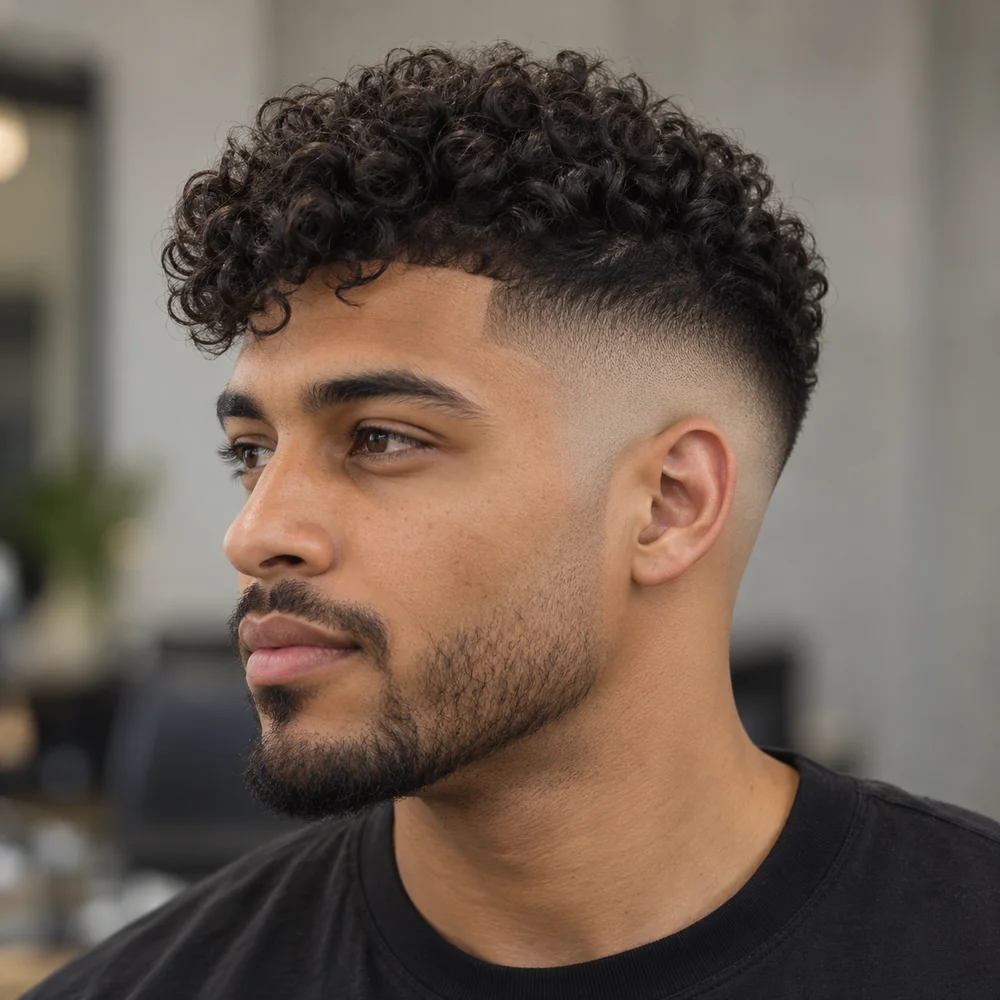
Defined curls keep movement above a high, closely finished side.
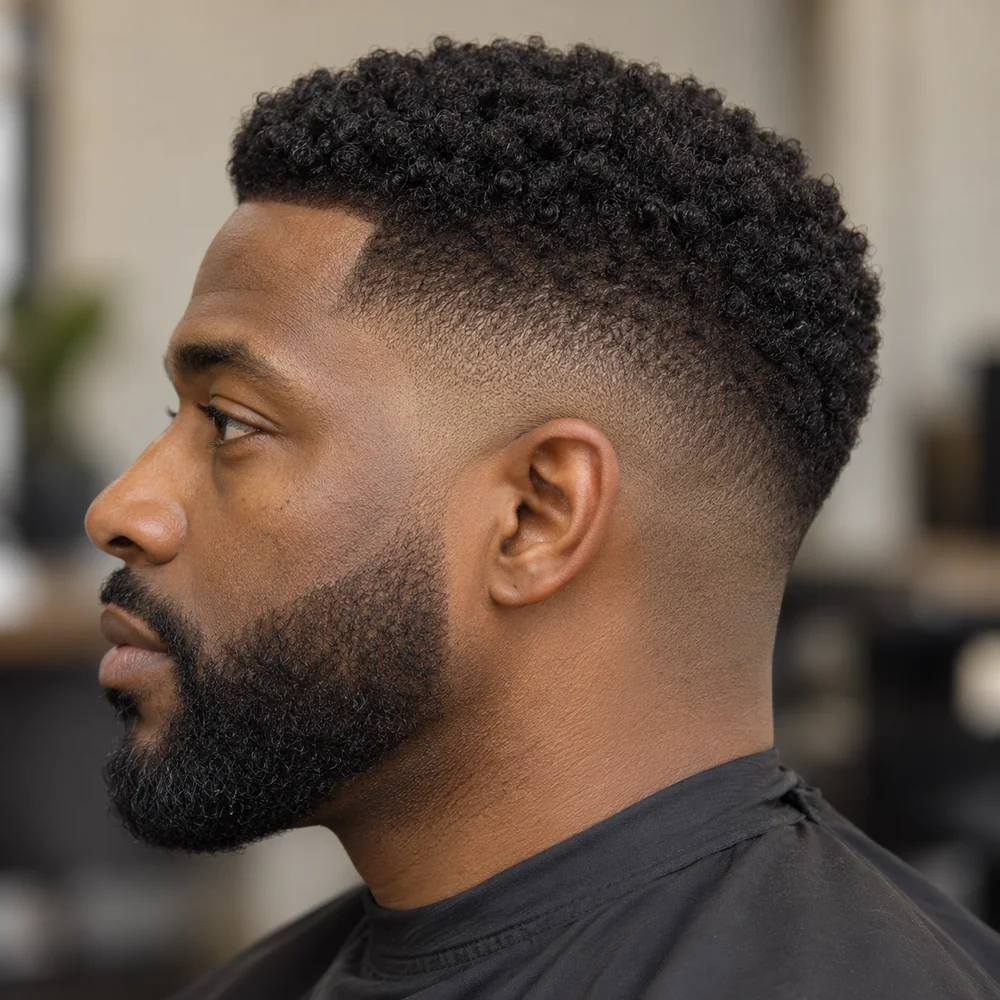
The rounded coily top remains compact while fine stubble softens the base.
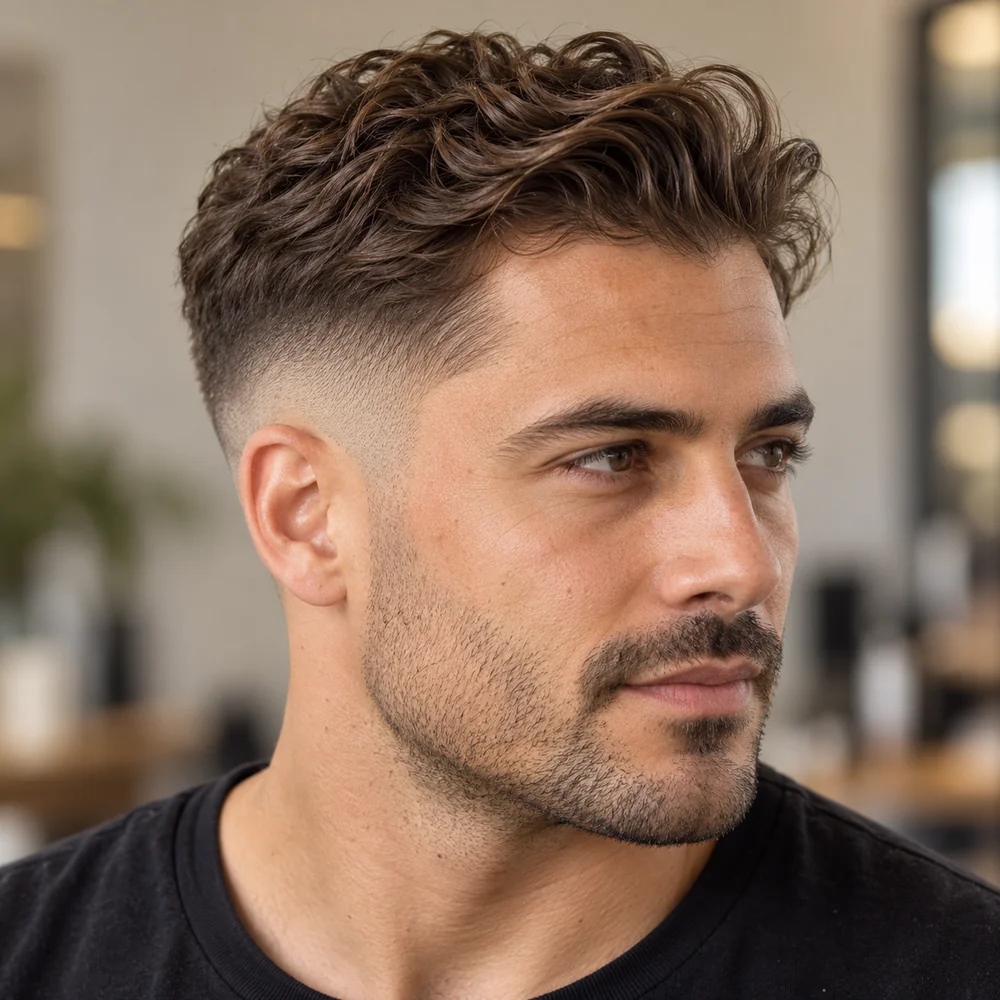
Loose waves move backward above a continuous short side graduation.
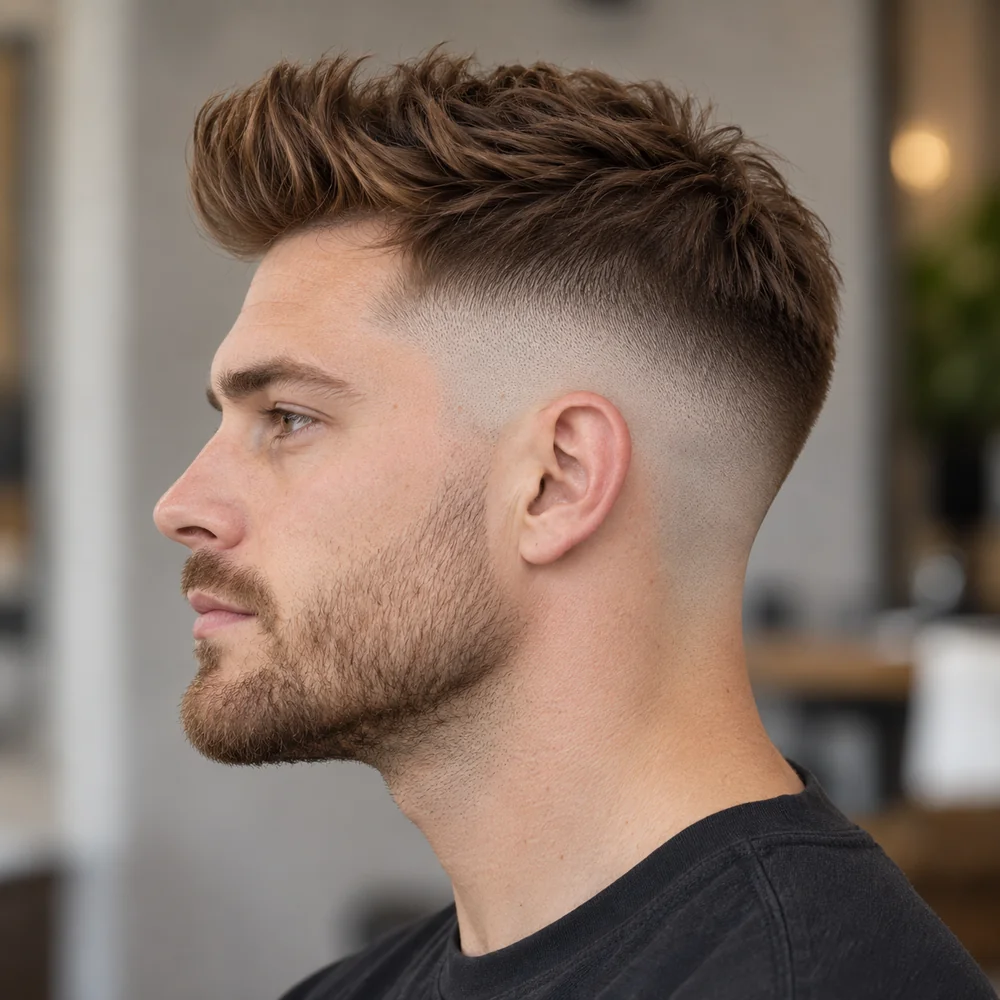
A compact front crest adds lift above the high side transition.

The rear angle shows the close-finished lower back and high transition below the crown.
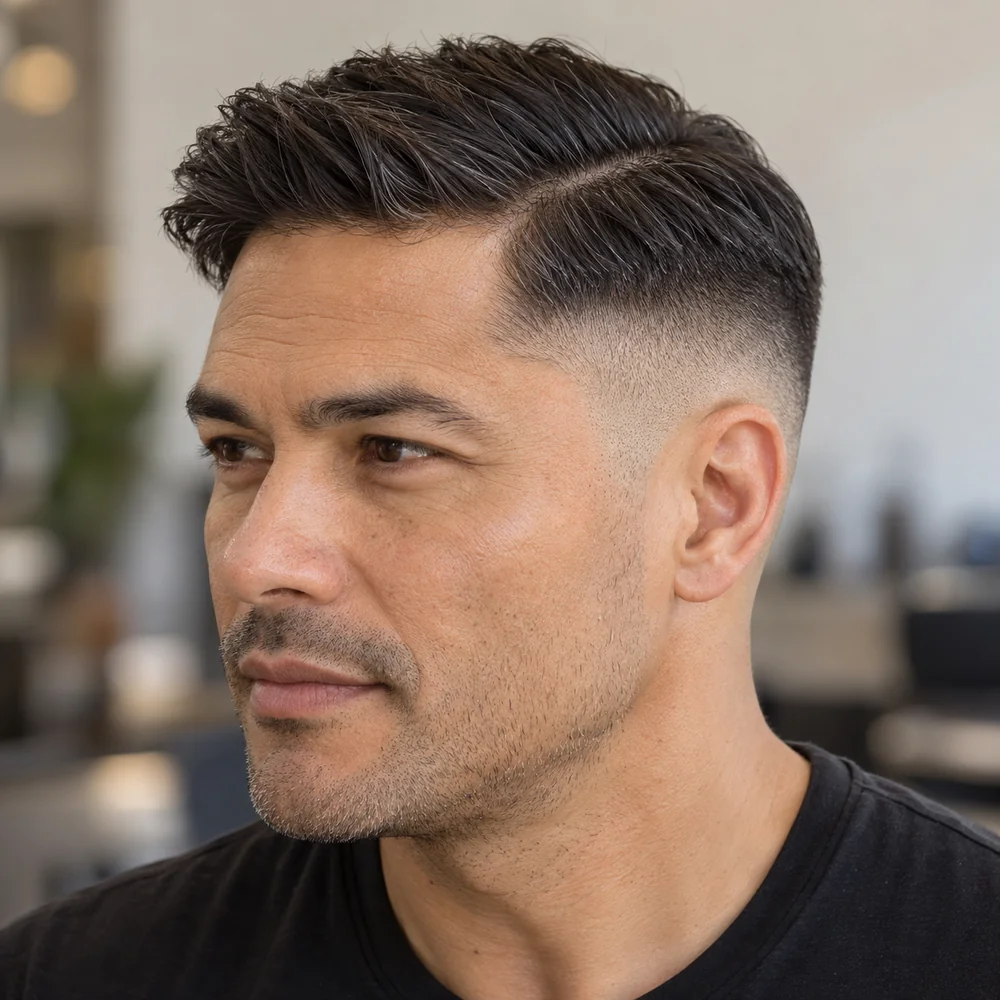
A combed part supplies direction without a shaved part line.

The backward sweep sits above much shorter sides than a localized taper.
Visual disclosure: These ten original AI-generated editorial illustrations depict different fictional adults. They explain placement, texture and finish choices; they are not real client photographs, verified barber work, before-and-after pictures or guaranteed results.
Barber brief: “I want a high fade around the sides and back, with this top shape. Please show me where the transition will sit before cutting. At the bottom, I want [a visible shadow / a skin finish]. Keep the blend connected unless we agree on a disconnected top.”
What is a high fade haircut?
“High” describes placement rather than one fixed length. The transition sits toward the upper sides, near the curve where the side of the head meets the top. A larger part of the sides looks short compared with a low fade. The exact boundary needs adapting to the head in the chair; there is no universal line that must sit a measured distance above every ear.
For a skin-finished example of that placement, CADMEN Barber Academy’s fade guide describes a high fade close to the upper-side curve. Our gallery also includes shadow finishes, where short hair remains at the base. Neither the top length nor the finishing tool is specified by the word “high.”
High fade vs high taper, mid fade and skin fade
| Term | What to check in the reference | Useful distinction |
|---|---|---|
| High fade | A continuous graduation high across the sides and back | Removes more side coverage than a lower placement |
| High taper | More localized shortening at the temple/sideburn and neckline | Can preserve a darker bridge around the sides |
| Mid fade | A transition through the middle of the sides | Keeps more upper-side coverage than a comparable high fade |
| Skin fade | A lowest section finished to bare skin | Can be low, mid or high; it names the finish |
| High top | Height or a shaped silhouette on top | Describes the top, not the fade placement |
Compare the more localized high taper fade if keeping darker sides matters to you. Our mid fade guide and low fade guide show lower alternatives. Barbers may use overlapping names, so point to both the temple and rear view rather than relying on a label alone.
10 high fade references: what each one shows
The numbers below follow the gallery in reading order. These are separate fictional models, not progress pictures of one haircut. Choose the top and side treatment together; asking for the fade alone leaves an important part of the brief unfinished.
1. High shadow fade with a buzz cut
The short, even top has little styling height to balance against the sides. A stubbled base softens the change in tone. Show your barber how much top coverage you want to retain when dry; an apparently similar buzz length can look different with another density or hair-to-scalp contrast.
2. High fade with a crew cut
The front is slightly longer than the crown, giving the short top direction without a long fringe. Ask to preserve that front-to-back graduation. If the front sticks up when dry, discuss its growth direction before taking more off; the answer is not automatically a stronger styling product.
3. High skin fade with a textured crop
The forward crop and short fringe sit above a high, close-finished side. Tell the barber whether you want a blunt or broken fringe edge, because the fade does not decide that detail. For more fringe references, see our French crop fade guide.
4. High skin fade with curls
The curls retain visible movement while the closely cut side makes their outline stand out. Agree on the dry curl shape and how much length can be removed. A side reference alone cannot show whether you want the front falling toward the forehead or lifted away from it.
5. High shadow fade with a coily top
This compact rounded top keeps tight coils rather than turning them into a flat-top silhouette. Ask for the shape you want seen from the front as well as the side. A natural edge, a sharper lineup and beard detailing are separate choices; none is required by this fade.
6. High fade with brushed-back waves
The wavy top moves back with a softer surface than a tightly combed slick back. Keep enough length for that direction rather than treating every loose strand as excess bulk. Try the finish with a small amount of product first, then adjust to the hold your hair actually needs.
7. High skin fade with a short quiff
The lifted front supplies a compact focal point while the rest of the top remains shorter. Ask the barber to demonstrate the direction of the front after drying. If you want less daily styling, choose a lower crest rather than assuming the high fade itself makes the top maintenance-free.
8. High skin fade from the rear
This angle shows how much of the lower back is exposed. It is the important check if you have only saved side portraits: a fade can look right at the temple and still finish higher than you wanted behind. Review the rear outline in a mirror before leaving the chair.
9. High fade with a natural side part
A combed part adds direction without a shaved part line. Tell the barber whether the part should remain movable. If you normally change its position, a razor-defined line would make that harder and add an edge you would need to maintain as it grows out.
10. High skin fade with a pompadour
The raised front sweeps backward above closely cut sides. This has less side weight than the localized taper in our mid taper pompadour guide. Choose between those outlines before discussing shine or hold; styling cannot restore side hair removed by the cut.
Build a clear barber request
- Show the highest acceptable point. Use the side and rear of your own head to confirm placement.
- Choose the base. Say whether you want visible stubble or skin, instead of assuming “high” means bald.
- Describe the top separately. Include fringe direction, dry length and whether the sides should connect into it.
- Confirm optional details. A hard part, lineup, beard blend or shaved design needs its own agreement.
A guard number helps communicate length but does not describe the entire blend. Blade settings, levers and technique also matter. Use the clipper guard reference as a conversation aid, then let the barber choose a workable sequence rather than demanding one recipe for every head.
Styling, upkeep and growing it out
Choose the top according to the routine you will repeat. A short crop needs a different drying direction from a quiff; waves and coils do not need to imitate straight hair. For lifted styles, establish the shape while drying before adding more finishing product. American Crew’s grooming guidance distinguishes matte, low-shine and higher-shine products; those finish choices are separate from fade height.
Plan your next visit around when the contrast stops looking the way you prefer. Some people refresh the sides while keeping top length; others let the entire cut soften. Take a dated reference of your own cut to make that preference clear. If you later want a lower fade, the higher area first needs time to regain length. Repeatedly taking the blend higher cannot create lower-side coverage.
High fade haircut questions
Does every high fade go down to skin?
No. A high fade can leave a short shadow or finish to skin. Confirm the shortest section separately from how high the graduation sits.
Is a high fade the same as a high taper?
They can be named inconsistently, but a high fade usually covers the sides and back more continuously. A taper can stay localized. Compare the coverage you want in photographs and confirm it with the barber.
Can you keep a long top?
Yes, but agree on how it connects into the short sides. A pompadour or brushed-back top needs enough retained length and a suitable drying routine; the fade does not provide the top shape by itself.
Which face shape needs a high fade?
No face shape requires one. Consider the side coverage, top volume, growth pattern and contrast you prefer. A reference adjusted during a consultation is more useful than a rigid face-shape rule.
Can you turn a high fade into a low fade immediately?
Not while the higher area remains very short. Explain the longer-term goal, allow that area to grow, and ask for interim tidying that supports it instead of moving the fade upward again.
Research and visual notes
This editorial guide was checked on 18 October 2026 using the barber-education and manufacturer resources linked above. The gallery labels describe visible haircut features; they do not claim a verified guard sequence, a real client result or a professional endorsement. For the wider structure, explore our fade haircut guide.
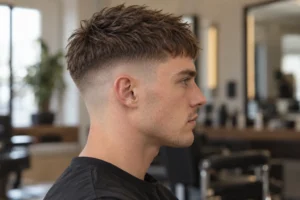 Textured Crop Haircut: Styles, Fades and How to Ask Your Barber
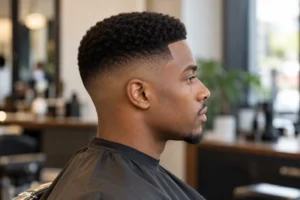 Boosie Fade: What It Is, 7 Styles and How to Ask for It
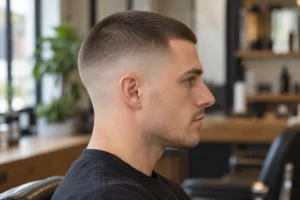 Buzz Cut Fade: Low, Mid, High and Skin Fade Styles With Photos
One Comment