The Modern Burst Fade Mullet Guide
Resurrecting the Icon: The Modern Burst Fade Mullet
No haircut in the history of men’s grooming has experienced a resurgence quite as explosive and polarizing as the heavily requested burst fade mullet. This aerodynamic, aggressively tailored hybrid has completely taken over high-fashion runways and professional sports arenas alike.
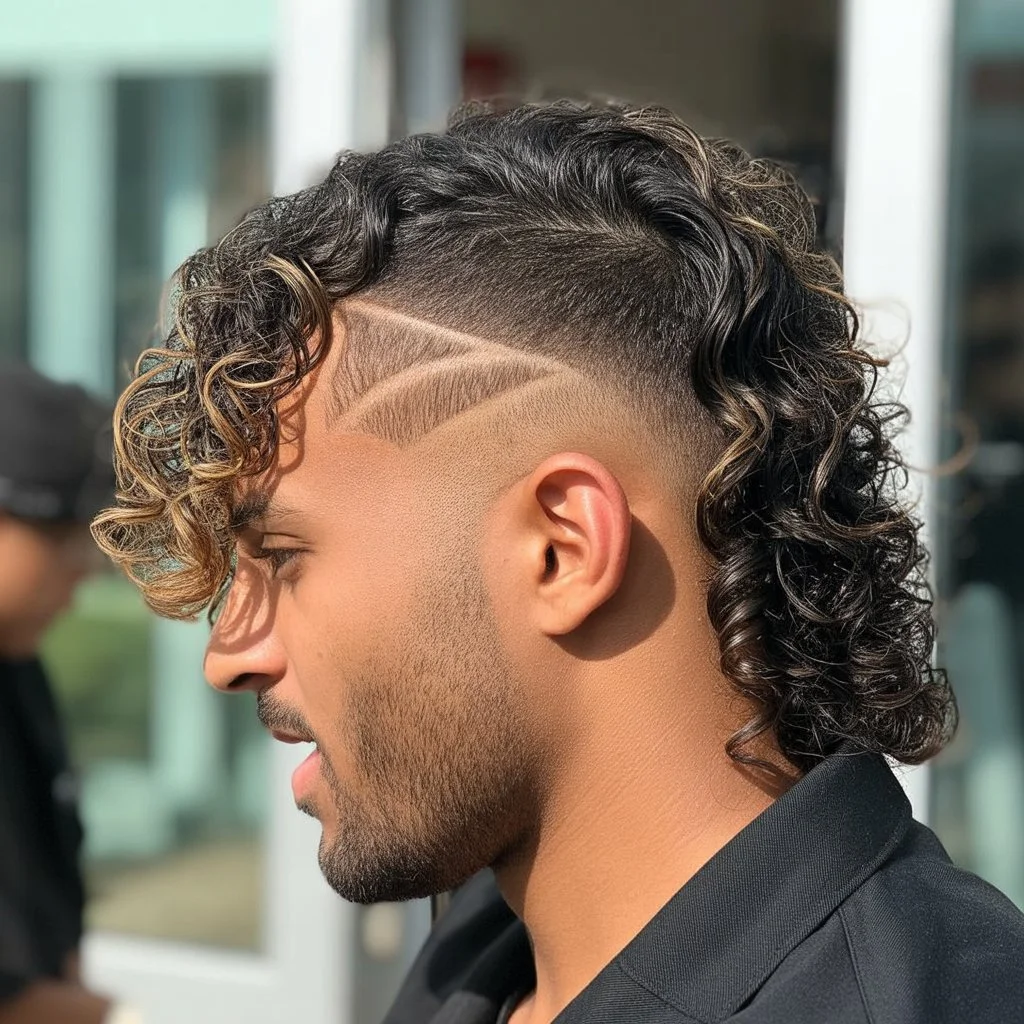
By combining the unapologetic, flowing volume of a traditional 1980s mullet with the mathematical, skin-tight precision of a modern fade around the ears, you create an architectural marvel. The burst fade mullet is inherently chaotic yet meticulously framed. It is the ultimate statement piece for men with wavy or curly textures who refuse to blend into the corporate crowd.
The Anatomy of the Burst Fade Mullet Silhouette
If you look at the history of the mullet, the core philosophy has always been “business in the front, party in the back.” However, the modern iteration elevates the “business” aspect to bespoke, high-end tailoring.
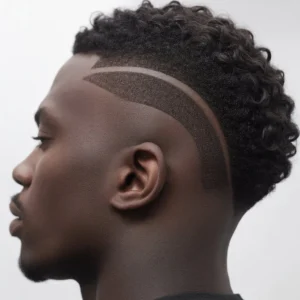
Instead of a messy, completely unkempt side profile, the fade acts as a surgical intervention. To build a proper burst fade mullet, the barber drops the clippers in a violent, semi-circular arc directly over and behind the ear. They carve this area down to absolute bare skin. This creates a mesmerizing, bald semi-circle that isolates the heavy back flow from the shorter, textured top.
Because the fade drops down heavily behind the ear instead of fading straight across the back of the neck, it intentionally leaves a thick column of hair cascading down the nape. This elongated back profile draws the eye continuously downward. It elongates the neck and gives the wearer of the burst fade mullet an aggressively aerodynamic, forward-moving aesthetic.
Straight vs. Curly: Adapting to Your Texture
The beauty of the burst fade mullet is that it adapts brilliantly to different hair genetics. However, the styling approach changes drastically depending on your natural texture. If you are unsure which variation fits your bone structure, check out our interactive fade calculator.
For men with straight hair, the mullet requires heavy texturizing shears on top to prevent the hair from looking like a rigid helmet. Straight hair mullets lean heavily into the punk-rock aesthetic and require dry styling powders for volume.
For men with curly or wavy hair, the burst fade mullet is an absolute cheat code. The curls naturally provide the necessary volume and bounce in the back tail. The skin-tight fade around the ears acts as a high-contrast picture frame, highlighting the rich, hydrated density of your natural curls without making your head look unnecessarily wide.
Execution: Communicating with Your Barber
The success of the burst fade mullet look depends entirely on your barber’s geometric precision. You must communicate your expectations clearly before the clippers turn on. First, specify the exact width of the burst. For this specific style, a “wide burst” is entirely necessary.
A wider burst extends further up into the parietal ridge and pushes deeper toward the back of the head. This ensures that the sheer volume of the cascading back tail does not overpower the sharp, clean sides. Second, request that the top canopy be disconnected from the back.
The hair resting on top of the head should be shattered via point-cutting. Keep it relatively short (two to three inches max) so it can be pushed forward into a messy crop. In stunning contrast, the hair falling down the nape of the neck must remain entirely intact. Ask your barber to layer the back heavily so it curls and flows outward organically over your collar.
Advanced Detailing: Surgical Lines and Lineups
Because the burst fade mullet utilizes a massive expanse of bald skin around the ear, it is the perfect canvas for razor detailing. Adding one or two parallel surgical lines directly above the ear creates a striking, customized look.
Furthermore, the temple lineup (or C-cup) is absolutely non-negotiable. It must be carved flawlessly with a straight razor. The stark juxtaposition between a mathematically straight, artificial razor line on the forehead and the wild, organic chaos of the mullet tail is the defining hallmark of this elite style.
Styling the Chaos: Taming the Tail
A burst fade mullet looks violently sharp on the sides, but if the long tail in the back is dry, brittle, or frizzy, the aesthetic collapses entirely. This haircut inherently requires you to manage two entirely different hair lengths on the same head. This necessitates a dual-pronged styling approach.
The foundation of your routine must be built on high-quality Sea Salt Spray. After washing, while the hair is still damp, generously spray the top canopy and the thick back tail. Sea salt spray binds the hair shafts together. It provides gritty volume and encourages natural waves or curls to lock in tightly.
Next, use a blow dryer with a diffuser attachment to dry the back tail. Scrunch the hair upwards with your fists to maximize the bounce and depth of the curls. If your hair feels dry after applying heat, you must hydrate it. Follow the steps in our natural hair care guide to restore your lipid barrier.
Finishing the Burst Fade Mullet Texture
Once the hair is completely dry, you must utilize the correct finishing products. Avoid shiny, heavy pomades entirely; they will weigh the burst fade mullet down and make it look incredibly greasy.
Instead, apply a nickel-sized amount of high-quality Matte Paste or a light-hold Styling Clay. Rapidly emulsify it in your palms until it vanishes entirely. Use your fingers to aggressively piece out the short fringe in the front, pushing it forward over the forehead.
Then, run your remaining product lightly through the cascading back tail. This tames wild flyaways and locks the curling ends into place. This quick technique achieves a deeply textured, completely matte finish that looks effortlessly rugged.
Long-Term Mullet Maintenance Strategies
There is a stark duality in maintaining the burst fade mullet. The long, curling tail itself requires very little mechanical cutting. Because the aesthetic relies entirely on flowing length, the back only requires a light dusting of split ends once every two or three months.
However, the sides are incredibly fragile. The fade transition from absolute bald skin up to a #2 guard happens within one inch of real estate. As the hair naturally grows, the stark, razor-sharp arc of the burst will soften and blur out within 14 days.
To maintain the aggressive contrast that makes the burst fade mullet explosive, you must book a fade touch-up every two to three weeks without fail. Letting the sides grow out completely destroys the architectural contrast, reducing your masterpiece back to a standard, shapeless haircut.
Frequently Asked Questions (FAQ)
How long does my hair need to be for a burst fade mullet?
To achieve a proper burst fade mullet, you need at least 4 to 6 inches of hair growth at the nape of your neck (the tail). The top canopy can be kept much shorter, usually around 2 to 3 inches, to create the necessary disconnection.
Does a mullet work with straight hair?
Yes, but it requires heavy texturizing. Straight hair tends to lay flat, so your barber must use thinning shears to remove bulk. You will also need to rely heavily on sea salt spray and styling powders to create artificial volume and grit.
How often should I get a haircut to maintain it?
While the back tail can grow freely for months, the bald fade around your ears requires strict maintenance. To keep the burst fade mullet looking premium and sharp, you should visit your barber every 2 to 3 weeks for a side taper touch-up and a razor edge-up.
Looking to explore other variations?
Check out our guide to the Mid Taper vs Low Taper: The Complete 2026 Height Guide, explore the Burst Fade vs Drop Fade: The Definitive 2026 Comparison, or switch it up completely with the Burst Fade vs Drop Fade: The Definitive 2026 Comparison.
Written by The Master Barber
With over a decade of high-end editorial grooming experience, our team breaks down complex barbering geometry into actionable styling advice for the modern man.