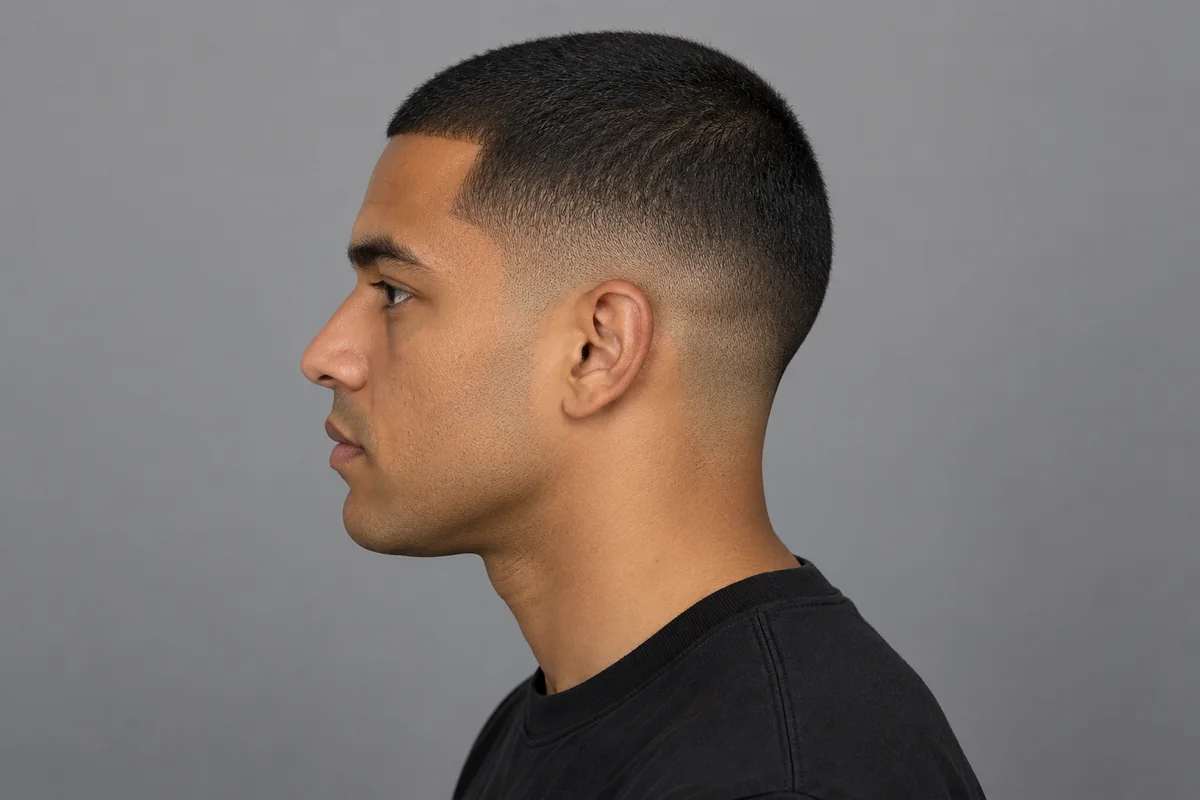
Low Fade Haircut: 10 Styles and Barber Requests
On this page
- What is a low fade haircut?
- Low fade vs low taper: check the side and back
- Choose a low fade style by the top you want
- 1. Low fade with a buzz cut
- 2. Low fade with a crew cut
- 3. Low fade with a textured crop
- 4. Low fade with a longer textured fringe
- 5. Low fade with a side part
- 6. Low fade with a short quiff
- 7. Low fade with a wavy brush-back
- 8. Low fade with a loose curly top
- 9. Low fade with a compact coily top
- 10. Low fade with a pompadour
- Check your low fade from the rear
- Low, mid or high: compare placement before contrast
- How to ask for a low fade haircut
- How much maintenance does a low fade need?
- Choose the reference that fits your routine
- Low fade haircut FAQs
- Sources and editorial method
A low fade haircut keeps the side-and-back transition close to the ears and neckline, leaving more darker hair above it than a higher fade. The top can be short, textured, curly or swept back. Choose the placement, shortest finish and top shape separately: saying “low fade” alone does not communicate all three. A low fade also pairs well with a buzz or crew cut on top: see buzz cut guard sizes and the crew cut.
The useful barber request: “Keep the fade low around my ears and nape, preserve this upper-side weight, and leave the top in this shape. Let’s agree how short the bottom should be before you start.” Show a side reference and check the rear outline as well.
What is a low fade haircut?
“Low” describes the placement of the transition, not the length of the hair on top. Wahl’s fade guide distinguishes low, mid and high fades by where the side transition starts, describing the low fade as close to the ear. There is no single ear-to-line measurement that reproduces every haircut.
Also specify the finish. A low skin fade exposes skin at its shortest edge, while a darker finish leaves visible short hair. In many shops a fade can be requested with either finish, but naming conventions vary. Point to the result you want rather than assuming “zero,” “skin” and “shadow” mean the same thing to everyone.
Low fade vs low taper: check the side and back
For this guide, a low fade means a connected blend through the sides and rear. A low taper usually concentrates the shortening near the sideburns and neckline while retaining more continuous side hair between those areas. A taper is also a general term for gradual shortening, so these labels are not universal specifications.
If you want only the temples and nape cleaned up, use our low taper fade guide. If you want a connected low side blend, the references below are the closer starting point. Our fade vs taper comparison explains the terminology; the mid taper vs low taper guide compares taper placement specifically.
Choose a low fade style by the top you want
These are ten combinations of a top style and low fade, not ten different fade heights. Every image illustrates one named combination. The rear reference after the gallery shows a separate angle rather than counting as an extra style.
| Top style | Visual detail to choose | Routine to discuss |
|---|---|---|
| Buzz cut | Even, compact top | Very little top arranging |
| Crew cut | Small front lift | Light front direction |
| Textured crop | Short forward fringe | Optional piece separation |
| Longer fringe | More forehead coverage | Keep front out of eyes |
| Side part | Deliberate across direction | Part placement and hold |
| Short quiff | Compact upward lift | Shape the front |
| Wavy brush-back | Open forehead and visible waves | Maintain backward direction |
| Loose curls | Visible curl groups | Agree the dry shape |
| Coily top | Compact rounded outline | Preserve texture and dry height |
| Pompadour | Smooth fuller front roll | More deliberate front shaping |
1. Low fade with a buzz cut
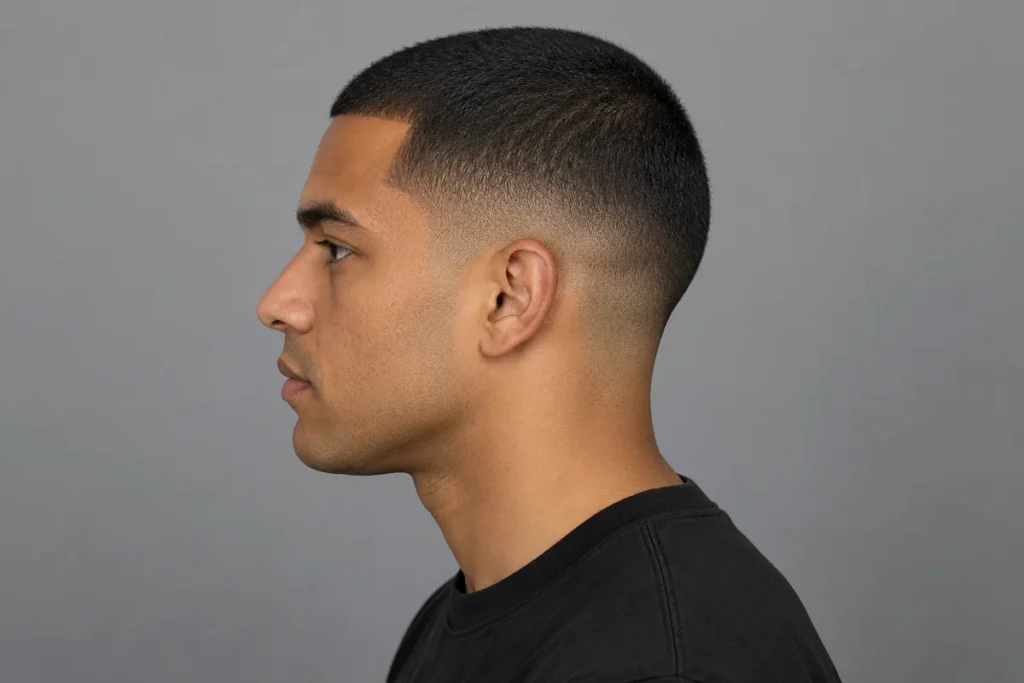
A compact, evenly clipped top and a close blend near the ear keep the silhouette simple. The top is visibly darker than the shortest side area. A buzz cut describes the top length; low fade describes where the side transition sits. Neither name tells the barber whether you want skin at the bottom.
Barber request: “Keep the top short and even, and blend the sides low around the ears and nape. Leave a dark upper side rather than taking the fade high. Please confirm the top length and shortest side length separately.”
Styling and upkeep: This is a starting point if you want little top arranging. It still needs perimeter upkeep when the contrast becomes softer than you prefer. A very short top also exposes the natural hairline, so look at that detail before choosing it.
2. Low fade with a crew cut
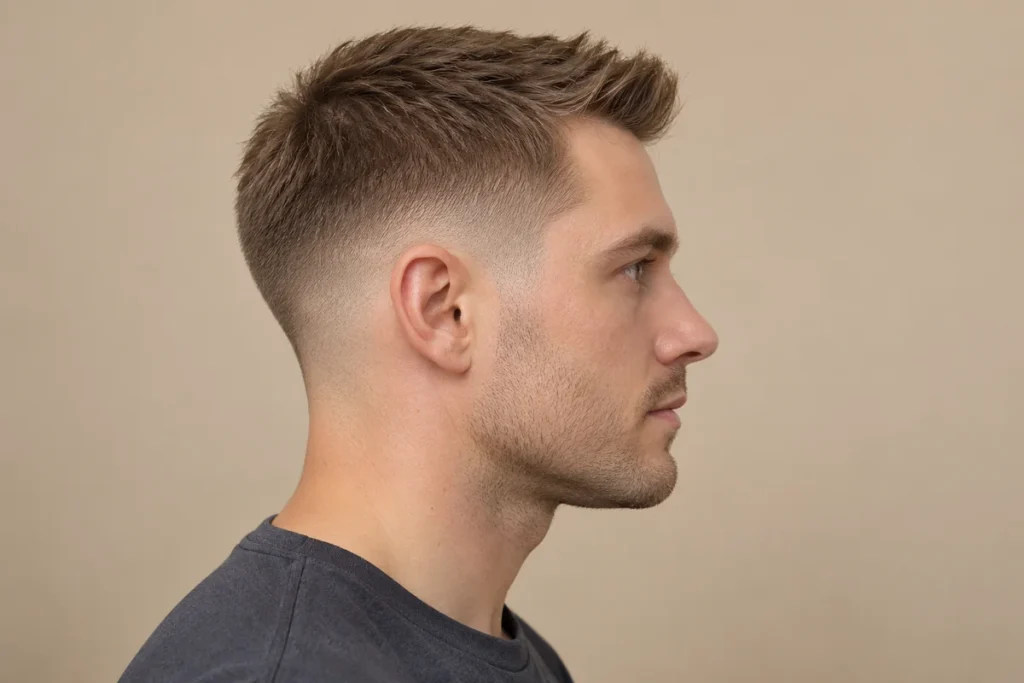
The front has a small amount of lift while the rest of the top stays compact. That graduation gives the crew cut more direction than the buzz cut, without the larger front volume of a quiff. The near-ear view matters: the shorter finish should remain low beneath the darker upper side.
Barber request: “Leave the front slightly longer than the crown and keep the overall top compact. Blend the sides low, with this amount of dark hair above the ear. I want a small lift rather than a tall quiff.”
Styling and upkeep: Try arranging the front with your fingers before deciding you need extra hold. Ask how a front cowlick will affect the dry shape. The illustration is a visual target, not a prescription for one clipper number.
3. Low fade with a textured crop
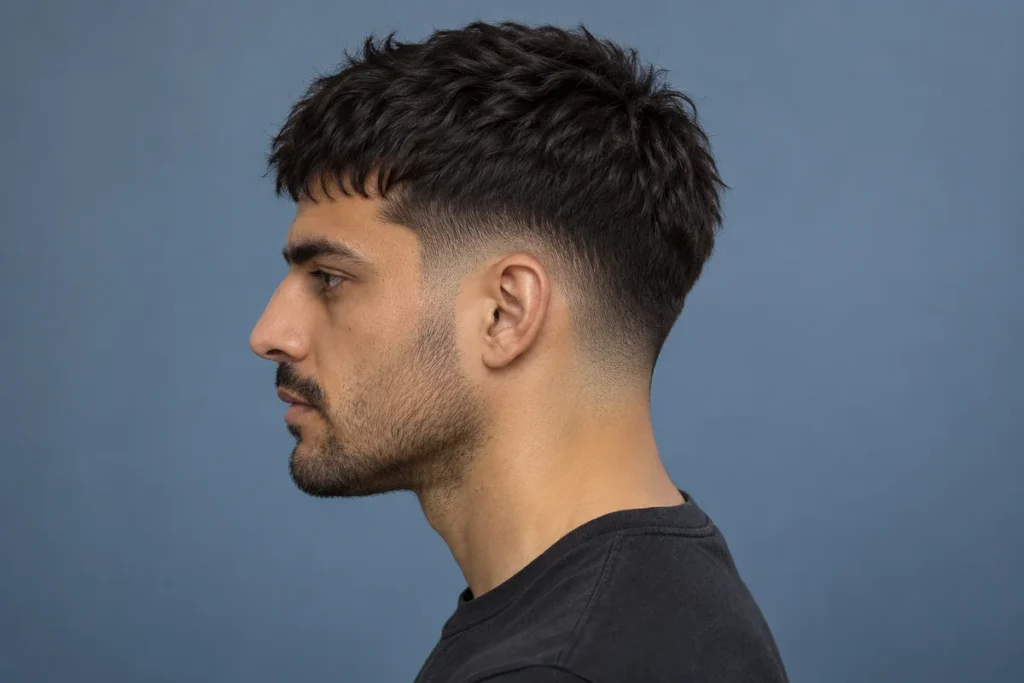
Short, separated pieces travel forward and end in an uneven fringe. The important distinction is direction: this crop brings hair toward the forehead instead of lifting it away. Keeping the fade low leaves a darker frame beneath the top rather than exposing a large area of scalp.
Barber request: “Cut a short textured top that sits forward, with an irregular fringe like this. Keep the fade low and connect the top softly. Do not turn the fringe into a long heavy curtain.”
Styling and upkeep: Decide how much forehead you want exposed while the hair is dry. A small amount of suitable matte styling product can separate pieces if needed; it is optional, not part of the haircut definition. Compare the separate French crop guide if you prefer a more deliberate fringe outline.
4. Low fade with a longer textured fringe
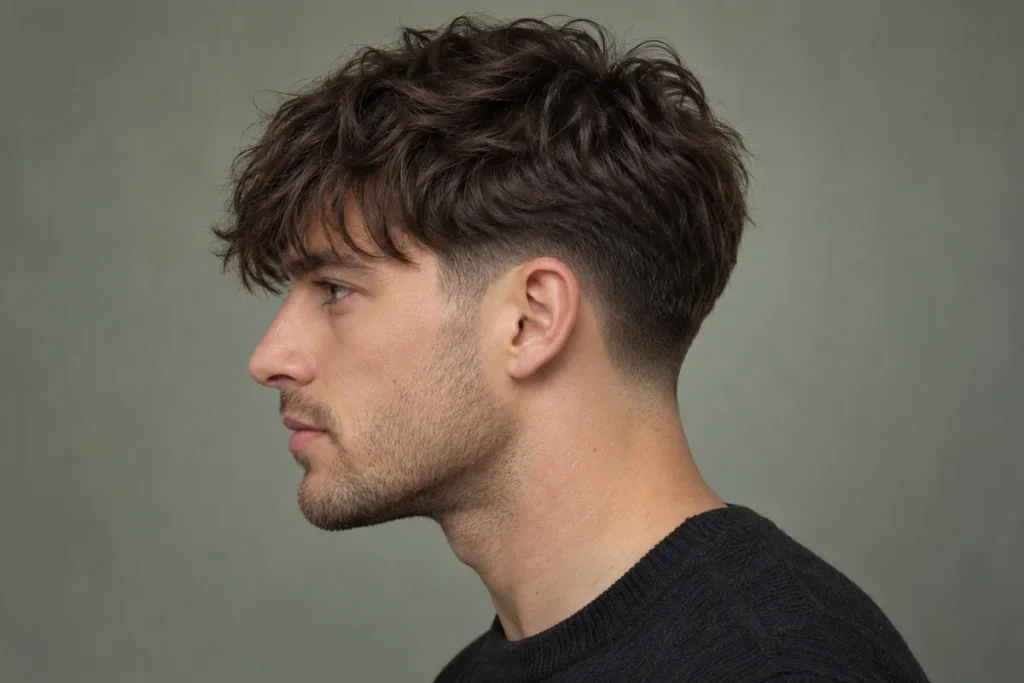
This example keeps more front length than the short crop. Loose pieces fall across the forehead, while the sides remain close only near the ear. The longer top is the choice that changes daily styling; the low fade does not automatically make the fringe easy to manage.
Barber request: “Leave this amount of front coverage and texture, keep the sides blended low, and show me where the fringe will sit after drying. Preserve enough upper-side weight to avoid a disconnected top.”
Styling and upkeep: Discuss whether the fringe falls into your eyes, how you wear glasses and the direction your hair naturally grows. Ask for a shorter version if you do not want to arrange the front each morning. The broader textured-fringe article explains top-shape choices beyond this low-fade pairing.
5. Low fade with a side part
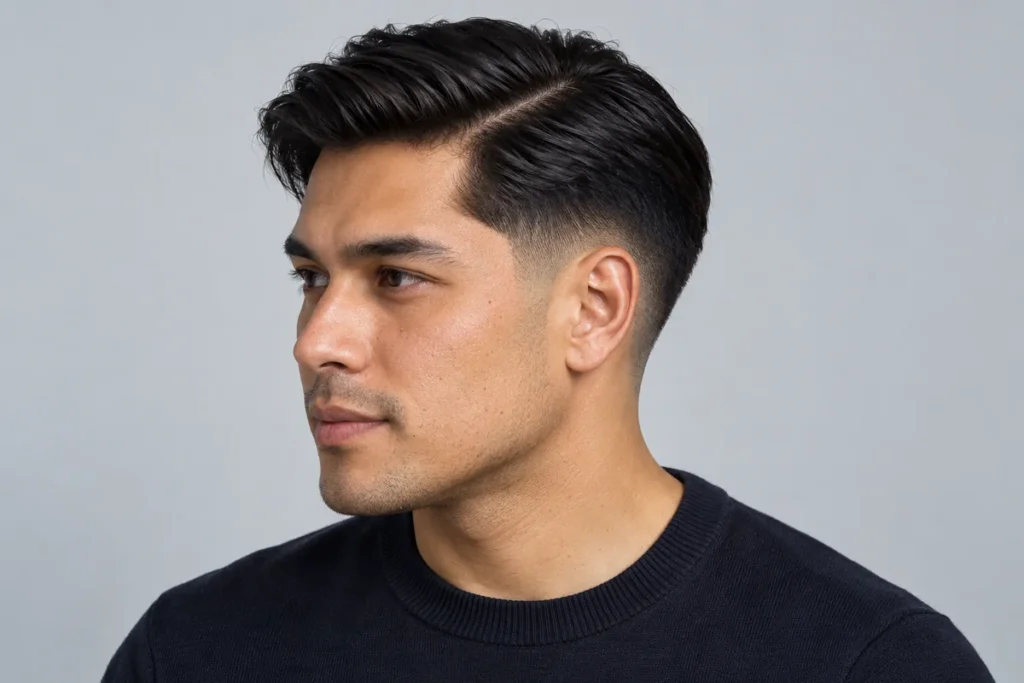
The top follows a deliberate part and travels across rather than forward. A natural part is not a shaved hard part: the illustration shows separation in the hair, not a line cut into the scalp. Low placement keeps the side contrast concentrated below the longer upper section.
Barber request: “Use a natural side part and direct the top across. Keep enough length for the part to sit comfortably, and blend the sides low. I do not want a shaved line unless we discuss it first.”
Styling and upkeep: Show the barber where the hair separates without forcing it. Decide whether you want a loose finish or a firmer combed outline. Different products change shine and hold; no named product is required to obtain the haircut.
6. Low fade with a short quiff
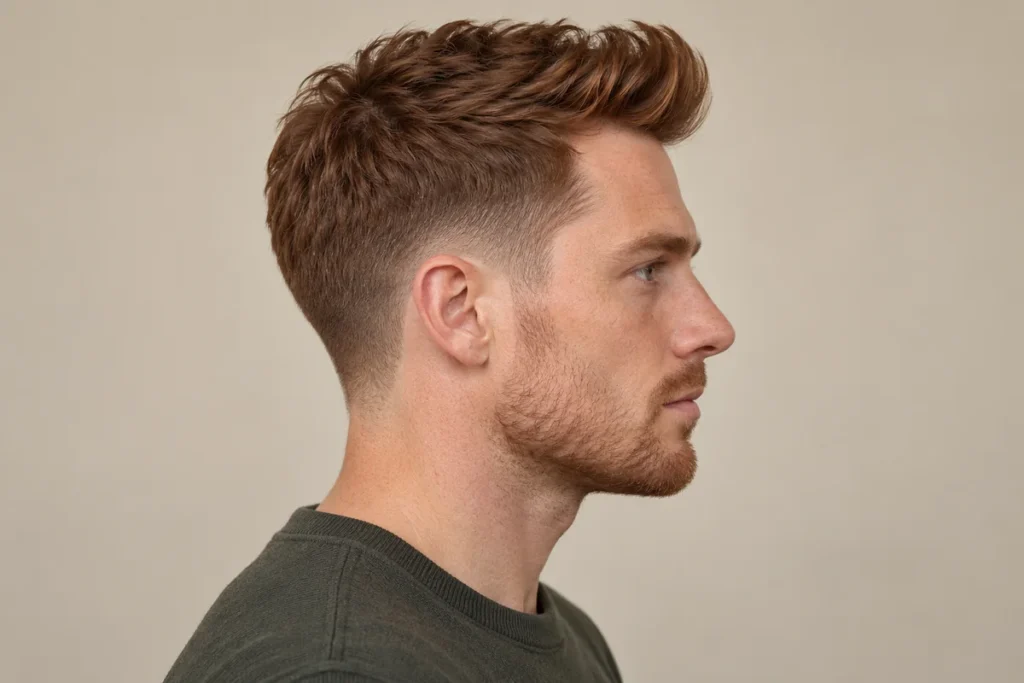
The front rises and turns slightly backward while the rest of the top stays shorter. This creates a compact lift rather than a full swept roll. The low fade is still a continuous side treatment; front height should not be mistaken for a high fade.
Barber request: “Leave enough front length for a small lifted quiff, keep the crown compact and blend the sides low. Show me a dry version I can arrange without building a much taller shape.”
Styling and upkeep: Expect to direct the front while it dries if it naturally falls forward. Start with a modest amount of hold and add only if needed. Choose the front height you like rather than treating a face-shape category as a rule.
7. Low fade with a wavy brush-back
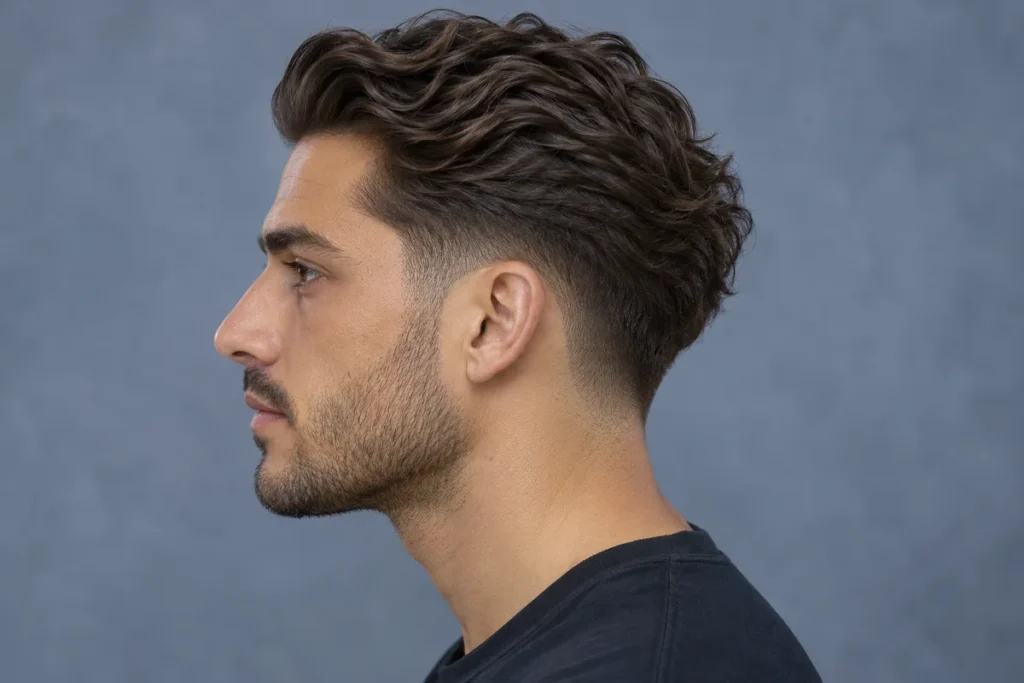
The forehead is open and the longer top travels backward with visible bends. Unlike a rigid slick-back, the waves keep movement. The preserved upper-side hair helps connect the longer top to the low transition, rather than making the top sit over a disconnected shaved section.
Barber request: “Keep enough top length to brush back while retaining the waves. Blend the sides low and connect them softly. I want this movement, not a flat wet finish or an undercut shelf.”
Styling and upkeep: Ask whether your natural growth direction allows the front to stay back with the effort you will actually make. You can use your usual suitable styling method; the illustration does not prove that a perm or any chemical treatment was used.
8. Low fade with a loose curly top
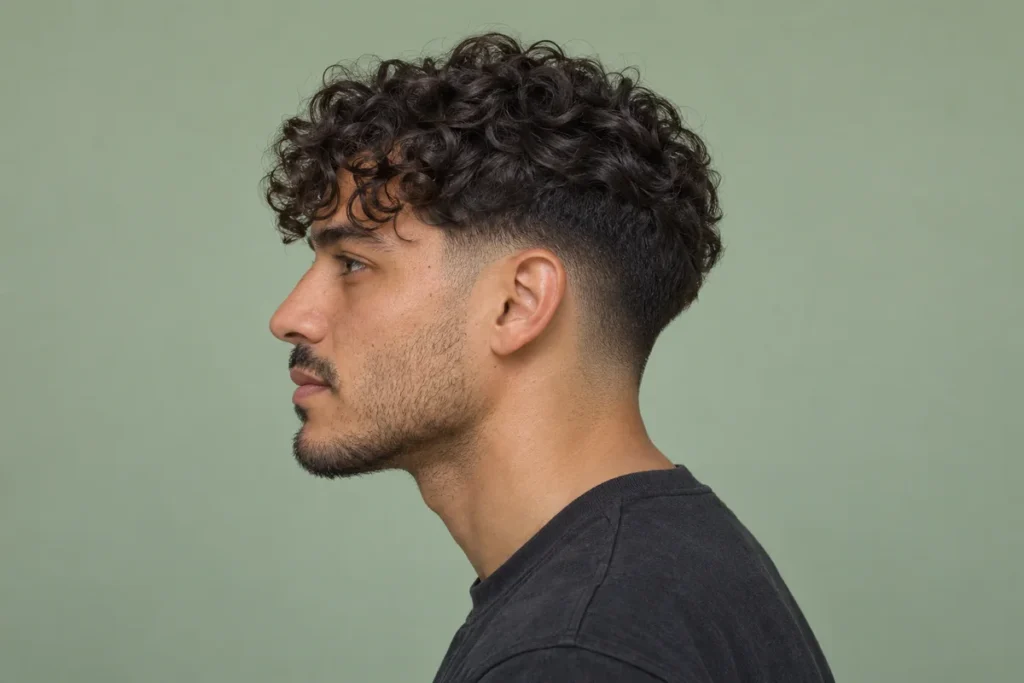
Loose curl groups stay visible through the top while the lower sides are blended close. Do not translate the apparent length into a fixed wet measurement: the dry curl shape and the amount of forehead coverage are more useful details to show your barber.
Barber request: “Keep the loose curls and this dry top shape, remove only the length we agree, and keep the side fade low. Please show me how the front settles before deciding the final outline.”
Styling and upkeep: Choose whether the curls should sit forward or leave more forehead open. Follow a routine appropriate to your own curls rather than brushing them into the straight-haired side-part example. Curl appearance alone cannot identify a treatment or guarantee the same result on another head.
9. Low fade with a compact coily top
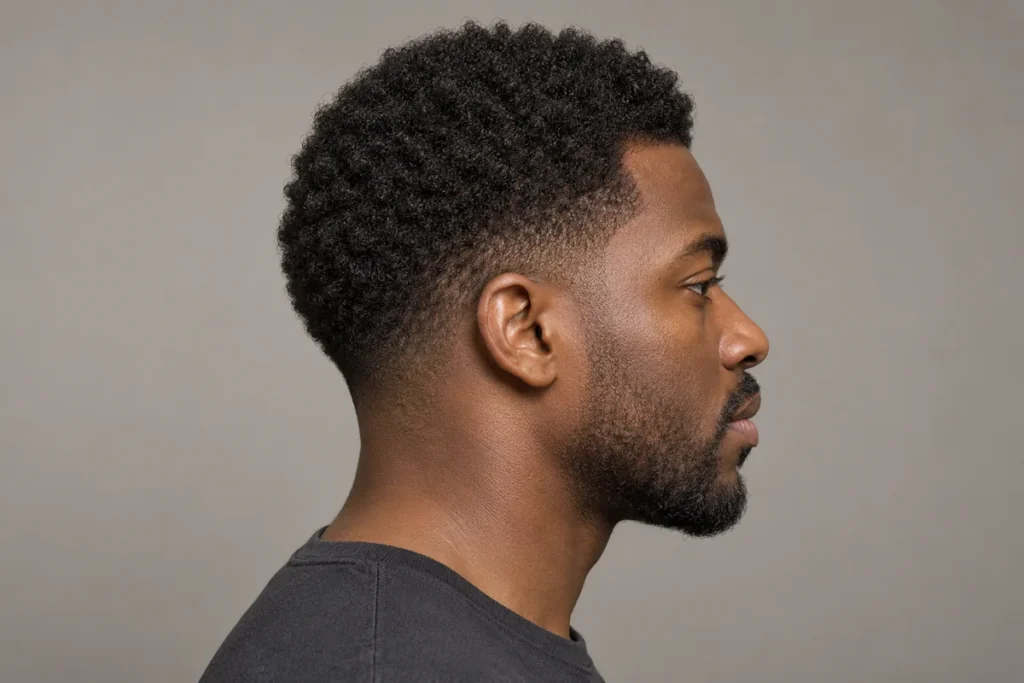
Tightly coiled texture forms a small rounded top above a low side blend. Here the intended choice is the silhouette and dry height, not an ethnicity-based rule. People with similar visible texture can still have different density, growth direction and preferred styling routines.
Barber request: “Retain my coily texture and this compact rounded height. Keep the fade low around the ear and nape, preserve the upper-side weight, and agree any hairline detailing before trimming it.”
Styling and upkeep: Check the shape in your usual dry state. Decide how sharply you want the perimeter defined and whether you prefer natural edges. A lined-up front is optional; it is not required to make a low fade complete.
10. Low fade with a pompadour
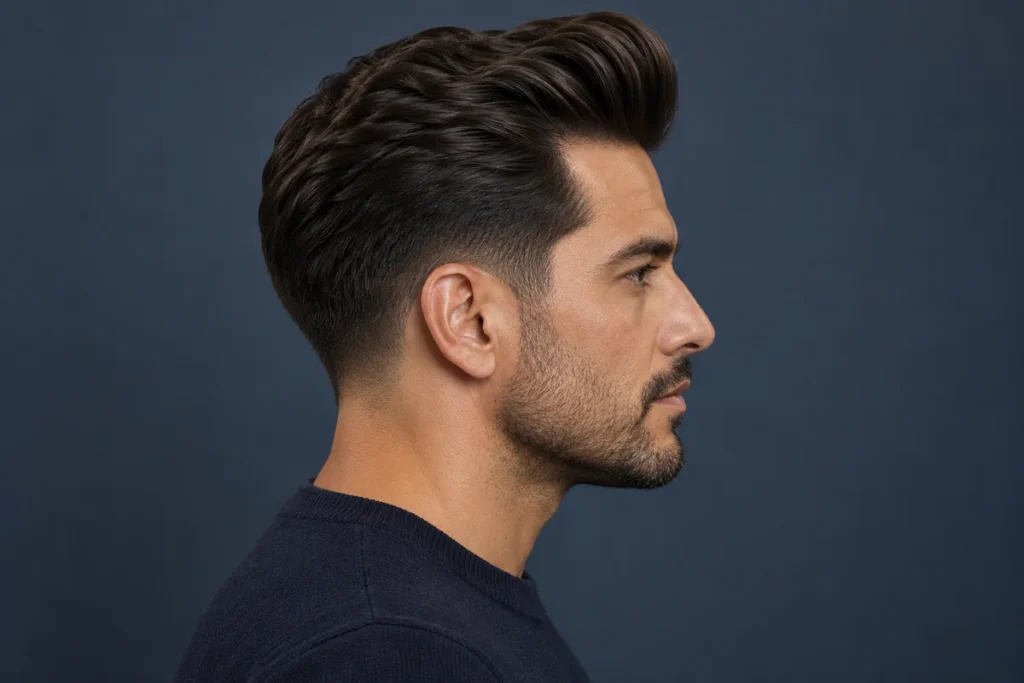
A fuller, smoother front rises into a backward roll. This gives more front volume than the short quiff. The side profile is useful because it shows the entire sweep and the retained darker side beneath it; a front-only picture can hide how high the fade actually sits.
Barber request: “Keep enough front length for this smooth backward roll, connect the upper sides, and keep the fade low. I want this volume without shaving the side high or disconnecting the top.”
Styling and upkeep: Choose this option if you enjoy shaping the front and maintaining the sweep. Ask the barber to demonstrate a routine with your own hair before accepting the illustrated height as a daily target. If you want less arranging, compare the crew cut or short crop instead.
Check your low fade from the rear
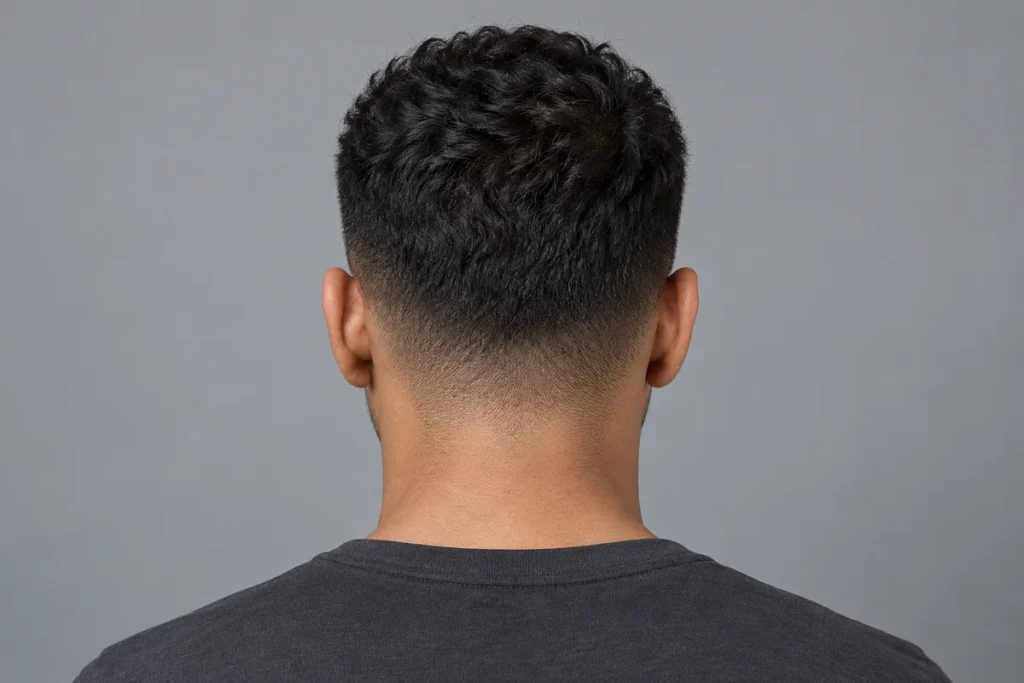
This separate rear reference shows a short, connected nape blend below a darker back section. Check where the short finish meets the retained weight and how it joins the side blend. A low fade should not be judged only by the area immediately in front of the ear.
Agree whether you want a natural softened neckline or a deliberately defined outline. If you want the line to curve lower behind the ear, describe that detail and compare our drop fade haircut guide. Low placement and a dropped curve can coexist; they describe different aspects of the shape.
Low, mid or high: compare placement before contrast
A low fade preserves more upper-side hair; a mid fade moves the transition farther up; a high fade exposes more of the upper side. The visual impact still depends on the shortest finish, retained weight and top length. A low skin finish can create strong contrast, and a higher shadow finish can look softer than you expect.
Use the mid fade haircut guide when you want to compare a higher transition. Do not choose a height solely from a face-shape label: the most useful consultation covers the outline you like, your density, growth pattern and how much arranging you will do.
How to ask for a low fade haircut
- Show the top and side separately. Use the gallery for the top shape and point to the low side placement you want.
- Agree the shortest finish. Say whether you want exposed skin or visible short hair at the bottom. Ask the barber to explain the terms they use.
- Preserve the right weight. Point to how much darker hair should remain above the ear, not just where the shortest area begins.
- Discuss the dry top. Agree fringe coverage, front height or curl shape after the hair has settled.
- Check the rear. Request a mirror view of the nape and how it connects to the sides.
- State what you do not want. Examples include a shaved part, a high skin section, a disconnected shelf or a sharper hairline than you prefer.
The London School of Barbering’s consultation guide recommends discussing length, lifestyle, styling effort and unwanted details. That conversation is more informative than using a haircut name alone.
How much maintenance does a low fade need?
Separate daily styling from appointment frequency. A buzz cut can need little top arranging but still lose its freshly cut contrast as it grows. A brush-back may need daily direction while allowing you to keep a longer top between visits. Low placement does not automatically mean low maintenance.
Book your next appointment when the outline changes beyond what you like: the shortest edge has grown darker, side bulk no longer sits comfortably, or the top stops holding its intended shape. Ask your barber for a starting schedule based on your finish and then adjust it. There is no universal two-week rule for every low fade.
If you want to communicate a particular clipped length, use the clipper guard-size reference alongside the picture. A guard number describes a length, not a complete fade shape; blade, lever position and technique also affect the result.
Choose the reference that fits your routine
Shorter tops are useful starting points when you want little arranging. A fringe gives forehead coverage; a quiff or pompadour lifts the front; a brush-back moves it away. Curly and coily examples retain their texture instead of treating straightening as a requirement.
You can use our Fade Calculator to organize preferences, then discuss the result with your barber. For a wider catalogue, browse fade haircuts for men. A visual guide helps communicate choices; it cannot assess your hair in person.
Low fade haircut FAQs
Is a low fade the same as a low taper?
Usually they describe different side treatments: a low fade connects the short blend through the sides and back, while a low taper focuses more on the sideburns and nape. Terms vary between shops, so compare the side and rear reference before agreeing the cut.
Does a low fade have to go down to skin?
No. Low describes placement. You can discuss either exposed skin or visible short hair at the shortest edge. Confirm the finish with your barber rather than relying on the word fade alone.
Can I get a low fade with curly or coily hair?
Yes. A low side blend can be paired with retained curls or coils. Agree the dry top silhouette, side weight and edge detailing so the reference is adapted to your own texture and routine.
What clipper number should I ask for?
There is no single number for the whole haircut. Agree the shortest side length and top length separately, then show where you want the transition. A guard number cannot specify placement, blend width or styling direction.
Is a low fade easy to maintain?
It depends on the top and finish. A compact top may need little morning arranging, but the close perimeter still grows out. A longer styled top adds different daily work. Choose your routine and appointment frequency separately.
Can a low fade also be a drop fade?
Yes. Low describes height and drop describes a line that curves lower toward the back. Show both the side and rear shape so your barber understands how much curve you want.
Sources and editorial method
- Wahl USA: fade haircut definitions — checked for the distinction between low, mid and high placement.
- London School of Barbering: haircut consultation — checked for communicating length, lifestyle and styling preferences.
Editorial review: researched and visually checked by Burst & Taper on 5 October 2026. The style combinations and barber requests are editorial suggestions. No individual assessment, barber certification or professional approval is claimed. Every illustration is disclosed; none is presented as a real haircut result.
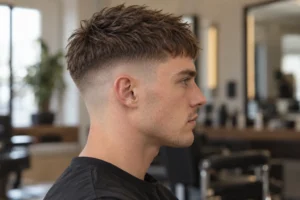 Textured Crop Haircut: Styles, Fades and How to Ask Your Barber
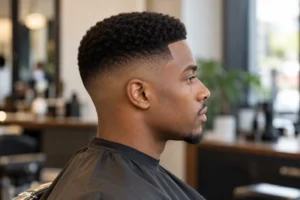 Boosie Fade: What It Is, 7 Styles and How to Ask for It
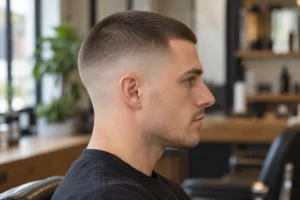 Buzz Cut Fade: Low, Mid, High and Skin Fade Styles With Photos
5 Comments