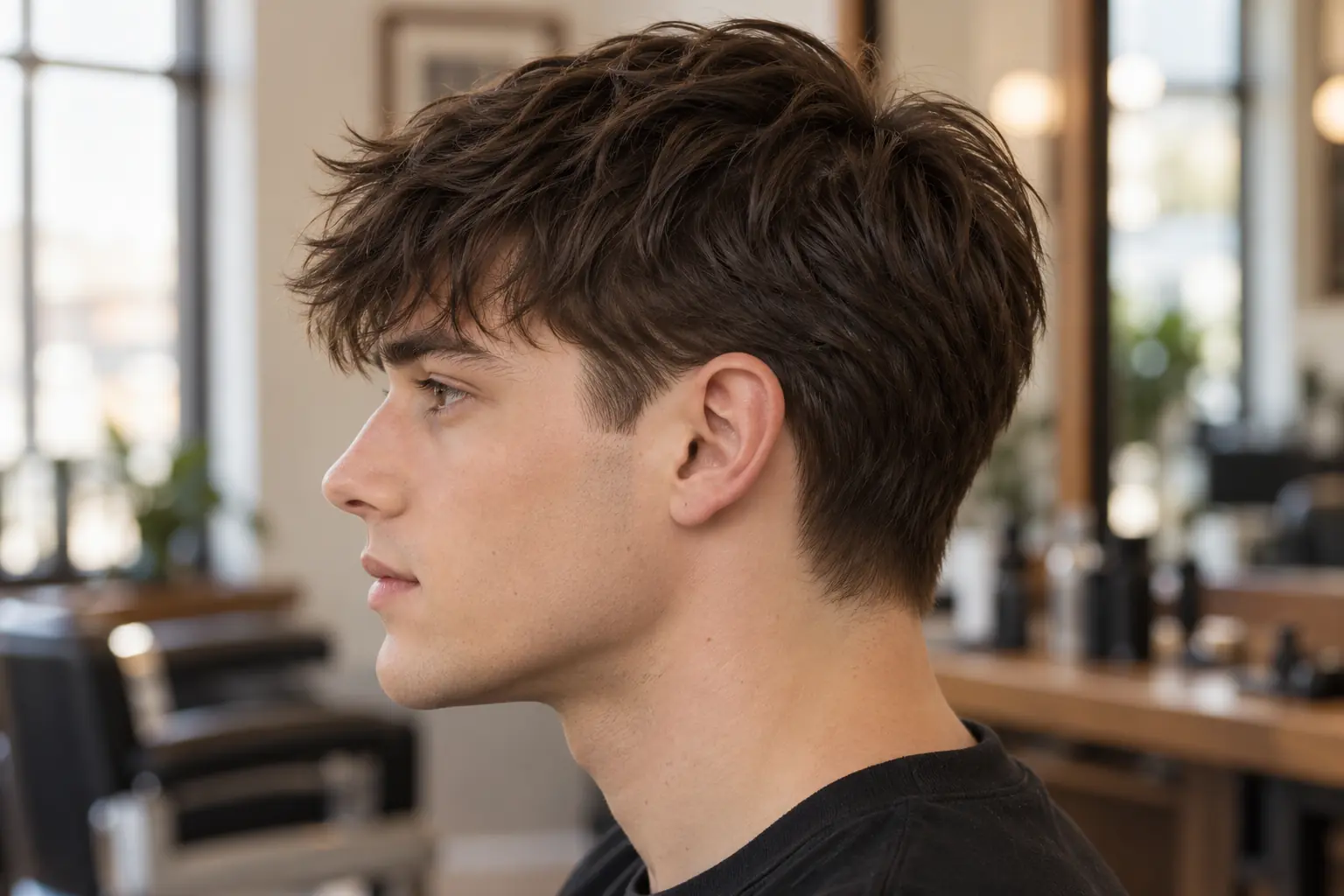
Low Taper Fade with Textured Fringe: Styles, Barber Script and Styling
On this page
- What Is a Low Taper Fade with Textured Fringe?
- Low Taper vs Mid Taper with a Textured Fringe
- Textured Fringe Styles with a Low Taper
- Who Suits a Textured Fringe?
- What to Tell Your Barber
- How to Style a Textured Fringe
- Maintenance and Cost
- How It Grows Out
- Common Mistakes
- Frequently Asked Questions
- Related Guides
A low taper fade with textured fringe pairs a choppy, forward-styled top with a taper that only shortens the bottom of the sideburns and the neckline. The sides keep their length, so the cut looks full and natural from every angle while the fringe does the talking. It is one of the most requested men’s haircuts right now because it suits straight, wavy and curly hair and needs about two minutes to style.
What Is a Low Taper Fade with Textured Fringe?
It is two choices in one cut. The low taper keeps the sides tidy without exposing skin above the ear. The textured fringe is 2 to 3.5 inches of hair on top, point cut so it breaks into separate pieces and falls forward onto the forehead. For the taper itself, see the low taper fade guide.

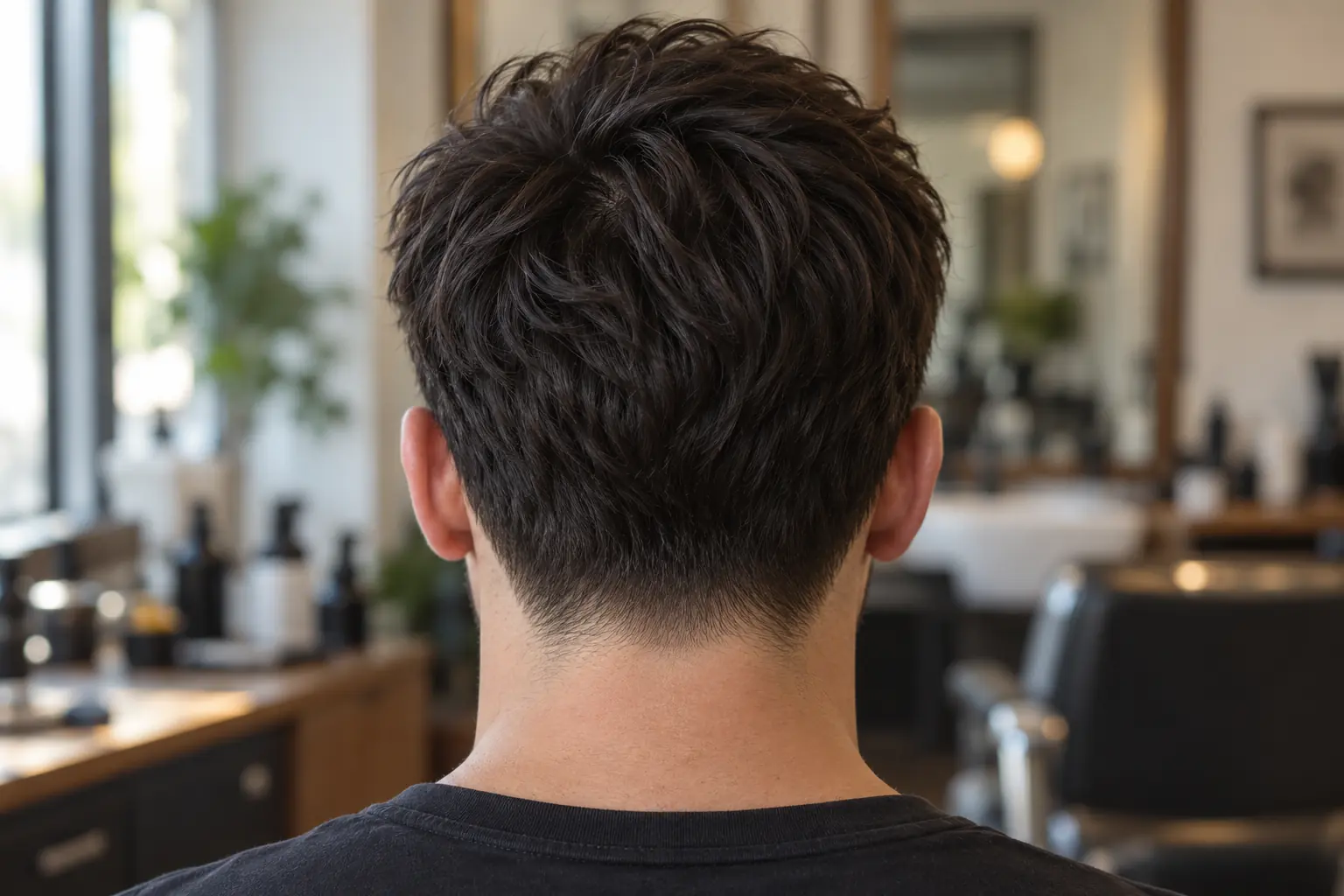
At a glance
| Feature | Low taper with textured fringe |
|---|---|
| Top length | 2 to 3.5 inches |
| Fringe | Falls to the middle of the forehead or just above the eyebrows |
| Taper | Bottom of the sideburn and the neckline only |
| Finish | Shadow, zero or skin |
| Styling time | About 2 minutes |
| Touch-up | Every 3 to 4 weeks |
| Good for | Straight, wavy and curly hair; high foreheads; round and oval faces |
Low Taper vs Mid Taper with a Textured Fringe
The fringe is the same; only the taper height changes. A low taper starts below the middle of the ear and keeps the sides fuller, which balances a heavy fringe. A mid taper starts around the middle of the ear and looks sharper. If your sides puff out as they grow, go mid; if you want the softest look, stay low. See the mid taper with textured fringe for that version and mid taper vs low taper for the full comparison.
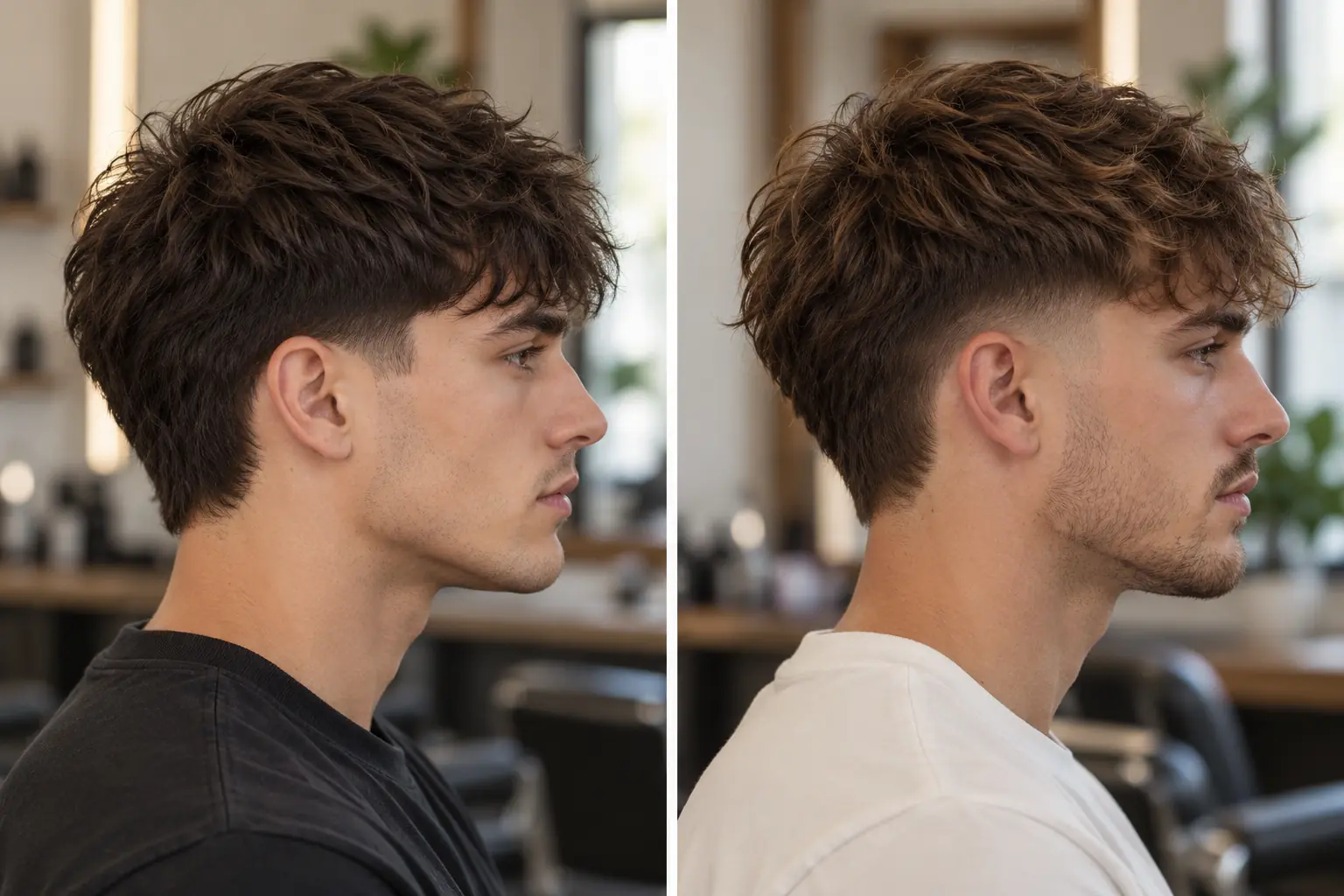
Textured Fringe Styles with a Low Taper
Classic textured fringe
Even, piecey texture falling straight forward. The safest version for school and work.
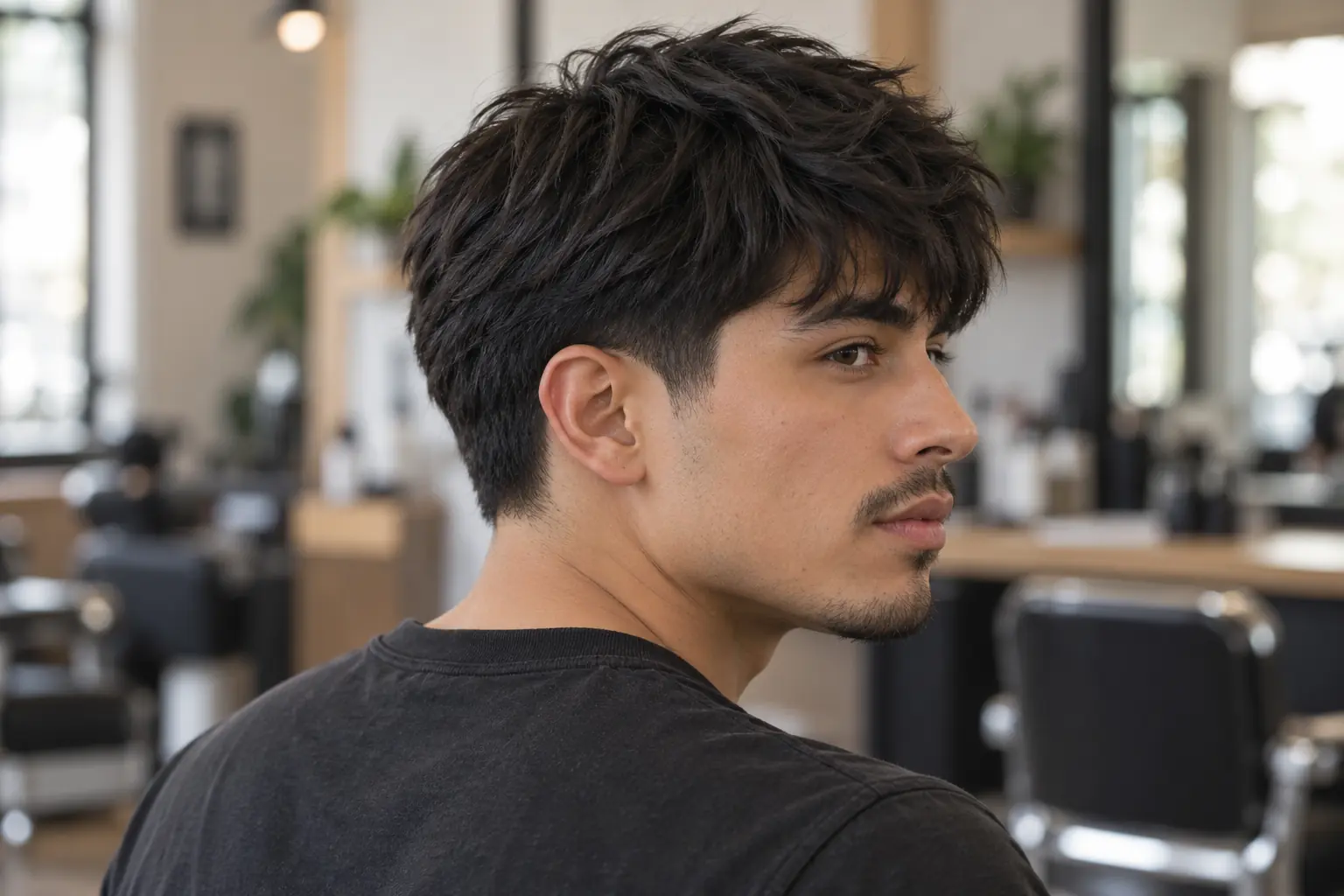
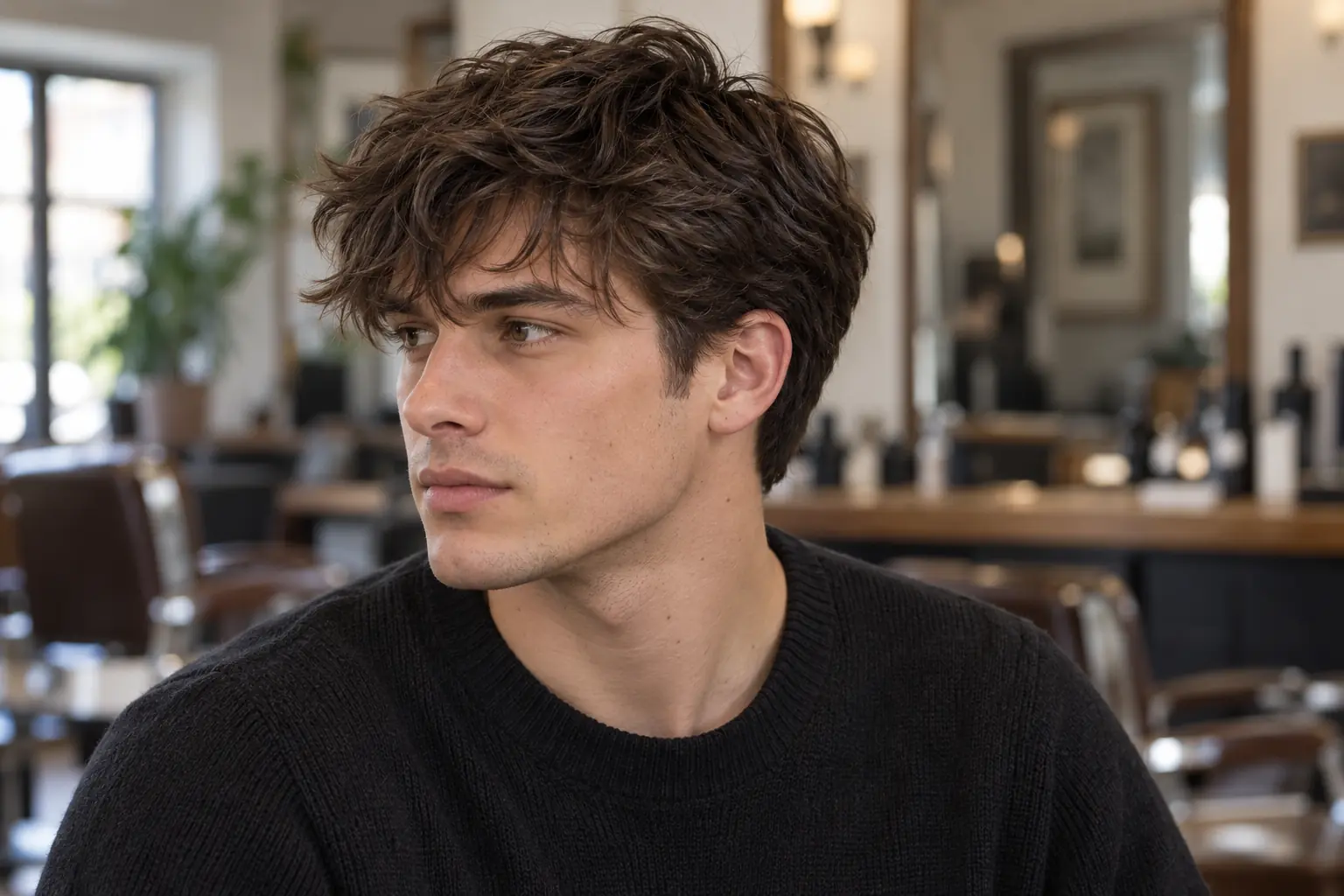
Messy fringe
A messy fringe is cut with deeper point cutting so the pieces sit at different lengths and angles. It looks best slightly undone, styled with matte clay and your fingers rather than a comb.
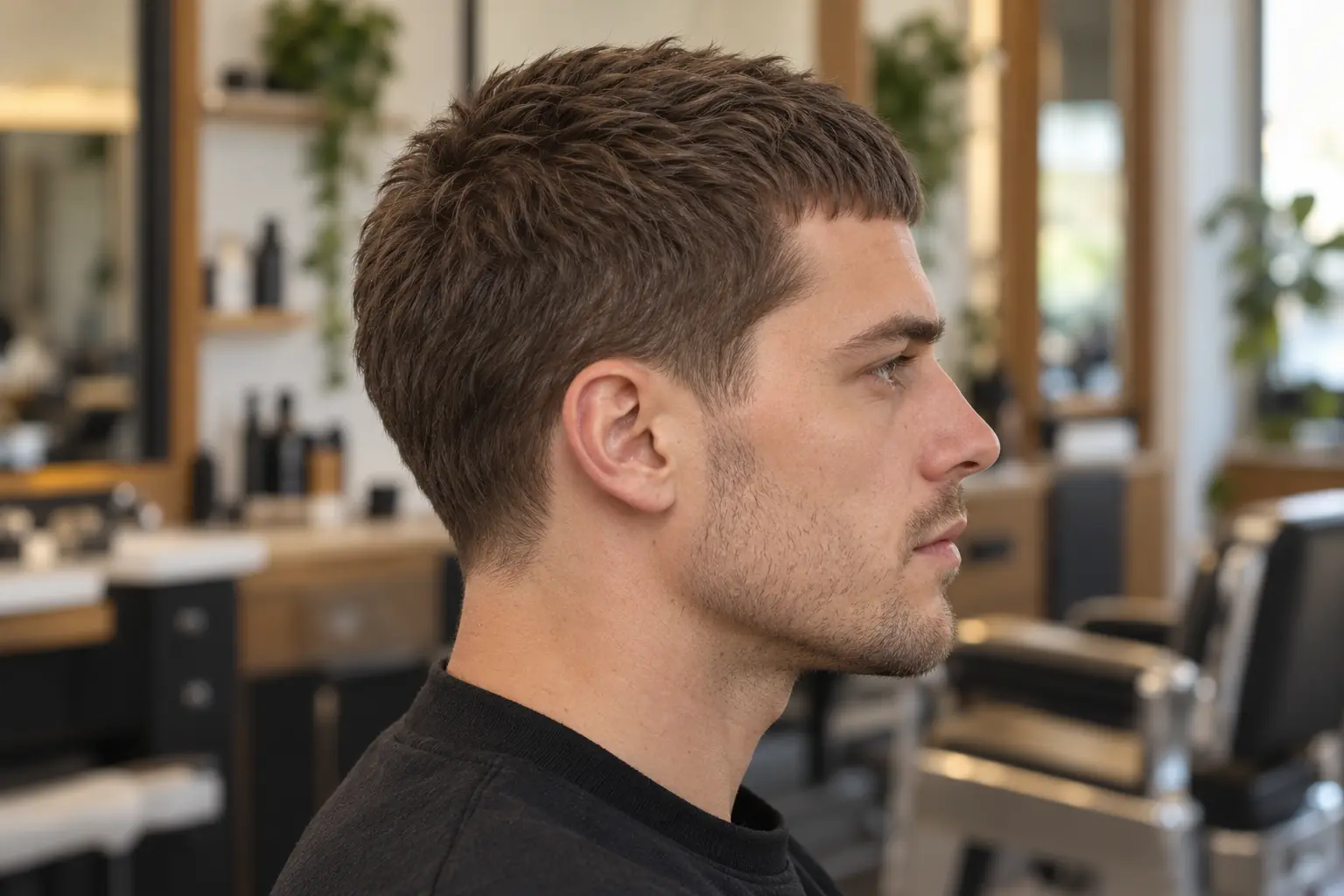
Short textured crop
Keep only 1 to 1.5 inches on top and a short, blunt fringe. It needs almost no styling and grows out cleanly. A French crop fade is the same idea with a stronger fade.
Blowout taper with a textured fringe
A blowout adds volume at the front by blow-drying the top up before it falls forward. Pair it with a low taper to keep the sides from looking too short. See the blowout taper guide.
Straight hair fringe
Straight hair shows a fringe most clearly but can fall flat and stick to the forehead. Ask for deeper point cutting at the front and use sea salt spray before blow-drying to give it grip.
Wavy fringe
Wavy hair gives the fringe natural movement. Leave a little more length, about 3 to 4 inches, so the wave has room to form.

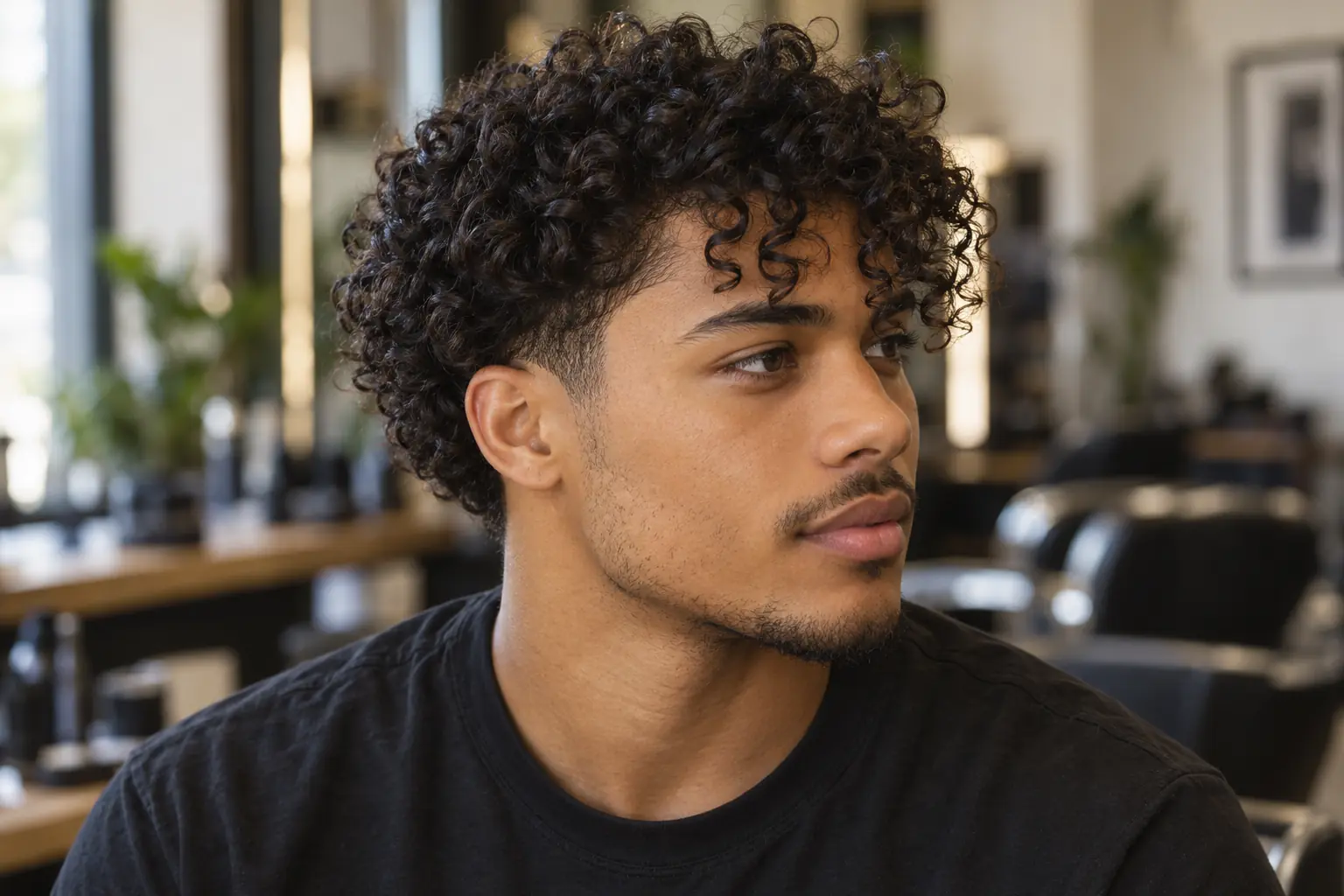
Curly fringe
Curls fall forward on their own, so the fringe takes no styling at all. Ask for the top to be shaped while the hair is dry or lightly damp, because curls shrink as they dry. More curly options are in the taper fade for curly hair guide.
Who Suits a Textured Fringe?
- Round faces: a fringe with height at the front and a low taper that keeps some width at the sides balances the face. Avoid a heavy, flat fringe.
- Oval faces: almost every fringe length works.
- Long or rectangular faces: a fringe shortens the face visually. Keep the sides fuller with a low taper rather than a high one.
- High foreheads and receding hairlines: the fringe covers the temples and the front hairline, which is why it is one of the most common choices for thinning at the front.
For more options if your hairline is moving back, see the best fades for a receding hairline.
What to Tell Your Barber
- Taper: “A low taper, only at the bottom of the sideburns and the neckline. Keep the length above my ears.”
- Finish: “Shadow (or zero, or skin) at the very bottom.”
- Top: “About 3 inches, point cut for texture, falling forward into a fringe.”
- Fringe length: “Stop the fringe at the middle of my forehead” (or “just above my eyebrows”).
- Blend: “Take a little weight out where the top meets the sides so it doesn’t puff out.”
Most low tapers start at a #0.5 or #1 at the edge and blend into a #2 or #3 on the sides. Bring a front and a side photo.
How to Style a Textured Fringe
- Towel-dry until the hair is damp, not wet.
- Add sea salt spray and blow-dry the top forward on medium heat, using your fingers to break it up.
- Finish with matte clay or paste: a pea-sized amount, warmed between your palms, worked through the top with your fingertips. Twist a few pieces at the front for definition.
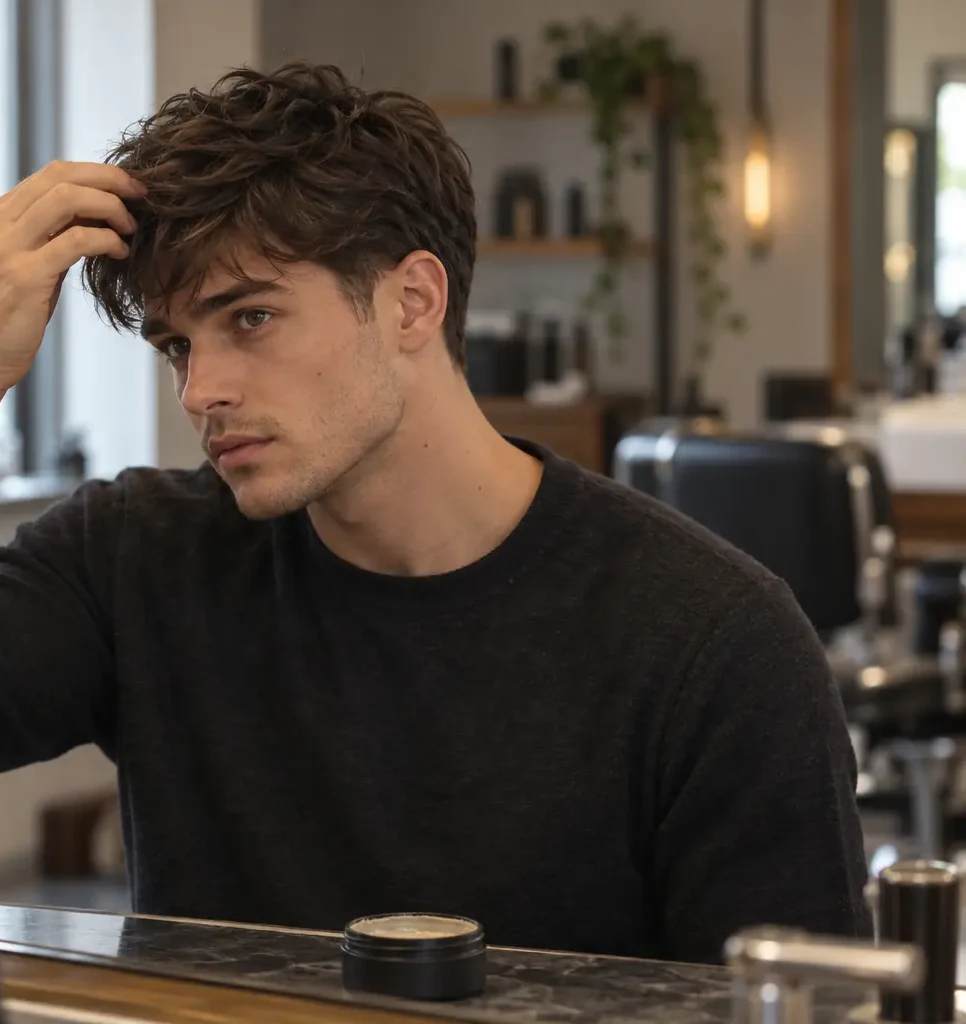
Avoid shiny gels and heavy pomades: they clump the fringe into wet-looking strands and hide the texture.
Maintenance and Cost
Book a touch-up every 3 to 4 weeks to keep the taper clean; the fringe usually needs a trim every 4 to 6 weeks before it reaches your eyes. The cut costs the same as a regular men’s taper at most shops. See our fade cost guide for prices.
How It Grows Out
| Time since the cut | What you’ll notice | What to do |
|---|---|---|
| Week 1 | Sharpest taper, fringe at its shortest | Style with a little clay only |
| Weeks 2 to 3 | Taper softens; sides start to fill in | Nothing yet; this is the natural look |
| Week 4 | Sideburns and neckline look fuzzy | Book the taper touch-up |
| Weeks 5 to 6 | Fringe reaches the eyebrows | Trim the fringe or push it to the side |
Common Mistakes
- Fringe cut too blunt. A straight-across line looks like a bowl cut. Ask for point cutting.
- Sides left too bulky. A low taper keeps the sides full, so ask for weight removed or they will puff out within two weeks.
- Taper taken too high. Say “low” and “only at the sideburn and neckline” so it doesn’t turn into a mid fade.
- Too much product. A pea-sized amount is enough; more makes the fringe heavy and flat.
Frequently Asked Questions
What is a low taper fade with textured fringe?
It is a haircut with a choppy, forward-styled top of about 2 to 3.5 inches and a low taper that only shortens the bottom of the sideburns and the neckline, keeping the sides full.
How long does my hair need to be for a textured fringe?
At least 2 inches on top, and ideally 3 inches, so the fringe can reach the middle of your forehead.
Does a textured fringe suit a big forehead?
Yes. A fringe covers part of the forehead, which makes a high forehead or a receding hairline less noticeable.
Is a textured fringe good for curly hair?
Yes. Curls fall forward on their own, so a curly fringe needs almost no styling. Keep a little more length on top to allow for shrinkage.
Low taper or mid taper with a textured fringe?
A low taper keeps the sides fuller and softer; a mid taper looks sharper around the ear. Choose low for a natural look and mid if your sides puff out quickly.
What product should I use for a textured fringe?
Sea salt spray before blow-drying and a matte clay or paste to finish. Avoid shiny gels, which clump the fringe.
Related Guides
- Low Taper Fade
- Mid Taper with Textured Fringe
- Textured Fringe Haircuts for Men
- Taper Fade
- Blowout Taper
- Best Fades for a Receding Hairline
 Low Taper Fade for Black Men: Styles, Line-Ups and What to Ask For
 Taper Fade for Curly Hair: Low, Mid and Blowout Tapers by Curl Type
 Taper Fade: What It Is, Every Height and What to Ask Your Barber