Mid Taper vs Low Taper: The Complete 2026 Height Guide
When you demand a premium, tailored silhouette, the specific geometry of your taper blend dictates the entire success of your haircut. While many clients simply ask for a “skin fade,” the truly sophisticated request centers on the precise placement of the fade height, leading to the ultimate barbershop debate: mid taper vs low taper. Both styles provide a crisp, manicured perimeter at the temples and the nape, but their effect on your facial architecture and the longevity of the cut couldn’t be more different. This definitive 1,000-word editorial guide will analyze the technical execution of both blend heights, providing the expert terminology necessary to achieve your ideal aesthetic.
Mid Taper vs Low Taper: The Essential Differences
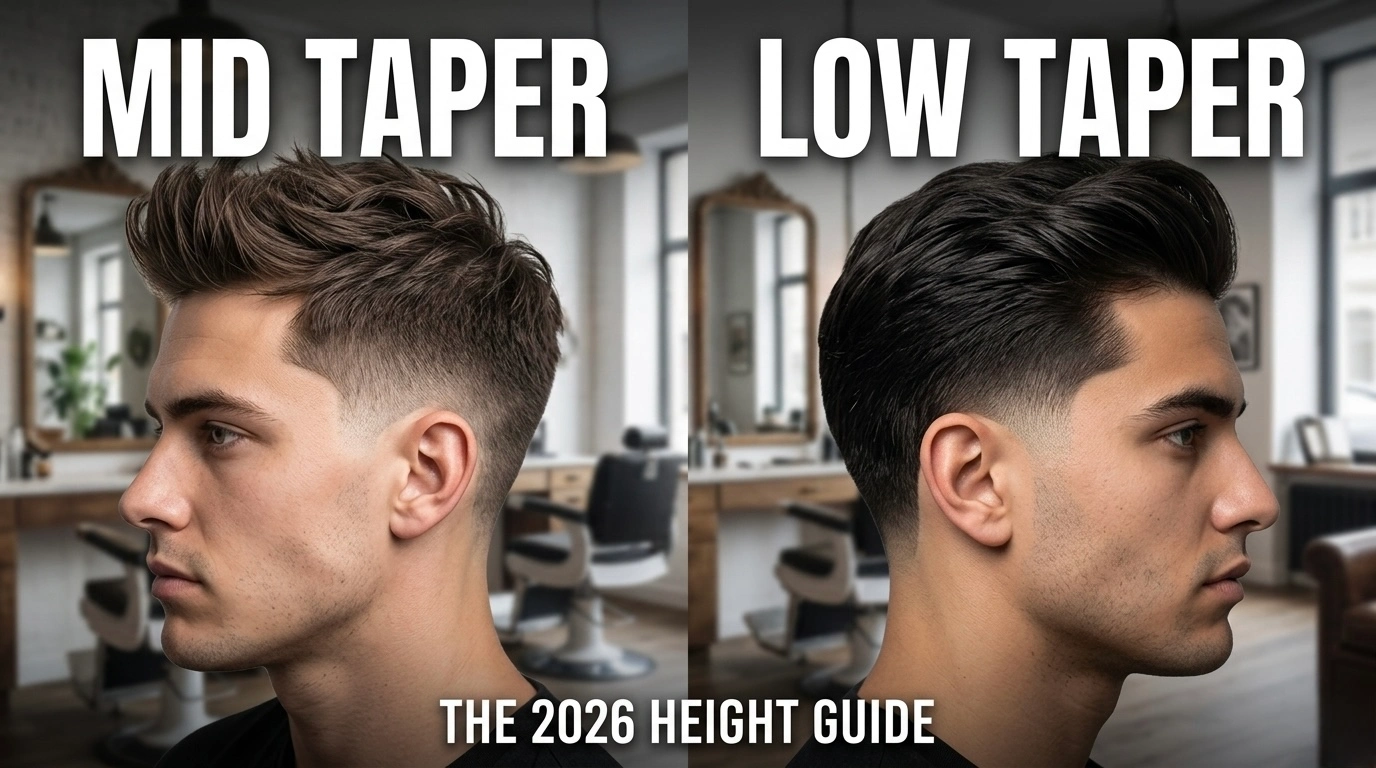
Before analyzing the technical geometry, we must establish the core visual distinction. The entire distinction between the mid taper vs low taper can be summed up in one word: *Height*. A taper fade modifies your natural hairline by localizing the blend exclusively to the sideburns and the bottom of the neck. A mid taper starts that blend higher up the sideburn, while a low taper keeps it extremely tight to the ear.
| Feature | The Low Taper | The Mid Taper |
|---|---|---|
| Starting Height | At the earlobe (lobule). | At the middle of the ear (tragus). |
| Sideburn Exposure | Minimal skin exposure at temple. | Significant skin exposure at temple. |
| Neckline Length | Preserves back length; blends very low. | Fades higher into the back weight line. |
| Visual Impact | Conservative, full shadow. | Sharp, high-contrast, tailored. |
Deep Dive: The Architecture of the Low Taper
The low taper is the definition of subtlety in barbering. When executing this cut, the barber has one objective: preserve the dark bulk on the sides while cleaning up the absolute edges. When analyzing the architecture of the low taper, the skin blend (the absolute bare skin point) typically originates exactly at the level of the earlobe. To execute this with precision, elite barbers often rely on professional Andis clippers or similar high-end tools to ensure the skin-to-hair transition is flawless without climbing too high.
Because the blend starts so low, the area directly above the ear retains a heavy, full “shadow” of hair. The natural perimeter of the hairline is barely modified. This provides a deeply conservative silhouette that looks impeccable on men who prefer textured tops, messy fringe styles, or anyone battling very thick hair and seeking a mid taper alternative that keeps the sides dark but the perimeter clean. A low taper provides the edge and crispness of a skin-tight lineup without the extreme skin exposure that comes with a higher blend placement.
Deep Dive: The Mechanics of the Mid Taper
The mid taper is the ultimate executive standard and is frequently recognized in high-end grooming standards as the most balanced haircut for the modern man. It hits the perfect golden ratio. It provides significantly more contrast and sharpness than a low taper, without drifting into the edgy, aggressive territory of a high bald fade or a zero mid taper fade. When analyzing the mechanics of the mid taper, the skin blend typically originates at the midpoint of the ear (level with the tragus).
This higher starting point removes significantly more dark bulk from the sideburn and temple area, completely exposing the facial architecture of the wearer. This higher starting point forces the clippers to blend into the heavier bulk on the sides much faster, creating a flawless, blurry gradient right at eye level. The mid taper is the superior choice for men wearing tailored, professional styles such as classic pompadours, tailored side-parts, or anyone who desires a structured, mathematically perfect profile.
Face Shape Analysis and Choice Strategy
Your bone structure, specifically the angularity of your jaw and the width of your cheekbones, should dictate your choice between the mid taper vs low taper. The taper height serves as an architectural adjustment for your entire head shape.
If you have a Round or Oval Face Shape, the higher skin exposure of the Mid Taper is your ideal choice. By removing more horizontal bulk from the sideburns, it visually elongates your face, making your jawline appear sharper and more chiseled.
Conversely, if you possess a highly angular Diamond, Square, or Oblong Face Shape with already prominent cheekbones, the Low Taper is strategically superior. Exposing too much skin at the temple on an already angular face can create a severe, gaunt appearance. A low taper retains that dark shadow of hair, softening your features and maintaining balanced proportions.
Styling Products and Maintenance Commitment
Understanding the maintenance cost is critical for your lifestyle. All taper fades modifying the natural hairline require precise upkeep. However, when comparing the mid taper vs low taper, the low taper offers slightly better longevity. Because the blend starts so tight to the earlobe, as the stubble grows back, it blends into the shadow faster. You can stretch a low taper to three or even four weeks before it looks sloppy. When styling a low taper, lightweight sea salt sprays and matte pastes are ideal for enhancing the dark, natural texture.
The mid taper demands strict adherence to a bi-weekly barbering schedule. The visual success of a mid taper relies entirely on the clarity of the skin contrast at the temple. As soon as stubble fills in that specific mid-level area (typically within 10 to 14 days), the geometry softens, the blurry effect is broken, and the entire haircut loses its sharp, premium tailored edge. For finishing a mid taper, a medium-hold styling clay or water-based pomade will lock in that sharp, executive aesthetic perfectly.
Written by The Master Barber
With over a decade of high-end editorial grooming experience, our team breaks down complex barbering geometry into actionable styling advice for the modern man.