Buzz Cut Fade: Low, Mid, High and Skin Fade Styles With Photos
On this page
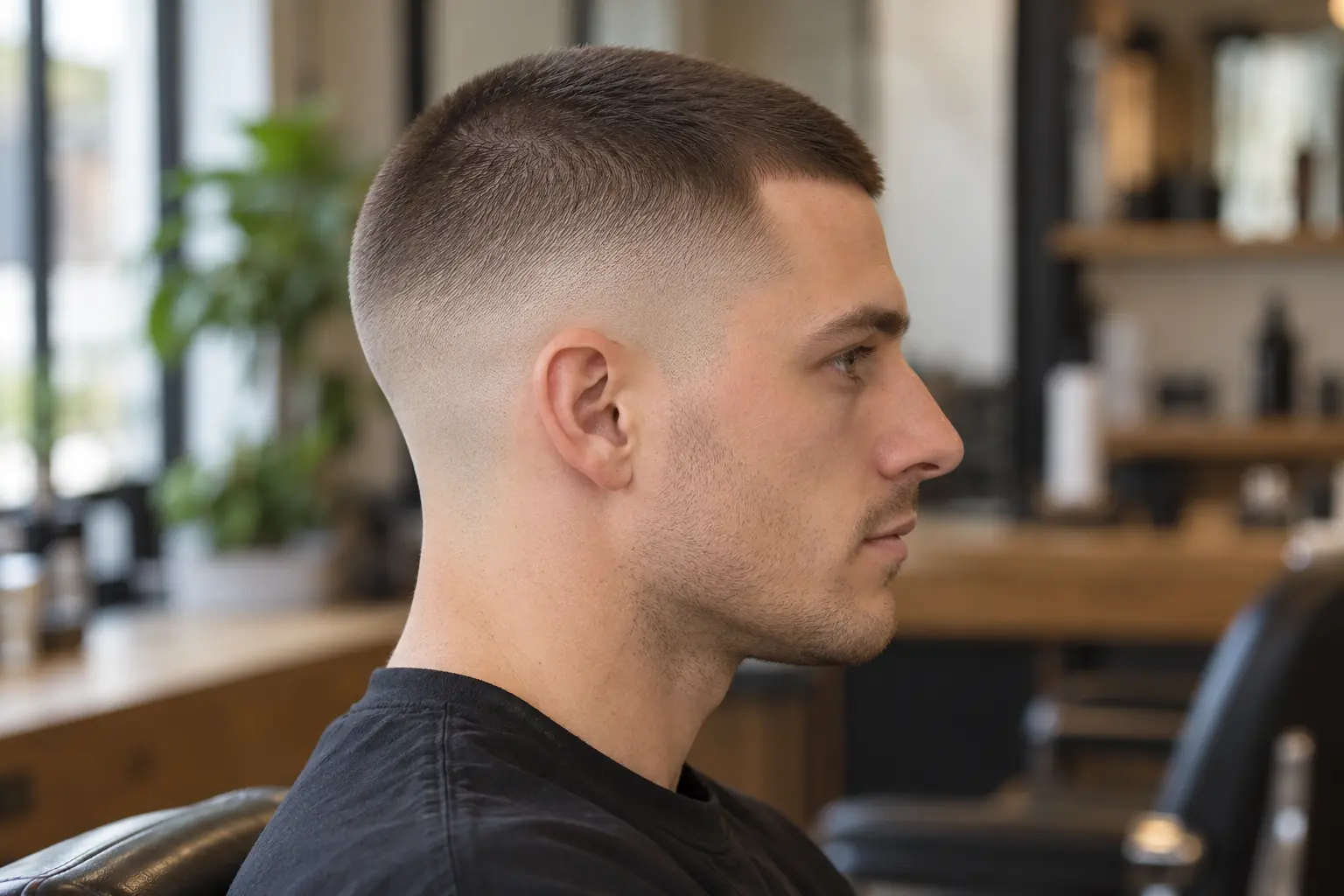
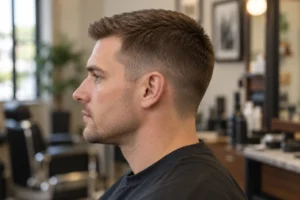
A buzz cut fade is a buzz cut with the sides and back faded shorter than the top. The top is clipped to one even length, usually a #2 to #4 guard, and the sides blend down to a shorter guard, a zero or bare skin. The fade gives a plain buzz more shape, makes it look sharper and helps it grow out more evenly.
At a glance
| Feature | Buzz cut fade |
|---|---|
| Top | One even buzzed length, usually #2 to #4 (1/4 to 1/2 inch) |
| Sides and back | Faded shorter all the way around: low, mid or high |
| Shortest point | A short guard, a zero or skin |
| Styling | None |
| Touch-up | Every 2 to 3 weeks for a skin fade, 3 to 4 for a softer fade |
Buzz Cut vs Buzz Cut Fade
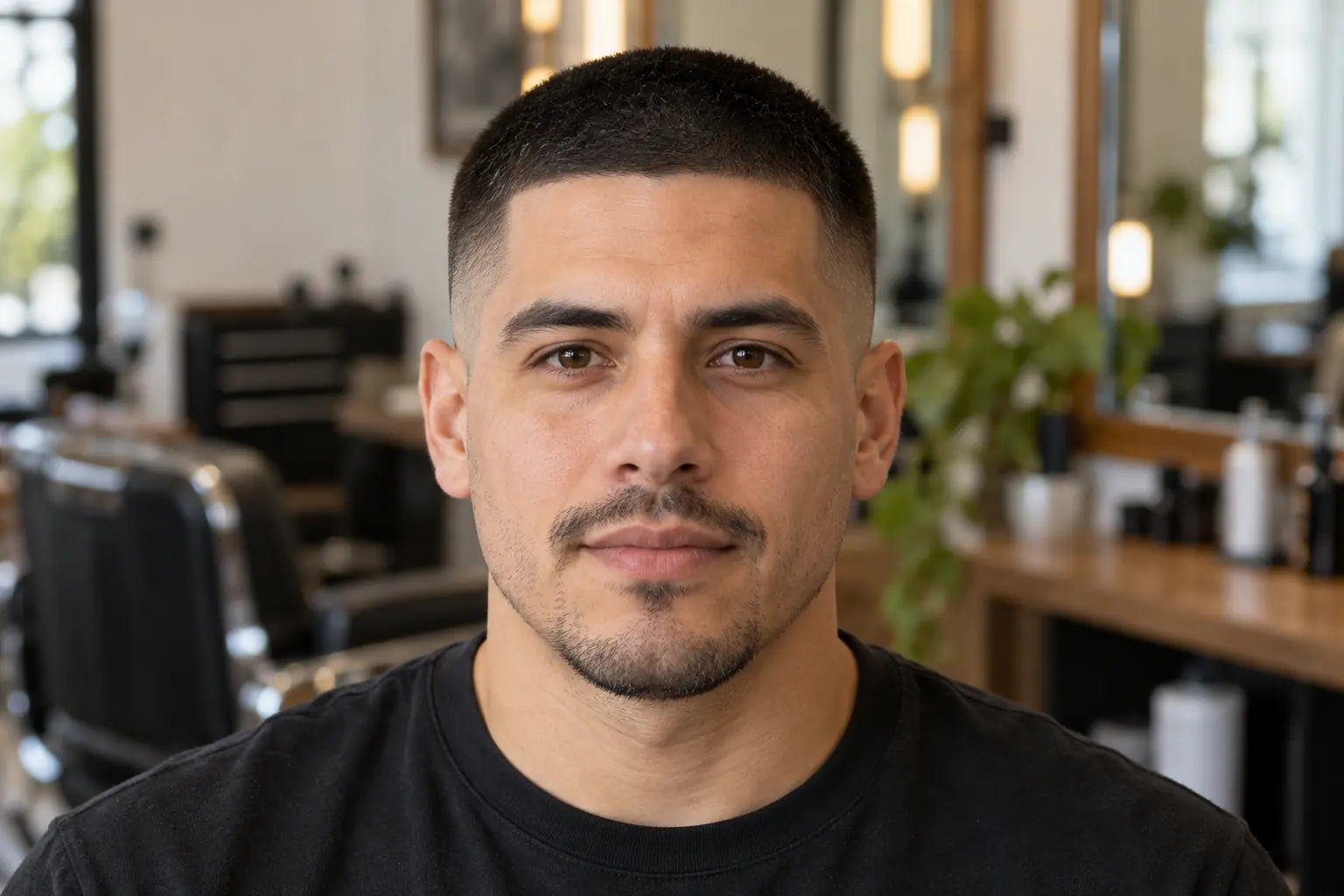
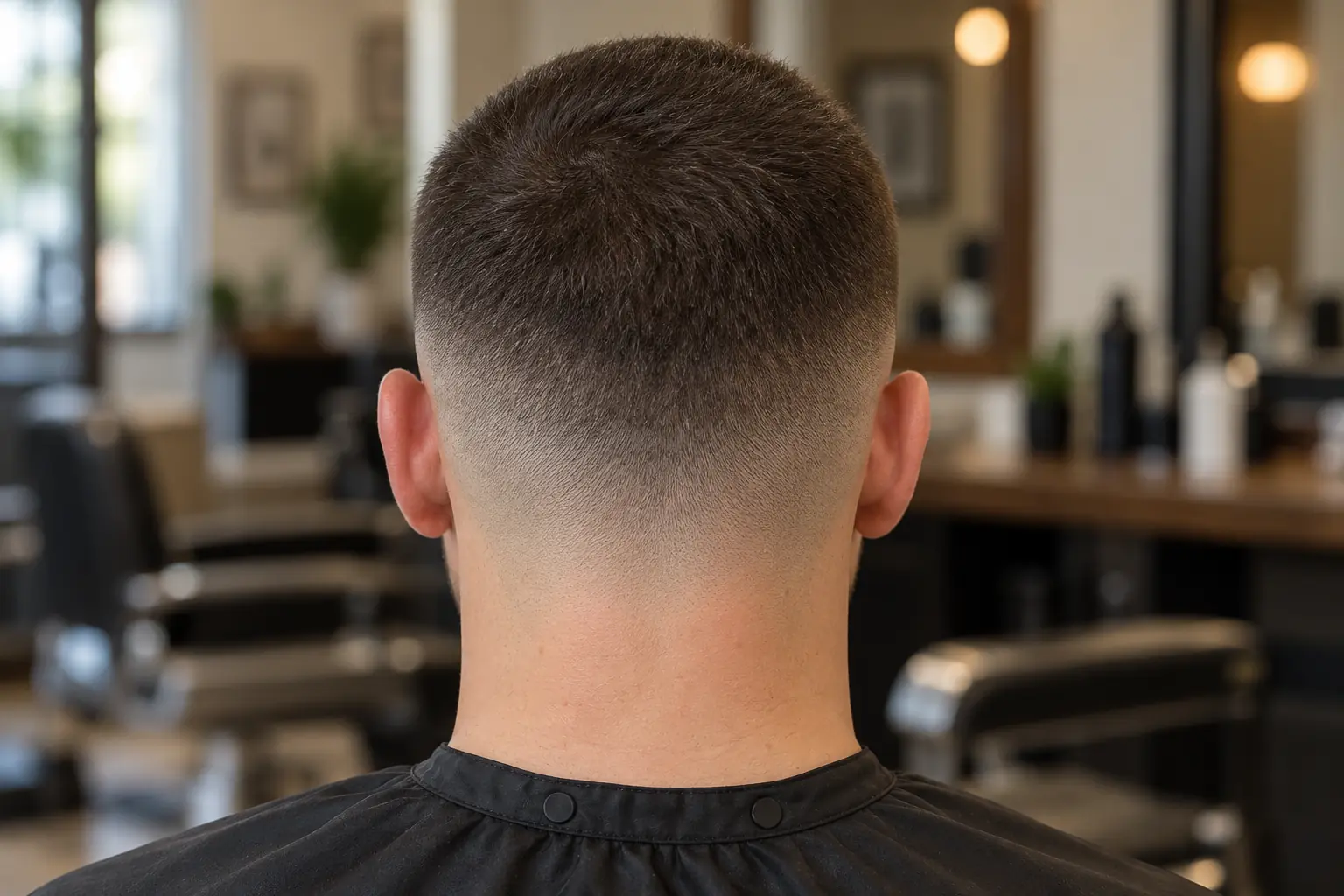
A plain buzz cut is one length everywhere. A buzz cut fade keeps that one length on top but blends the sides and back shorter, so the head looks narrower at the sides and the cut looks cleaner from a distance. If you only want the edges tidied, choose a taper instead (see below). To pick the length on top, see buzz cut guard sizes.
Buzz Cut Fade Styles
Buzz cut with a low fade
The fade starts just above the ear and the neckline, so most of the side keeps the top length. It is the most subtle and office-friendly version and grows out softly. For more on the height, see the low fade guide.
Buzz cut with a mid fade
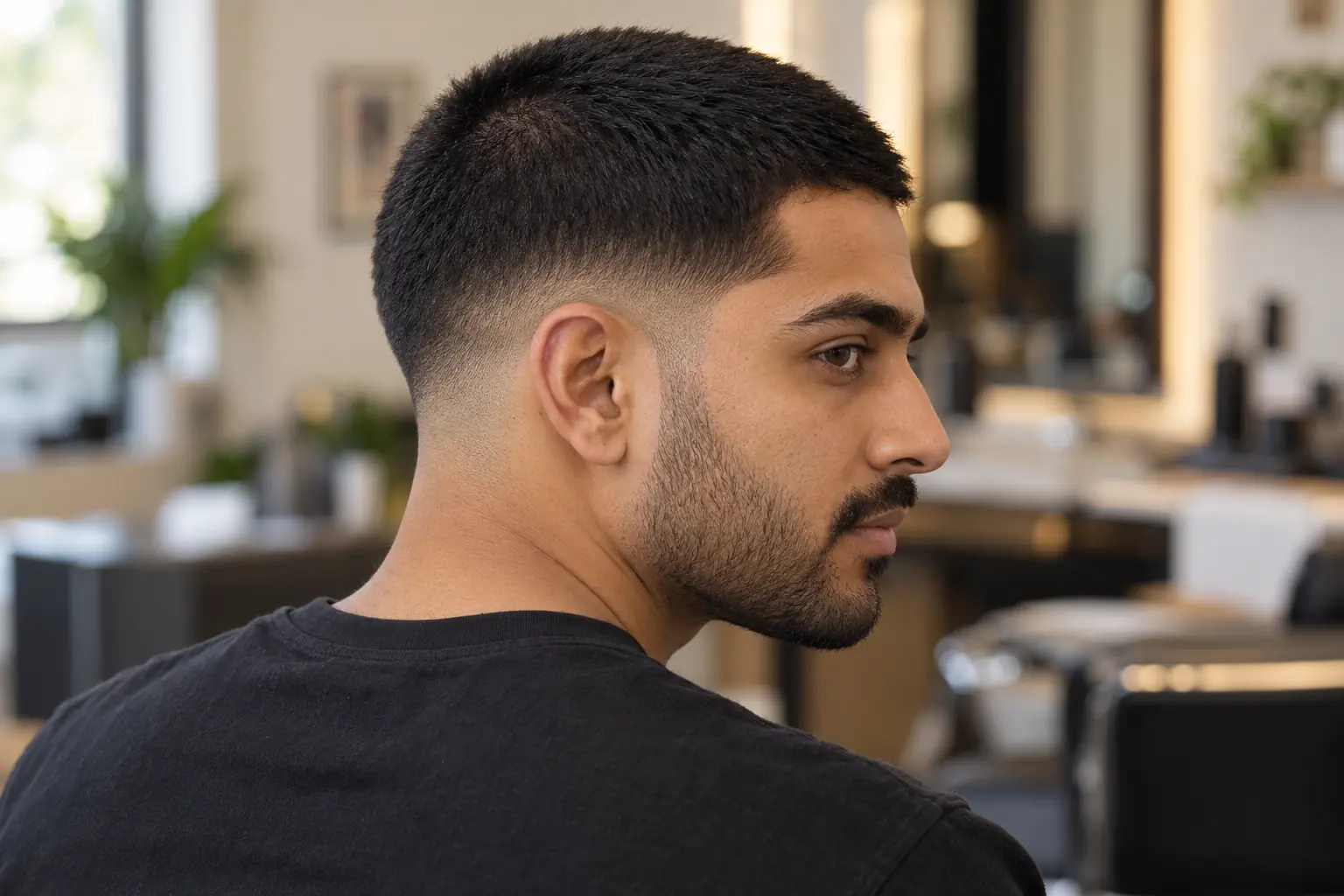
The fade starts around the temple, halfway up the side of the head. It is the most popular balance: clearly faded but not extreme. See the mid fade guide for how the height is measured.
Buzz cut with a high fade
The fade climbs to the temple and the corner of the head, so most of the side is very short and blends quickly into the top. It gives the most contrast and the most military look. See the high fade guide.
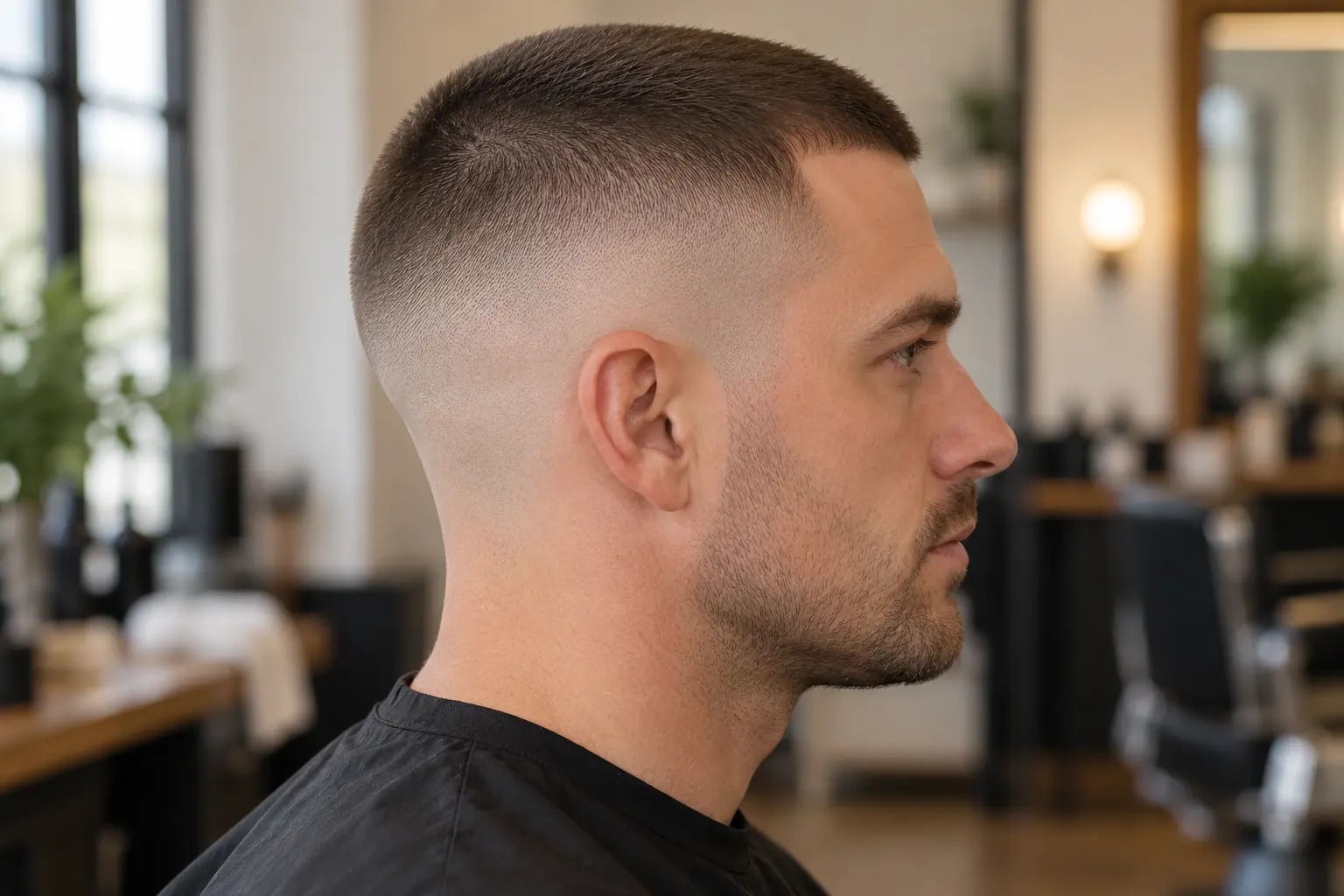
Buzz cut with a skin fade
Any of the heights above can be finished at skin (also called a bald fade), where the bottom of the fade is shaved with a foil shaver or razor. It looks the sharpest but shows growth within a week or two. See the skin fade guide.
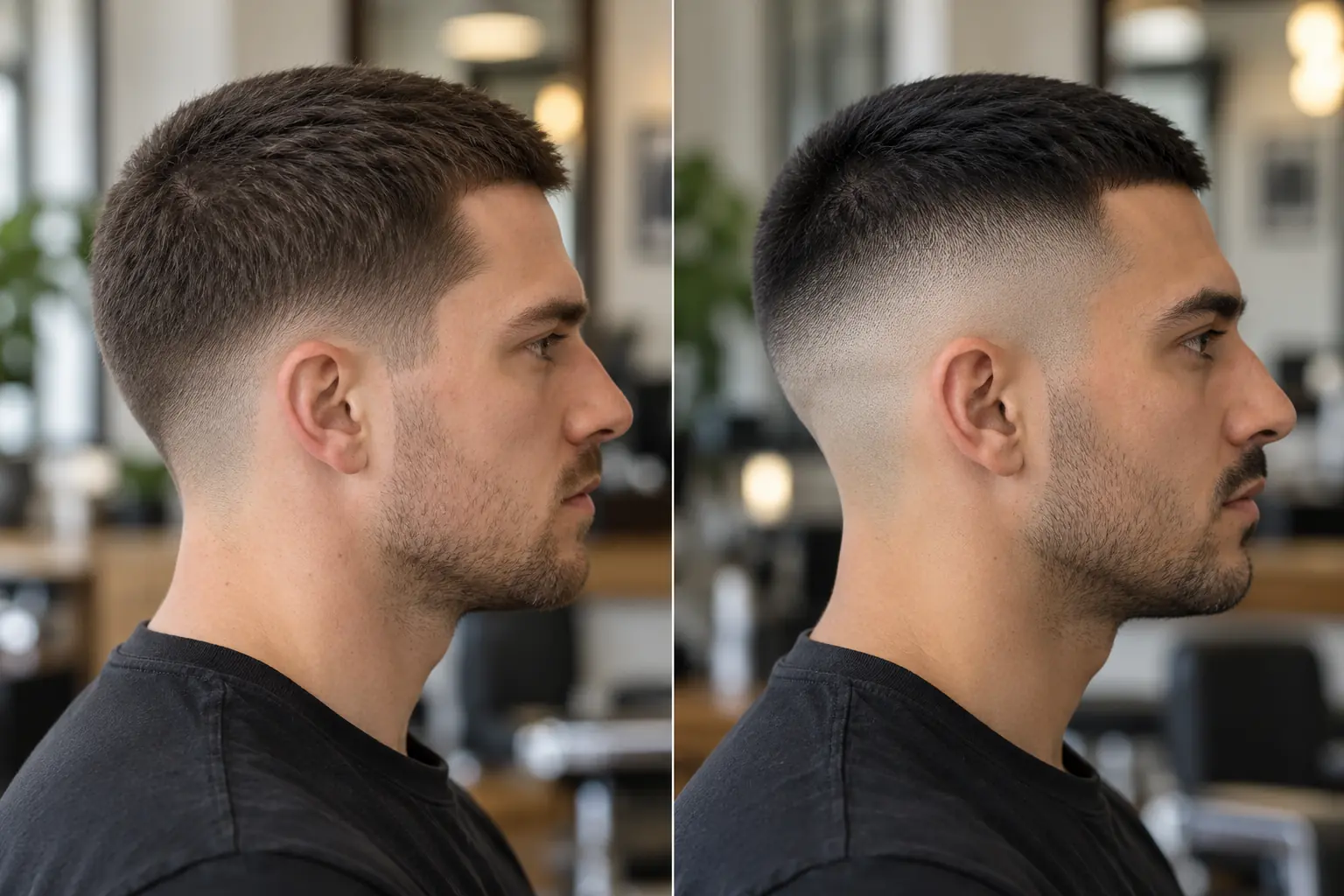
Long buzz cut fade
The top is left longer, around a #6 to #8 (3/4 to 1 inch), so it looks soft and dense rather than shaved. A long buzz cut fade suits people who want low maintenance without showing their scalp or head shape.
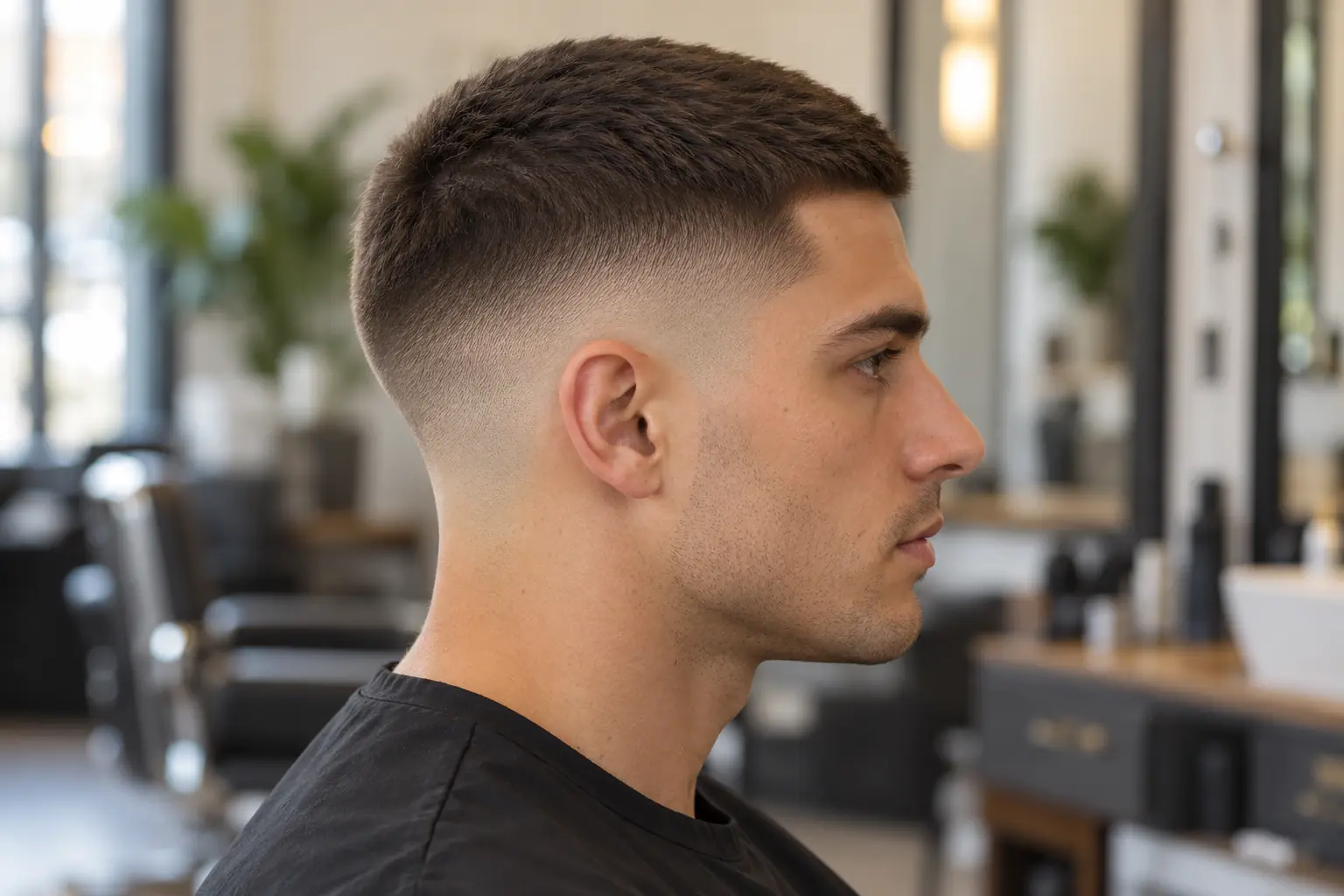
Buzz cut fade with a line-up
On coily hair, a buzz cut fade is often finished with a line-up at the forehead and temples. The short top shows the curl pattern, and the line-up makes the outline crisp. Ask the barber to follow your natural hairline rather than pushing it back. More options are in fade haircuts for Black men.
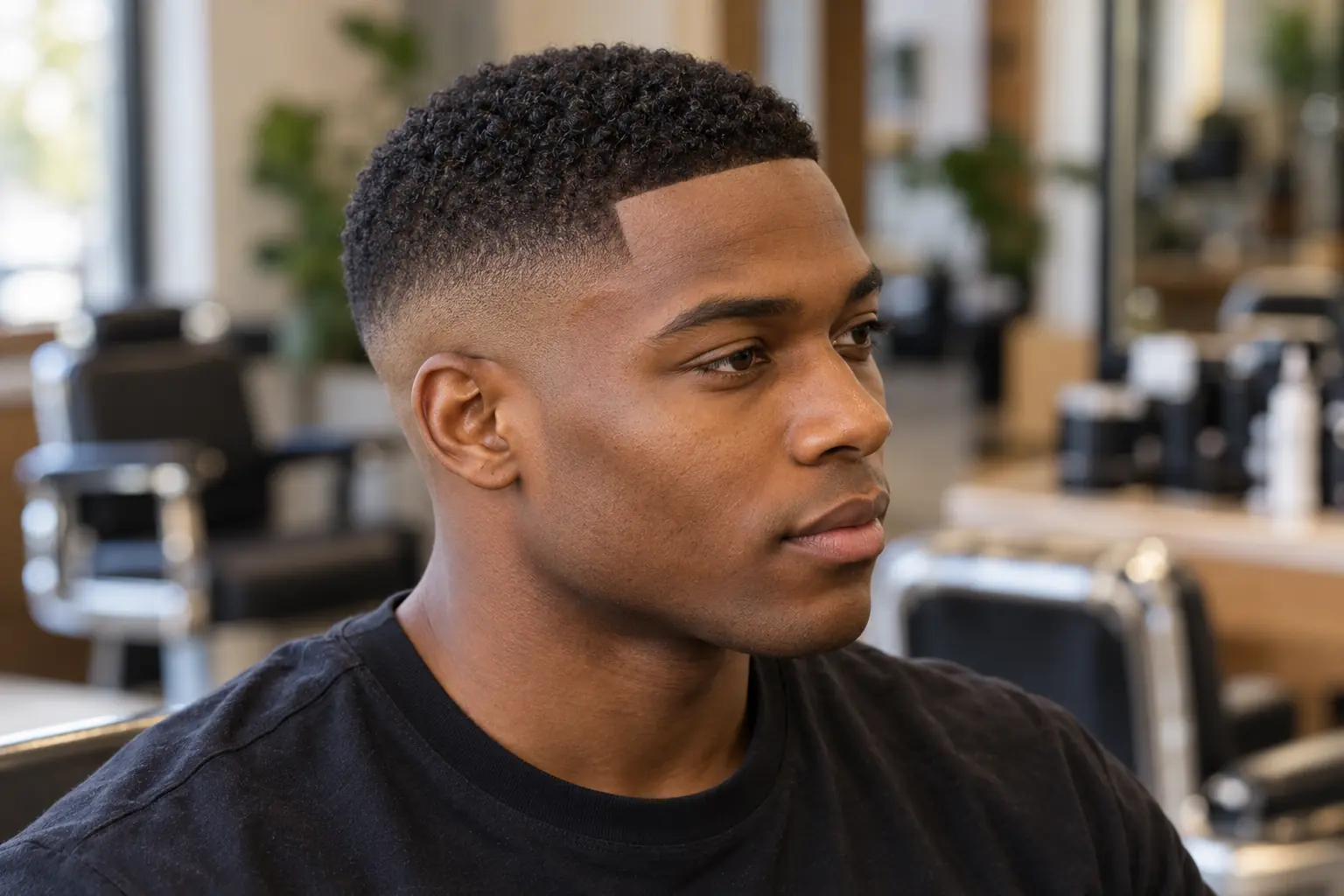
Buzz cut fade with a beard
Ask for the fade to come back up through the sideburn and blend into the beard, so there is no bare gap at the cheek. A short top with a full beard balances the face and works especially well on round or long face shapes.
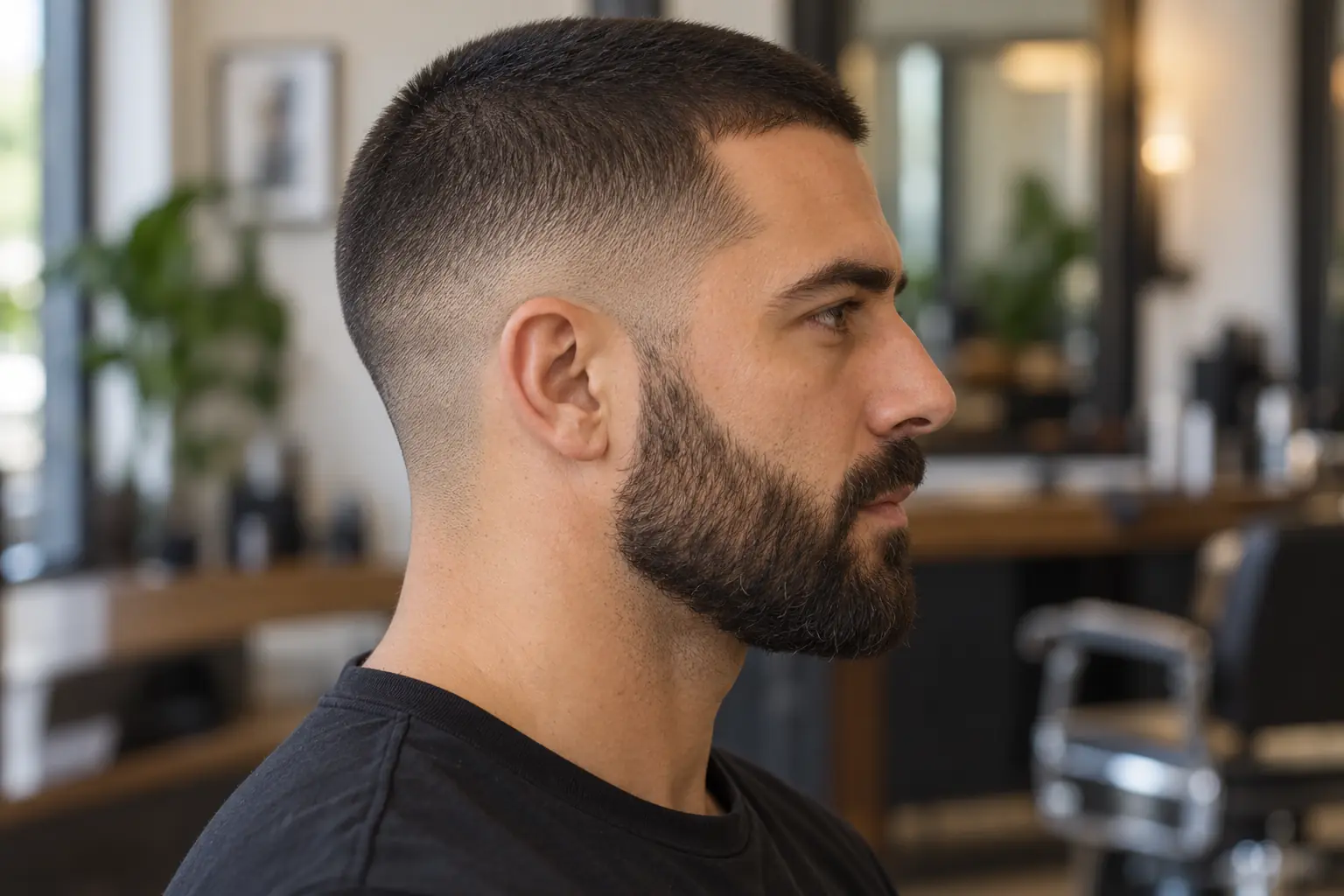
Buzz cut fade for a receding hairline
A short, even top reduces the contrast between the receded corners and the rest of the hairline, so a receding hairline looks tidy and intentional. Keep the fade low to avoid drawing attention to the temples. See more options in the best fades for a receding hairline.
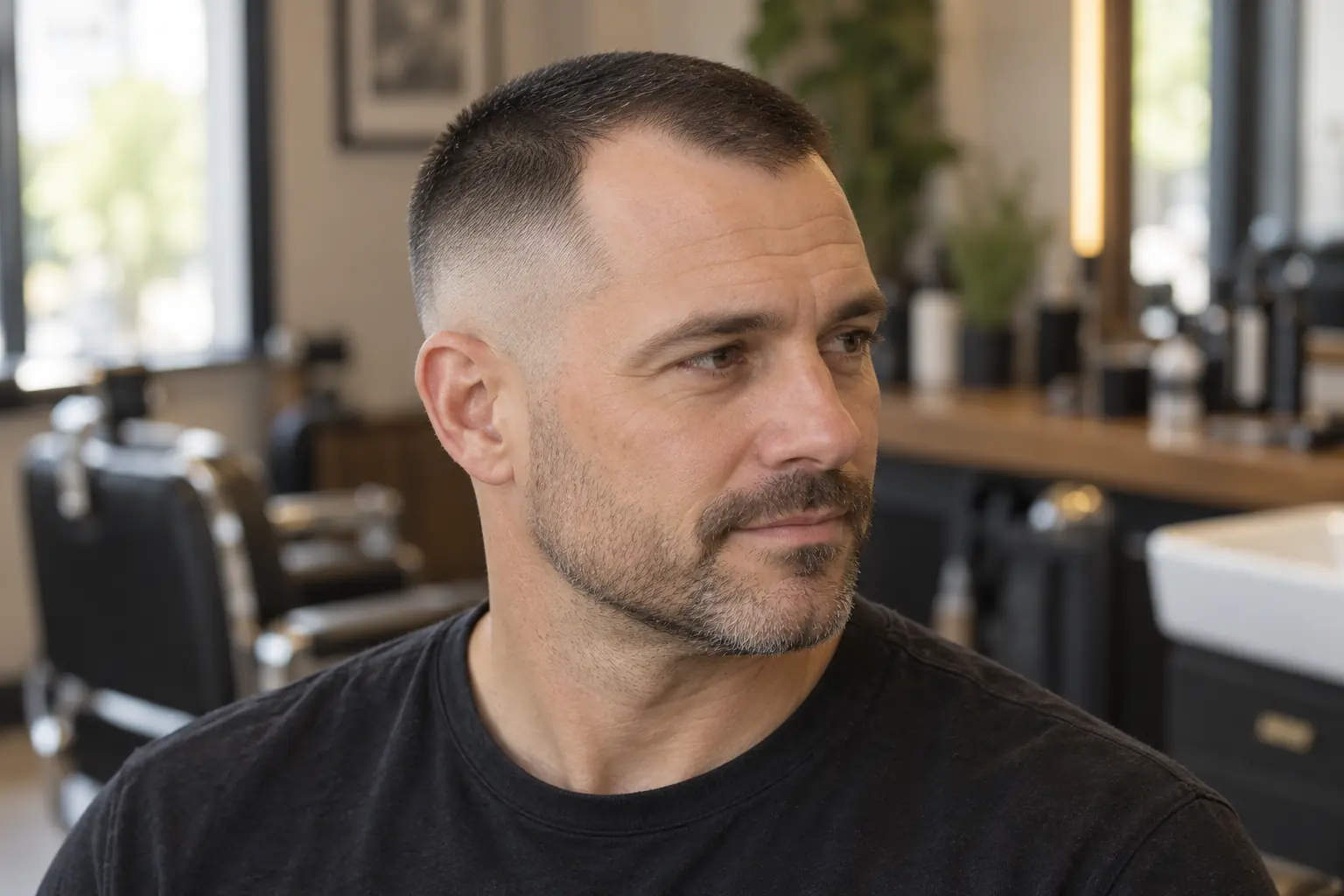
Buzz Cut Fade vs Buzz Cut Taper
A buzz cut taper (or low taper buzz cut) only shortens the sideburns and the neckline; the rest of the sides stay at the top length. A buzz cut fade takes the whole side and back shorter. Choose the taper for the most natural, low-key look and slower grow-out, and the fade for a sharper shape. Learn how tapers work in the taper fade guide.
| Buzz cut taper | Buzz cut fade | |
|---|---|---|
| Short area | Sideburns and nape only | All around the sides and back |
| Look | Natural, subtle | Sharp, high contrast |
| Grow-out | Slow and soft | Shows in 1 to 3 weeks |
Which Guard Numbers Are Used?
The most common setup is a #2 or #3 on top with the fade running from a #0 or skin at the bottom up through a #1 to meet the top. For a softer look, use a #4 on top and finish the fade at a #1 instead of skin. Guard lengths are listed in the haircut numbers guide.
| Look | Top | Fade |
|---|---|---|
| Classic short | #2 (1/4 in) | Skin or #0 to #1 |
| Everyday | #3 (3/8 in) | #0 to #2 |
| Soft | #4 (1/2 in) | #1 to #3 |
| Long buzz fade | #6 to #8 (3/4 to 1 in) | #1 to #4 |
What to Tell Your Barber
- Top: “A buzz on top with a #3 (or your number), all one length.”
- Fade height: “Low (or mid, or high) fade on the sides and back.”
- Finish: “Take it down to skin (or a zero, or a #1) at the bottom.”
- Edges: “Natural line-up” or “just tidy the neckline,” and say if you want the beard blended in.
Maintenance and Grow-Out
Hair grows about half an inch a month, so a skin fade looks soft within one to two weeks and needs a touch-up every two to three weeks. You can re-buzz the top at home between visits with the same guard. Short, faded sides expose the scalp to the sun, so use sunscreen on them in summer. If a skin fade leaves bumps on coily hair, the American Academy of Dermatology advises shaving in the direction the hair grows, and a zero finish is a gentler alternative.
Want a little more shape on top? A crew cut keeps the front slightly longer while staying just as easy.
Frequently Asked Questions
What is a buzz cut fade?
It is a buzz cut with one even length on top and the sides and back faded shorter, down to a short guard, a zero or skin.
What guard is a buzz cut fade?
Most use a #2 to #4 on top and fade the sides from a #0 or skin up to a #1 or #2.
Is a low fade or high fade better with a buzz cut?
A low fade is more subtle and grows out softly; a high fade gives more contrast and a sharper, military look. Start low if you’re unsure.
How often should I get a buzz cut fade touched up?
Every two to three weeks for a skin fade and every three to four weeks for a softer fade.
Can I do a buzz cut fade at home?
You can keep the top buzzed at home, but a smooth fade is hard to cut on your own head. Most people get the fade done by a barber and re-buzz the top themselves between visits.
Is a buzz cut fade professional?
Yes. A low or mid fade with clean edges is accepted in almost every workplace.
Related Guides
- Buzz Cut Guard Sizes
- Crew Cut
- Skin Fade Haircut
- Low Fade Haircut
- Textured Crop
- Fade Haircuts for Men
 Textured Crop Haircut: Styles, Fades and How to Ask Your Barber
 Boosie Fade: What It Is, 7 Styles and How to Ask for It
 Crew Cut: Classic, Fade and Textured Styles and What to Ask For