Modern Mullet: Styles, Fade Options and How to Ask Your Barber
On this page
- What Is a Modern Mullet?
- Modern Mullet Fade Options
- Short vs Long Modern Mullet
- Modern Mullet by Hair Type
- More Modern Mullet Styles to Ask For
- Modern Mullet vs Wolf Cut
- How to Grow a Mullet
- What to Tell Your Barber
- Styling and Maintenance
- Common Modern Mullet Mistakes
- Frequently Asked Questions
- Related Guides
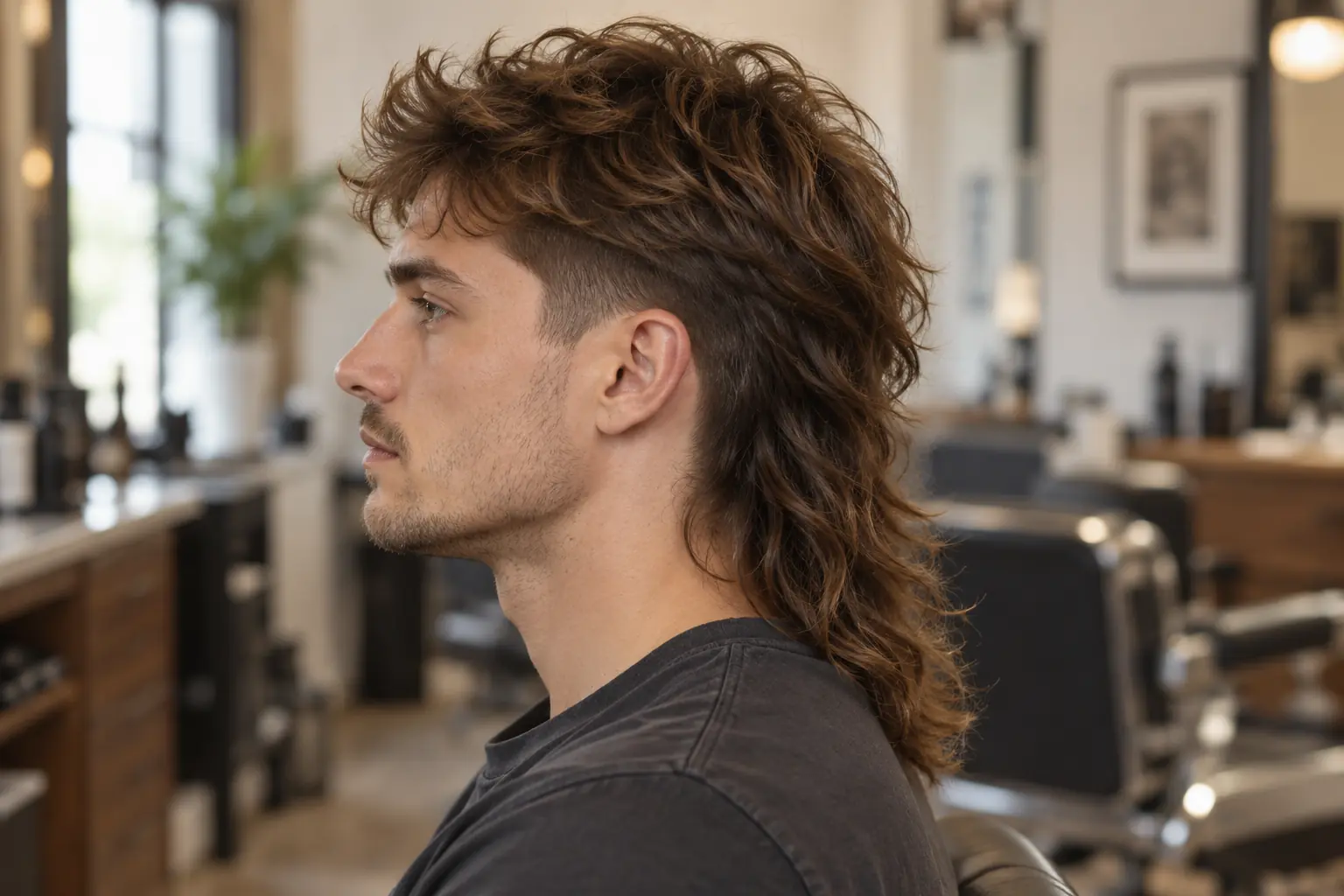
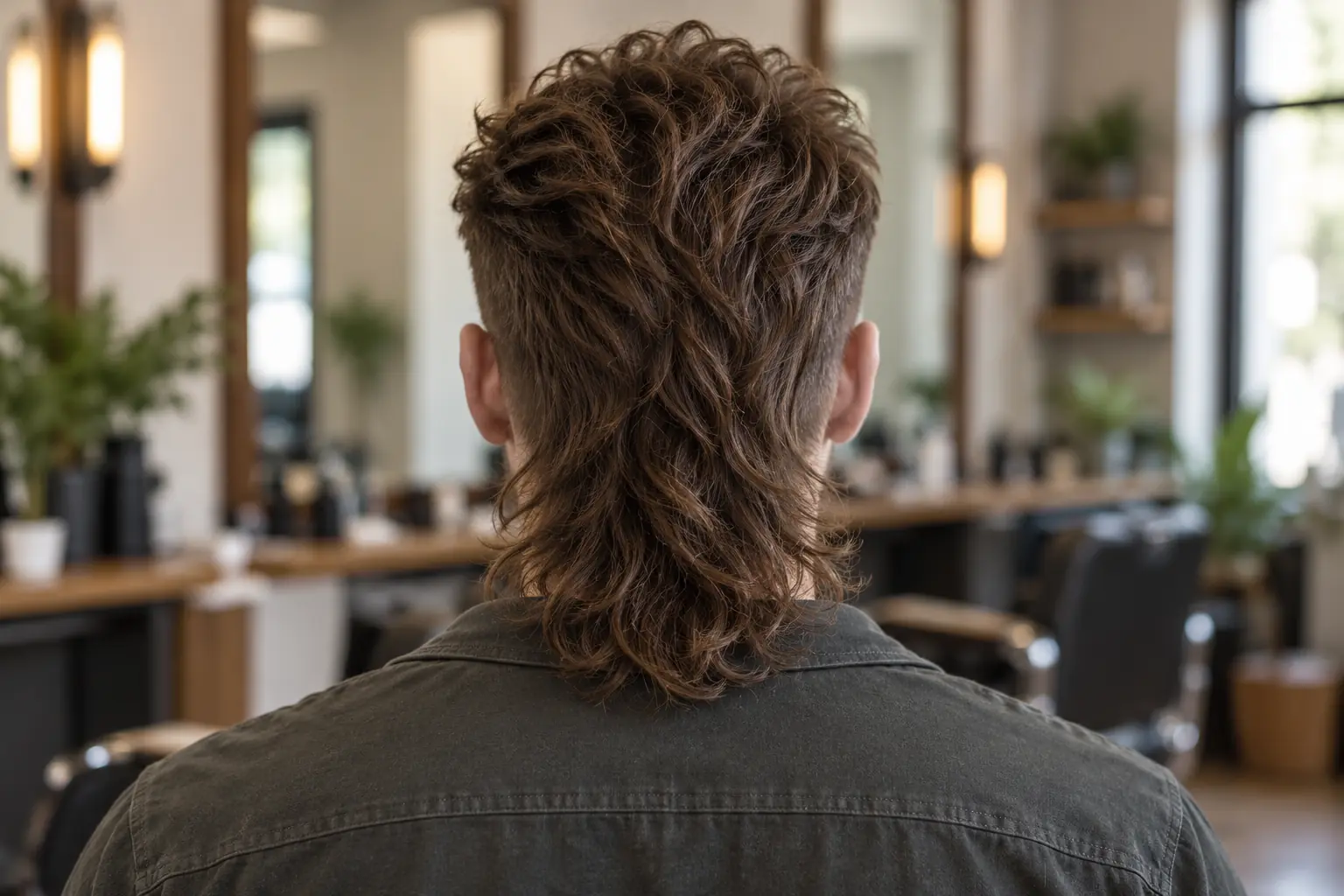
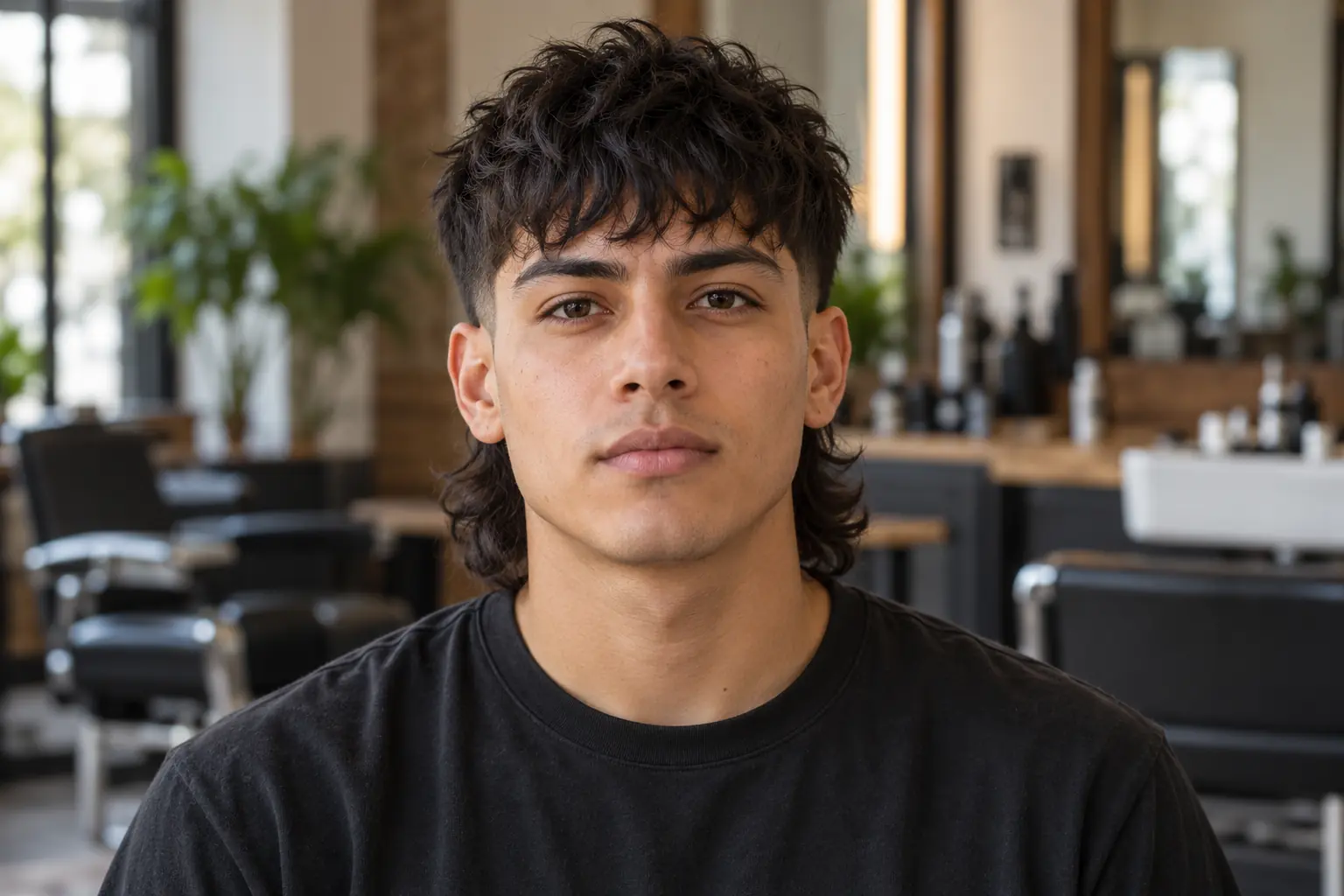
A modern mullet is a haircut with a textured top, short blended sides and noticeably longer hair at the back. Unlike the 1980s version, the sides are faded or tapered and the top is cut with texture, so the change from short to long looks smooth instead of blocky. You choose the side blend (taper, burst or drop fade), how long the back goes and how you style the top.
If you like the length but want it more even all around, with pieces falling over the ears and forehead, the warrior cut is the closest alternative.
What Is a Modern Mullet?
Every mullet is short at the front and sides and long at the back. What makes it modern is the blend. The classic mullet had one-length sides and a hard jump to the long back. The modern mullet haircut fades or tapers the sides, keeps texture on top and lets the back flow, so it looks deliberate and grows out more evenly.
Modern mullet at a glance
| Feature | Modern mullet |
|---|---|
| Top | 2 to 4 inches, textured, often a fringe |
| Sides | Taper, burst fade or drop fade |
| Back | 1 to 6 inches past the collar |
| Hair needed to start | About 2 inches at the back |
| Side touch-up | Every 3 to 5 weeks |
| Best hair types | Wavy and curly; straight works with texture spray |
| Classic vs modern | Classic: hard jump to the long back. Modern: blended sides and a textured top |
Modern Mullet Fade Options
The side blend is the biggest choice. It decides how bold the mullet looks and how much maintenance it needs.
Low taper mullet
The softest option. Only the sideburn and the edge around the ear get short, and the sides keep some length, so the mullet looks natural and grows out gently. Ask for a low taper if you work in an office or want your first mullet to be subtle. The taper fade guide explains the heights.
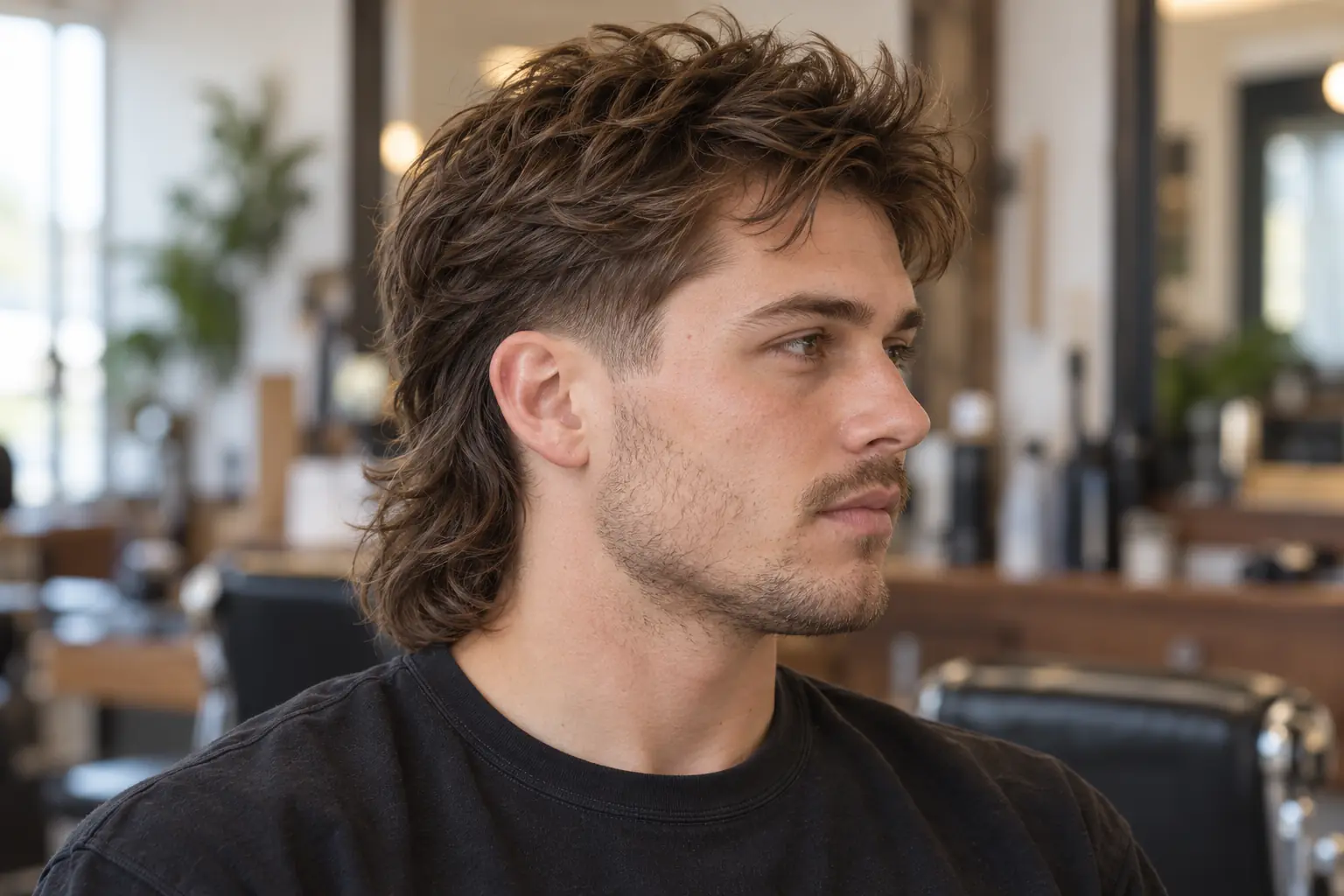
Burst fade mullet
The most popular mullet fade. The blend curves in a half-moon around the ear and stops before the back, so the tail stays full. It is bolder than a taper and shows a clean arc from the side. Our burst fade mullet guide covers back lengths, textures and the exact barber script.
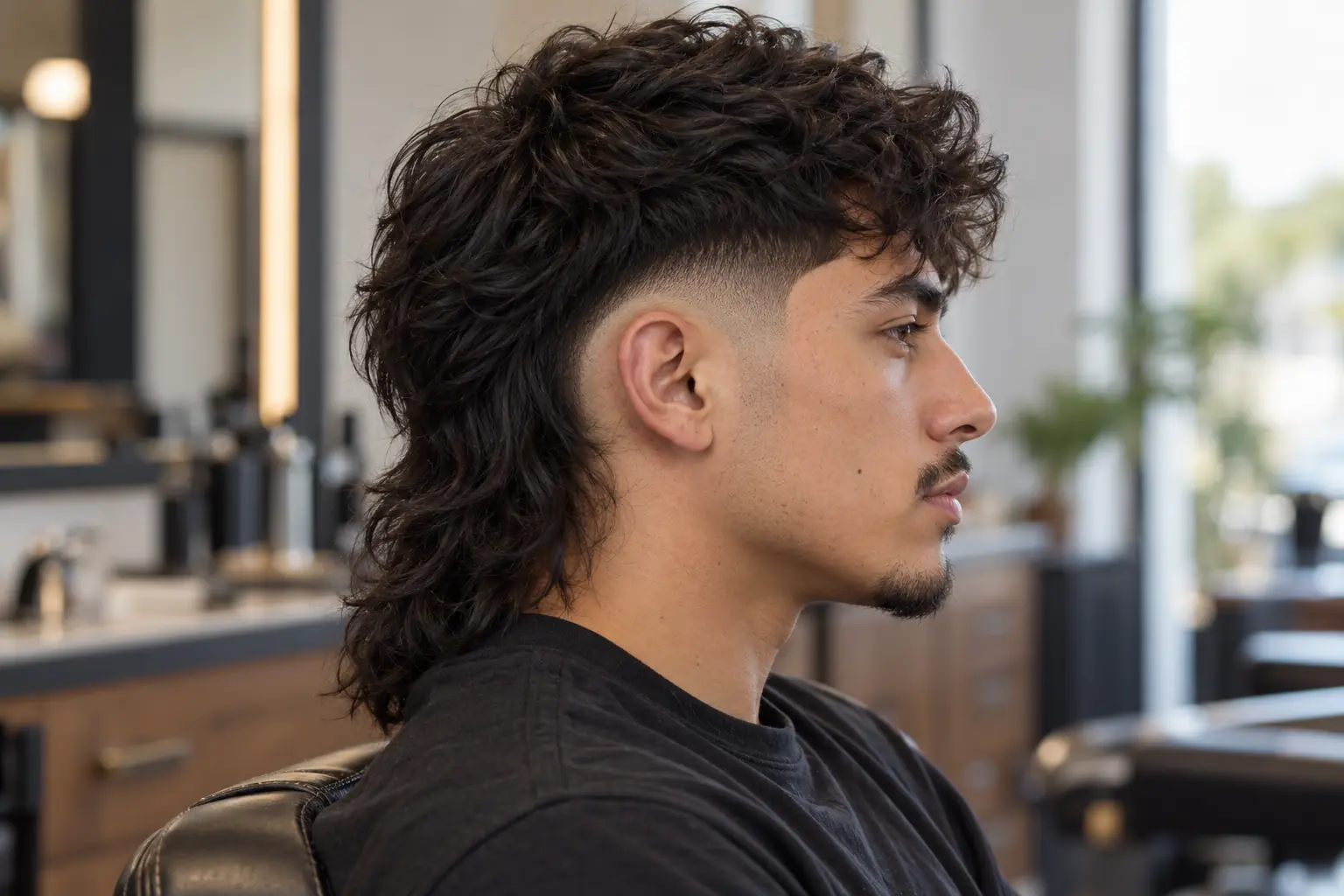
Drop fade mullet
The fade line dips down behind the ear toward the nape, framing the tail from the side. It suits curly and coily hair, where a sharp curve stands out. See how a drop differs from a burst in burst fade vs drop fade.
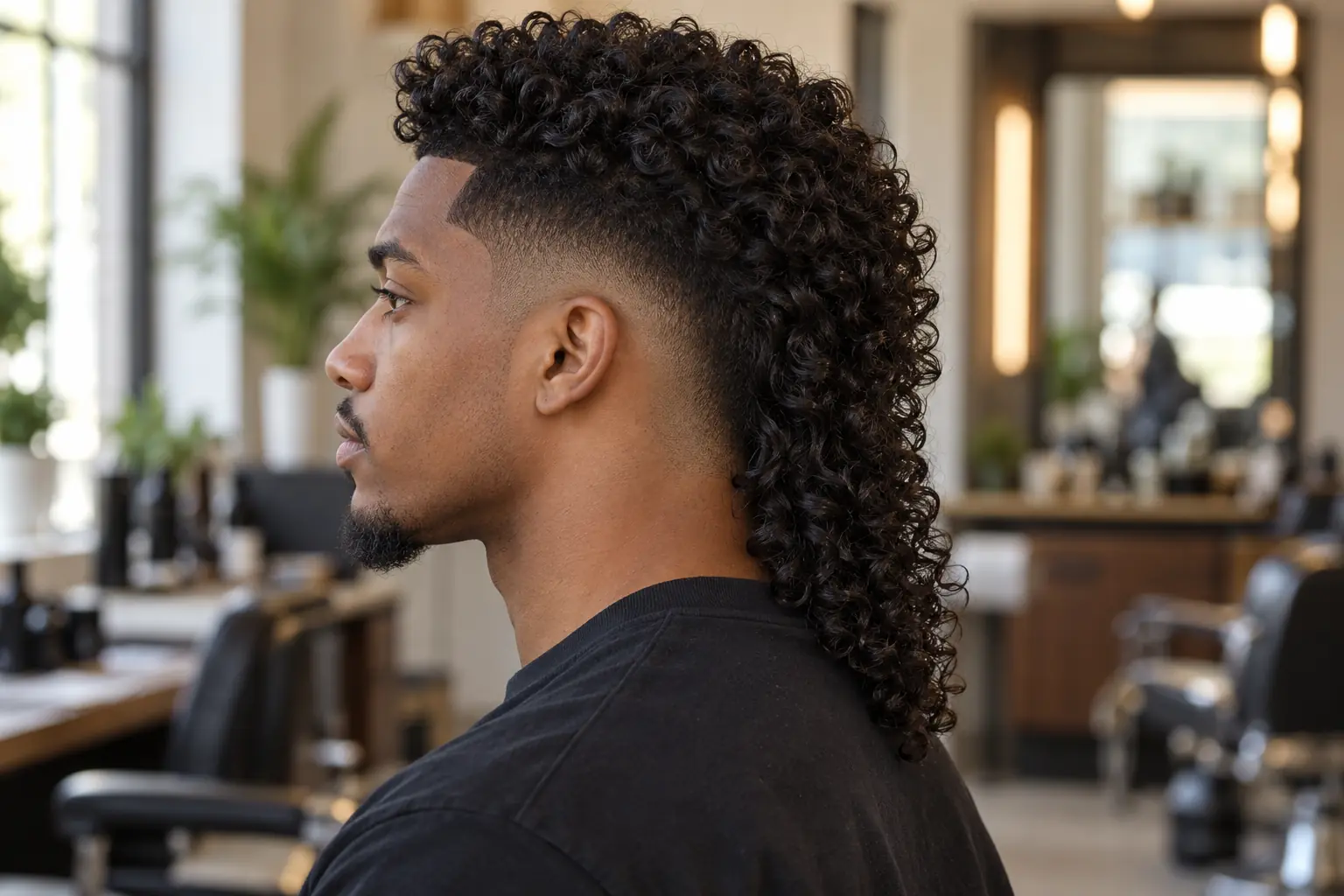
Mohawk mullet
A burst fade on both sides leaves a strip of longer hair from the front to the back, so the top and the tail connect into one line. It is the boldest version and needs styling every day.
Soft mullet with no fade
The sides are cut with scissors instead of clippers and simply kept shorter than the back. It is the easiest mullet to grow out of, and a good test before committing to a fade.
Short vs Long Modern Mullet
How far the back goes past the collar sets how loud the mullet looks.
| Length | Back past the collar | Looks like |
|---|---|---|
| Short mullet | 0 to 1 inch | A textured crop with a little extra at the back; office-friendly |
| Medium modern mullet | 2 to 3 inches | The classic modern look; clearly a mullet from the side |
| Long mullet | 4 to 6 inches | A statement cut; works best with waves or curls |
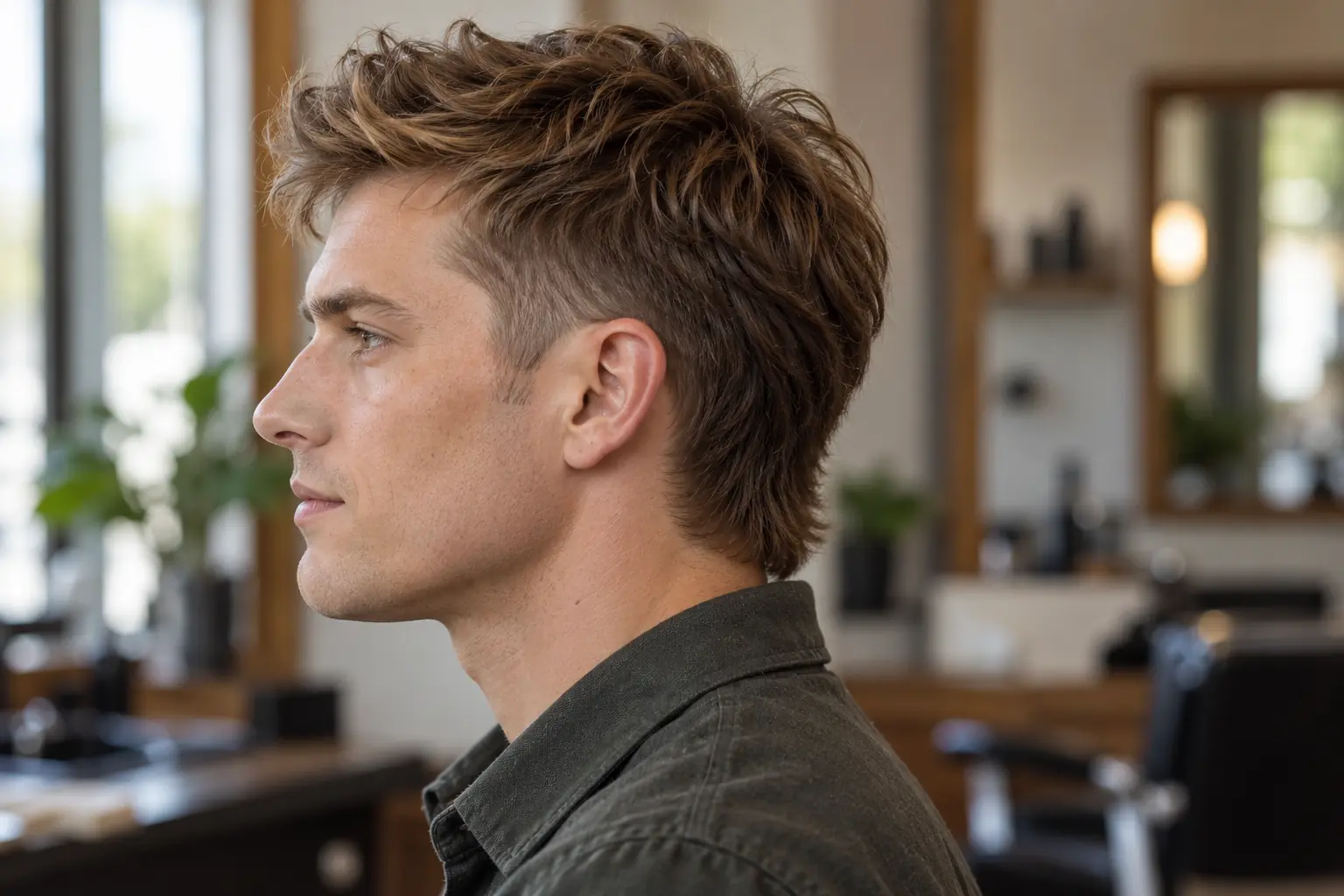
If you are unsure, start short. You can always let the back grow, while cutting it shorter means losing months of growth.
Modern Mullet by Hair Type
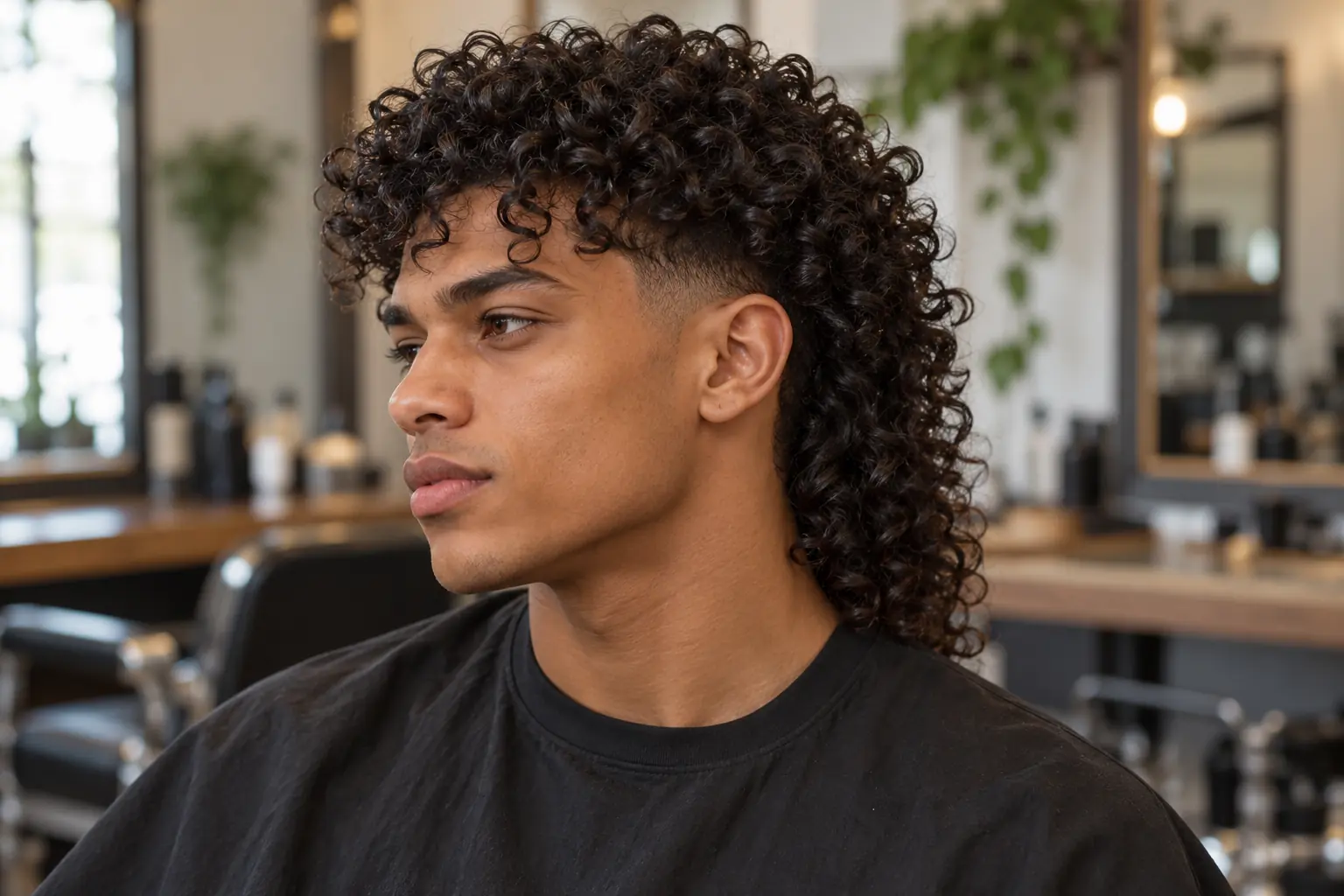
Curly mullet
Curls make the best mullets because the back keeps its shape and volume on its own. Keep 3 to 4 inches on top so the curls can form, and pair it with a low taper or drop fade. Curly mullets need less styling than straight ones: a leave-in or curl cream is usually enough.
Straight hair mullet
Straight hair can fall flat and look like one length, so ask for point cutting on top and at the back for texture. A light sea salt spray before blow-drying adds the grip it needs. This is also the classic Asian and Korean mullet look: piecey top, light fringe and a straight, sleek back.
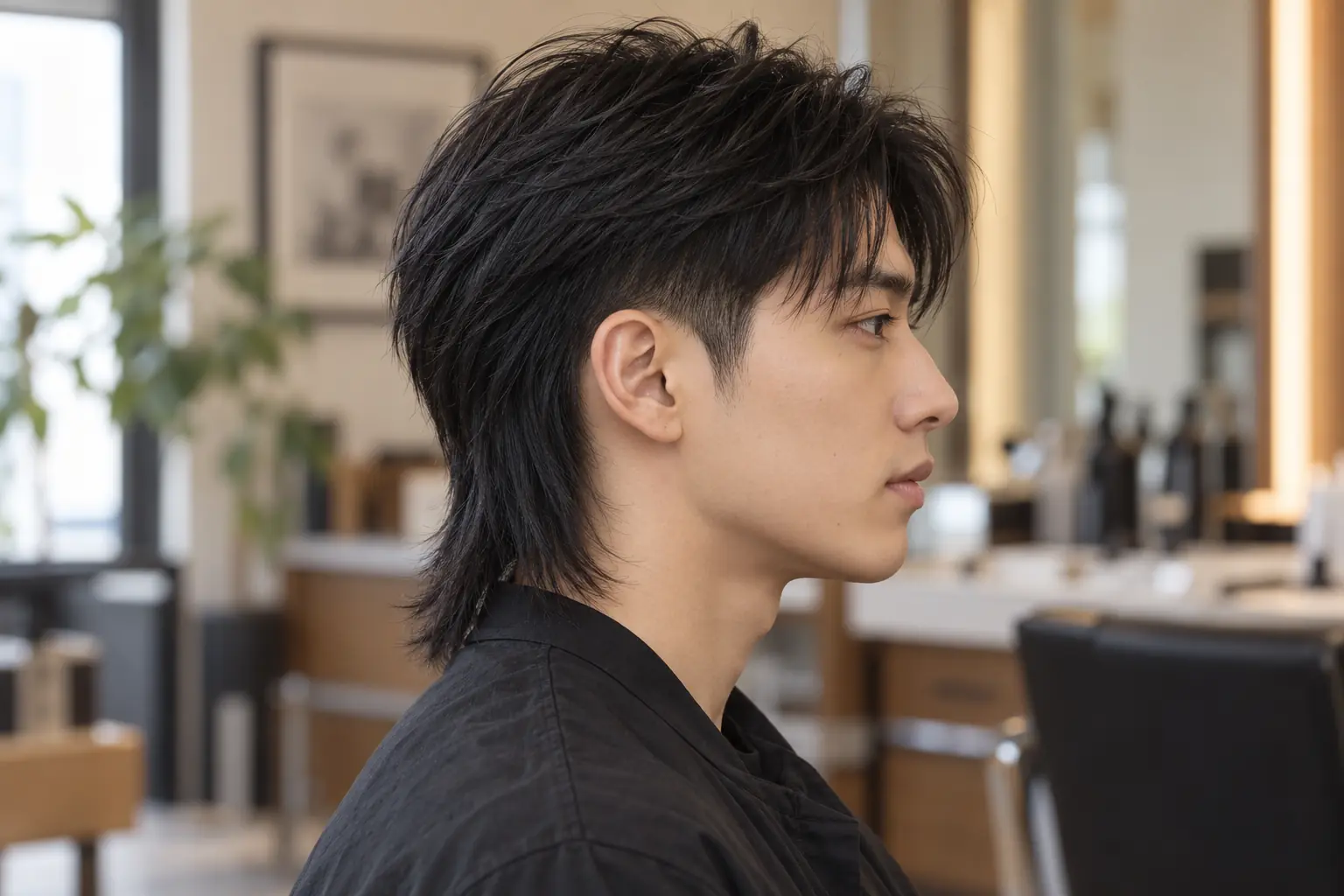
Wavy hair and the middle part mullet
Wavy hair gives the back natural movement. Grow the top to 4 or 5 inches and it falls into a middle part with curtain-style waves, one of the most searched mullet styles right now.
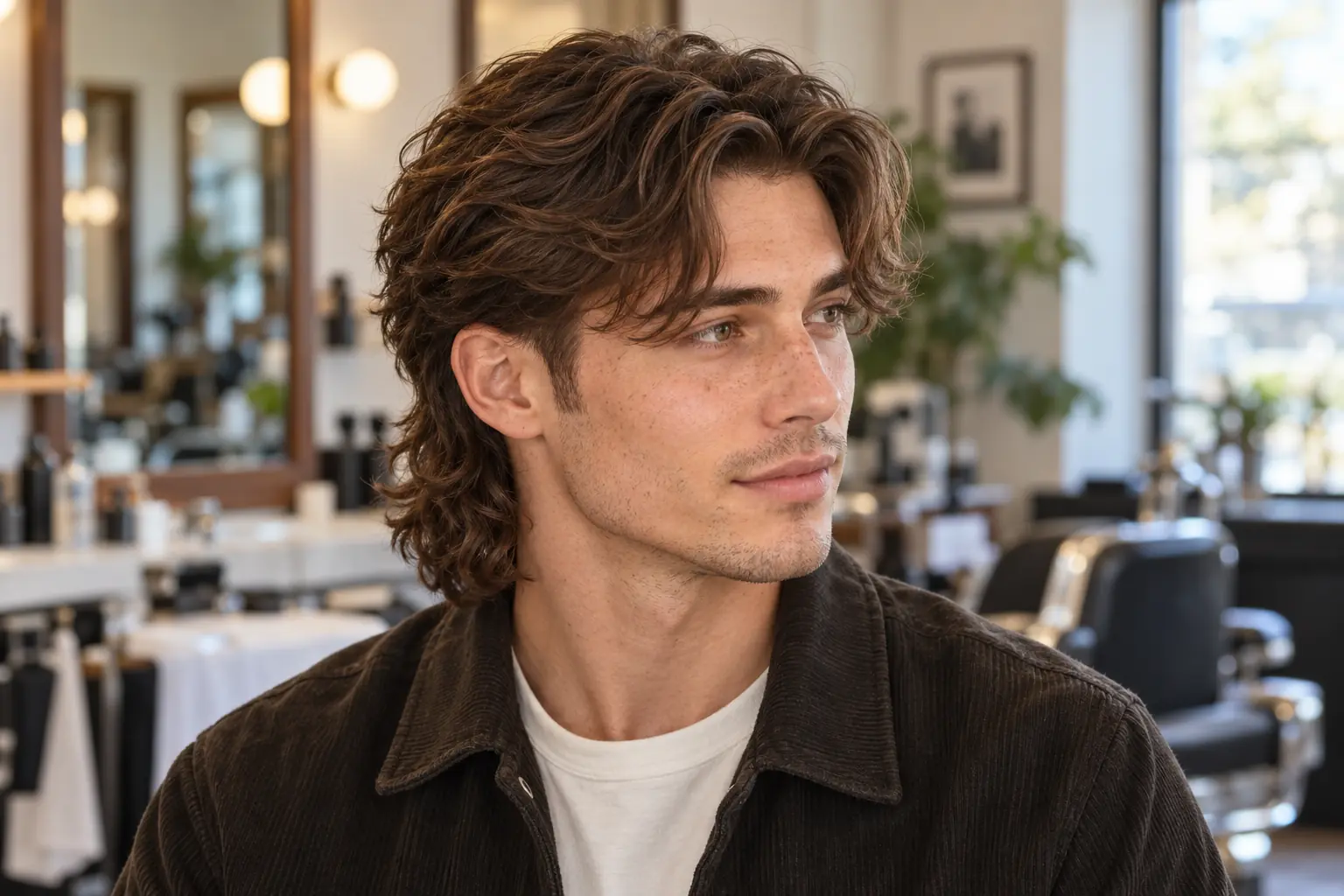
For more wavy options, see the wavy burst fade mullet.
Thick hair
Thick hair can make the back look like a block. Ask your barber to thin the back with texturizing so it tapers toward the ends instead of sitting heavy on the neck.
More Modern Mullet Styles to Ask For
- Wolf cut mullet: a shaggy, layered top with a clear mullet back. A middle ground if you can’t choose between the two.
- Shaggy mullet: choppy layers all through the top and back for a messy, lived-in look. Best on wavy hair.
- Edgar mullet: the blunt, straight-across fringe of an Edgar cut with faded sides and a longer back.
- Baseball mullet: a medium back that flows out from under a cap. Keep the sides tapered so the cap sits clean.
- 80s mullet: the original. One-length sides, no fade and a long back; worn today mostly as a throwback.
- Kids mullet: a short back, scissor-cut sides and a shadow finish if any clippers are used, so it stays gentle on young skin.
Modern Mullet vs Wolf Cut
Both keep length at the back. A mullet has a clear contrast: short sides and a longer back. A wolf cut is shaggier, with layers all over and more length on the sides and top, so the change is gradual. If you want short sides, choose the mullet; if you want a softer, layered shape, see the wolf cut for men.
How to Grow a Mullet
Hair grows about half an inch a month, so plan the back first and keep the sides tidy while it grows.
- Month 0: stop cutting the back. Keep the sides and top at your usual length.
- Months 1 to 2: get the sides tapered or faded and the top textured; ask the barber to only clean the neckline at the back.
- Months 3 to 4: the back reaches the collar. This is a short mullet and the first point where it reads as a mullet.
- Months 5 to 6: the back sits 2 to 3 inches past the collar: a full modern mullet. From here, trim the ends every 6 to 8 weeks.
What to Tell Your Barber
- Sides: “A low taper (or burst, or drop fade) on the sides. Don’t take the fade through the back.”
- Finish: “Shadow, zero or skin at the bottom.”
- Top: “About 3 inches, textured and point cut, falling forward” (or “into a middle part”).
- Back: “Keep the length at the back, just clean up the ends. I want it about 2 inches past the collar.”
- Blend: “Connect the top to the back so there is no hard step.”
Bring a side photo and a back photo. Mullet length is easy to misread from the front.
Styling and Maintenance
- Daily: towel-dry, add sea salt spray or a light cream, rough-dry with your fingers. Finish the top with a little matte paste.
- Curly hair: skip the blow-dryer and scrunch in a curl cream instead.
- Sides: touch up every 3 to 5 weeks, or every 2 to 3 weeks for a skin fade.
- Back: trim the ends every 6 to 8 weeks so the tail stays shaped, not stringy.
A mullet usually costs the same as a regular fade at most shops. See our fade cost guide for typical prices.
Common Modern Mullet Mistakes
- The fade goes through the back. Then it is not a mullet. Say “stop the fade before the back.”
- No texture on top. A flat top with a long back looks like the 1980s version. Ask for point cutting.
- Cutting the back while it grows. Let the back grow for at least three months before judging the shape.
- Too much contrast too soon. A high skin fade with a short back looks unfinished. Start with a low taper or burst.
Frequently Asked Questions
What is a modern mullet?
A modern mullet is a haircut with a textured top, short faded or tapered sides and a longer back. The blended sides and textured top make it look smoother than the 1980s mullet.
How long does hair need to be for a mullet?
About 2 inches at the back to start a short mullet. For a full modern mullet, with the back 2 to 3 inches past the collar, most people need 5 to 6 months of growth.
What fade goes best with a mullet?
A burst fade is the most popular because it keeps the back full. A low taper is the most subtle, and a drop fade suits curly hair best.
Is a mullet good for curly hair?
Yes. Curly hair is the easiest type for a mullet because the back holds its shape and volume without much styling.
How often should I cut a modern mullet?
Touch up the sides every 3 to 5 weeks and trim the back every 6 to 8 weeks.
What is the difference between a mullet and a wolf cut?
A mullet has short sides and a longer back. A wolf cut is layered all over and keeps more length on the sides, so the shape is softer and shaggier.
Related Guides
- Burst Fade Mullet
- Wavy Burst Fade Mullet
- Wolf Cut for Men
- Taper Fade
- Burst Fade vs Drop Fade
- All Fade Haircuts for Men
 Textured Crop Haircut: Styles, Fades and How to Ask Your Barber
 Boosie Fade: What It Is, 7 Styles and How to Ask for It
 Buzz Cut Fade: Low, Mid, High and Skin Fade Styles With Photos
2 Comments