Buzz Cut Guard Sizes: Every Length From #0 to #16, With Photos
On this page
- Buzz Cut Guard Sizes Chart
- Guard by Guard: What Each Buzz Cut Looks Like
- Should You Get a Buzz Cut?
- Which Guard Should You Choose?
- Buzz Cut with a Fade
- Buzz Cut vs Crew Cut
- How Often to Re-Buzz
- How to Make a Buzz Cut Look Good
- How Long Does a Buzz Cut Take to Grow Out?
- How to Buzz Your Own Hair
- Frequently Asked Questions
- Related Guides
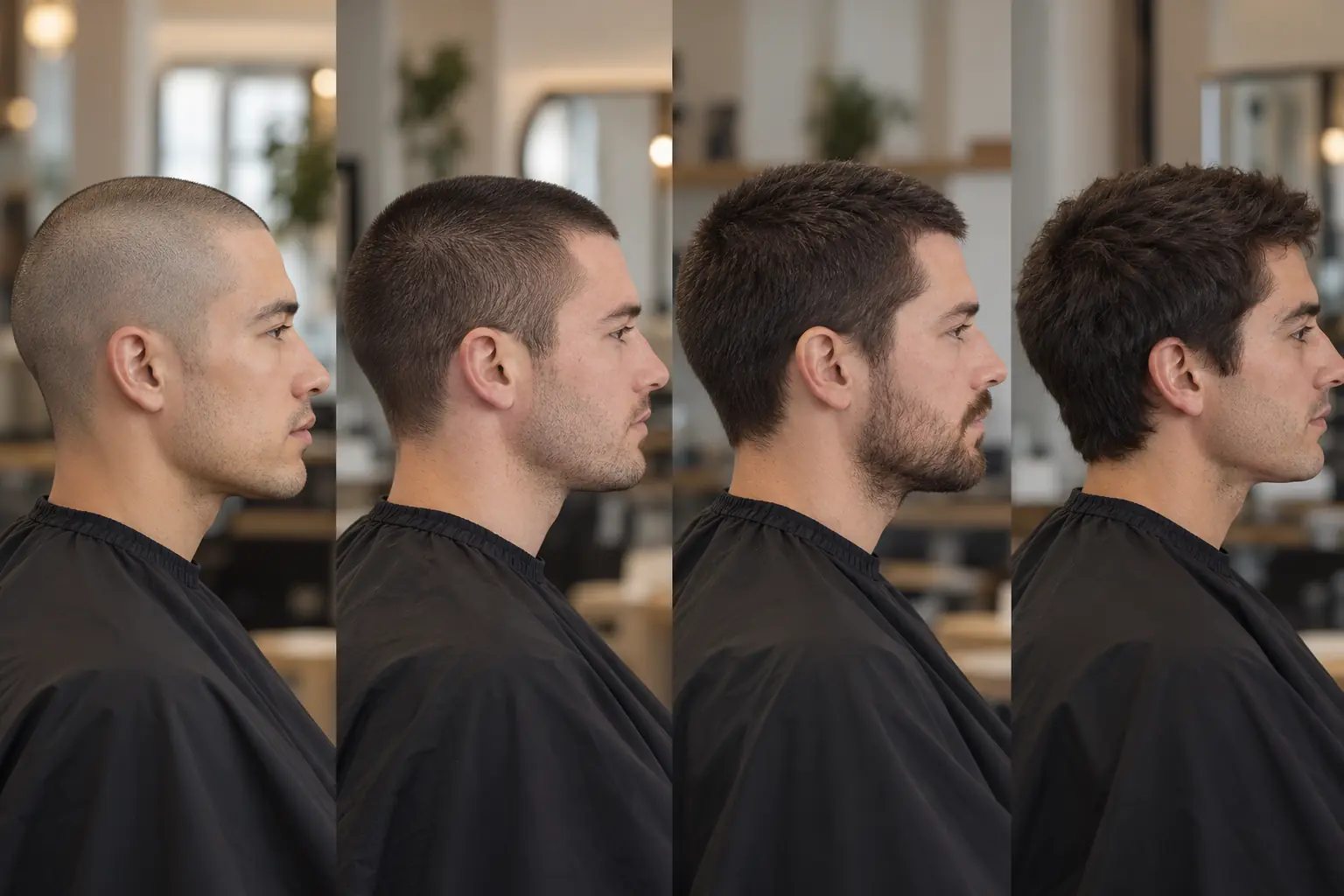
A buzz cut guard number tells you how much hair the clipper leaves: on standard guards, each number adds one-eighth of an inch. A #1 leaves 1/8 inch, a #4 leaves 1/2 inch and a #8 leaves 1 inch. The guard you choose decides how much scalp shows, how bold the cut looks and how often you need to re-buzz.
Want the sides shorter than the top? See the buzz cut fade for low, mid, high and skin fade versions.
Buzz Cut Guard Sizes Chart
Most clipper guard numbers follow the same rule: the number divided by 8 is the length in inches. Exact lengths vary slightly by brand, so treat these as a guide. Wahl, for example, lists the #1 at 1/8 inch (3 mm) and the #4 at 1/2 inch (13 mm) in its clipper cutting lengths guide, and sells a #10 (1-1/4 inch) and #12 (1-1/2 inch) set for longer cuts. For how numbers are used in fades and tapers, see the full haircut numbers guide.
| Guard | Length (inches) | Length (mm) | Scalp showing |
|---|---|---|---|
| #0 (no guard) | Under 1/32 | About 0.5 to 1 | Yes, clearly |
| #0.5 | 1/16 | 1.5 | Yes |
| #1 | 1/8 | 3 | Yes, through the hair |
| #1.5 | 3/16 | 4.5 | A little |
| #2 | 1/4 | 6 | Barely |
| #3 | 3/8 | 10 | No |
| #4 | 1/2 | 13 | No |
| #5 | 5/8 | 16 | No |
| #6 | 3/4 | 19 | No |
| #7 | 7/8 | 22 | No |
| #8 | 1 | 25 | No |
| #10 | 1 1/4 | 32 | No |
| #12 | 1 1/2 | 38 | No |
| #16 | 2 | 51 | No |
A note on “16”: a #16 guard leaves about 2 inches, but some clippers label guards in millimeters, and a 16 mm guard is close to a #5 (5/8 inch). Check which system your clipper uses before buzzing.
Guard by Guard: What Each Buzz Cut Looks Like
#0 buzz cut (no guard)
The clipper blade alone leaves a very close layer of stubble. The scalp shows clearly. It is the closest you can get without a razor and the boldest buzz.

#1 buzz cut
About 1/8 inch. The scalp is visible through the hair, especially in bright light. A popular summer cut and a common choice for thinning hair because it evens out the density.

#2 buzz cut
About 1/4 inch. The classic short buzz: clean and even, with the scalp barely showing. This is the length most people mean when they say “a buzz cut.”
#3 buzz cut
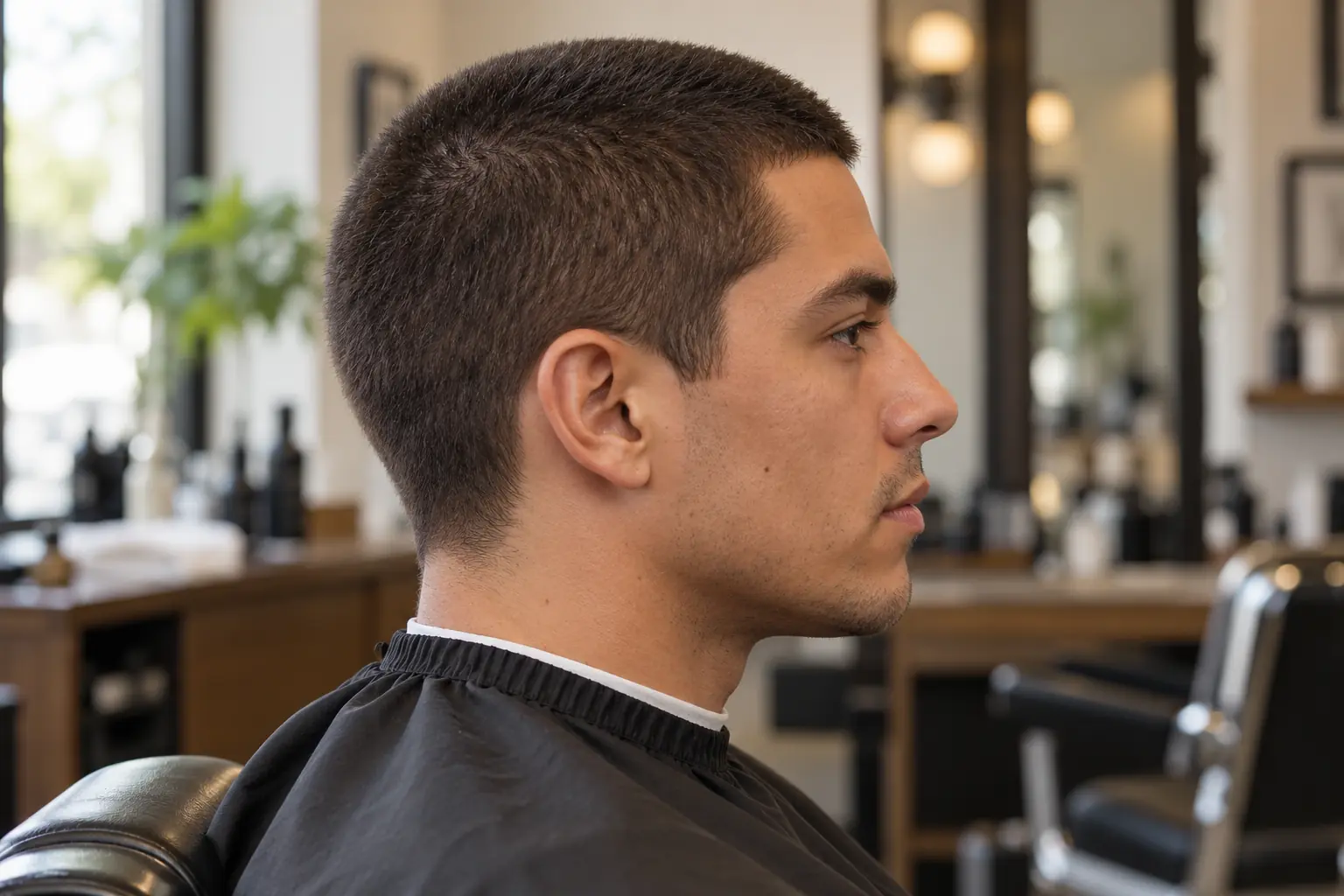
About 3/8 inch. Dark, dense coverage with no scalp showing. A good first buzz if you are nervous about going short.

#4 buzz cut
About 1/2 inch. Soft to the touch and noticeably fuller. It is long enough to soften a strong head shape.

#6 buzz cut
About 3/4 inch. Natural texture starts to show on top. It reads as a very short haircut rather than a buzz from a distance.

#8 buzz cut
About 1 inch. The longest of the standard guards. Curls and waves start to form, which makes it a good length for growing out.
#10 to #16: the long buzz cut
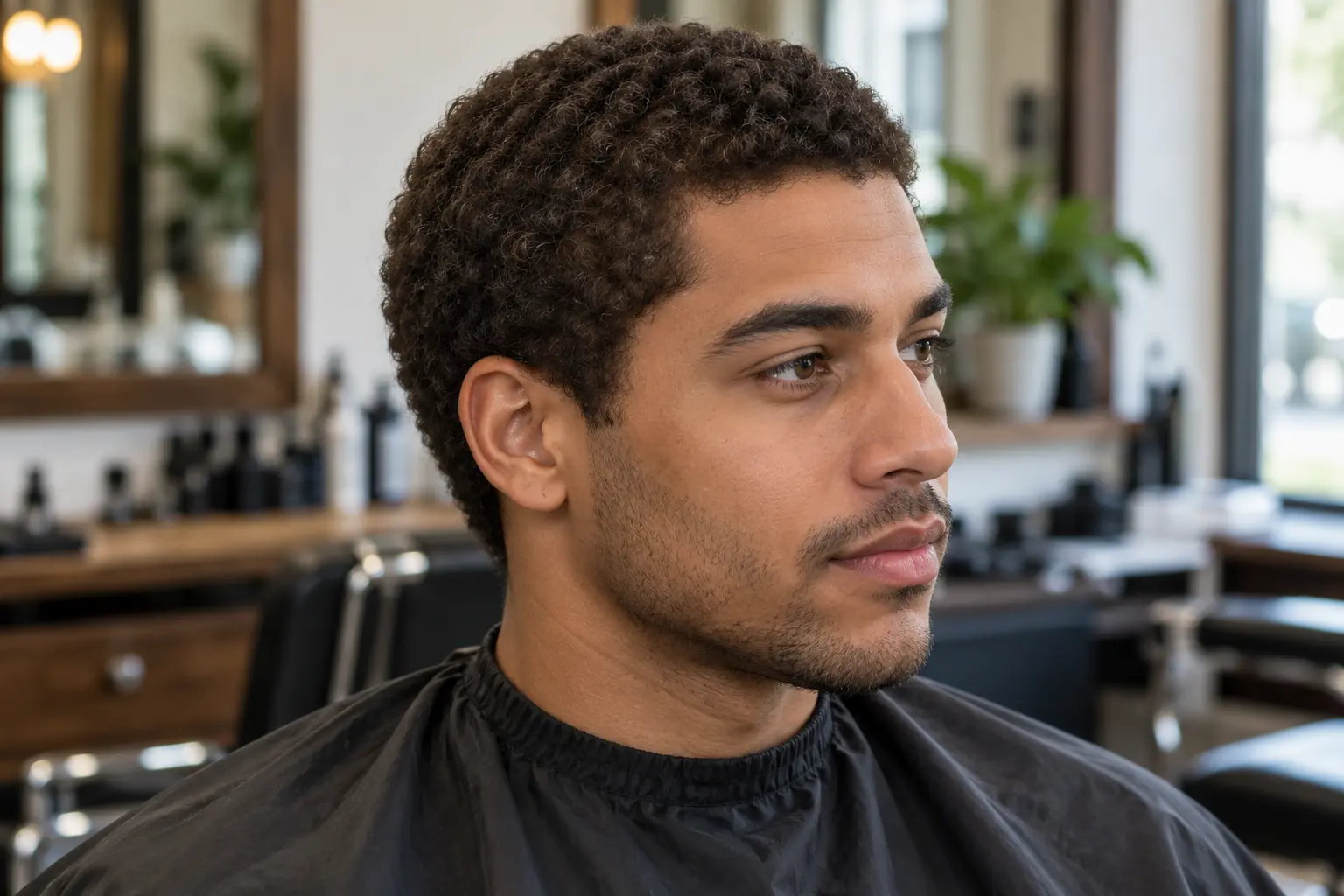
From 1 1/4 to 2 inches. At this length a buzz behaves like a soft, short haircut and can fall forward at the front. It is the gentlest way to go short without exposing your head shape. For a clean long buzz with a #12, cut against the grain in slow strokes and go over each area twice, because longer guards push hair flat instead of cutting it.

Should You Get a Buzz Cut?
A buzz cut shows your head shape, ears and hairline, so it suits some people more than others. Before you commit, pull your hair back tightly with wet hands and look at your head from the front and side, or try a buzz cut filter in a photo app. If you like what you see, go ahead.
- Good fit: an even head shape, a strong jawline, thinning or receding hair you want to stop fighting, or a hot climate.
- Think twice: scars, bumps or flat spots you’d rather hide, or ears you’re self-conscious about. A #4 or longer, or a crew cut, covers more.
Still unsure? A crew cut gives a similar short, clean look with a little more length on top.
Which Guard Should You Choose?
- First buzz: start with a #3 or #4. You can always go shorter the same day.
- Thinning or receding hair: a #1 or #2 makes the difference between thin and full areas less obvious.
- Bumps, scars or an uneven head shape: stay at #4 or longer to cover them.
- Round face: a shorter buzz with a low fade on the sides adds definition.
- Hot climate or sport: #1 or #2 for the lowest maintenance.
Buzz Cut with a Fade
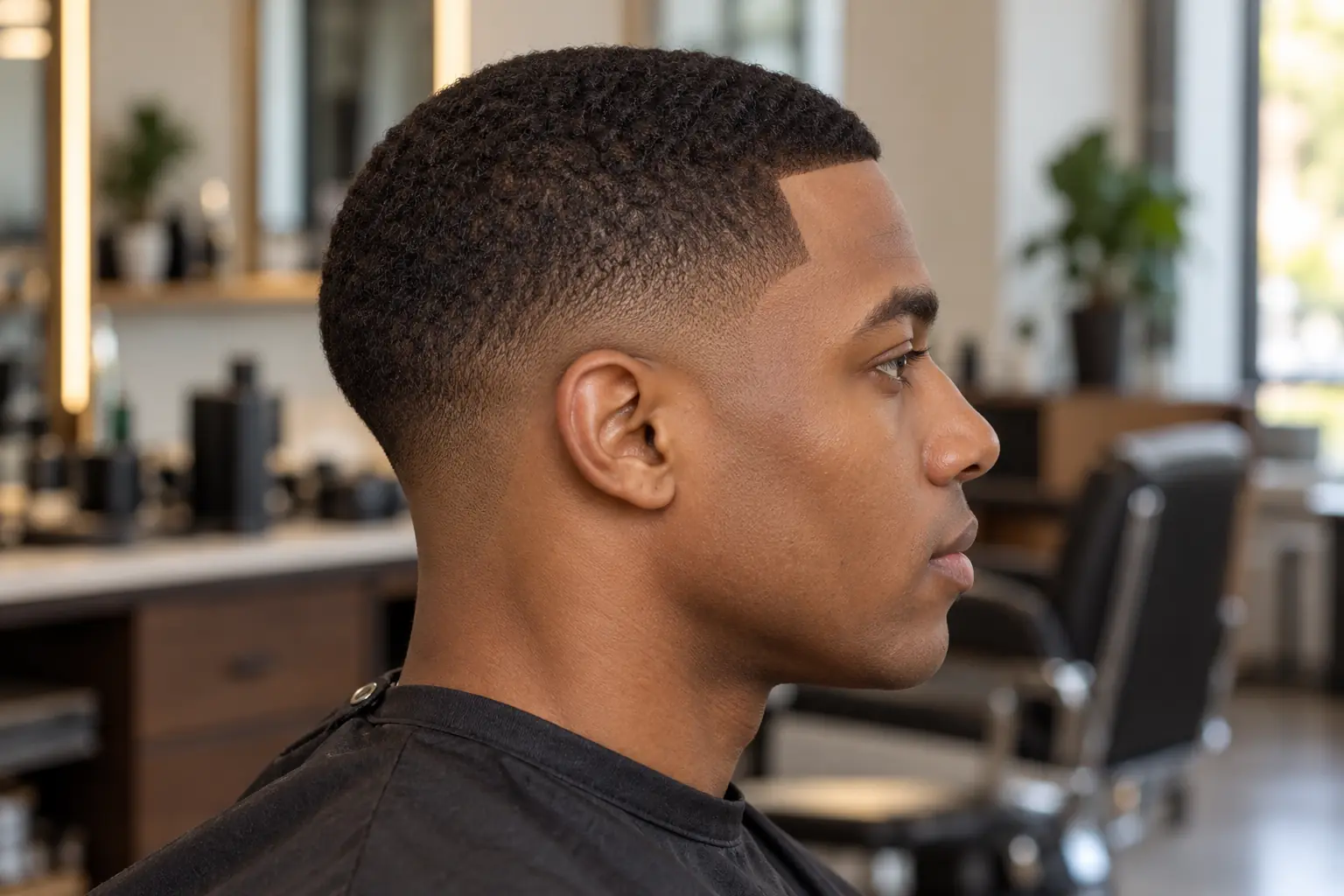
Keeping the top at one guard and fading the sides down to a shorter guard or skin gives a buzz cut more shape. A low fade is the most popular. See the low fade guide and the skin fade guide, or a taper if you want a softer edge.
Buzz Cut vs Crew Cut
A buzz cut is one length everywhere. A crew cut keeps the top longer than the sides and longest at the front. If you want a little shape to style, see the crew cut guide.
How Often to Re-Buzz
Hair grows about half an inch a month, which is roughly one guard size every week. So a #2 buzz looks noticeably longer after about two weeks, and a #4 holds its shape for three to four. If you buzz at home, a quick pass every one to two weeks keeps it even.
How to Make a Buzz Cut Look Good
- Clean edges: a tidy neckline and sideburns make a buzz look intentional. Ask a barber for a line-up if your hairline allows it.
- Even length: go over every area twice so no patches stay longer.
- Scalp care: a light moisturizer stops flaking, and sunscreen protects the scalp on short buzzes.
- A fade on the sides: fading the sides one or two guards shorter than the top adds shape.
How Long Does a Buzz Cut Take to Grow Out?
At about half an inch a month, a #2 buzz reaches crew cut length (1 to 1.5 inches) in about two to three months, and a short textured crop (2 to 3 inches) in about four to six. Get the sides and neckline tidied every few weeks while the top grows so the in-between stage looks deliberate.
How to Buzz Your Own Hair
- Start with dry, clean hair and the guard you want, or one size longer for a first try.
- Clip the guard on firmly; a loose guard is the most common cause of bald patches.
- Cut against the direction of growth, from the nape up the back, then the sides, then front to crown.
- Go over each area twice in slow, overlapping strokes.
- Clean the edges around the ears and the neckline with the guard off, or ask a barber to do it.
If you get bumps after a very close buzz or shave, the American Academy of Dermatology recommends shaving in the direction your hair grows. On a #0 or #1, try a final pass with the grain.
Frequently Asked Questions
What is a buzz cut?
A buzz cut is a haircut clipped to one short length all over the head with clippers and a guard, usually between a #0 and a #8.
What guard is a buzz cut?
Any guard can be used, but most buzz cuts are a #1 to #4. A #2, which leaves about 1/4 inch, is the most common.
Should I get a buzz cut?
Try it if you have an even head shape, thinning hair or want zero styling. If you’d rather hide scars or bumps, choose a #4 or longer, or a crew cut.
How long does it take for a buzz cut to grow back?
Hair grows about half an inch a month, so a short buzz reaches 1 to 1.5 inches in two to three months and 2 to 3 inches in four to six months.
Is a buzz cut professional?
Yes. A neat buzz with clean edges is accepted in almost every workplace.
What is the most common buzz cut guard size?
A #2, which leaves about 1/4 inch. It looks clean and even, with the scalp barely visible.
How long does a #4 guard leave hair?
About 1/2 inch, or 13 mm.
What is a 16 guard buzz cut?
A #16 guard leaves about 2 inches, a long buzz. If your guards are labeled in millimeters, a 16 mm guard leaves about 5/8 inch, close to a #5.
Should I start with a short or long guard?
Start longer, with a #3 or #4. You can always go shorter, but you cannot add length back.
How often should I re-buzz?
Every one to two weeks for #1 to #2, and every three to four weeks for #4 and longer.
Related Guides
- Crew Cut
- Taper Fade
- Low Fade Haircut
- Skin Fade Haircut
- Best Fades for a Receding Hairline
- Fade Calculator
 Two Block Haircut: 5 Styles, Lengths & Barber Tips
 Wolf Cut for Men: 6 Layered Styles & Barber Requests
 Professional Hairstyles for Men: 8 Practical Work Styles