
Mid Taper Fade for Thick Hair: Control Bulk & Avoid Mushrooming
On this page
A mid taper fade for thick hair is less about removing as much hair as possible and more about controlling where the density sits. Thick hair can look excellent with a taper because the natural volume gives the top shape, but the cut needs a smooth transition above the short temple and neckline zones. If that transition is ignored, the sides can “mushroom” over the taper as the hair grows.
Mid taper for thick hair: top shape and weight control
Compare top direction, retained side weight and the localized temple and nape blends. Each is a separate fictional reference. Select an image to enlarge it.
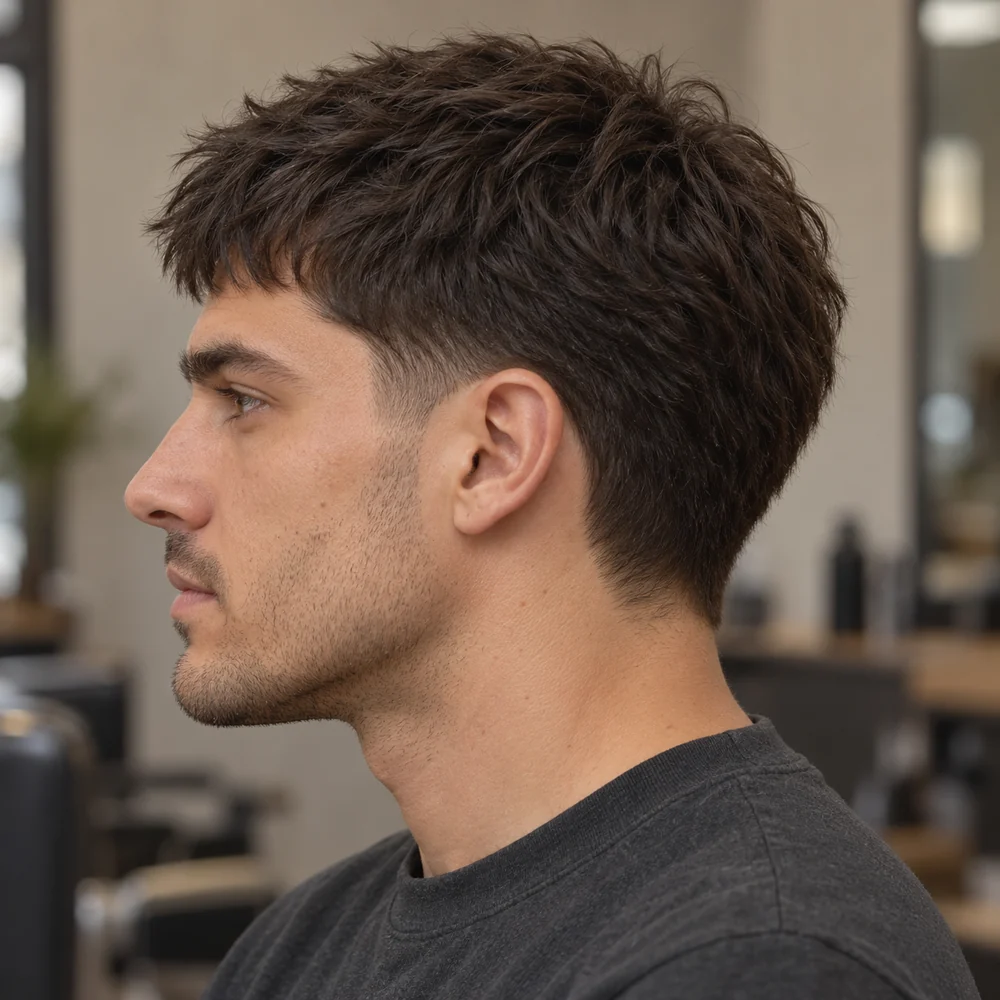
The separated forward fringe sits over connected side weight; the shortest area stays near the temple.
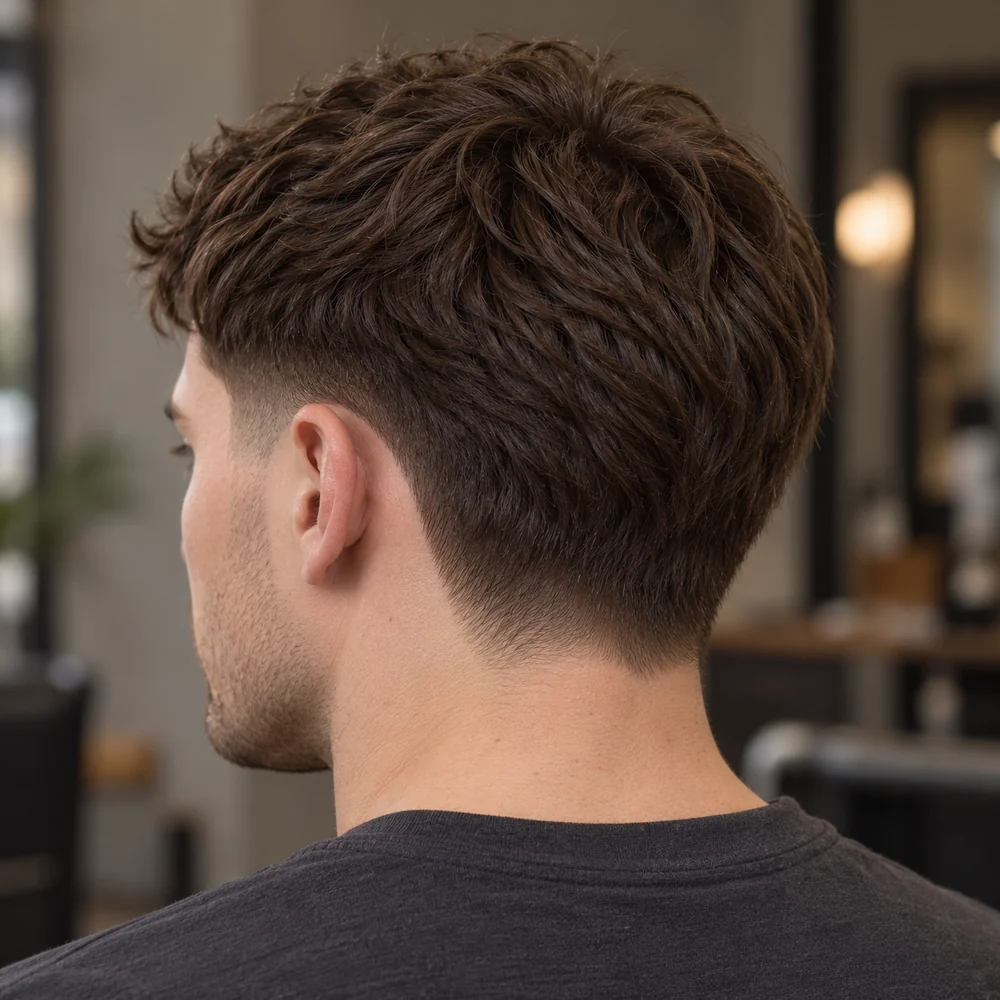
This rear angle shows how dense back hair can connect into a soft neckline without removing the whole side.
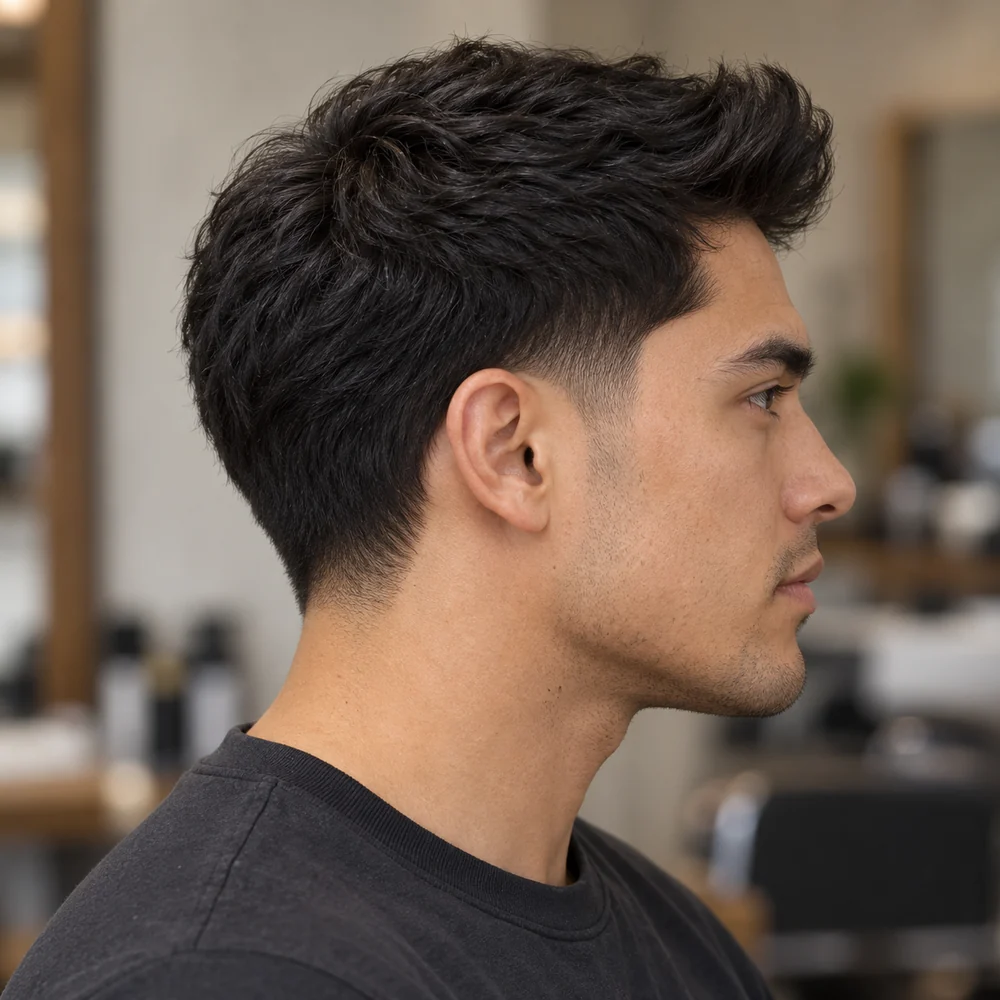
A compact lifted front uses the hair’s density while the upper sides remain connected.
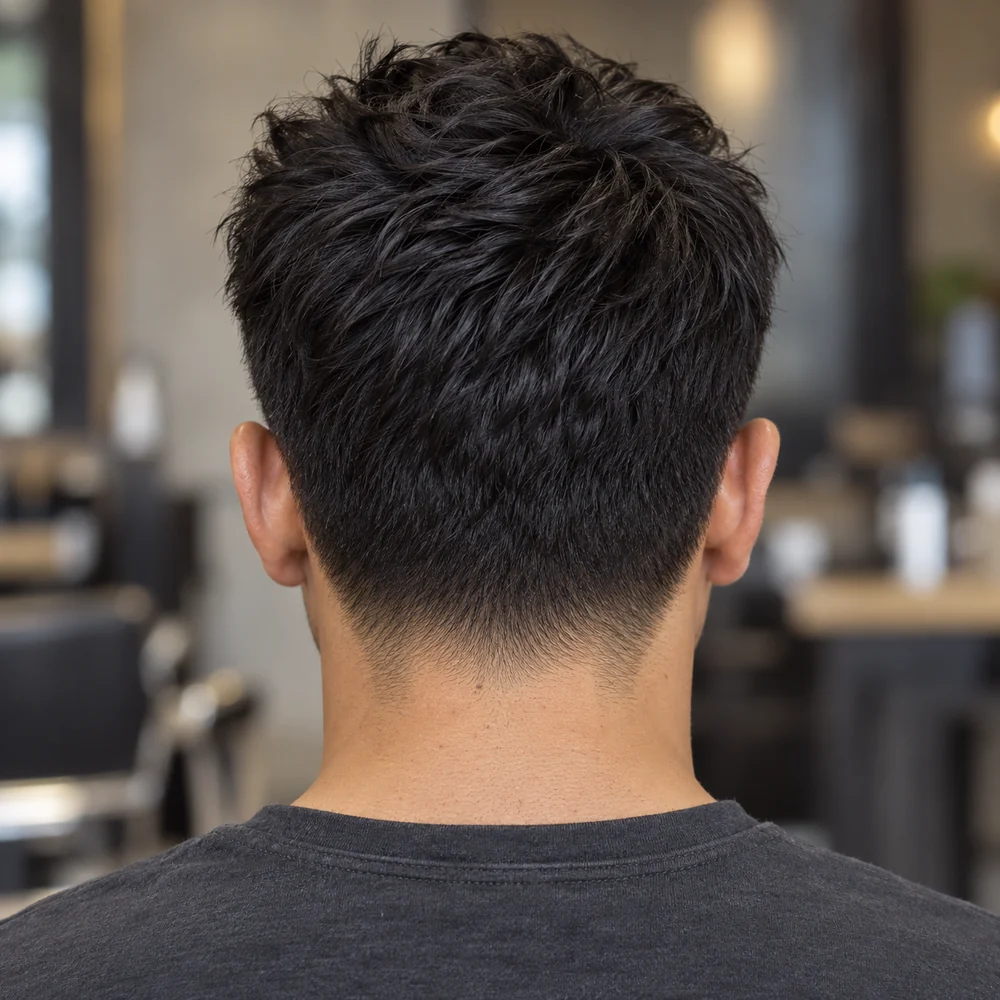
The rear silhouette keeps supporting weight above the shorter neckline instead of raising the fade through the back.
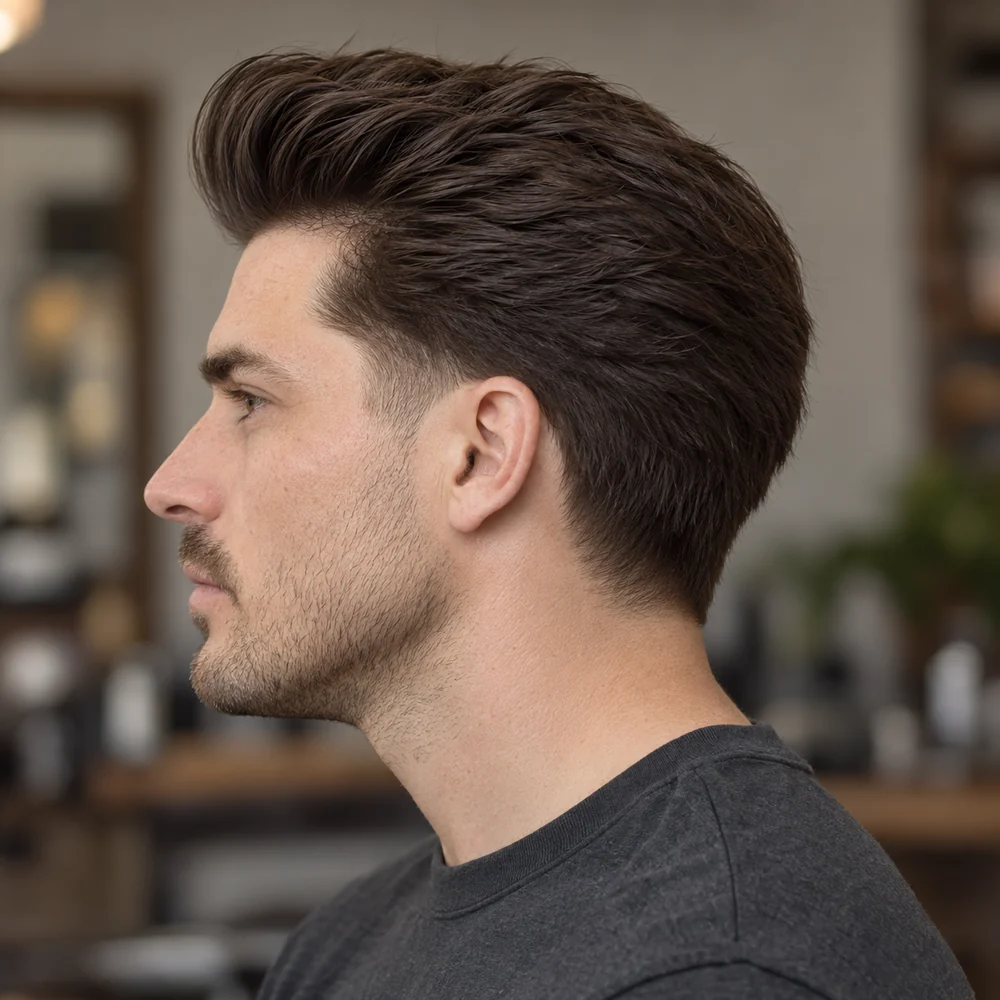
The rolled front and backward direction give height while the sides connect smoothly to the dense top.
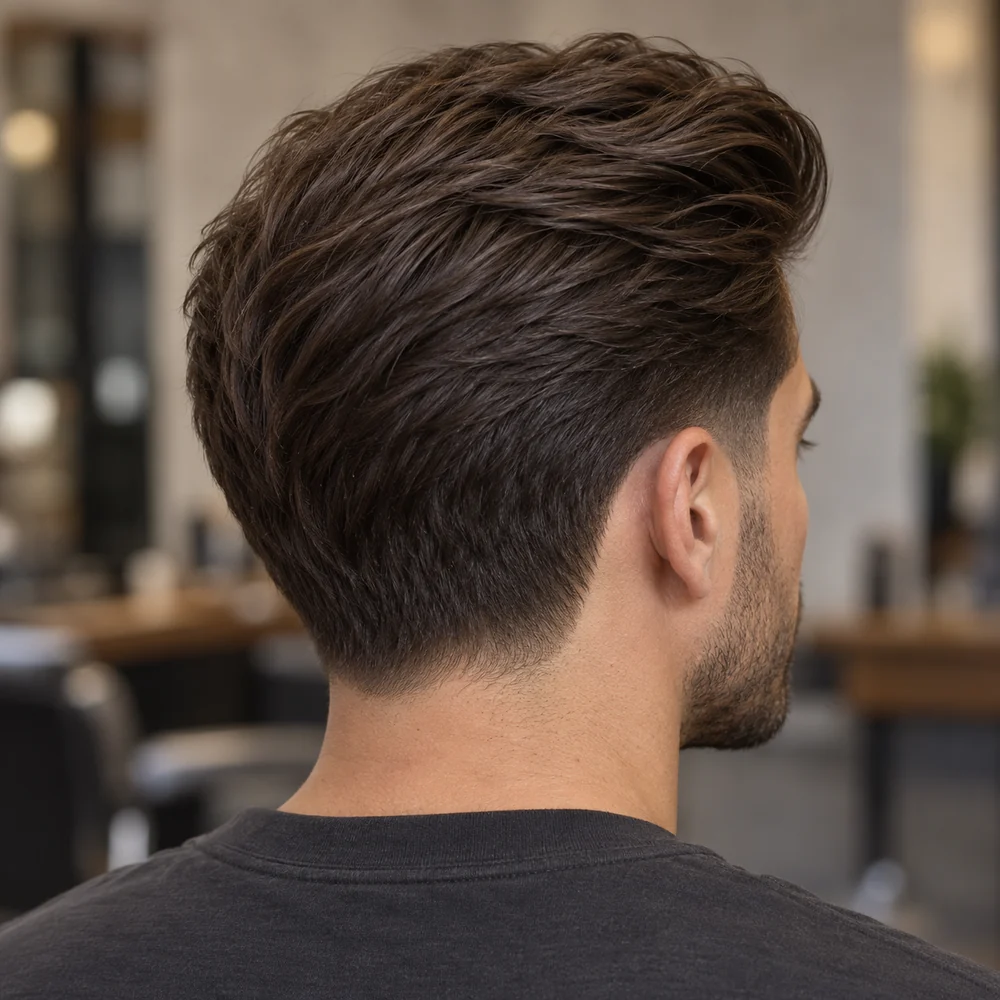
The back angle shows the connection between the swept top, retained density and shorter nape.
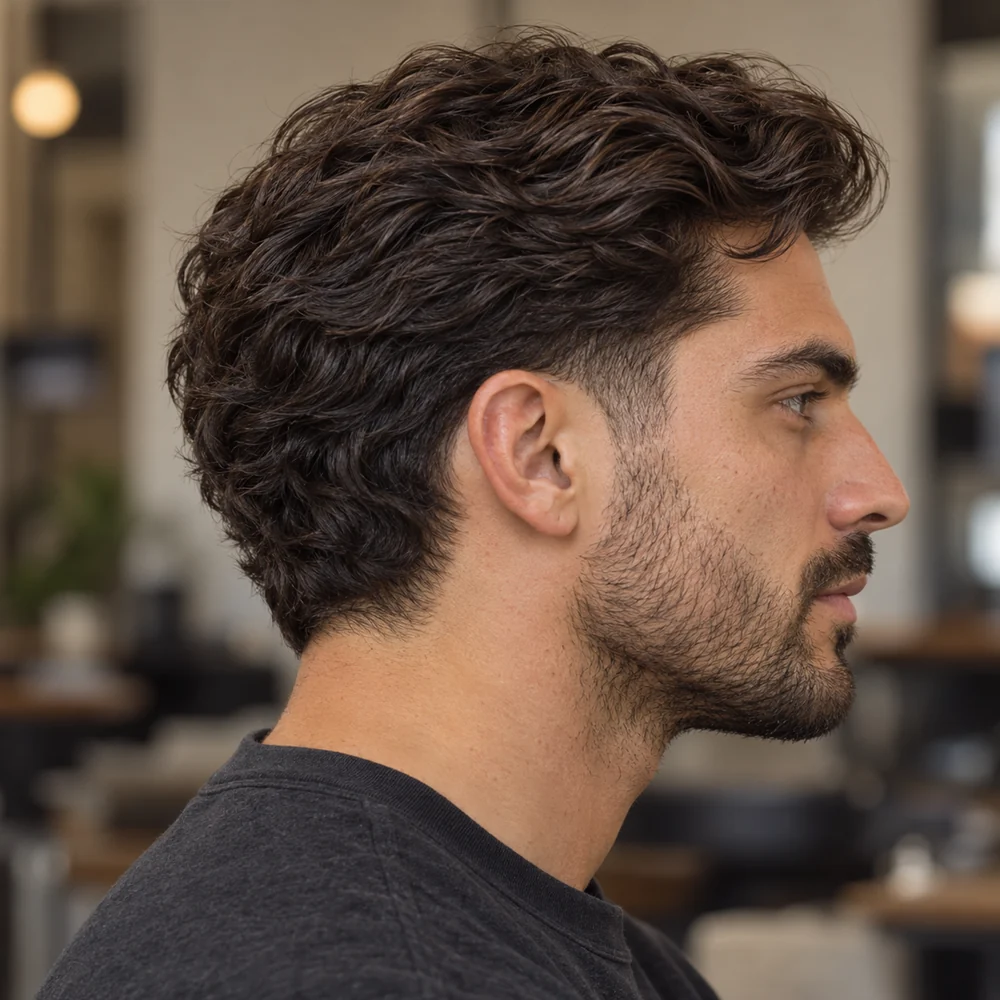
Natural bends provide movement; the short temple area leaves the wavy side and back weight intact.
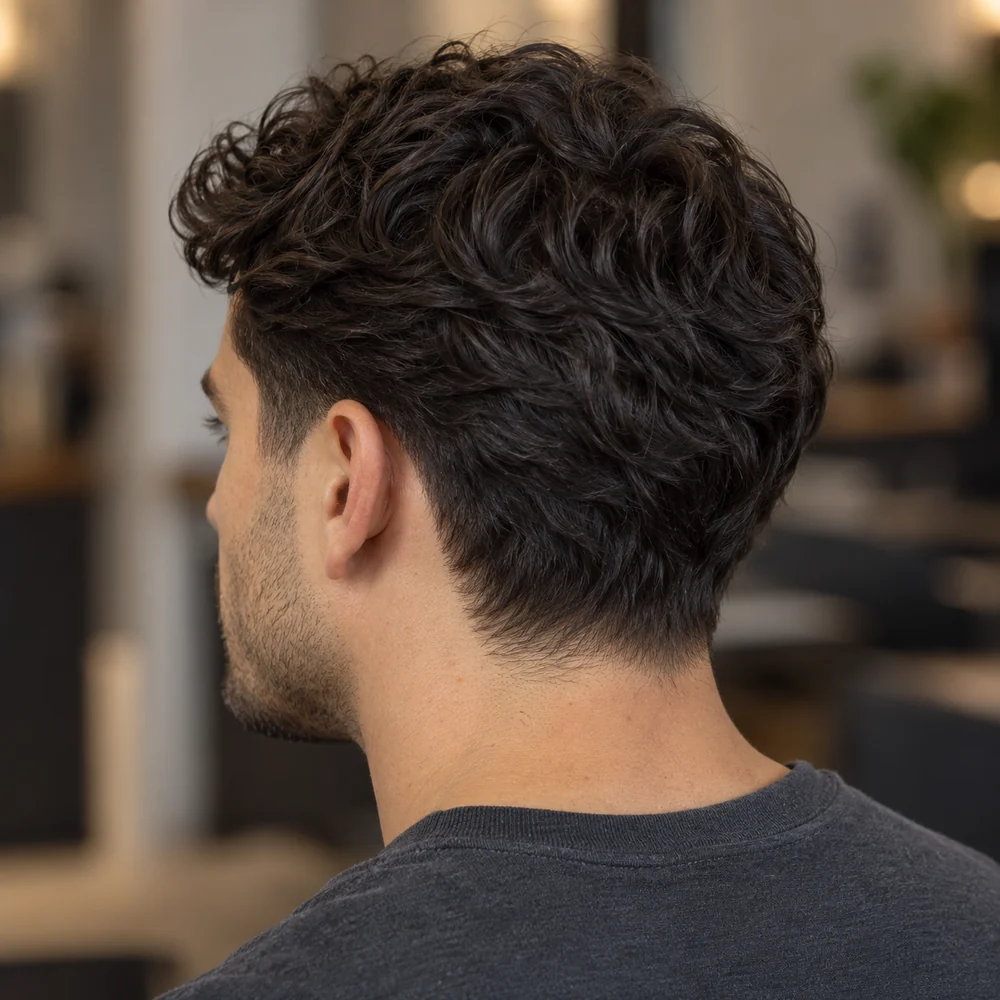
The rear view illustrates retained waves and a soft perimeter rather than an elevated rear fade.
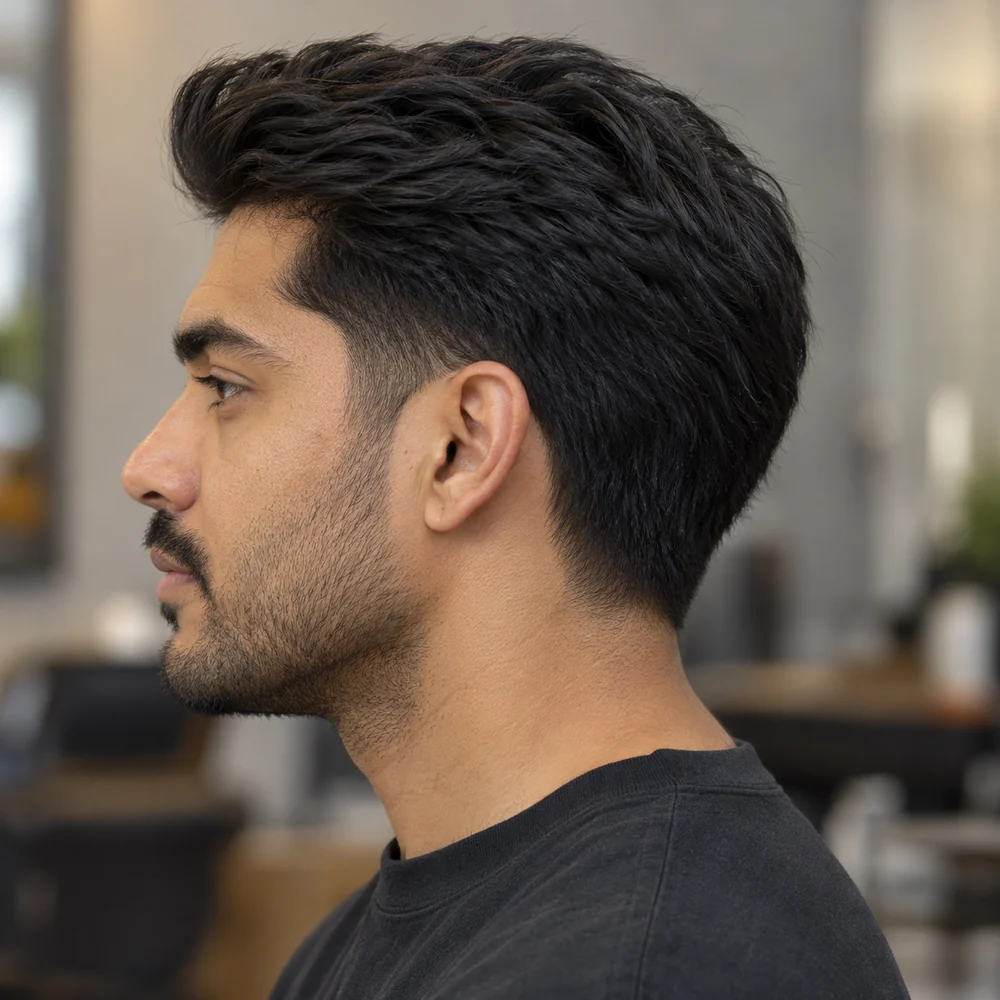
The front is directed away from the face while enough upper-side weight supports the fuller top.
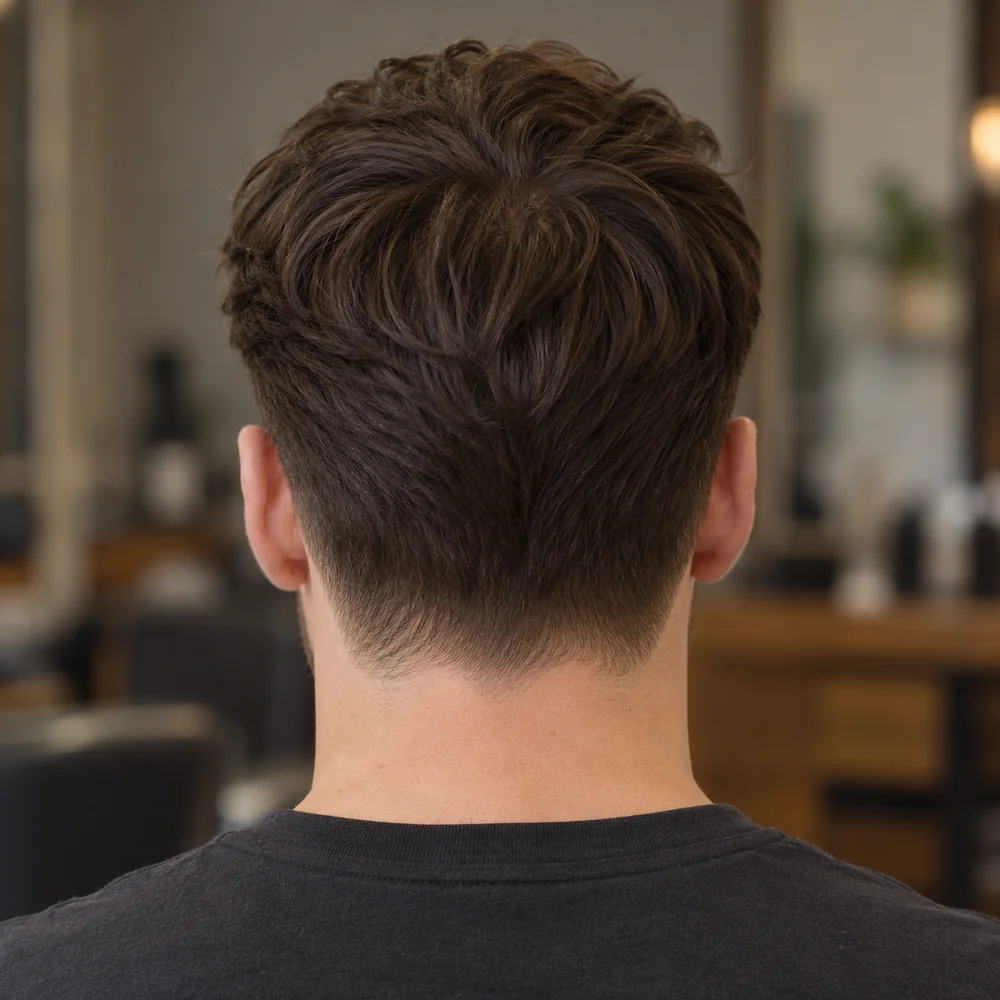
The full upper back narrows gradually toward the neckline without a harsh shelf above the short area.
Visual disclosure: These ten references are original AI-generated editorial illustrations of different fictional adults. They illustrate the haircut choices discussed in this article, not real clients, verified barber work, before-and-after results or guaranteed outcomes. The existing article text and featured image are retained.
The main fix: keep the taper localized, preserve enough supporting weight through the upper sides, and remove internal bulk only where the hair is pushing outward. Do not solve every thick-hair problem by simply taking the fade higher.
Why Thick Hair Mushrooms Over a Taper
The taper creates a short area near the sideburn/temple and nape. Directly above it, thick hair may contain enough density to spring outward. If the transition between those two zones is abrupt, you see a ledge: very short hair underneath with a heavy shelf above.
The solution depends on your hair. A barber may use scissor-over-comb, clipper-over-comb, point cutting, or careful internal weight removal. The goal is a balanced silhouette, not thinning the entire head indiscriminately.
Mid Taper vs Going Higher
A higher fade removes more side weight and can feel cooler or sharper, but it also exposes more of the head shape and creates stronger contrast with a dense top. A mid taper keeps more hair through the sides, which can make the transition into thick hair look more natural. If your current haircut balloons out, ask the barber to diagnose the weight line before deciding that the fade itself needs to move higher.
What to Tell Your Barber
Try this: “I want a mid taper at the temple/sideburn and nape. My hair gets bulky above the taper, so check the weight line and remove only enough internal bulk to stop the sides from pushing out. Keep enough weight to connect the top instead of taking the fade higher.”
Then show how you actually style the top. A barber should shape thick hair differently for a forward fringe, quiff, pompadour, or brushed-back flow.
Three Ways to Wear the Top
Textured fringe
This is useful when you want the density to create visible separation at the front. The ends need texture rather than a heavy horizontal line. Our textured fringe with mid taper guide covers the details.
Quiff or pompadour
Thick hair can hold height well, but excess weight can also make a tall style collapse. Build the shape with blow-drying first, then use a controlled amount of product. For a swept-back option, see the mid taper pompadour.
Natural flow
If your thick hair is also wavy, keeping extra length can create a softer top. Shape and weight removal become more important than heavy product.
Styling Thick Hair Without Making It Heavier
- Start with less product: dense hair already has physical volume.
- Use heat for direction: a blow dryer can change where the roots sit before finishing product is added.
- Choose finish by goal: matte paste/clay for separation, cream for softer control, pomade for a smoother classic finish.
- Apply strategically: concentrate on the top and problem areas instead of coating every strand.
Maintenance: Taper vs Top
The short taper can lose definition sooner than the thick top loses its overall shape. That means a quick perimeter refresh and a full reshaping cut do not always need to happen at the same time. If the top still sits well, ask for a taper cleanup and only minor weight adjustment.
For wavy density, compare our mid taper for wavy hair. For the full family of fade and taper choices, start with fade haircuts for men.
Technique Reference
Wahl’s professional fade tutorial shows how barbers use guard progression, no-guard work and bulk removal as separate steps rather than treating the whole side as one length. See Wahl’s fade education guide.
Is a mid taper good for thick hair?
Yes. It can clean the perimeter while preserving side weight, which often helps a dense top connect more naturally than an aggressive high fade.
Why does thick hair mushroom over a fade?
It usually happens when a heavy weight line sits directly above a much shorter area. The fix is a better transition and selective bulk control, not automatically a higher fade.
Should a barber use thinning shears on thick hair?
They can be useful in some cases, but they are not mandatory and should not be used indiscriminately. The right technique depends on density, texture, growth pattern and the style you want.
 Low Taper Fade for Black Men: Styles, Line-Ups and What to Ask For
 Low Taper Fade with Textured Fringe: Styles, Barber Script and Styling
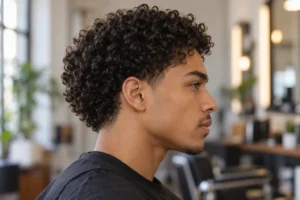 Taper Fade for Curly Hair: Low, Mid and Blowout Tapers by Curl Type
One Comment