Best Zero Mid Taper Fade: Ultimate Skin-Tight Guide (2026)
Uncompromising Sharpness: The Zero Mid Taper Fade
If you are looking for the absolute highest level of contrast available in modern men’s grooming, the zero mid taper fade operates in a category completely of its own. In the world of high-end barbering, extreme contrast is the ultimate indicator of a premium haircut.
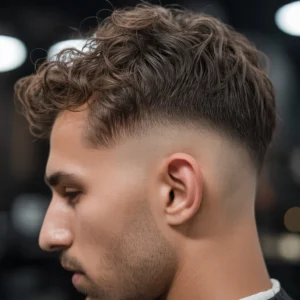
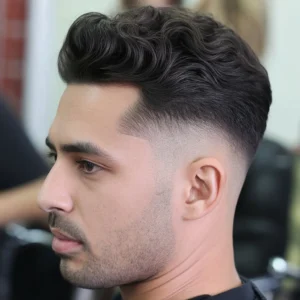
We are going to explore exactly why targeting this high-bald contrast style produces such an aggressive, clean aesthetic. Unlike a standard shadow taper that leaves a thin layer of hair against the scalp, this true “zero” style utilizes foil shavers to eradicate the hair down to the bare, shiny skin.
By confining this skin-tight transition strictly to the mid-temples and the nape of the neck, you create an uncompromising profile. The zero mid taper fade proves that you care deeply about your personal presentation.
The Technical Execution of the Zero Line
The danger inherent in the zero mid taper fade lies entirely in the blending mathematics. Moving a gradient from absolute smooth skin to a #2 or #3 guard within the vertical space of just one inch requires exceptional technical command from your barber.
There is absolutely zero room for error. The process begins by establishing the “zero line.” The barber will use trimmers to create a hard guideline horizontally across the temple and across the nape of the neck.
Everything below that specific line is brought down to the bare scalp with electric foil shavers or a straight razor. The visual punch of this haircut comes from the stark whiteness of the bald skin contrasting immediately against the darker hue of the hair above it.
From that hard line, the barber must meticulously “flick out” the electric hair clippers. They must incrementally open the blade lever by millimeters to dissolve the line into a perfectly blurry gradient. This gradient ascends seamlessly into the parietal ridge.
Why the Mid Placement is Crucial
The “mid” placement is what validates the entire look. If the barber takes the skin line too high, it aggressively eats into your natural hairline. This makes the side profile look excessively tall and disconnected from the rest of your head.
If taken too low, the zero transition is lost underneath the shadow of the overhanging bulk hair. The zero mid taper fade hits the geometric golden ratio. It delivers extreme skin contrast right at eye level, framing your cheekbones perfectly.
If you want to know if this specific placement suits your jawline and facial geometry, we highly recommend using our interactive fade calculator before your next appointment.
Why the Zero Mid Taper Fade is Strategically Superior
There are very specific, tactical advantages to requesting a skin-tight zero taper over a standard shadow taper. These benefits go far beyond simply the visual shock factor.
First and foremost is longevity. Because the fade literally begins below the skin line, it buys the wearer an extra five to seven days before the haircut looks grown out. You are essentially resetting the hair growth clock to zero.
This means the sharp contrast of the zero mid taper fade will last significantly longer than a standard clipper cut. Secondly, this specific fade acts as an eraser for natural hair imperfections.
The vast majority of men struggle with uneven, patchy sideburn growth. Many also deal with chaotic, swirling hair matrices at the very bottom of the neckline. The zero taper permanently solves both of these issues by completely eradicating those problem areas.
Styling Variations for the High-Bald Contrast
Because the zero mid taper fade utilizes such an aggressively clean canvas on the perimeter of the head, the styling options for the hair on top are functionally limitless.
The skin fade acts as a blank, high-contrast frame for whatever architecture you decide to build above it. Here are two of the best ways to style this elite haircut.
The Textured Crop
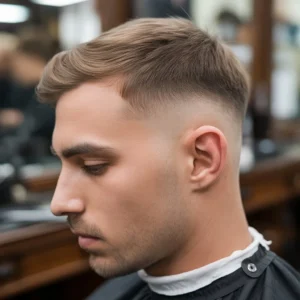
When paired with a blunt, heavily textured fringe brought forward over the forehead, the zero taper creates an incredibly tactical, European-inspired look.
The chaotic, piecey texture of the crop contrasts brilliantly with the mathematical, austere precision of the bald skin fade on the sides. To execute this, use a lightweight styling dust or a matte clay to achieve maximum separation.
The Premium Buzz Cut
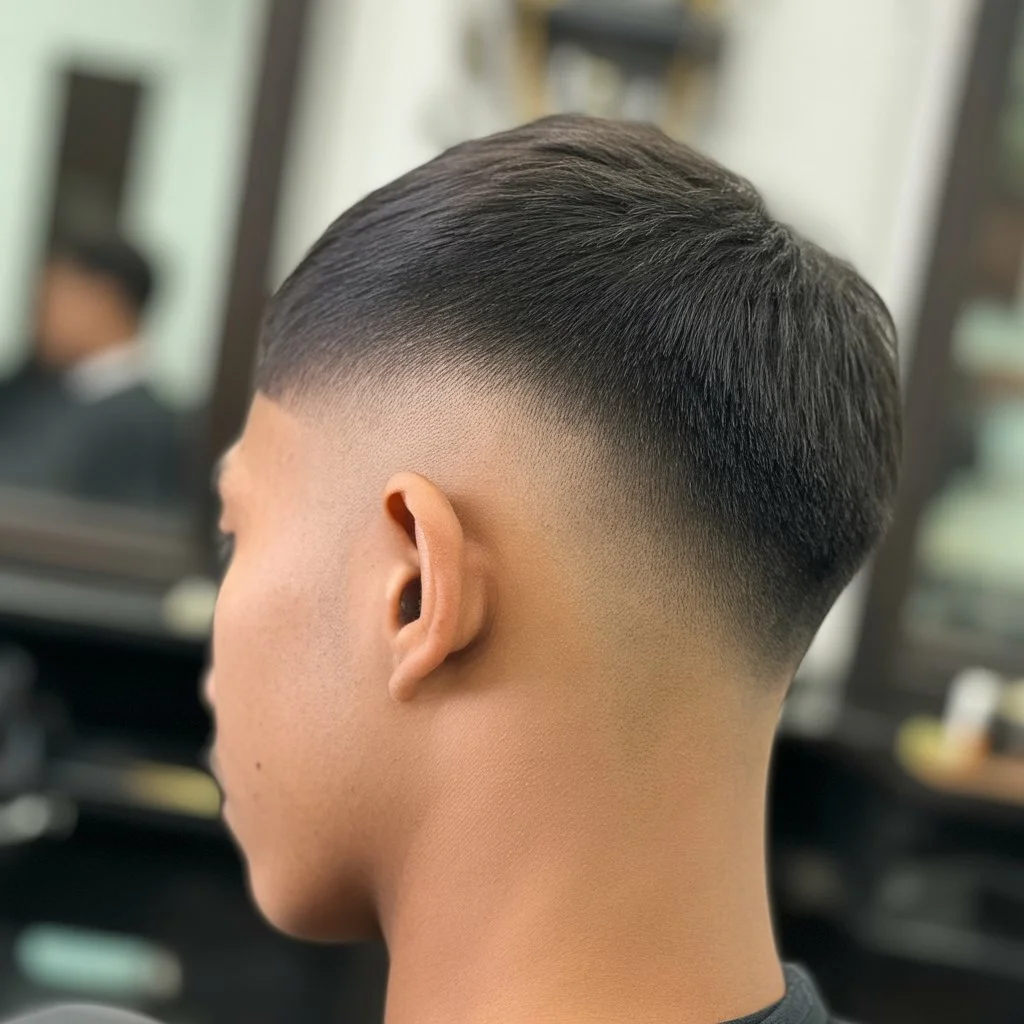
This is the ultimate low-maintenance combination. Taking a #3 or #4 guard uniformly all over the top of the head, and pairing it with the stark zero mid taper fade creates a military-meets-high-fashion aesthetic.
It requires absolutely zero product and zero morning styling time. It relies 100% on the barber’s fading ability and edge-up precision to make you stand out in a crowded room.
Scalp Care for Skin Fades
When you expose your scalp down to the bare skin using foil shavers, you must prioritize skincare. The skin around your temples and neck is highly sensitive.
If you suffer from razor burn or dry skin, the flawless aesthetic of your fade will be ruined by redness. We highly recommend utilizing a soothing aftershave balm immediately after your haircut.
Furthermore, you must apply a lightweight moisturizer to the faded areas daily. Check out our natural hair care guide for the best botanicals to keep your scalp hydrated and flake-free.
Booking the Correct Maintenance Appointment
While the zero taper mathematically lasts slightly longer than a standard shadow taper, the harsh reality of skin fades cannot be ignored. The moment thick stubble returns, the illusion of bare skin is broken.
To keep the zero mid taper fade looking aggressively sharp and premium, you must submit to a rigorous barbering schedule. You will need to be in the barber chair every ten to fourteen days.
When booking this appointment, it is critical that you specify you want a “skin” or “bald” taper in the notes. Failing to do so might result in the barber not allocating enough time to execute the tedious foil shaver work required.
Frequently Asked Questions (FAQ)
What is the difference between a zero taper and a skin taper?
In modern barbering, these terms are often used interchangeably. A true zero mid taper fade usually implies using a zero-gapped trimmer or foil shaver to get the hair down to the absolute bare skin, just like a skin taper.
Does a zero taper look good on round faces?
Yes, it is highly recommended. By removing the bulky hair at the temples and replacing it with bare skin, the zero mid taper fade creates a slimming effect that aggressively sharpens a round or oval face shape.
How long does a zero taper take at the barbershop?
Because the barber must use multiple tools (clippers, trimmers, and foil shavers) to create a flawless, blurry transition from bare skin, a proper zero mid taper fade usually takes a master barber between 30 to 45 minutes to execute perfectly.
Looking to explore other variations?
Check out our guide to the Best Mid Taper Fade Wavy Hair: Ultimate Styling Guide (2026), explore the Best Mid Taper Fade Pompadour: The Ultimate Styling Guide, or switch it up completely with the 7 Tips for the Perfect Burst Fade for Coily Hair (Guide).
Written by The Master Barber
With over a decade of high-end editorial grooming experience, our team breaks down complex barbering geometry into actionable styling advice for the modern man.