The Ultimate Wavy Burst Fade Mullet: Complete 2026 Barbering Guide
The Modern Revival: Introducing the Wavy Burst Fade Mullet
The modern grooming landscape has shifted dramatically toward heavy texture and architectural contrast. Sitting at the absolute peak of this movement is the wavy burst fade mullet. This is not the unkempt, blocky mullet of the 1980s. This is a highly technical, precision-engineered haircut that combines the aggressive geometry of a skin burst fade with the relaxed, natural flow of oceanic waves.
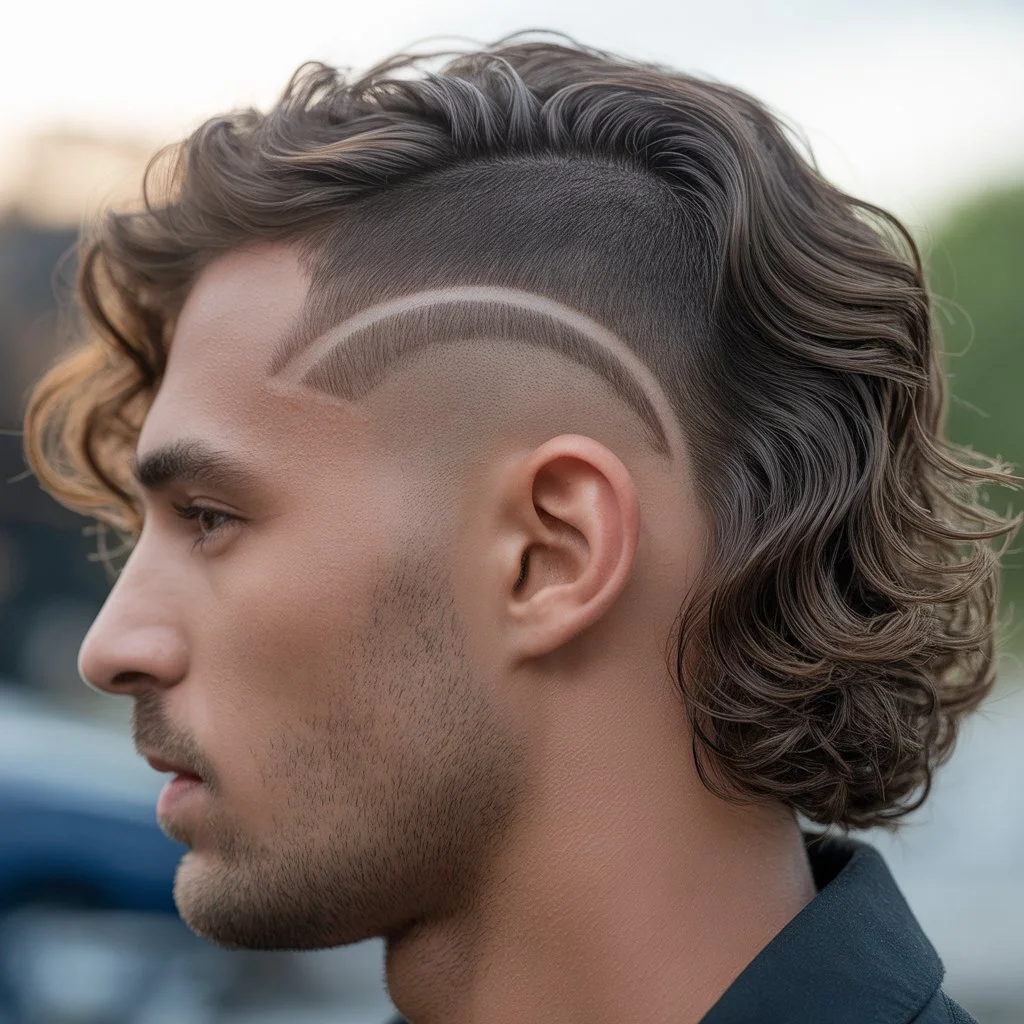
By completely removing the hair immediately around the ear, the wavy burst fade mullet isolates the top canopy and the trailing neckline. This creates an elongated, aerodynamic silhouette that screams high fashion while remaining effortlessly rugged. For men with natural wave patterns, this cut acts as the ultimate cheat code—eliminating the annoying bulk at the sides of the head while celebrating the hair’s natural texture everywhere else.
The Silhouette Analysis: Contrast and Design Lines
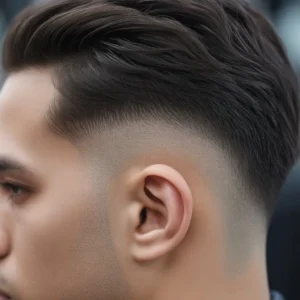
To understand why the wavy burst fade mullet dominates current styling charts, you have to look at the geometry. A standard drop fade creates a continuous halo around the back of the head. A burst fade, however, stops abruptly. It is a targeted, semi-circular intervention.
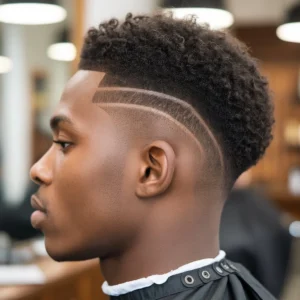
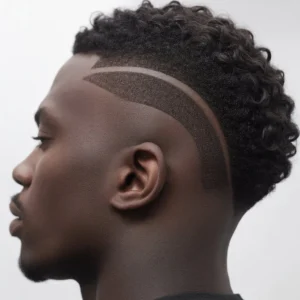
In the premium variation of this cut—often accented with a surgical design line—the barber carves a hard part that runs parallel to the faded arc. This negative space highlights the density of the wavy hair cascading down the nape. The burst exposes the skin around the ear, drawing the eye instantly to the heavy, textured fringe sweeping across the forehead and the pronounced mullet tail. The result is a profile that is clean and sharp from the side, but wild and voluminous from the front and back.
How to Ask Your Barber for a Wavy Burst Fade Mullet
Walking into a barbershop and simply asking for a “mullet” is a dangerous game. To achieve this exact high-end look, you need to communicate precise technical instructions to your barber.
- Step 1: The Top and Fringe Consultation. Start by discussing the top. For a wavy burst fade mullet, request that the top be left at least 3 to 4 inches long. Ask your barber to use point-cutting techniques or texturizing shears. You want to remove the internal weight of the hair so the waves can breathe and form naturally.
- Step 2: Carving the Burst Arc. This is the most critical step. Tell your barber you want a bald burst fade or skin burst directly around the ear. Specify the width of the burst. For this modern look, the fade should push slightly into the parietal ridge to create a strong disconnect, but it must completely avoid touching the hair at the nape of the neck.
- Step 3: Blending the Mullet Flow. The transition from the skin fade to the heavy back section must be handled with care. Ask the barber to leave the bulk in the back. The neckline should not be squared off or tapered into the skin; it should be left natural to allow the waves to flow over the collar.
- Step 4: The Surgical Design Line. If you want to elevate the haircut, request a curved design line. Ask the barber to carve a single, sharp arc using the trimmers and a straight razor, running parallel to the top edge of the burst fade.
Face Shape Compatibility: Who Should Wear It?
Because the wavy burst fade mullet relies on extreme volume on top and in the back, while keeping the sides skin-tight, it interacts uniquely with different facial structures.
- Oval and Diamond Faces: This is the ideal canvas. The tight sides highlight sharp cheekbones, while the volume on top balances out a narrower chin.
- Square Faces: Excellent choice. The rounded nature of the wavy hair softens the hard, angular jawline, creating a highly complimentary aesthetic.
- Heart and Round Faces: Proceed with caution. Because the sides are completely shaved down, this cut can sometimes make a round face appear wider. If you need a more conservative, boardroom-safe option, a mid taper fade is usually a better alternative to maintain structural width.
The Maintenance Cycle: Keeping the Fade Fresh
Do not let the messy, effortless appearance of the waves fool you; the wavy burst fade mullet requires strict maintenance. To keep the semi-circular burst arc and the surgical design line looking sharp, you will need to sit in the barber’s chair every 10 to 14 days.
Once the hair around the ear grows past a #1 guard, the sharp architectural contrast is lost, and the haircut begins to look rounded and unkempt. The longer wavy sections on top and at the back are much more forgiving and only require a minor texturizing trim every 4 to 6 weeks to prevent split ends and manage bulk.
Product & Styling Guide: Enhancing the Wave
The biggest mistake men make with this haircut is using heavy, oil-based pomades or crunchy gels. Wavy hair needs to move. Here is your daily protocol:
- The Pre-Styler: After a shower, towel dry your hair until it is slightly damp. Generously apply a high-quality sea salt spray—we recommend authoritative grooming brands like Davines for superior follicle hold. This mimics the gritty, voluminous texture of ocean water and forces the hair to clump into defined waves.
- The Blow Dry: Use a blow dryer on medium heat with a diffuser attachment. Use your fingers to scrunch the hair upward, encouraging the wave pattern to lock in as it dries.
- The Finish: Once completely dry, take a dime-sized amount of a matte styling powder or a lightweight matte clay. Work it strictly into the roots of the top canopy to build structural volume, leaving the tips of the waves dry, natural, and free-flowing.
Frequently Asked Questions
Does a burst fade work with wavy hair?
Yes, it is arguably the best texture for a burst fade. The natural movement of wavy hair contrasts beautifully with the sharp, bald geometric lines of the skin fade around the ear.
How long does the back need to be for a burst fade mullet?
For a modern wavy burst fade mullet, the hair at the nape of the neck should be at least 2 to 3 inches long so it visibly curls and flows over the shirt collar.
What is the difference between a drop fade and a burst fade mullet?
A drop fade lowers behind the ear but continues to fade the hair all the way down the back of the neck. A burst fade completely stops behind the ear, deliberately leaving the hair long and heavy at the nape to create the mullet silhouette.
Written by The Master Barber
With over a decade of high-end editorial grooming experience, our team breaks down complex barbering geometry into actionable styling advice for the modern man.