Wolf Cut for Men: 6 Layered Styles & Barber Requests
On this page
- More wolf cut visual references
- Choose a wolf cut reference by the feature you want
- What defines a wolf cut for men?
- Wolf cut, shag, mullet or Mod Cut?
- Six wolf cut references by length and texture
- Choose the version by your hair and routine
- How to ask for a wolf cut at the appointment
- Styling and grow-out without overpromising
- Frequently asked questions
- Research and editorial notes
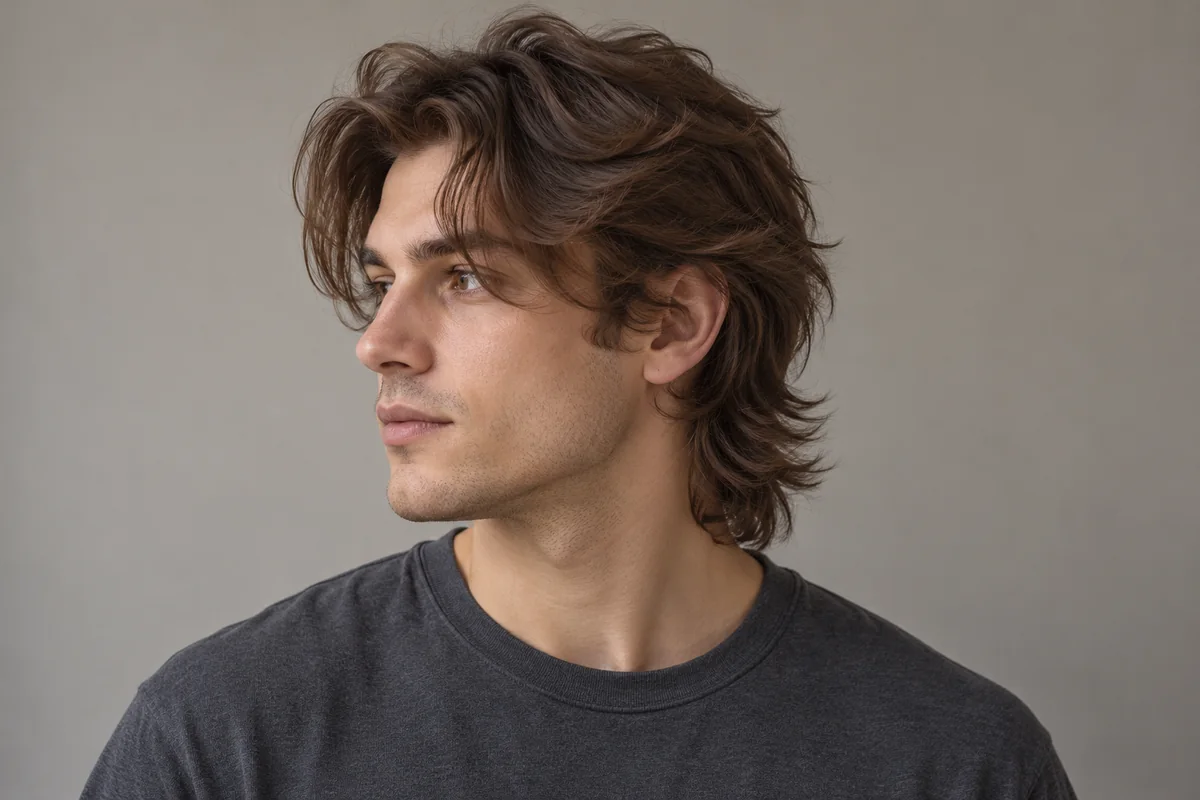
A wolf cut for men combines a shaggy layered crown, face-framing fringe and retained length toward the nape. The useful question is not whether the name sounds right: it is how short the upper layers should be, how much side coverage should remain and where the back should finish when dry. This guide compares six original references and gives you specific choices to discuss with a barber or stylist.
Prefer shorter sides with the length kept at the back? See the modern mullet. Want messier, face-framing length over the ears instead? See the warrior cut.
Visual disclosure: The new realistic references below are original AI-generated editorial illustrations of fictional adults. They illustrate haircut choices, not real client results. Compare the visible shape with your own hair and discuss adaptations with your barber.
More wolf cut visual references
Select an image to view it larger.
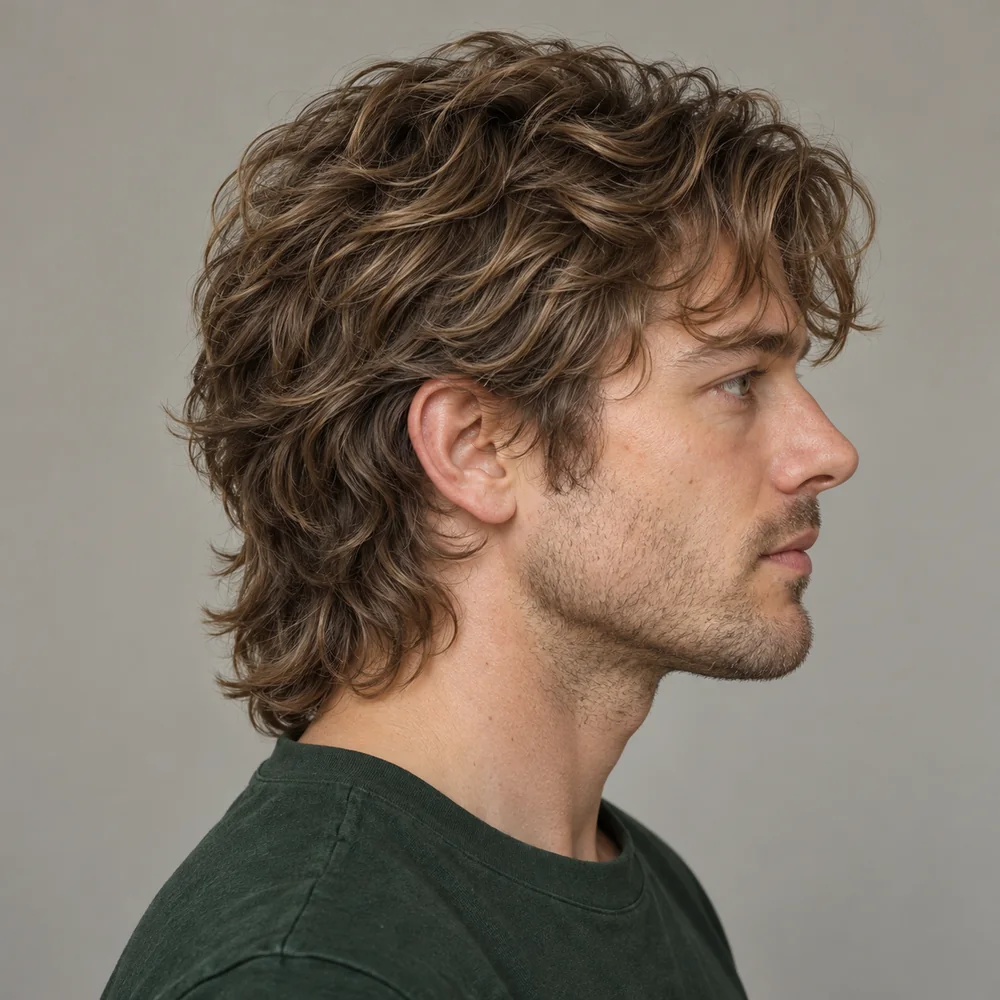
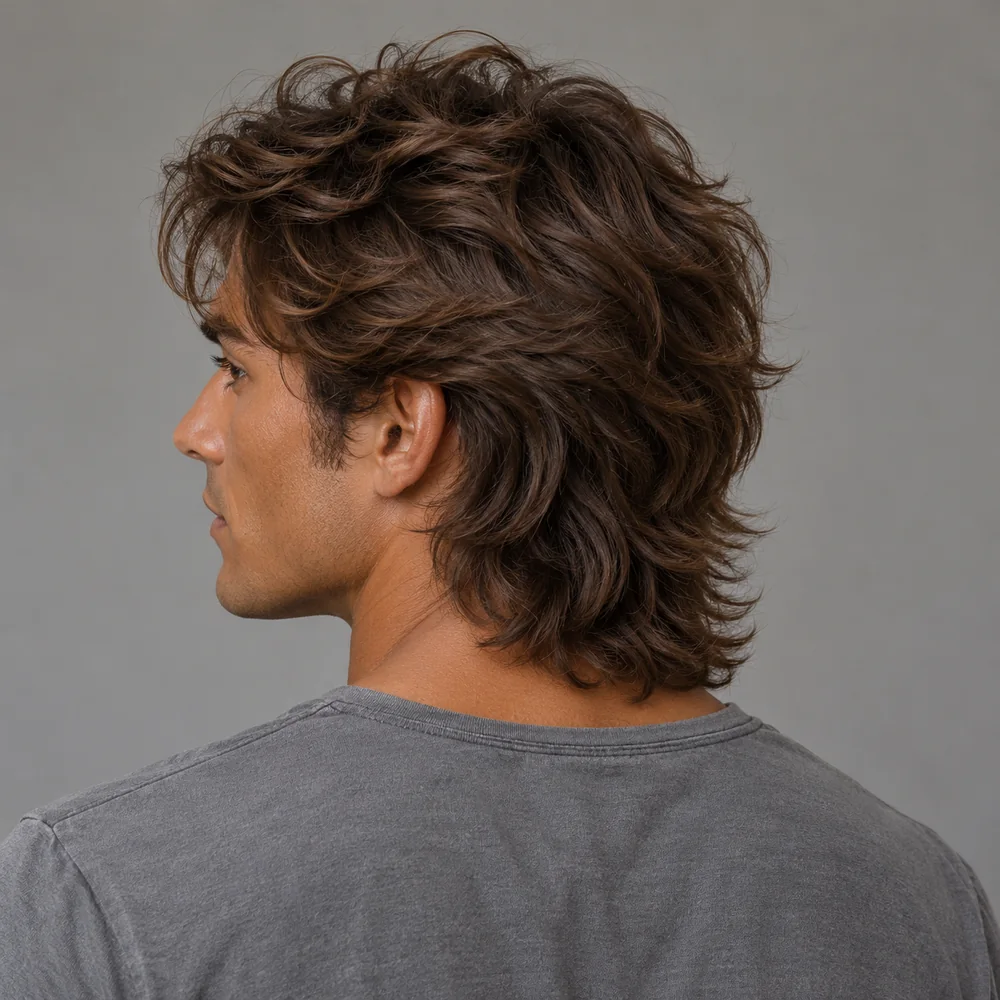
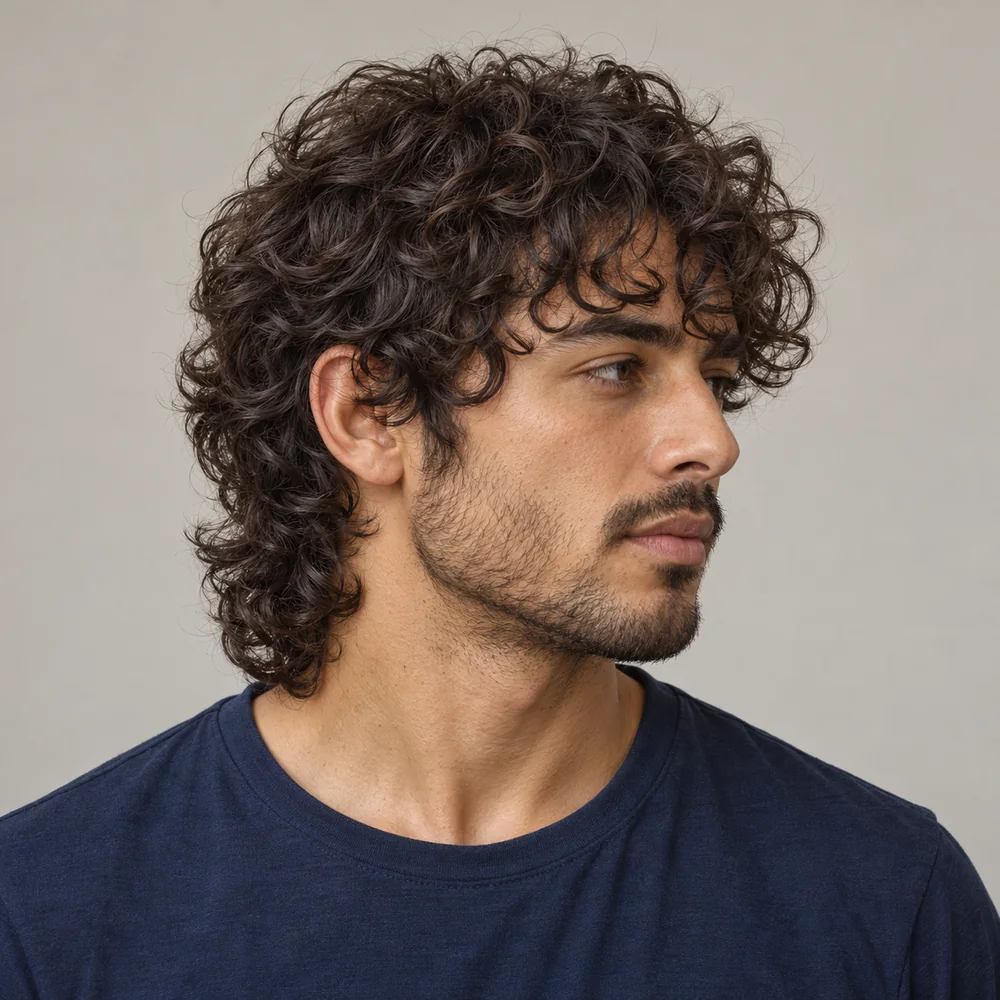
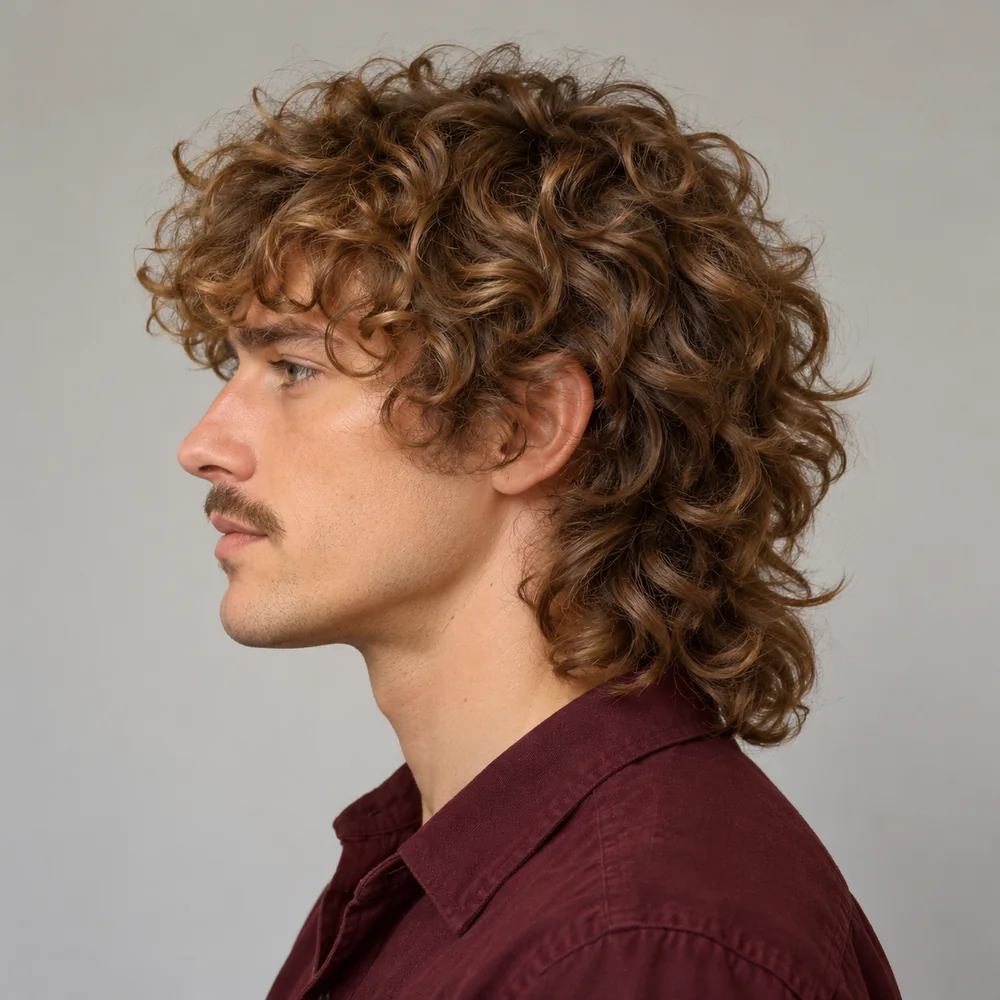
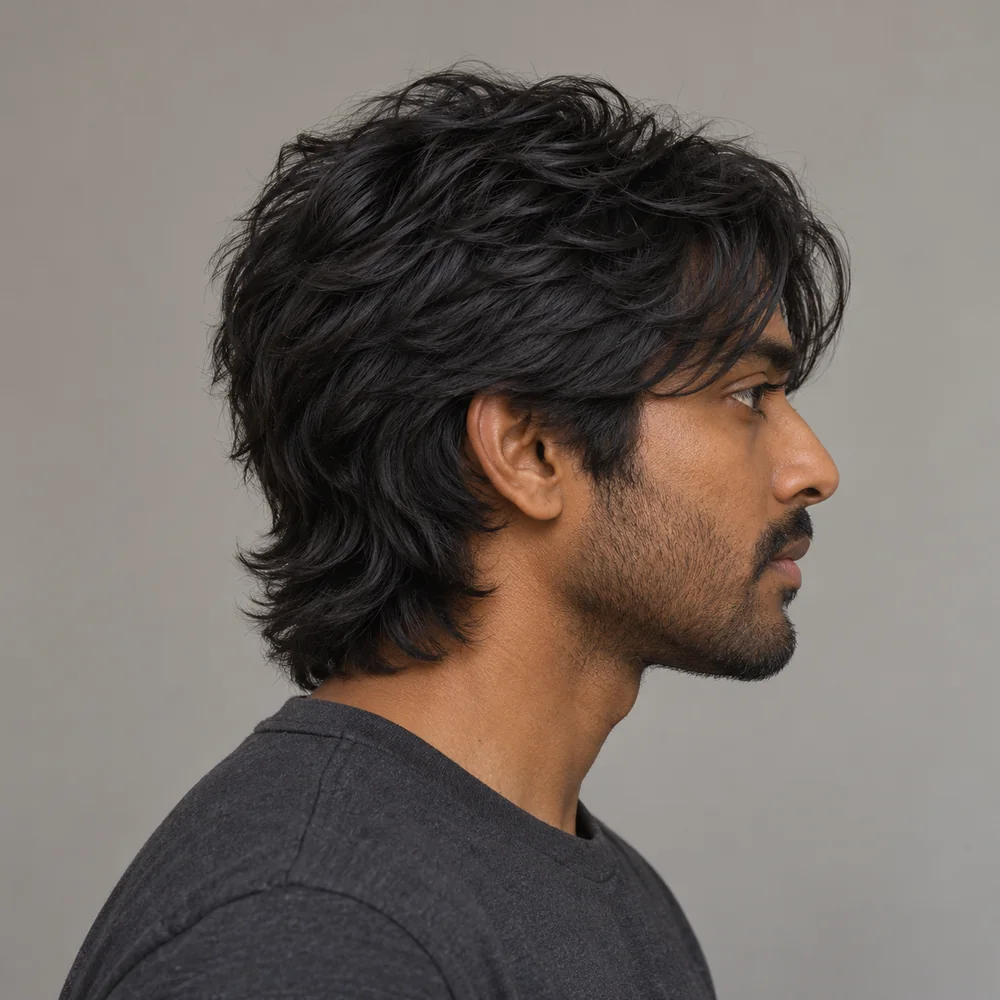
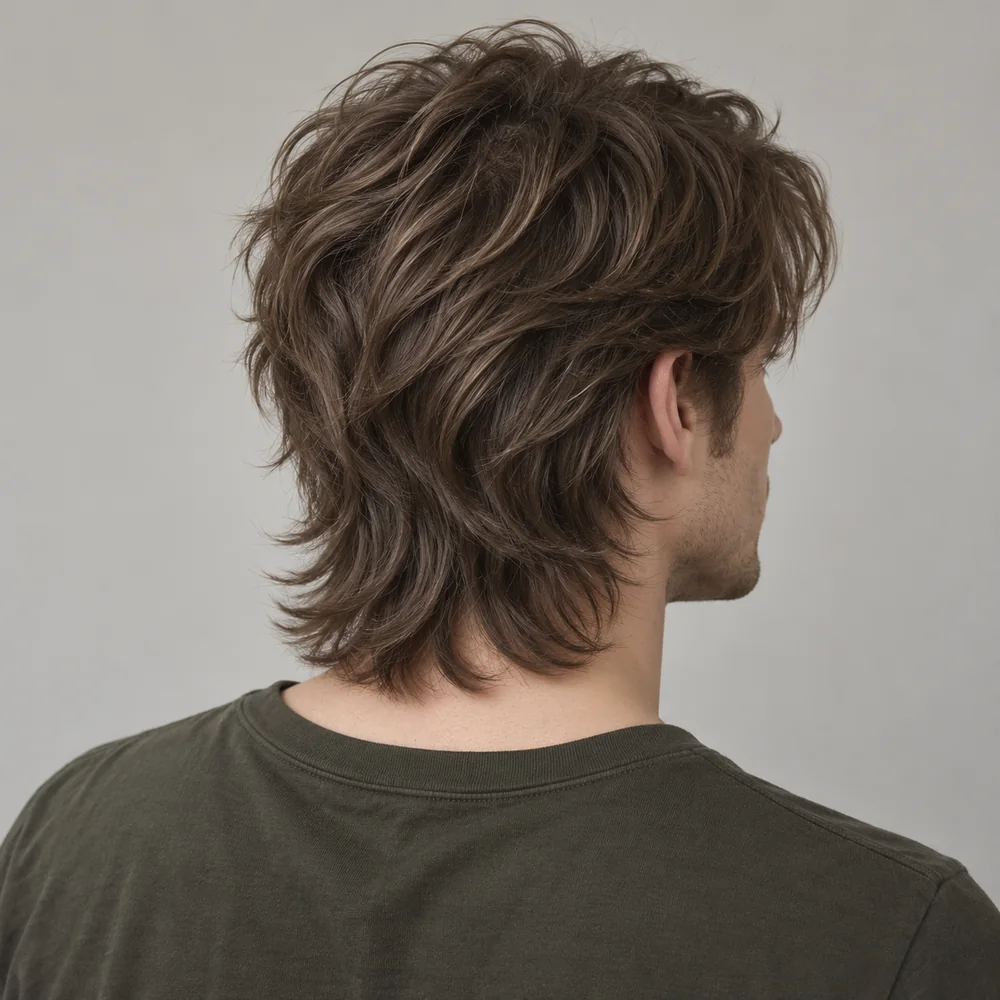
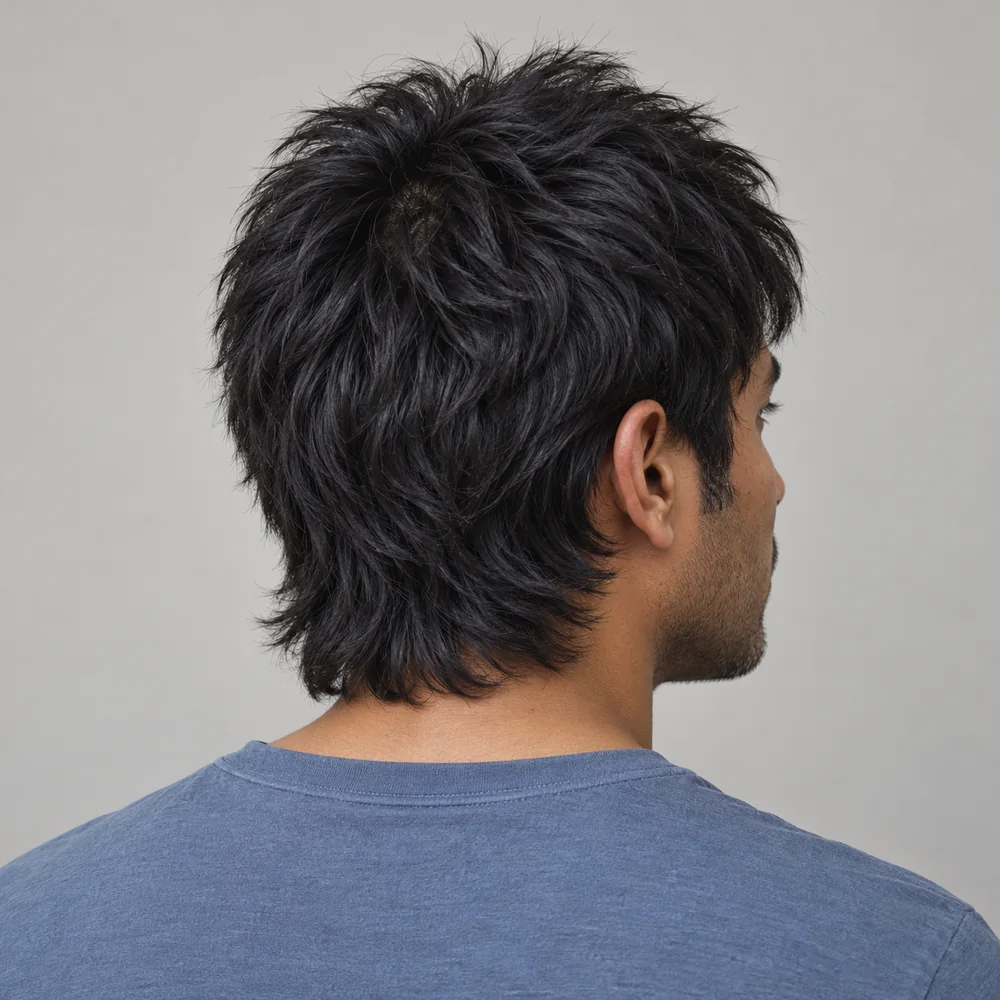
Visual disclosure: These ten new references are original AI-generated editorial illustrations of fictional adults. They show haircut choices, not real clients or guaranteed results. Existing references and explanations continue below.
Choose a wolf cut reference by the feature you want
Start with one feature: the fringe direction, side coverage or back length. The links below open the exact references in the new gallery. Use the table to identify what you want to keep, then read the six detailed examples below for fuller explanations and barber requests.
| Open the references | Compare this feature | A useful question at the appointment |
|---|---|---|
| Short straight wolf cut Compact wolf cut rear view |
Compact length with a visible feathered nape. The rear view helps you describe the shorter outline you want. | “Can we keep a compact back while leaving enough contrast between the crown and nape?” |
| Soft curtain wolf cut Medium layered side view |
Parted front framing versus fuller coverage around the ear. Treat fringe direction and side length as separate choices. | “Where would the fringe and side pieces settle in the part I normally wear?” |
| Piecey straight wolf cut Long straight rear view |
Visible layer separation versus a longer feathered rear outline. Specify the coverage you want preserved. | “Can you show which areas you would shorten and which you would leave full?” |
| Medium wavy wolf cut Long wavy wolf cut |
A medium outline versus more retained neck length. Choose the endpoint separately from the amount of wave definition. | “Can this back length work with my waves in the finish I wear at home?” |
| Curly fringe wolf cut Loose curly wolf cut |
Forward curly framing and longer rear curls. Compare placement and fullness; neither picture promises the same curl pattern on your hair. | “Where will the fringe and nape finish once my own curls are dry?” |
Use different views without assuming they show the same haircut
These references depict separate fictional adults. They are not matching 360-degree views, before-and-after results or proof of a stylist’s work. You can select a fringe from one reference and a back endpoint from another, but ask whether those choices can form a connected shape on your hair. Explain any feature you do not want copied.
If a photo looks more arranged than your intended everyday finish, use it to describe the outline rather than a promised styling result. Ask to see the fringe and back in the finish you expect to maintain.
What defines a wolf cut for men?
Look for a visible difference between the shorter crown layers and the longer lower outline. The fringe and side pieces frame the face, while the back keeps a softer, longer silhouette. It is generally a layered scissor-led shape; shaved sides are not a requirement. A stylist may use different cutting tools to suit your hair, so ask about the finished shape rather than prescribing one technique.
Terminology varies between salons. Bring a side reference and, ideally, a rear reference. Point out which parts you want copied and which parts you want adapted. Your dry texture, density, growth direction and existing length can change how the same layer pattern falls.
Wolf cut, shag, mullet or Mod Cut?
| Request | Main decision | What to show |
|---|---|---|
| Wolf cut | Shorter shaggy crown with retained nape and face framing | Layer contrast, fringe and rear endpoint |
| Shag | Layered movement throughout; the back need not dominate | Overall layer shape and perimeter |
| Mullet | More deliberate contrast between shorter front/sides and longer back | Side connection and how pronounced the tail should be |
| Mod Cut | A more compact connected silhouette with fringe and side coverage | Perimeter, crown fullness and fringe direction |
These families overlap. A wolf cut can look mullet-like without needing a burst fade. The Mod Cut guide covers the more compact shape; the Korean hairstyle guide compares several different salon references. This page focuses specifically on wolf-cut layer and length decisions across textures.
Six wolf cut references by length and texture
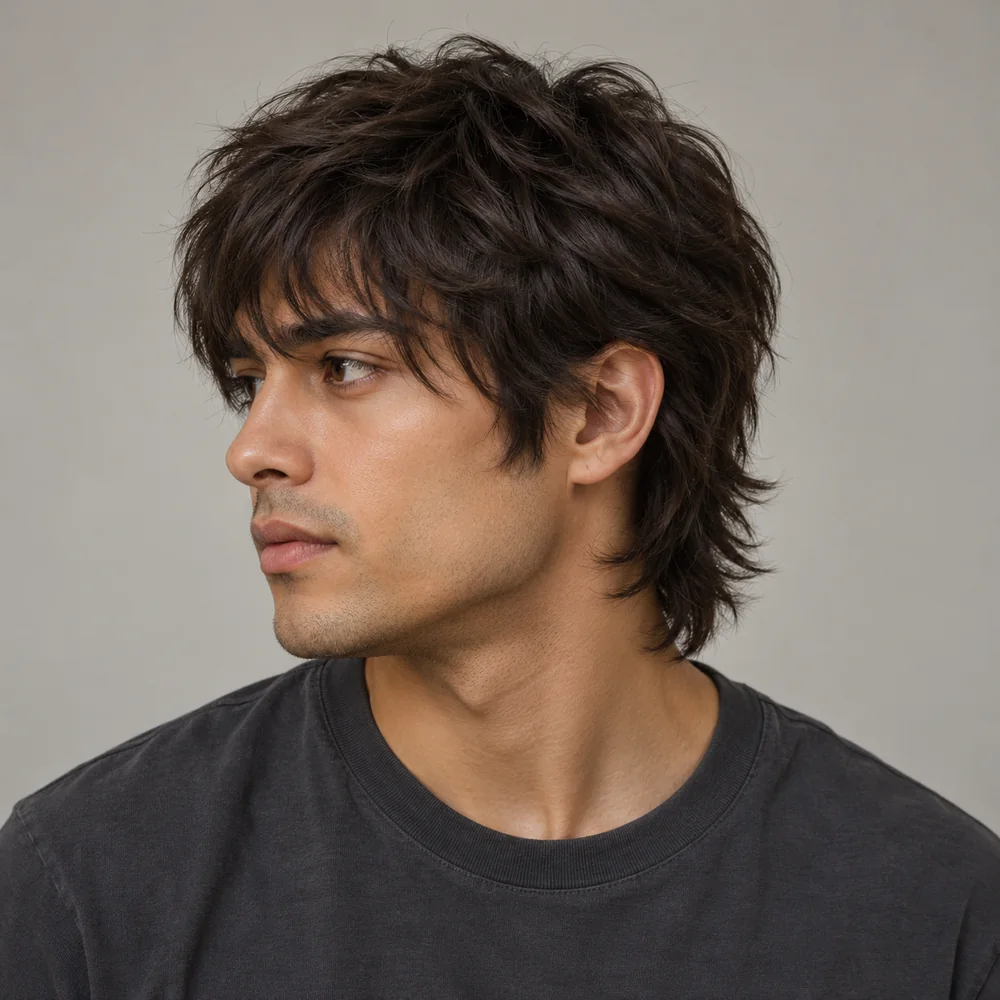
1. Short wolf cut with a compact nape
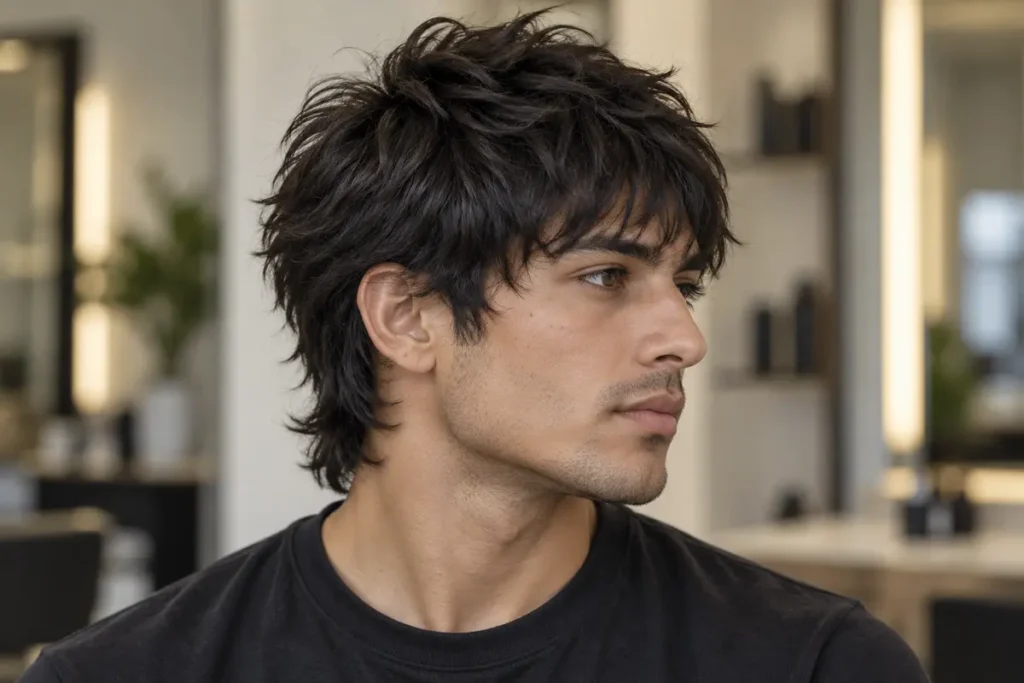
The top has short broken layers, the fringe sits near the brows and the nape remains feathered instead of buzzed away. This option keeps the layered silhouette without a long back. The important limit is enough length for the upper and lower sections to look different; cutting everything uniformly short can turn the result into a crop.
Ask for: “Keep a compact feathered nape and this brow-level fringe. Add visible crown texture, but preserve the side connection around my ears.” Ask the stylist to show the shortest proposed layer before cutting, particularly if your hair has a strong growth pattern at the crown.
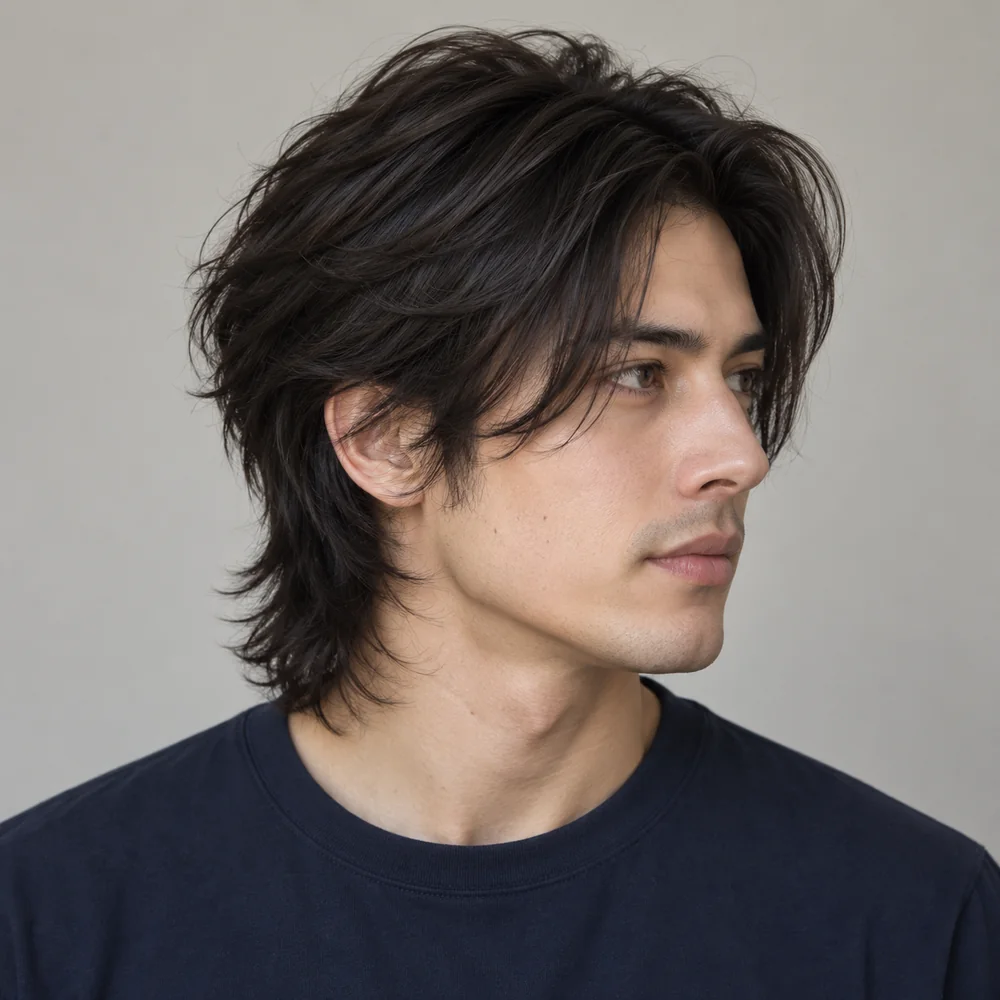
2. Medium wolf cut with curtain framing
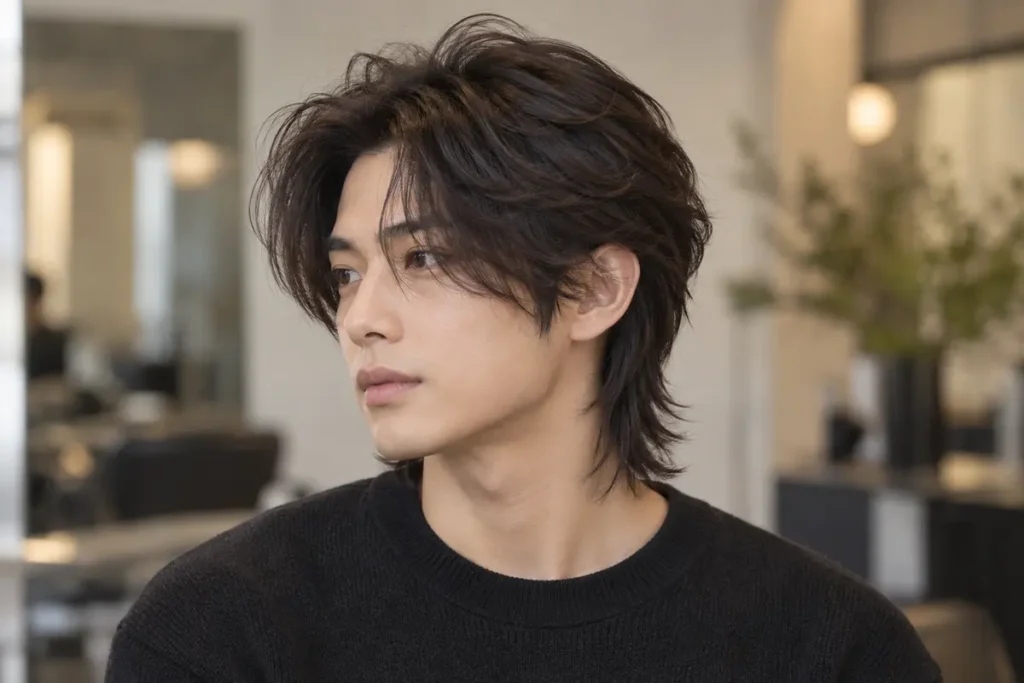
The parted front framing and longer side pieces give this reference a softer outline. The crown still has shorter layers, while the nape remains distinct from the front. Choose where the fringe should land when dry and whether the sides should partly cover the ears. A center part is a styling choice, not a mandatory component of every wolf cut.
Ask for: “Keep this parted front length and a soft connection around the ears. Make the crown lighter and layered while leaving a visible feathered back.” If your natural part falls off-center, discuss using it rather than forcing symmetry every morning.
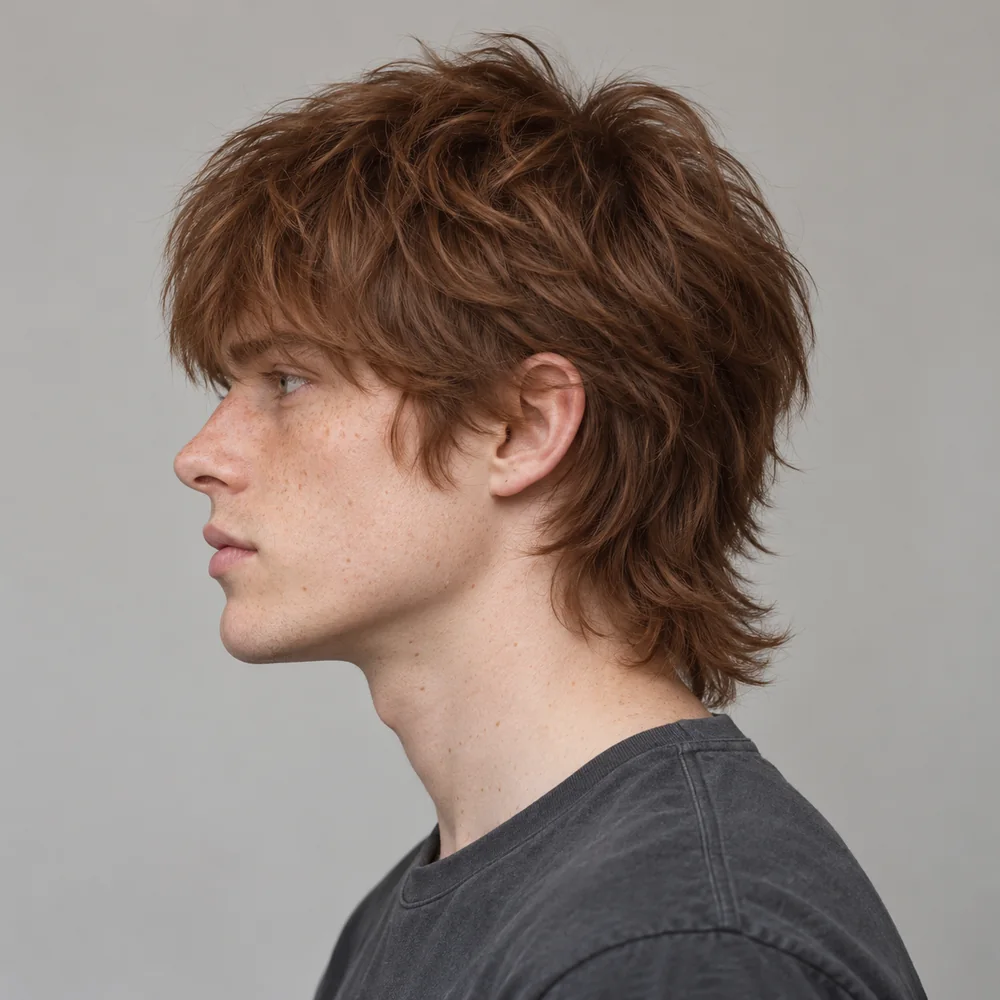
3. Wolf cut on mostly straight hair
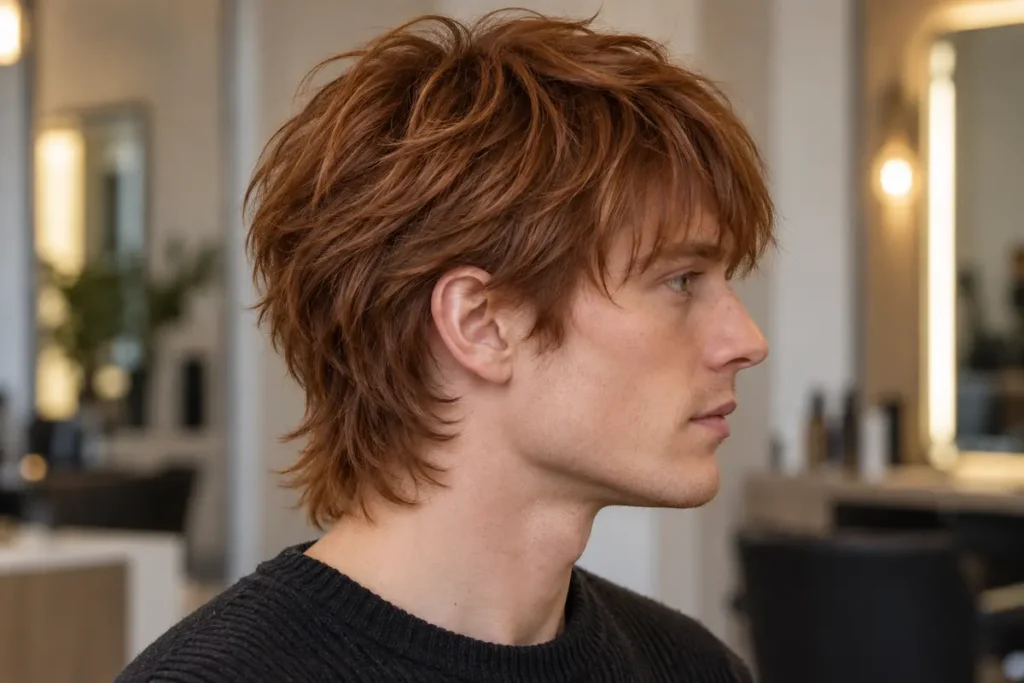
The auburn reference shows separated crown layers, a forward fringe and a wispy lower outline. Mostly straight hair can make the layer boundaries easier to see. That makes the balance between texture and retained fullness especially useful to discuss. Very aggressive thinning may leave less coverage than you wanted; removing more hair is not automatically the solution to a heavy-looking shape.
Ask for: “Keep enough weight for this outline, with visible separation through the crown and a soft nape. I want this fringe length without an undercut.” Ask what the shape will do when air-dried so you can decide whether occasional blow-drying is an acceptable part of the routine.
4. Wavy wolf cut with connected movement
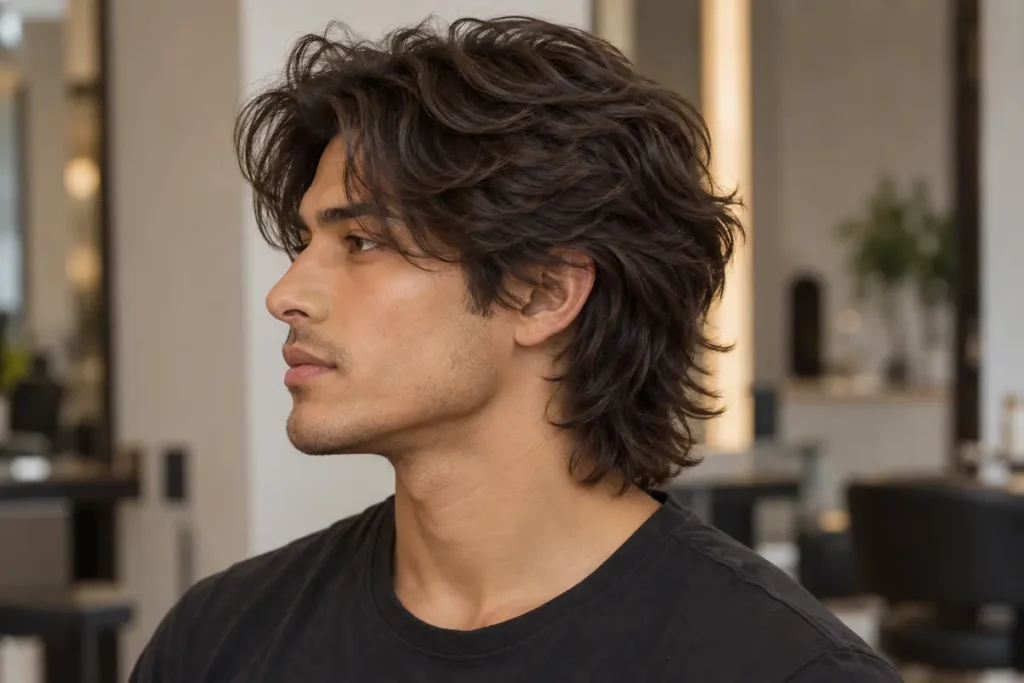
The loose waves carry movement from the upper layers into the back. Compare the shape at the temple with the longer nape: the sides are layered rather than shaved. This reference is useful if you want visible texture with a connected outline. Your own wave groups may sit differently, so the dry shape matters more than copying a single measurement.
Ask for: “Work with these waves and keep this back endpoint when dry. Layer the crown without leaving an abrupt shelf above the longer section.” Discuss whether you prefer an air-dried finish or a more deliberately directed fringe.
5. Curly wolf cut with a curly fringe
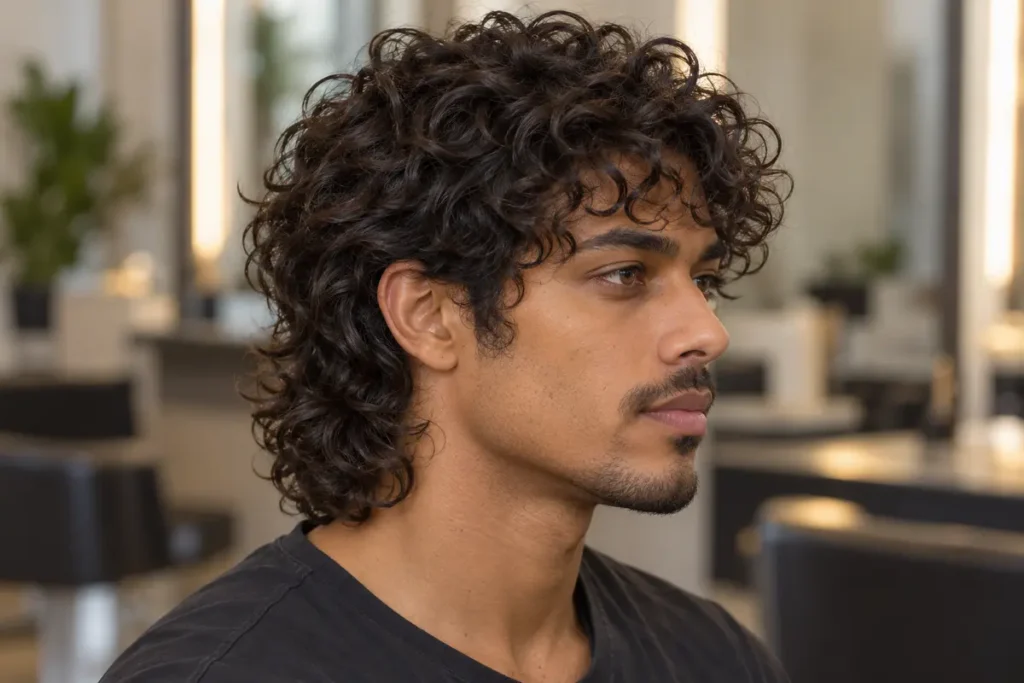
The curls frame the forehead and retain a longer rear outline. A curly fringe can supply the face framing without being forced into straight curtain bangs. The layers need to account for the way your curls shorten visibly as they dry. Show the stylist how you usually wear the hair, including the amount of separation and fullness you want to retain.
Ask for: “Keep this curly fringe and dry nape outline. Shape the crown while preserving the curl groups and enough fullness through the sides.” Do not treat the illustration as evidence that your curls need a chemical treatment or that one product will create the same pattern.
6. Longer wolf cut: rear silhouette reference

The rear three-quarter view shows a longer feathered back beneath shorter upper layers. It is particularly useful for agreeing where the nape should end and how much fullness should remain below the crown. A front photo alone cannot settle that decision. Ask whether the current back length can support the shape or whether a staged grow-out would preserve more of your goal.
Ask for: “Keep this longer rear outline and blend the upper layers into it. Avoid leaving just a thin tail or removing the side coverage I want.” Before the cut, point to the dry endpoint on your own neck rather than asking for “long” without a reference.
Choose the version by your hair and routine
Start with three practical constraints: the length you have now, the texture you normally wear and the time you want to spend styling. A compact version can be a sensible first step if the back is still growing. A longer version can preserve more of your existing outline while changing the crown and face framing. Neither choice requires a rigid face-shape rule.
For fine or lower-density areas, discuss coverage before adding deep layers or thinning. For thick hair, decide which areas feel bulky and which areas need to stay full. For curls or coils, agree on the dry outline rather than assuming the wet or stretched length will remain visible. These are consultation priorities, not universal recipes.
If the pictures look more styled than your intended daily finish, say so. Ask the stylist to demonstrate a routine you can realistically repeat. A cut should be judged in the finish you expect to wear, not only in the salon’s carefully arranged photo.
How to ask for a wolf cut at the appointment
- Show the reference that best matches your intended texture and length.
- Specify the dry fringe endpoint and whether it falls forward or parts.
- Agree on the shortest crown layer and how much side coverage remains.
- Show the rear endpoint and the connection through the crown.
- Confirm that you want layered sides, unless you separately request a localized taper.
- Ask what needs to grow before the full outline is possible.
A useful request is: “I want a layered wolf cut with this fringe, this side coverage and this dry back length. Keep visible crown texture, but preserve the fullness I point out. Please explain any changes needed for my texture before removing length.”
Styling and grow-out without overpromising
Begin with your usual clean, conditioned hair and a gentle drying method. If you want extra hold or separation, try a small amount of a product suited to your texture and follow its instructions. Too much product can weigh some hair down; adding more is not always the answer. You may prefer air-drying, finger direction or controlled blow-drying depending on the finish you want.
If you use a dryer, choose comfortable heat and airflow and stop if the scalp feels irritated. Curly references do not require brushing every curl apart; straight-haired references do not require a perm. Ask the stylist to show how the fringe and crown should be directed, then judge how well the routine works at home.
Arrange trims around the fringe, crown balance and rear outline as they grow. The right interval depends on your growth and how closely you want to hold the shape. There is no fixed schedule that every wolf cut requires. When growing out a short cut, you can keep the fringe and perimeter comfortable while gradually building the contrast between upper layers and back length.
Frequently asked questions
Is a wolf cut the same as a mullet?
They overlap, but the request is not identical. A wolf cut emphasizes shaggy layers and face framing; a mullet emphasizes front/side versus back length. Show the layer contrast and rear outline you want rather than relying on either name alone.
Does a wolf cut need a fade?
No. All six references here retain layered sides. A taper can be discussed separately, but it changes the connection around the ear and should not be assumed from the wolf-cut name.
Can men with straight hair get a wolf cut?
Yes, a mostly straight-haired reference is included. The stylist should account for density and how clearly the layers show. Ask about the air-dried result and any styling effort needed for your preferred movement.
Can a short haircut become a wolf cut immediately?
It depends on the existing length and the reference. The crown and lower outline need enough contrast to read as layers. A staged grow-out can be more realistic than promising the full shape from uniformly short hair.
Do I need curtain bangs?
No. A parted fringe is one option; the short, mostly straight and curly references use other framing. Agree on the dry fringe length and direction with your stylist.
Are these photos of real clients?
No. They are original AI-generated editorial illustrations of fictional adults, reviewed for the layer and silhouette choices discussed here. They are planning references, not proof of a barber’s work or a guaranteed outcome.
Research and editorial notes
Reviewed 8 October 2026. This is an independent planning guide, not a technical cutting tutorial or a claim of licensed barber review. We use published professional commentary to check terminology, then separate those general observations from the choices illustrated in our original references. No real client images or celebrity likenesses were used.
Research reference: GQ’s interview with barber Brandon Faulk about the men’s wolf cut discusses its scissor-led layered approach and individual consultation. The six reference descriptions, comparison decisions and request scripts on this page are our own editorial material.
 Buzz Cut Guard Sizes: Every Length From #0 to #16, With Photos
 Two Block Haircut: 5 Styles, Lengths & Barber Tips
 Professional Hairstyles for Men: 8 Practical Work Styles
One Comment