High Taper Fade for Black Men: 9 Styles, Line-Ups and What to Ask For
On this page
- What Makes a Taper “High” on Coily Hair?
- High vs Mid vs Low Taper for Black Men
- High Taper Fade for Black Men: 9 Styles to Try
- The Line-Up: Keep Your Natural Hairline
- Shadow, Zero or Skin: Avoiding Razor Bumps
- Who Suits a High Taper Fade for Black Men?
- What to Tell Your Barber
- Maintenance and Grow-Out
- Frequently Asked Questions
- Sources and Further Reading
- Related Guides
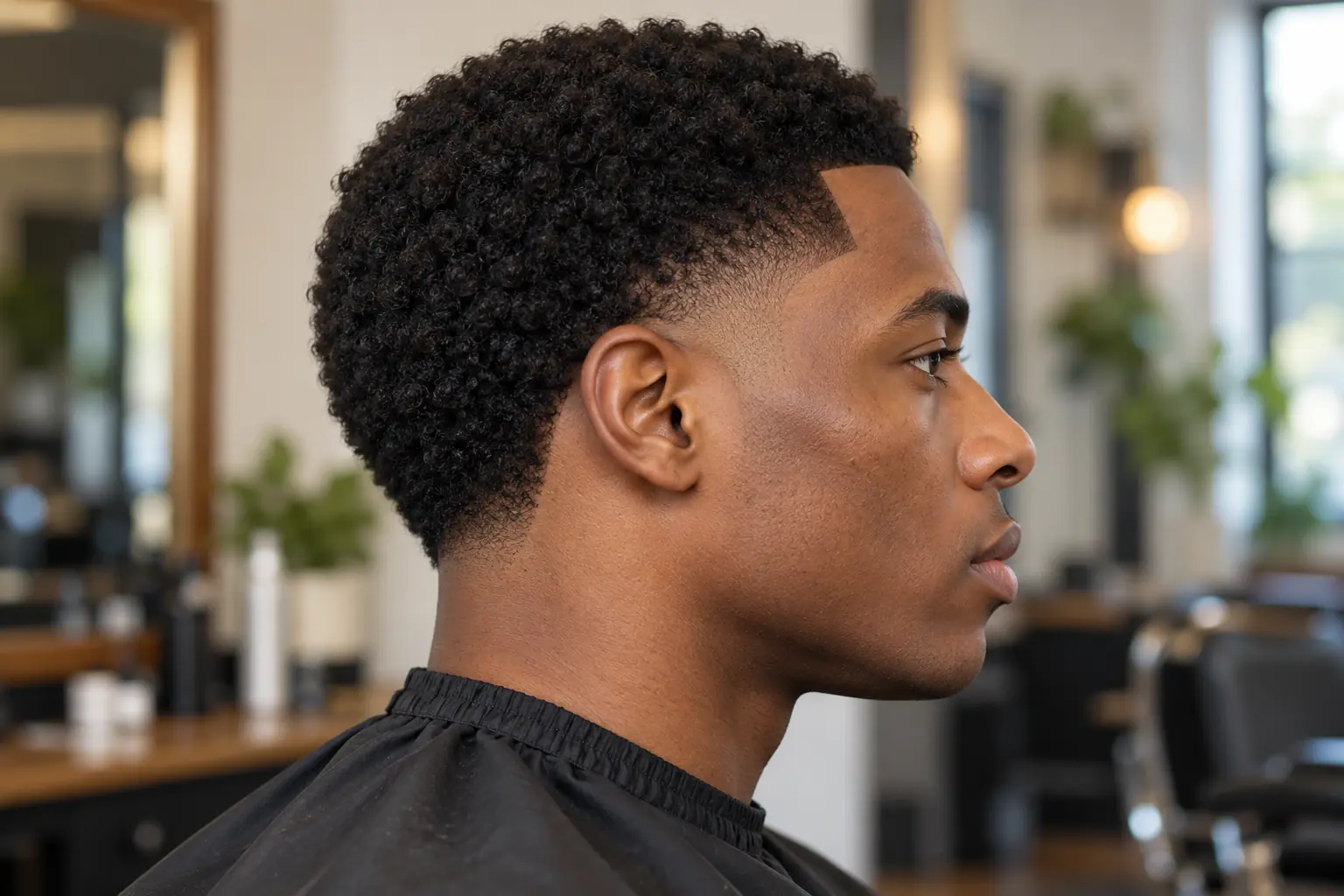
A high taper fade for Black men shortens the hair at the temples, sideburns and nape, starting up near the temple instead of at the bottom of the sideburn, while the top and most of the back keep their length. It gives a sharper, more contrasted outline than a low taper but stays far softer than a full high fade, because no short band wraps around the head. It works with 360 waves, twists, sponge curls, locs, afros and beards.
At a glance
| Feature | High taper fade for Black men |
|---|---|
| Where it starts | Near the temple, above the top of the ear |
| Short areas | Temples, sideburns and nape only |
| What stays long | The top and most of the back |
| Finish | Shadow, zero or skin |
| Edges | Usually a line-up at the forehead and temples |
| Touch-ups | As a rough guide, line-up every 1 to 2 weeks, taper every 2 to 3 |
What Makes a Taper “High” on Coily Hair?
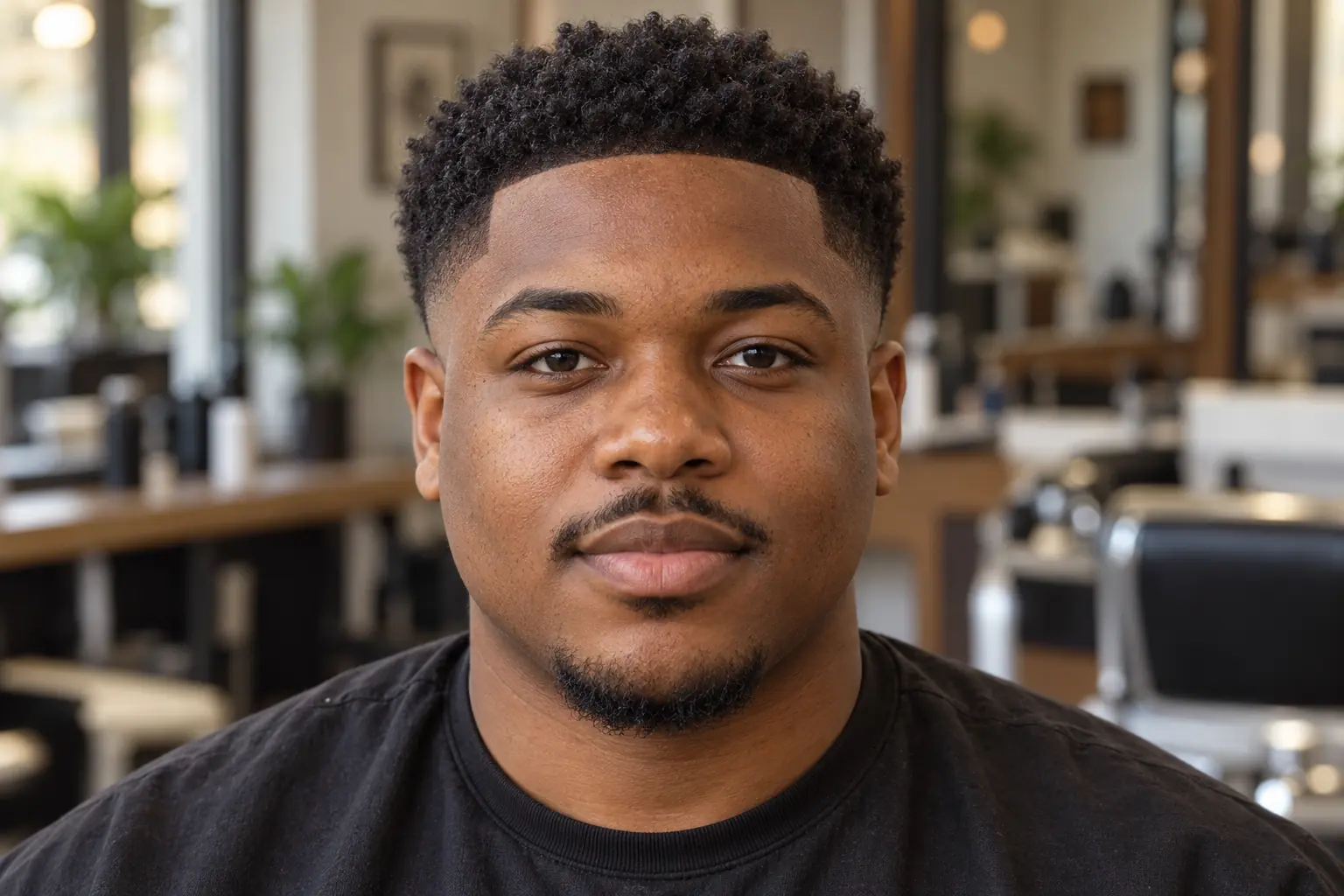
Every taper shortens the same areas: the sideburns, temples and nape. The height is where the blend starts. On a high taper, the barber begins blending up near the temple, above the top of the ear, so more of the temple area is short and the line-up stands out more. On dark, dense coily hair that contrast is very visible, which is why the high taper looks so sharp in photos.
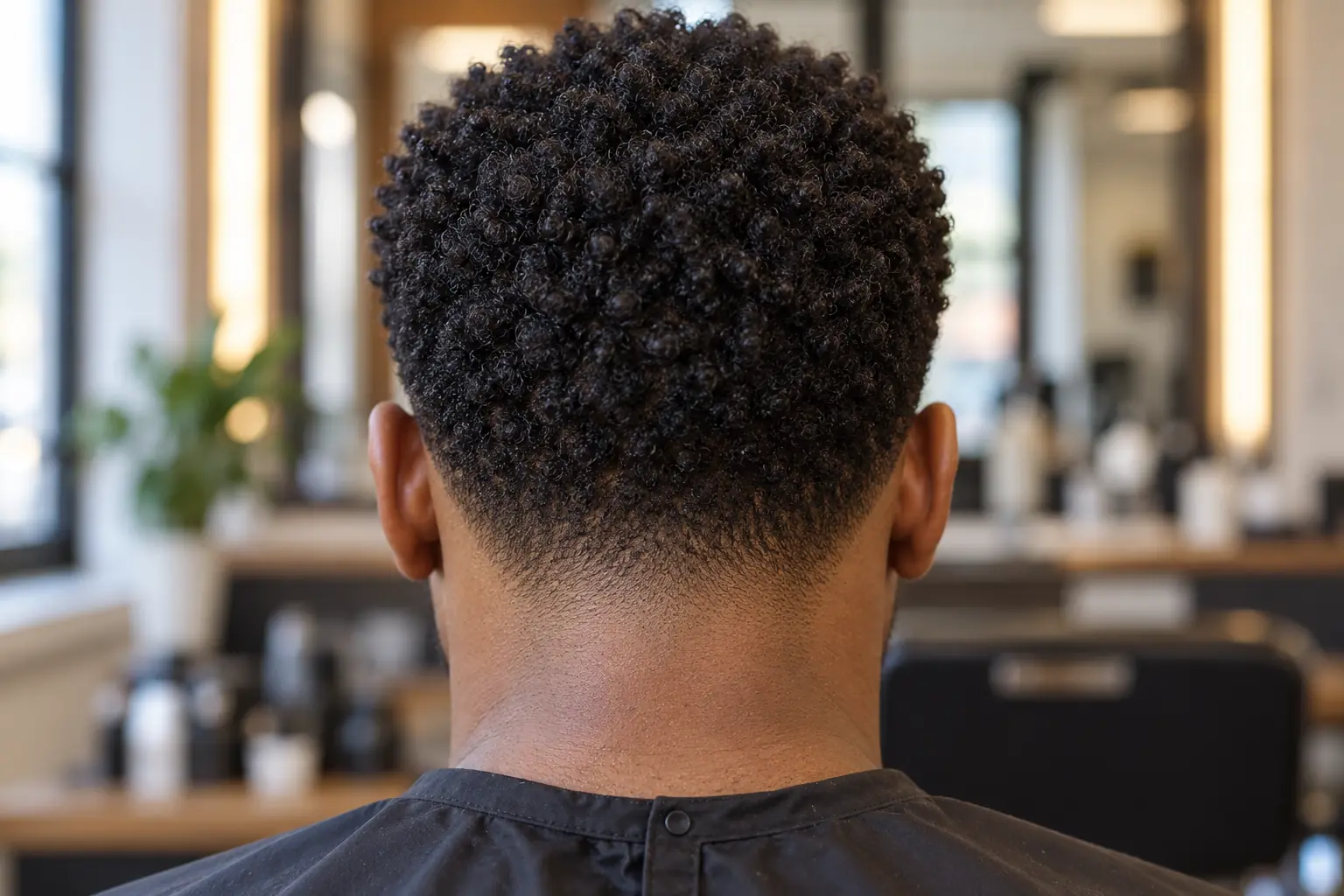
What keeps it a taper is that the blend stays at the edges. Look at the back: the nape is tapered, but the hair behind the ears and across the back of the head stays full. If a short band runs all the way around, you have a high fade, not a high taper. For how the cut works on every hair type, see the main high taper fade guide.
High vs Mid vs Low Taper for Black Men
| Low taper | Mid taper | High taper | |
|---|---|---|---|
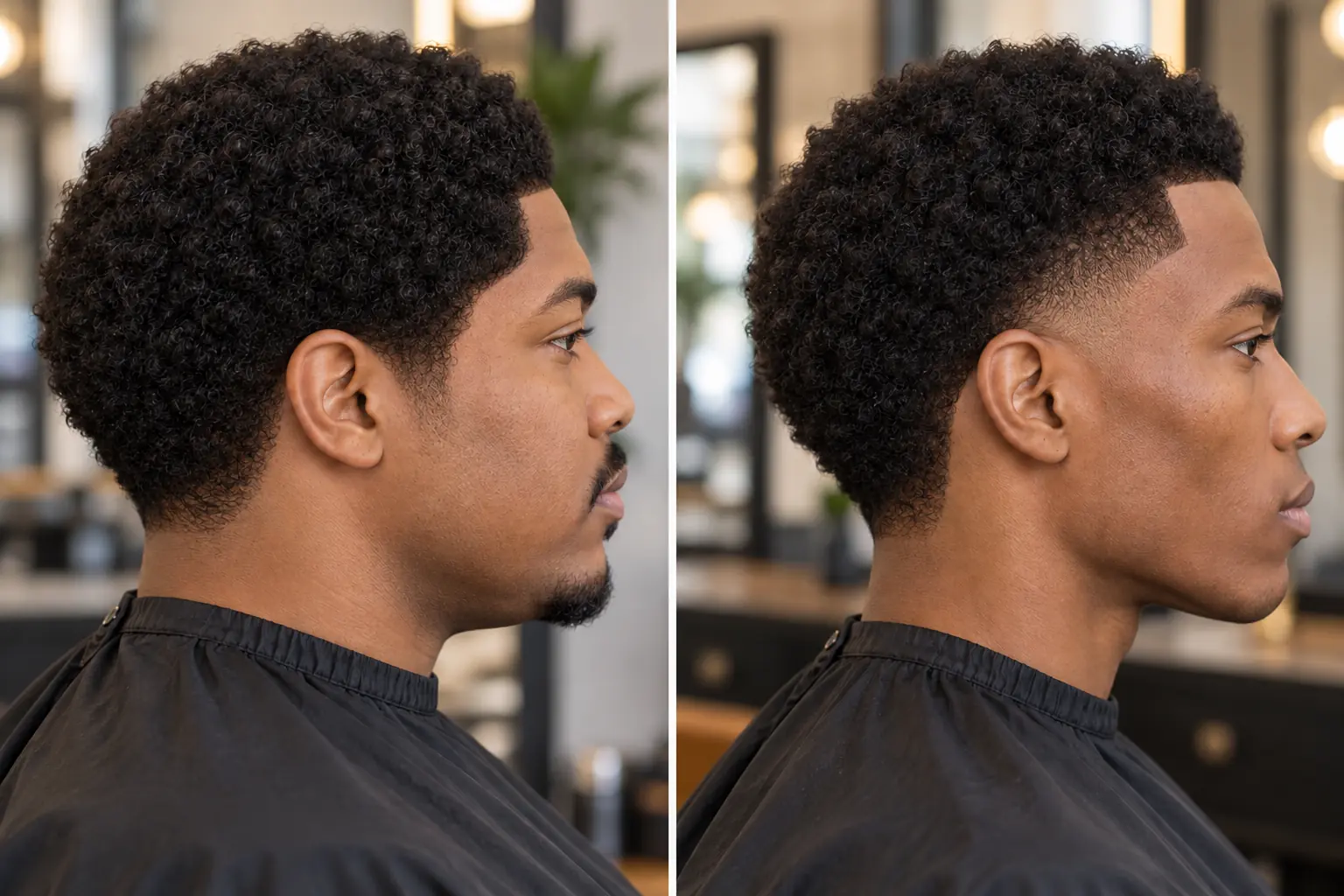
| Where the blend starts | Bottom of the sideburn | Around the middle of the ear | Near the temple, above the ear |
| Look | Subtle and natural | Balanced | Sharp, high contrast |
| Shows growth | Slowest | In between | Soonest |
| Best with | Fuller sides, afros, first tapers | Most tops | Waves, short twists, a strong line-up |
A useful way to choose between a high taper fade for Black men and a lower taper: the more defined you want your line-up and temples to look, the higher you go. If you want the cut to grow out quietly between visits, stay low or mid.
High Taper Fade for Black Men: 9 Styles to Try
1. High taper with 360 waves
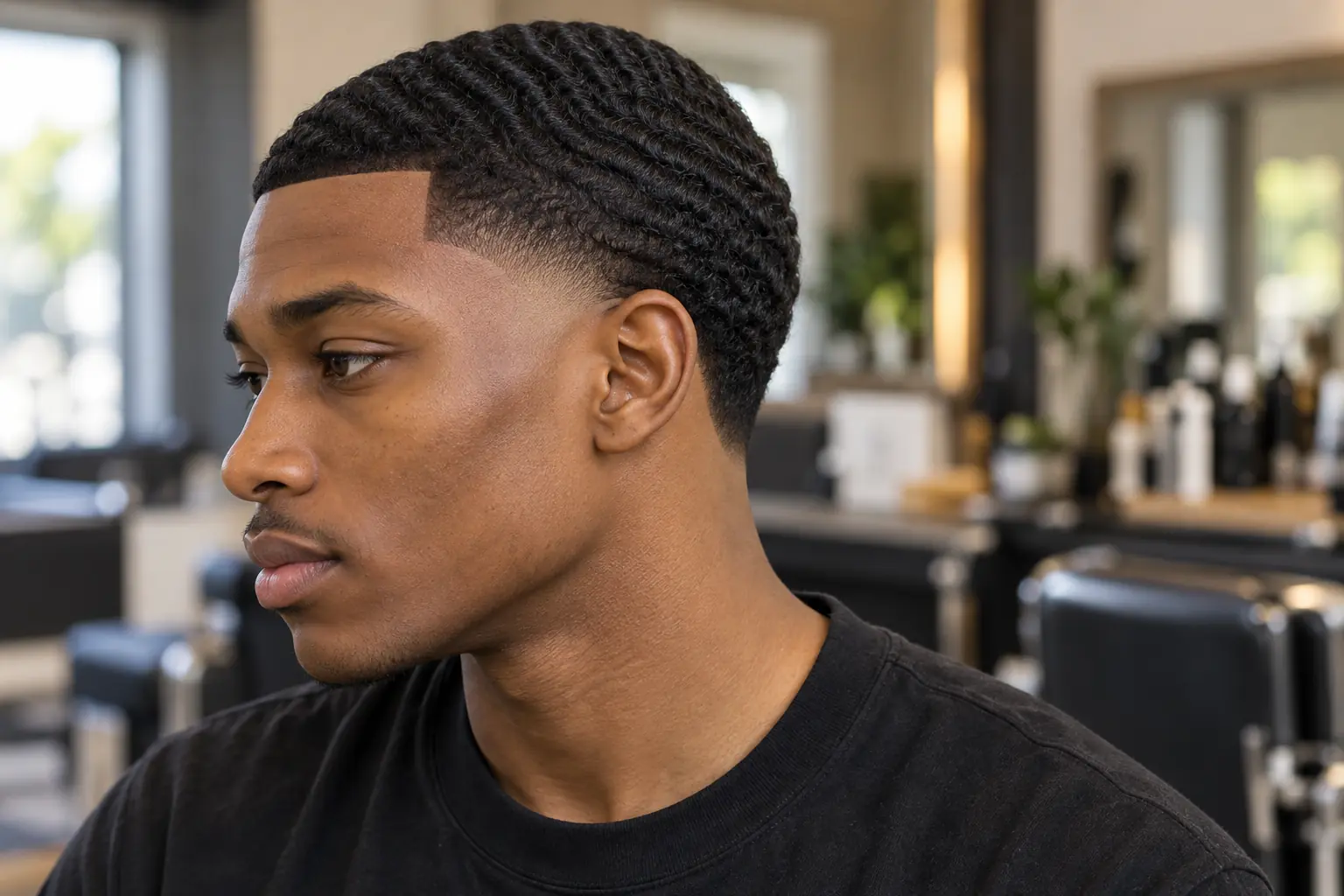
Waves and a high taper are a natural pair: the high, clean temple lets the wave pattern run right to the edge of the line-up. Keep the top short and even, around a #1 to #2 guard length, so the waves stay defined. Brush in your usual direction before the cut and wear a durag at night.
Say: “High taper at the temples and nape, short even top for my waves, natural line-up.”
2. High taper with twists
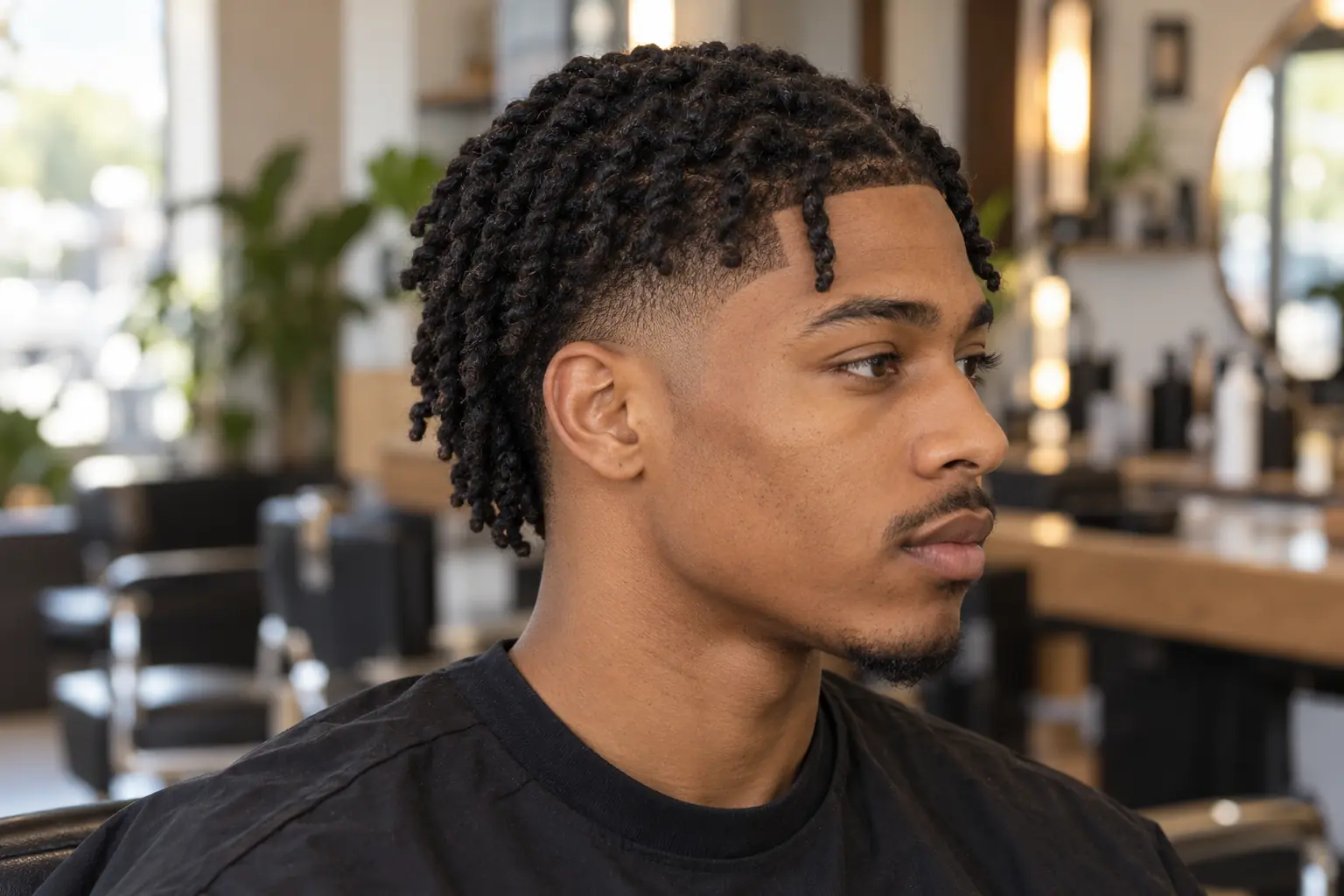
Two-strand twists of about two to four inches look neater with clean edges, and a high taper keeps the sides tidy as the twists grow. Ask your barber to taper before you twist, or to work around existing twists without cutting into them. Keep twists loose at the hairline rather than pulled tight.
3. High taper with sponge curls
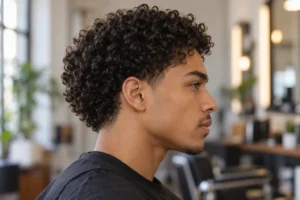
Sponge curls are short, defined coils made by rubbing a curl sponge over slightly damp hair, usually with about two inches on top. A high taper frames them with sharp temples, so the curls look deliberate rather than grown out. Moving the sponge in one direction keeps the coils from unravelling.
4. High taper with a blowout afro
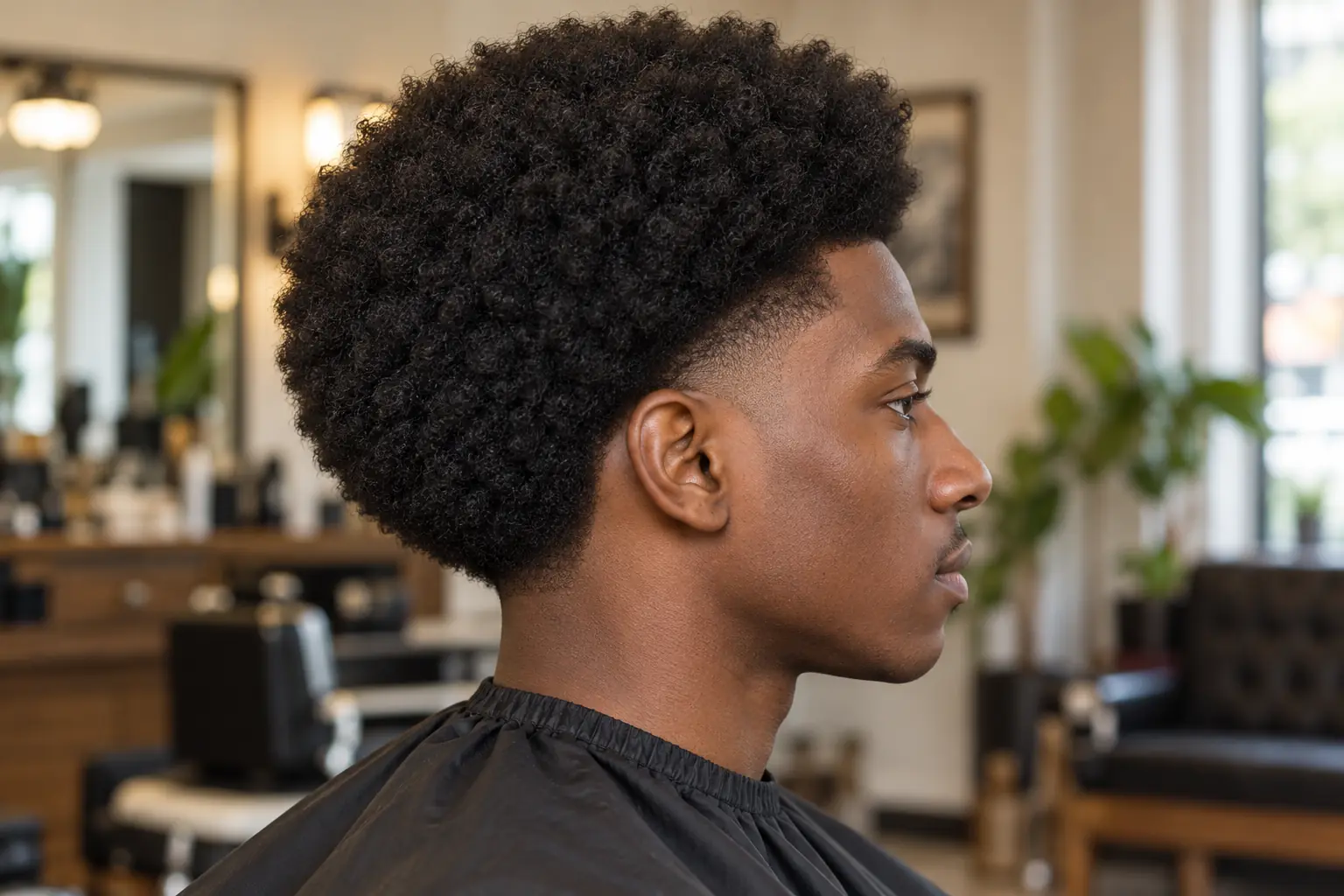
Tapering the edges makes a big, round afro look shaped instead of wide. A high taper gives the strongest contrast under a tall afro; if you want the afro to look fuller at the sides, keep the taper a little lower. For the picked-out version, see our blowout taper guide.
5. High taper with locs
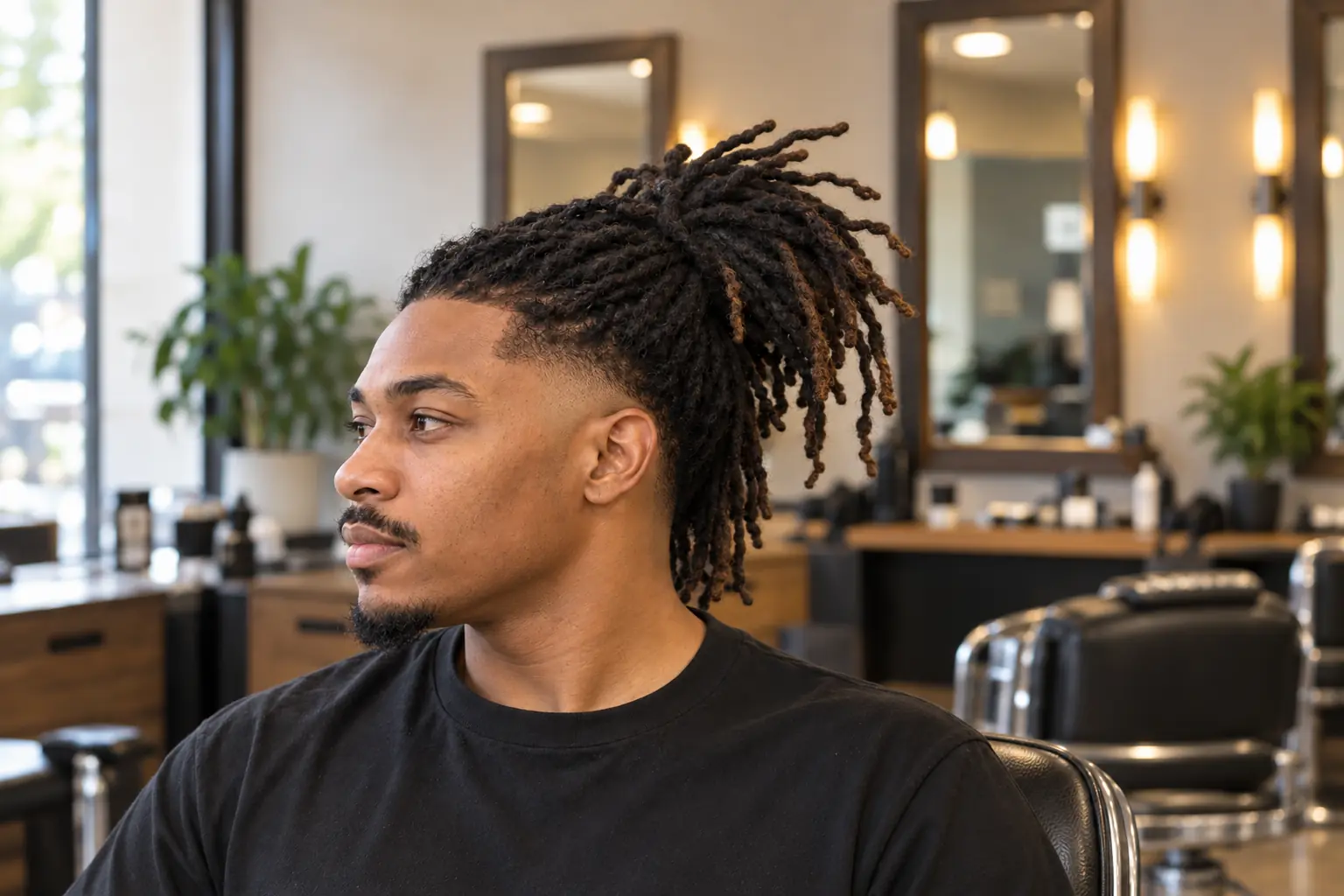
A high taper keeps the sides and nape clean under locs, whether you wear them down or up. Tie them loosely: the American Academy of Dermatology lists tight locs among the hairstyles that can cause hair loss at the hairline, and recommends thicker locs and regular breaks from tight styling.
6. High taper with looser curls
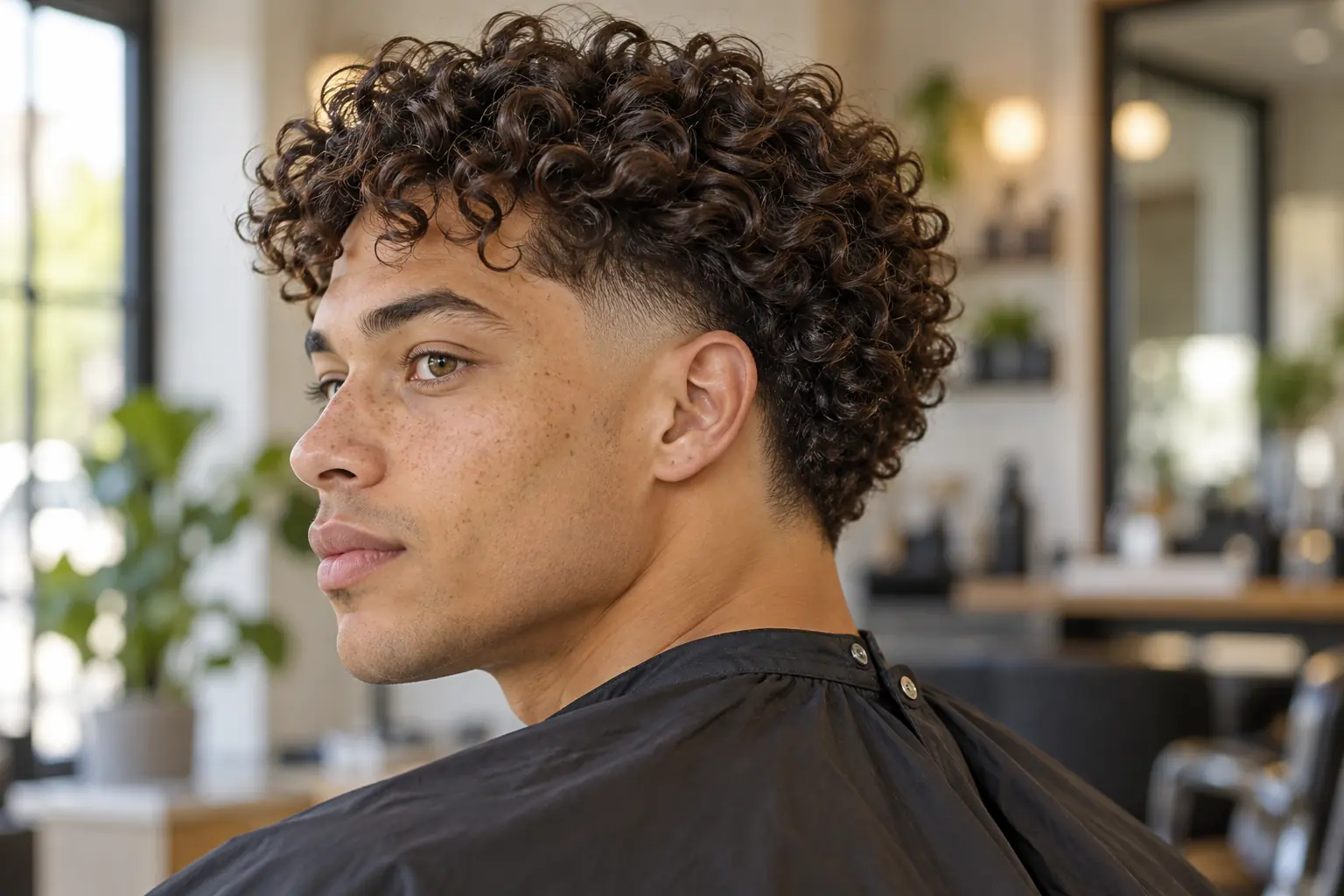
On looser curls, leave about three inches on top so the curls can form and fall forward. Curls shrink as they dry, so ask the barber to set the taper height with your hair dry. More looks for this texture are in the taper fade for curly hair guide.
7. High taper with a beard
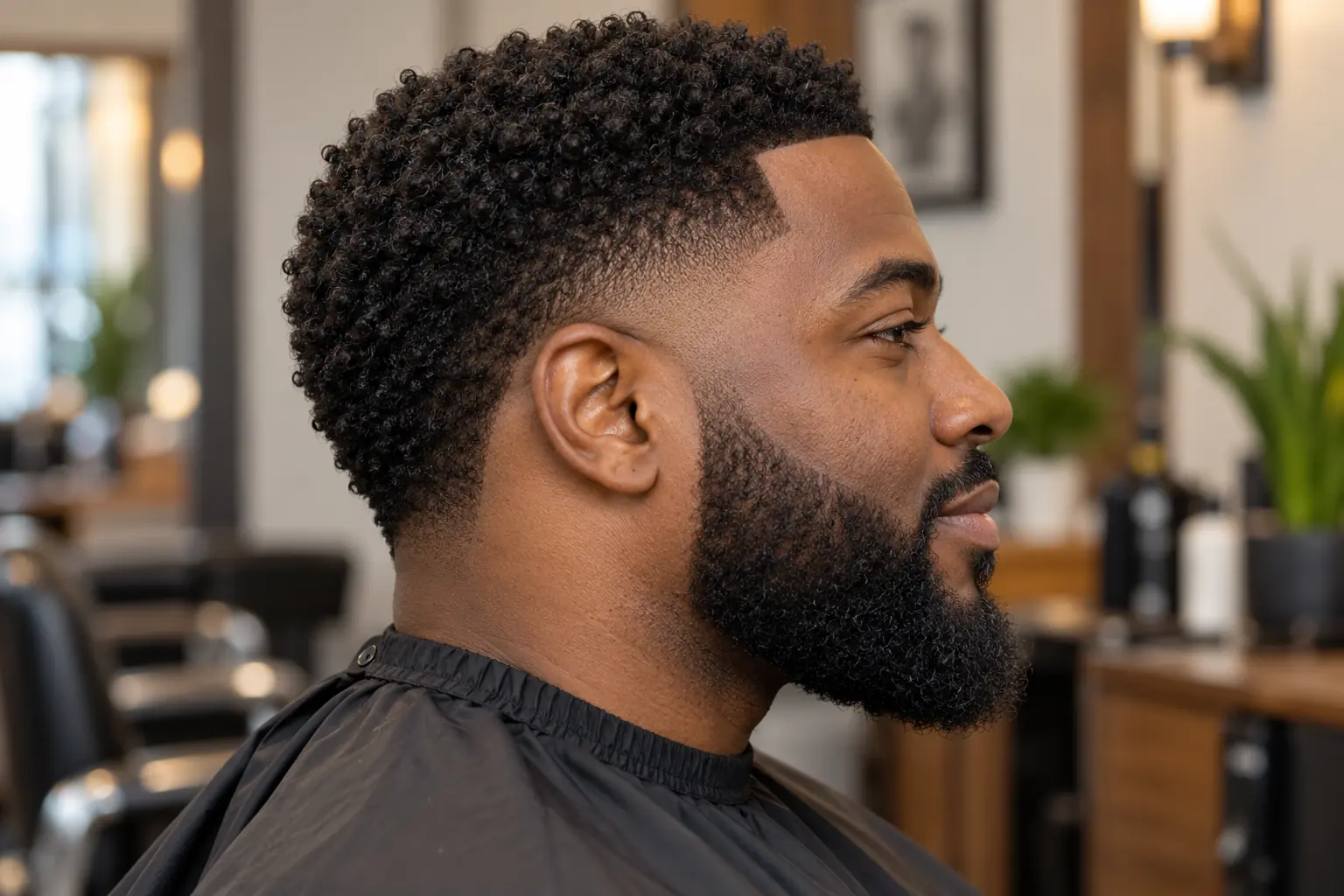
With a beard, a high taper needs one extra instruction: the sideburn must blend back into the beard. Without it, a high taper can leave a bare strip at the cheek. Ask for the same guard where the hair and beard meet, and for the beard line to be shaped to match the line-up.
8. High taper with a shaved part
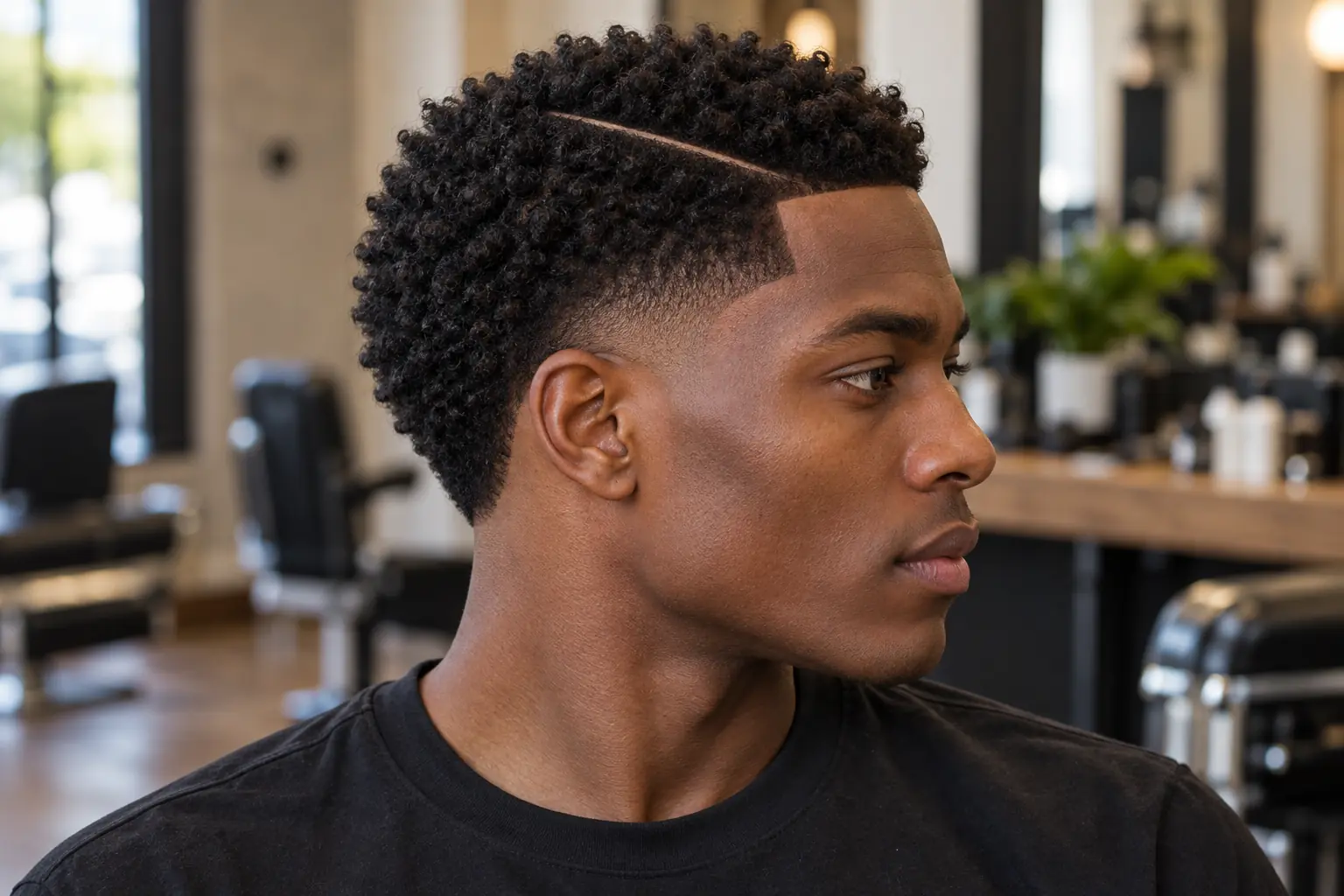
A single shaved part line adds detail without a full design. Line it up with the corner of your temple so it looks connected to the taper. A part softens as it grows, usually within a week or two, so it needs refreshing at each line-up. For more involved line work, see the design section of our burst fade guide.
9. High taper with a buzz cut
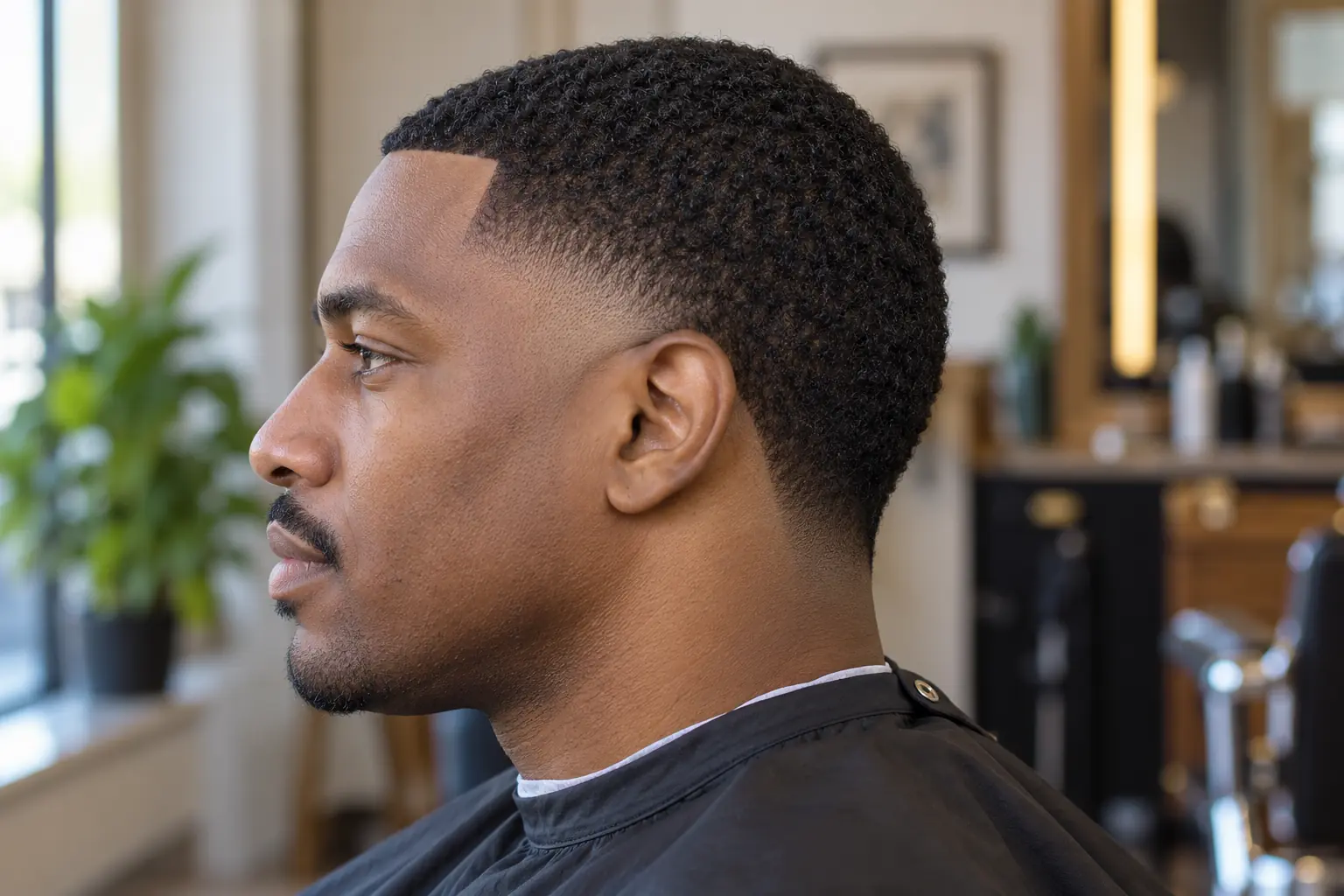
The lowest-effort version: the top is clipped to one short length and the high taper does the shaping. There is nothing to style, though the edges need regular touch-ups. To choose the top length, see buzz cut guard sizes; for the all-round version, see the buzz cut fade.
The Line-Up: Keep Your Natural Hairline
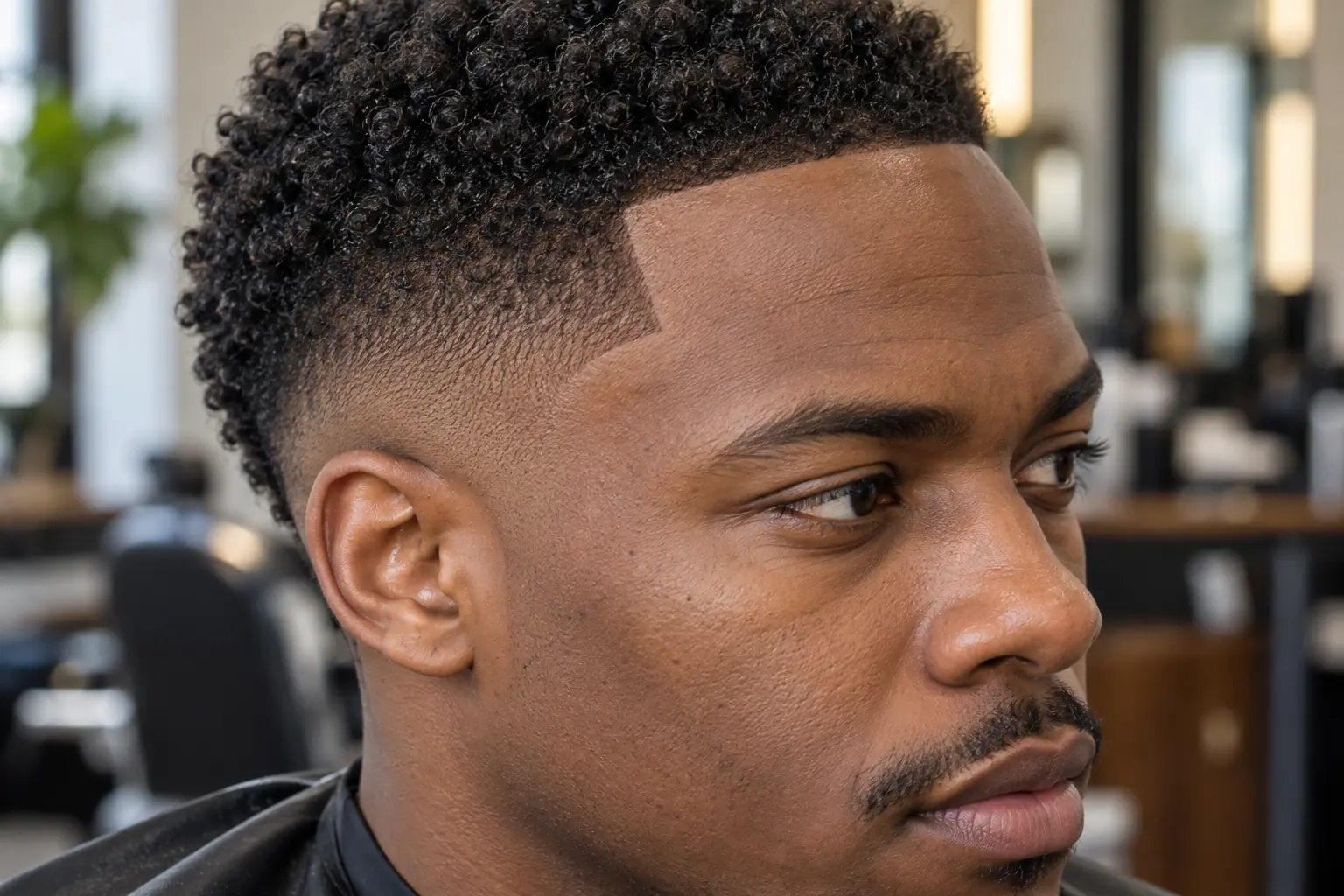
Because a high taper clears the temple, the line-up becomes the frame of the whole cut. A sharp edge looks great, but pushing the line back each visit to make it look crisper slowly moves your hairline and can make it look like it is receding. Ask for the line-up on your natural hairline and for the temple corners to stay where they grow.
If your temples are already receding, a high taper exposes them more. A mid or low taper with a softer line-up usually looks fuller.
Shadow, Zero or Skin: Avoiding Razor Bumps
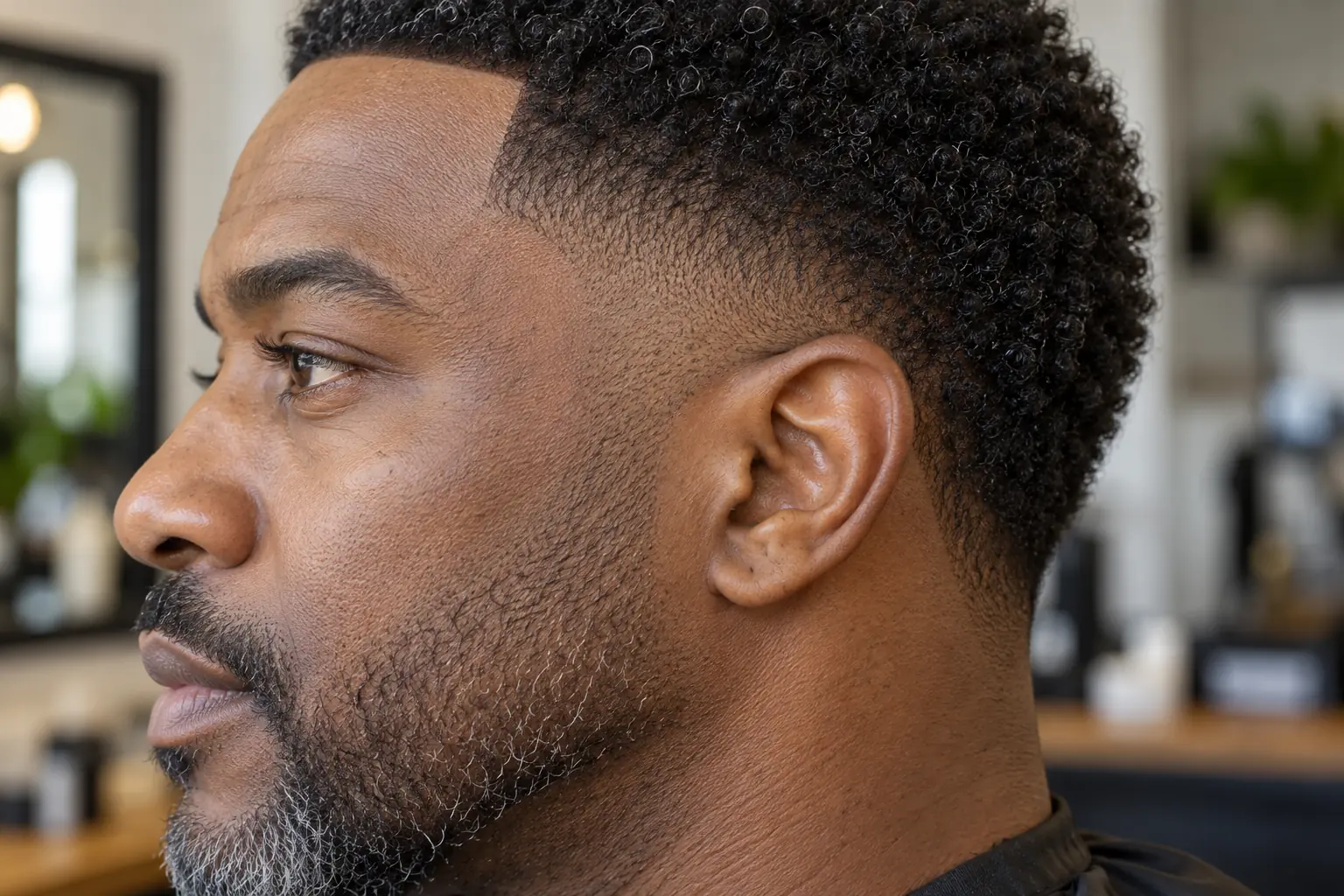
The bottom of the taper can be finished at skin, a zero or a shadow. Skin gives the sharpest contrast but is the most likely to cause bumps: University of Iowa Health Care explains that razor bumps happen when curly hairs curl back into the skin after a close shave, and that they are most common in people of African descent. It suggests trimming with clippers at 0.5 to 1 mm rather than shaving when bumps are a problem.
If you get bumps after skin tapers, ask for a zero or shadow finish. If you do want skin, the American Academy of Dermatology advises shaving in the direction the hair grows. Bumps that are painful or keep coming back are worth showing a dermatologist.
Who Suits a High Taper Fade for Black Men?
- Short tops: waves, buzz cuts, sponge curls and short twists look sharpest with high edges.
- Round or full faces: clean, high temples make the face look longer.
- Dense, fast-growing hair: a higher taper controls bulk at the sides.
- Think twice if your temples are receding, your skin is prone to bumps, or you can’t get a touch-up every few weeks. A low taper is easier to live with.
What to Tell Your Barber
- Height: “High taper, starting up near the temple. Only the temples, sideburns and nape.”
- The back: “Keep the length across the back; don’t wrap it around.”
- Finish: “Skin” (or “zero” or “shadow” if you get bumps).
- Line-up: “Line me up on my natural hairline, don’t push it back.”
- Top: name the style (waves, twists, sponge curls, afro, locs) and how much length to keep.
- Beard: “Blend the sideburn into my beard” if you have one.
Bring the front, side and back photos of the high taper fade for Black men from this page: the back view matters most, because it shows the barber where the taper should stop.
Maintenance and Grow-Out
- Line-up: as a rough guide, every 1 to 2 weeks to stay crisp.
- Taper: every 2 to 3 weeks. A high taper shows growth sooner than a low one; as it grows, it softens into a mid taper.
- Moisture: the American Academy of Dermatology’s tips for Black hair care suggest washing about once a week or every other week and conditioning every time.
- Night: a durag or satin cap protects waves and twists and reduces friction.
Frequently Asked Questions
What is a high taper fade for Black men?
A taper that shortens the temples, sideburns and nape, starting up near the temple, while the top and most of the back keep their length. It is usually finished with a line-up.
What is the difference between a high taper and a high fade?
A high taper only shortens the edges, so the back stays full. A high fade takes a short band all the way around the sides and back.
Does a high taper work with waves?
Yes. The high, clean temple lets the wave pattern run right to the line-up, which is why it is a popular choice for 360 waves.
Will a high taper make a receding hairline look worse?
It can, because it clears the temples. With receding temples, a mid or low taper and a line-up on your natural hairline usually look fuller.
Can I get a high taper with locs?
Yes. Keep the locs loose at the hairline and ask for the taper to stop below where the locs start.
Is a high taper fade for Black men professional?
Usually. A clean high taper with a natural line-up suits most workplaces; check any dress code that applies to you. A shadow finish looks the most understated.
Sources and Further Reading
- American Academy of Dermatology: Black hair, tips for everyday care
- American Academy of Dermatology: hairstyles that pull can lead to hair loss
- American Academy of Dermatology: how to prevent razor bumps
- University of Iowa Health Care: razor bumps
Related Guides
- High Taper Fade
- Low Taper Fade for Black Men
- Fade Haircuts for Black Men
- Boosie Fade
- Blowout Taper
- Taper Fade
 Low Taper Fade for Black Men: Styles, Line-Ups and What to Ask For
 Low Taper Fade with Textured Fringe: Styles, Barber Script and Styling
 Taper Fade for Curly Hair: Low, Mid and Blowout Tapers by Curl Type
